• Skip to main content
  • Skip to footer
  • Home

The May 13 Group

the next day for evaluation

  • Get Involved
  • Our Work
  • About Us
You are here: Home / Archives for cplysy

cplysy

Jan 22 2020

Visual Thinking

Service and product design involves creating something, envisioning it’s use, consideration of its effects, and hopefully seeing it achieve a goal. When we are creating or planning our project we need to consider all of that on top of the many ideas we have about what that product or service ought to involve. That is a lot to hold in our heads at one time.

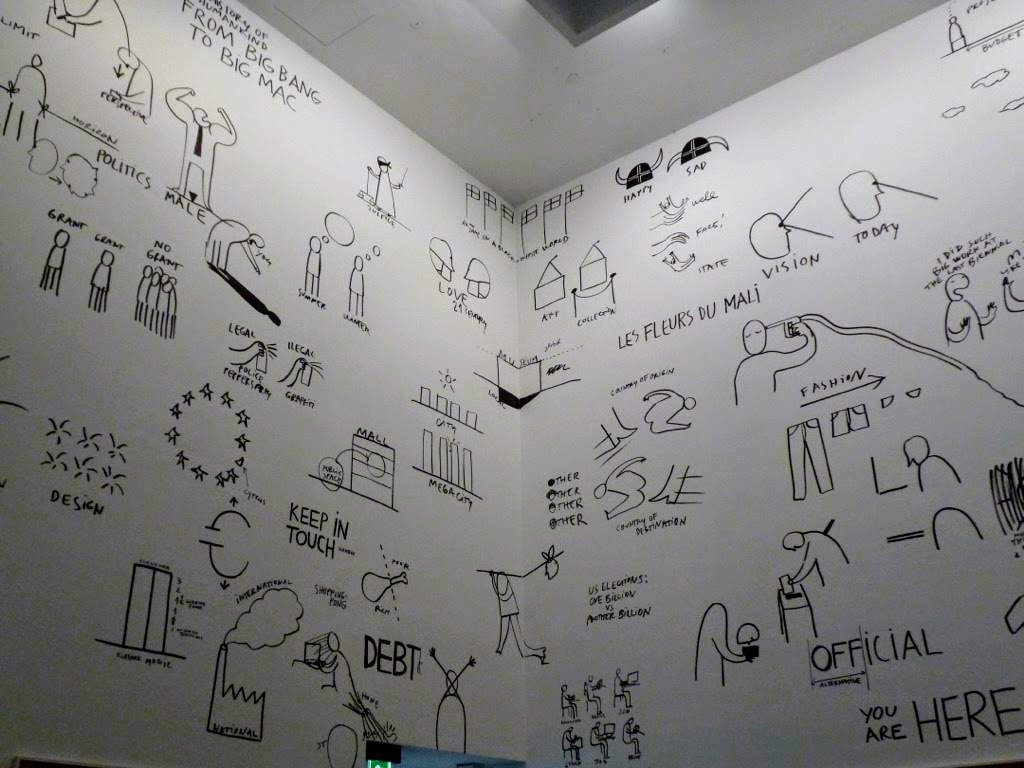
This is why designers often rely on visual thinking and communication to help illustrate these ideas as systems. The benefits of this approach are many and include:

  • Providing a way to communicate your thoughts in multiple dimensions. Time, space, sequence, and effects are all different considerations for service design and visualizing that allows us to see these all in one space. Our language is linear, visualizing allows for linear and non-linear effects.
  • It creates a space for everyone to participate. Whether you are a skilled visual communicator or someone who hasn’t drawn anything by hand in 20 years, nearly everyone can draw. Visual thinking tools can provide a means to literally get people working on the same page. Simple methods like the Sketch Map are easy to employ and get everyone sharing ideas together.
  • Visual language – such as that illustrated by XPlane in their useful guide to visual thinking transcends spoken words and allows us to communicate even when our shared spoken language isn’t strong.
  • Visual thinking allows us to use metaphors, express complex emotions, and connect physical and emotional things together during a service journey in a way that is difficult to convey through oral or written language.
  • Visuals provide an artifact that can be interrogated, explored, and reviewed from many different perspectives allowing people to point to objects, relationships, and structures and ask about their purpose, illustration, and meaning without requiring much technical understanding of the problem-domain (allowing outside and alternative perspectives to meaningfully contribute).
  • It also provides a means to generate a shared understanding of the system boundaries, components, and purposes that guide your development of the service. It gets people on the same page metaphorically and literally.

Visual communicator Angelika Skotnicka provides a strong case for why we want to consider visual thinking and how it is done from the perspective of graphic recording.

Consider ways to bring in visual thinking to your project planning, service design, evaluation, and strategy development. It is low-risk, high-reward and is an engaging, low-cost, and often enjoyable way to generate enormous insight quickly and effectively.

Want to learn more? Contact us and we can help you bring your ideas to light visually and more.
Written by cplysy · Categorized: cameronnorman

Jan 21 2020

Report Design as Magazine Design [Graphic Novel Blog Post]

So what if you created reports the same way publishers created magazines? That’s the question behind today’s post.

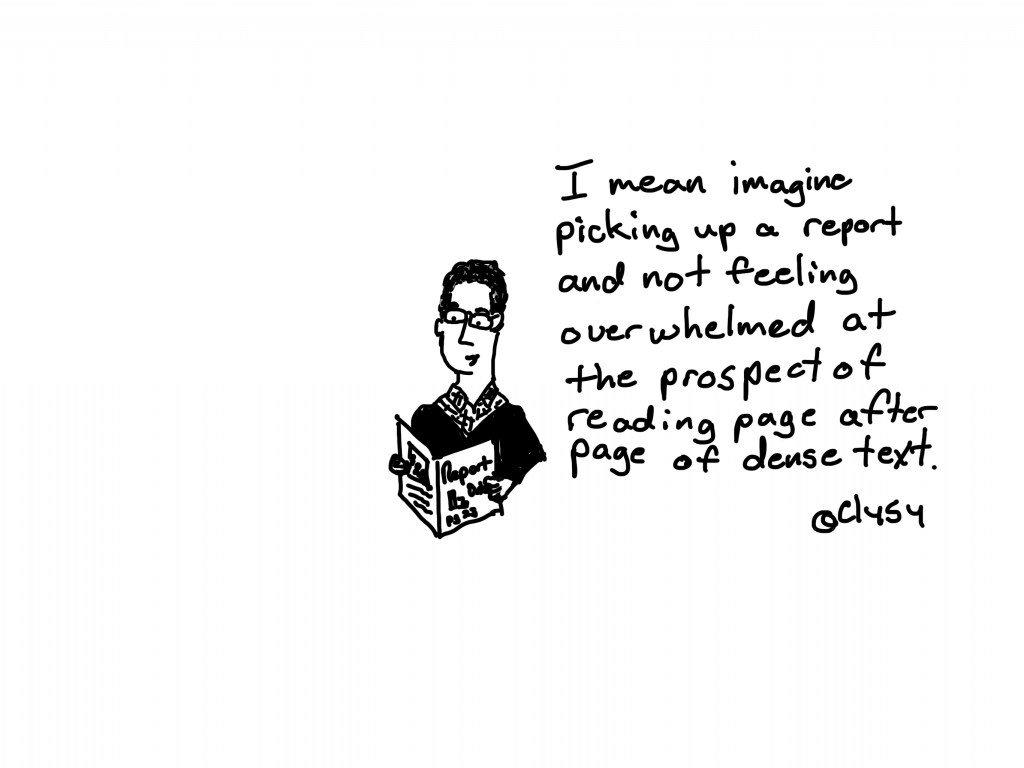
So what if report design was magazine design.
I mean imagine picking up a report and not feeling overwhelmed at the prospect of reading page after page of dense text.
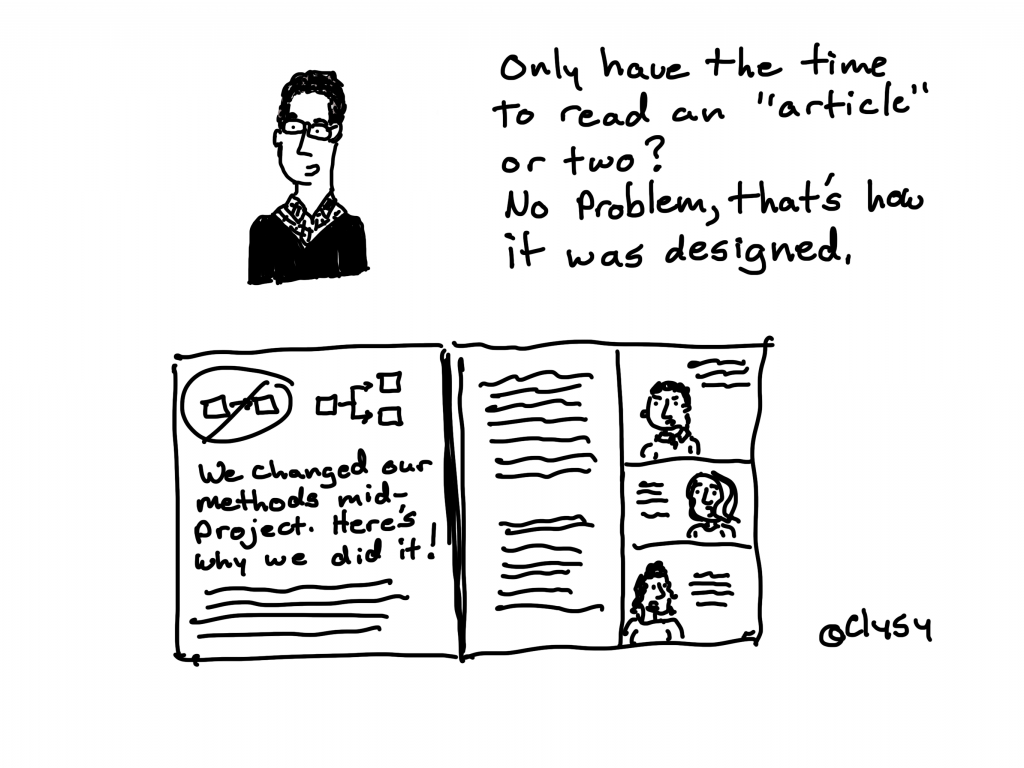
Only have the time to read an "article" or two? No problem, that's how it was designed.
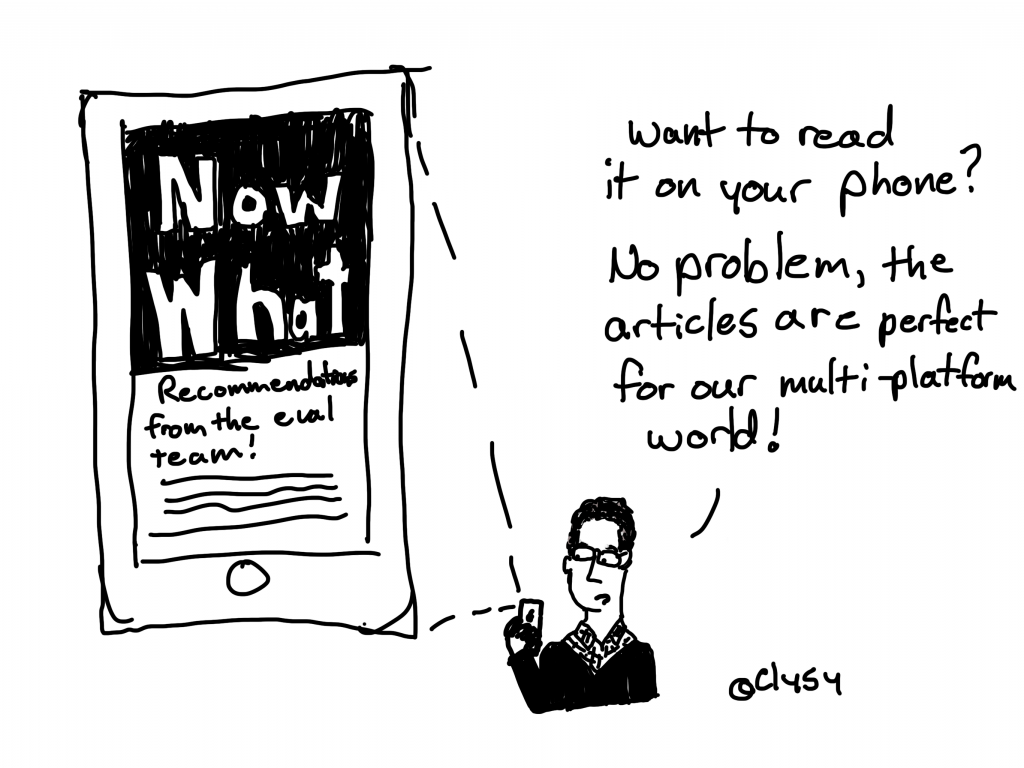
Want to read it on your phone? No problem, the articles are perfect for our multi-platform world!
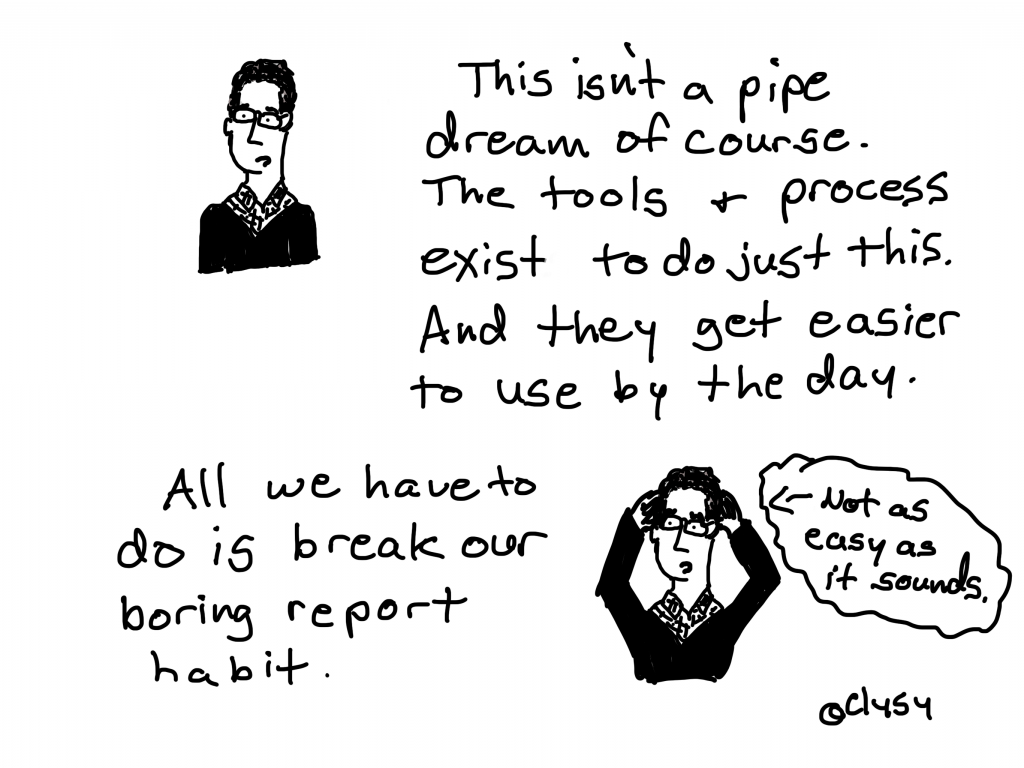
This isn't a pipe dream of course. The tools and process exist to do just this.  And they get easier to use by the day.  All we have to do is break our boring report habit. Not as easy as it sounds.
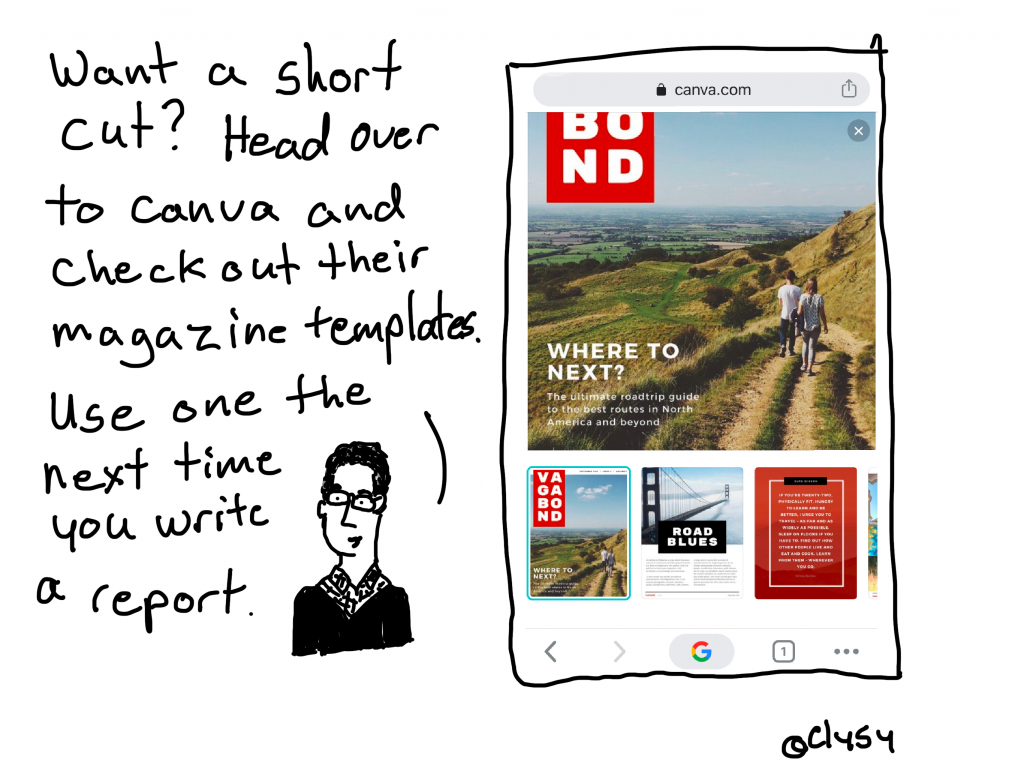
Want a short cut? Head over to canva and check out their magazine templates. Use one the next time you write a report.

Here is a link to Canva magazine templates.

Things to keep in mind when using Canva for this kind of report writing.

  • Magazine templates are shown as covers. But many have internal spreads as well (article templates). Choose a template based on the internal spreads, you can always add a different cover.
  • If a template has a premium stock image it will cost money to download/print. But if you replace out the premium image (or just delete it) the template is free again.
  • Short reports and guides are pretty easy to create this way. The longer the report, the harder it is to use Canva as it starts to get a little too graphically intense for your web browser. If this happens, try breaking it into sections.
  • Write first using Word or some other writing application. Keep it as close to plain text as possible, don’t try to format in Word. Track changes is still useful, especially when team writing. Then copy over the text to Canva for finishing!

Written by cplysy · Categorized: freshspectrum

Jan 15 2020

Ask Nicole: Why Did You Move from New York City to Washington, DC?

Have a question you’d like to be featured? Let me know. After 11 years in New York City, I moved to Washington, DC, on December 30, 2019. I’ve only been here for about 2 weeks, but in that short time, I’ve been asked a variation of the question above. This has been a decision I […]

The post Ask Nicole: Why Did You Move from New York City to Washington, DC? appeared first on Nicole Clark Consulting.

Written by cplysy · Categorized: nicoleclark

Jan 14 2020

Branding and Marketing for Evaluation Consultants


Evaluation Consulting Round-Up

Part 4

image.jpg

“New Directions for Evaluation” is one of the American Evaluation Association’s (AEA) academic journals, and they publish articles on cutting-edge issues in the evaluation world. Recently, they released a special issue focused on being an independent evaluation consultant. This is a round-up of what we learned.

Check out the other articles in this series:
Part 1 – non-evaluation skills you need to be a good evaluation consultant.
Part 2 – managing your consulting business.
Part 3 – maximizing productivity with business processes.
Part 4 – branding and marketing.


Part 4 in this series is about branding your business, and it’s based on the article by Stephanie Evergreen and Nina Sabarre: “Branding for the Independent Consultant: Basic to Advanced.”

As independent evaluation consultants, we might find ourselves working in the “gig economy” – that thrilling and perilous world of odd jobs and short-term contracts (and best of all: freedom). Whether or not you participate in the gig economy, key to success for any consultant is branding: it’s how you tell the world who you are and the unique value you offer. To start thinking about branding, fill in these blanks:

I am known for ______________.

I want to be known for ______________.

Branding is the Uber driver that can get you from where you are to where you want to be. It’s all about getting the world to “see you” the way you want to be seen.

There’s no step-by-step guide to successful branding, but this article will give you some ideas of where to focus your branding at different stages of your business (whether you’re a newbie, a pro, or somewhere in-between).


Newbies

Branding Goal:

Help potential clients find you

If you are just starting out as an evaluation consultant, you will probably focus your efforts on branding basics. That means figuring out what your unique brand is, and making sure it sends the right message about your business. Do you want to be known as dependable? Innovative? Traditional? Exciting? Then you need to make conscious decisions to brand your business accordingly.

Once you figure out the message you’re trying to send, you need to do some brand design. This includes your business name, logo, fonts, colour palettes, and visual elements that will be consistent across all aspects of your business.

Last is brand building: taking all those elements of your brand design and applying them to your website, newsletter, blog, events, presentations, business cards, etc., etc. Pro tip: make sure the website domain you want is available, then buy it before somebody else does.

Depending on the resources you have, you might do all these things yourself, or you might hire some outside help. As a consulting newbie, you might be worried about making all these important decisions about your brand before you’ve really figured out your professional identity. It’s ok! Your brand is allowed to evolve over time, so just do your best with what you know right now.


In-Betweeners

Branding Goal:

Create consistency

If you have a somewhat established business already, and have covered all the branding basics, then it’s time for intermediate branding. The goal here is to create a consistent image for your business so that potential clients know exactly what they are going to get from you. Imagine your potential clients are “window shopping” – this is the stage where you build up what they see when they look through your business’ “window.” Three areas to focus branding on are:

Graphic design styles: Use similar graphical elements across your website, reports, and presentations that all tie into your brand. For example, use a colour from your logo on your business card text to create consistency.

Data visualization styles: Remember that charts and graphs are part of your brand. It’s another opportunity to apply the colours and styles you’ve established in basic branding.

Social media: Use the social media platforms that make sense for your business and the audience you’re trying to reach. For example, Facebook tends to be more personal, Twitter can be casual, and LinkedIn is seen as more corporate (but these aren’t hard rules).


Pros

Branding Goal:

Build lasting relationships

By the time you’ve made a name for yourself (maybe you’re even seen as an expert in your circle), you might think your branding work is done. Nope! There are still things you can do to continue growing and refining your brand. At this point, the goal is less about finding any ol’ clients, and more about finding bigger and better projects by building lasting relationships with clients. Here are four branding ideas for the pros:

Experiential marketing: Think about how you can use real-world or hands-on experiences to build your brand. For example, presentations, trainings, workshops, speaking engagements, and volunteer work (like a pro bono evaluation for a non-profit that aligns with your brand and values).

Swag: Actual physical objects are pretty rare these days, so swag can be effective at making your brand memorable. Again, it’s an opportunity to show your business identity to the world – maybe you give away branded rulers, cookies, post-it notes, candies, lunch kits… the options are endless!

Personal look and voice: Like it or not, potential clients are judging us by the way we conduct ourselves in-person and online. Part of branding is thinking about the image you portray through your clothing, language, and tone (both spoken and written). For example, you might use a signature “voice” in your Tweets and blog posts, or perhaps you have a trademark clothing style.

Process or procedure: By the time you are a branding pro, you might have your own business processes that you follow when conducting evaluations that are uniquely yours. This is the time to put that down on paper and make it part of your brand. For example, Starbucks uses the same process for making drinks every time (they write your name and order on the cup, make your drink, then call out your name), and we come to expect this process as part of their brand.


To summarize, branding is how you show your business off to the world, and when done well, will help attract the right clients. It’s a matter of deciding what message you want to send with your branding, then taking advantage of every opportunity to share it.

image.jpg


Source:

Evergreen, Stephanie, and Nina Sabarre. “Branding for the Independent Consultant: Basic to Advanced.” New Directions for Evaluation 2019, no. 164 (2019): 101–13. https://doi.org/10.1002/ev.20392.


Sign up for our newsletter

We’ll let you know about our new content, and curate the best new evaluation resources from around the web!


We respect your privacy.

Thank you!


Written by cplysy · Categorized: evalacademy

Jan 13 2020

My Most Powerful Reads of the Decade

I love to read. Curling up with a good book and getting lost in the story for hours is pure bliss for me. Of course, adulthood prevents this from being a regular occurrence, but I still treasure the time I spend reading and the lessons I learn from the books on my shelves. 

I was struggling to come up with a topic for this week’s post and decided to look at my notebook of what I’ve read over the years. Given that a new decade has officially commenced, I excitedly realized that I could reflect on my favorite and most inspiring reads from the past decade. If Barack Obama and Bill Gates can share their lists of favorite books, why can’t I? With much difficulty, I chose one book that I read each year that helped me understand the world – and why it is the way it is – with greater clarity and from other perspectives. 

2010: Half the Sky by Nicholas Kristof and Sheryl WuDunn

This book by two acclaimed reporters focuses on how empowering women in developing countries can bring about a reduction of poverty and an economic boost for all. Discussions on the impact of micro-finance – providing small loans to women (or men) to help them start a business, get an education, and/or support their families – and the stories of individual women who benefited it are compelling. The authors show how even minor investments can have a tremendous return – economically and emotionally – for women who have been abused, disenfranchised, or simply undervalued. 

2011: The Immortal Life of Henrietta Lacks by Rebecca Skloot 

As an alumna of Johns Hopkins and a longtime Baltimorean, the story of Henrietta Lacks intrigued me on many levels. Rebecca Skloot’s book talks about how a black woman in Baltimore in the 1950s inadvertently became the foundation of widespread and landmark medical research. Not only did I learn about the HeLa cells (which were removed from her when she was treated for cancer at Hopkins Hospital and used for research without consent) and the science they inspired, but I also got new insights into what Baltimore and Hopkins were like during segregation, how differently black patients experienced medical care than white patients, and how the Lacks family still struggles today. 

2012: The Jungle by Upton Sinclair 

I distinctly remember my 9th grade U.S. History teacher discussing this novel and its implication of the meatpacking industry in the early 1900s. I didn’t think I could stomach Sinclair’s descriptions of “how the sausage gets made” then, but when I read this classic as an adult, I was astonished to learn that this book is about so much more than horrifying practices of Chicago’s meatpacking plants. What struck me most were the immense challenges faced by immigrant communities at the time and the conditions they had no choice but to endure in order to support their families and survive.

2013: Fire in the Ashes by Jonathan Kozol

I would be remiss to not include a book by my hero, Jonathan Kozol. His compassionate and candid discussions of poverty and the unacceptable conditions of educational systems in America have inspired me since I was in college, and I was lucky enough to hear him speak and meet him many years ago. This book commemorates 25 years of his critically important work by following up with the children he befriended and wrote about through his impassioned research and storytelling. 

2014: Education and the Cult of Efficiency by Raymond Callahan 

Although this text was written in 1962, it is still incredible relevant to educational debates today. Callahan reflects on how the “efficiency movement” of the early 1900s influenced the structure of schooling in America. His book shares how the management of time and production efforts in American factories spawned everything from traditional school schedules and bell systems to accountability structures and the desire for measuring … well, everything. Since schools are human-serving organizations and therefore quite different from factories, this book made so much sense to me as a partial explanation for how our educational systems developed in a misguided way. 

2015: Black Boy by Richard Wright

My college professor (and my friend and mentor to this day), Dr. Floyd Hayes, is a Richard Wright scholar and first introduced me to his work. I’ve read many of Wright’s books over the years and in fact started 2020 with one of his masterpieces. Yet Black Boy stuck with me in a profound way. This is Wright’s autobiographical work, and his profoundly moving descriptions of hunger as a child made that phenomenon clear to me in a way that nothing else had. I am fortunate to have always had food on the table, but this book gave me a powerful understanding for those who struggle every day. 

2016: Five Miles Away, A World Apart by James Ryan

Ryan’s book about the differences between two large high schools – one in a suburb and the other in the neighboring city – and the political underpinnings of those differences was not a comfortable read. He describes in detail the way that local, state, and national governments and courts have historically and systematically “saved the cities and spared the suburbs” through damaging, discriminatory policies. These policies and legal decisions, made under the guise of being progressive and helpful, in fact helped to keep our schools and neighborhoods segregated and our non-white citizens disadvantaged. This book, among others read at the same time, completely transformed the way I think about our government, public institutions, and society in general.

2017: We Were the Mulvaneys by Joyce Carol Oates 

This novel follows the breakdown of a once tight-knit family after their only daughter experiences a significant trauma. While I have enjoyed many of Oates’ novels, this one was a particularly compelling illustration of how trauma not only affects the person who initially experiences it, but how it also impacts the entire family system. Told from the perspective of the youngest brother, this is a story that I could not put down and that kept me thinking.

2018: The New Jim Crow by Michelle Alexander

Anderson argues that our country’s horrifying system of mass incarceration is the newest iteration of the Jim Crow laws of the 20th century. She shares compelling parallels between the systems of control, containment, and oppression used during slavery, segregation, and in between, to maintain white superiority and the widespread incarceration of black men that began with the War on Drugs. Her discussion of racism and social control is informative and eye-opening and is a critical read for understanding the dynamics of our current society. 

2019: $2.00 a Day: Living on Almost Nothing in America by Kathryn Edin and Luke Shaefer

​​This had been on my reading list for a few years, after hearing author Kathryn Edin speak at a conference. I wish I had gotten to it sooner, as it was one of the most enlightening books I have read in a while. Edin and Shaefer tell the stories of a number of families who, through circumstances often beyond their control, effectively live without any income. In what seem like unfathomable situations, the parents highlighted in this book dispel stereotypes about people living in poverty or who receive/are eligible for public assistance. I was blown away by the sheer resilience and persistence that these families continually demonstrated, and I learned so much about just how little is done to support those who need it most.
Which books inspired you the most over the past decade? Share your recommendations in the comments!

Written by cplysy · Categorized: engagewithdata

  • « Go to Previous Page
  • Go to page 1
  • Interim pages omitted …
  • Go to page 283
  • Go to page 284
  • Go to page 285
  • Go to page 286
  • Go to page 287
  • Interim pages omitted …
  • Go to page 304
  • Go to Next Page »

Footer

Follow our Work

The easiest way to stay connected to our work is to join our newsletter. You’ll get updates on projects, learn about new events, and hear stories from those evaluators whom the field continues to actively exclude and erase.

Get Updates

Want to take further action or join a pod? Click here to learn more.

Copyright © 2026 · The May 13 Group · Log in

en English
af Afrikaanssq Shqipam አማርኛar العربيةhy Հայերենaz Azərbaycan dilieu Euskarabe Беларуская моваbn বাংলাbs Bosanskibg Българскиca Catalàceb Cebuanony Chichewazh-CN 简体中文zh-TW 繁體中文co Corsuhr Hrvatskics Čeština‎da Dansknl Nederlandsen Englisheo Esperantoet Eestitl Filipinofi Suomifr Françaisfy Fryskgl Galegoka ქართულიde Deutschel Ελληνικάgu ગુજરાતીht Kreyol ayisyenha Harshen Hausahaw Ōlelo Hawaiʻiiw עִבְרִיתhi हिन्दीhmn Hmonghu Magyaris Íslenskaig Igboid Bahasa Indonesiaga Gaeilgeit Italianoja 日本語jw Basa Jawakn ಕನ್ನಡkk Қазақ тіліkm ភាសាខ្មែរko 한국어ku كوردی‎ky Кыргызчаlo ພາສາລາວla Latinlv Latviešu valodalt Lietuvių kalbalb Lëtzebuergeschmk Македонски јазикmg Malagasyms Bahasa Melayuml മലയാളംmt Maltesemi Te Reo Māorimr मराठीmn Монголmy ဗမာစာne नेपालीno Norsk bokmålps پښتوfa فارسیpl Polskipt Portuguêspa ਪੰਜਾਬੀro Românăru Русскийsm Samoangd Gàidhligsr Српски језикst Sesothosn Shonasd سنڌيsi සිංහලsk Slovenčinasl Slovenščinaso Afsoomaalies Españolsu Basa Sundasw Kiswahilisv Svenskatg Тоҷикӣta தமிழ்te తెలుగుth ไทยtr Türkçeuk Українськаur اردوuz O‘zbekchavi Tiếng Việtcy Cymraegxh isiXhosayi יידישyo Yorùbázu Zulu