• Skip to main content
  • Skip to footer
  • Home

The May 13 Group

the next day for evaluation

  • Get Involved
  • Our Work
  • About Us
You are here: Home / Archives for cplysy

cplysy

Nov 30 2024

New template: “Top 10 tips for facilitating an evaluation planning meeting”

This article is rated as:


Eval Academy just released a new, free template: “Top 10 tips for facilitating an evaluation planning meeting”
Top 10 Tips for Facilitating an Evaluation Planning Meeting

Top 10 Tips for Facilitating an Evaluation Planning Meeting

CA$0.00

Curious about how to facilitate effective evaluation planning meetings? Our new template provides clear, actionable steps to ensure your meetings are productive, inclusive, and result-oriented.

Who’s it for?

This template is perfect for:

  • Evaluation facilitators

  • Program managers

  • New and seasoned evaluators

  • Project leads and decision-makers

What’s Inside?

This infographic outlines:

  • The top 10 tips for facilitating evaluation planning meetings

  • Key preparation steps to ensure success

  • Practical advice for conducting and wrapping up meetings effectively


Learn more: related articles and links

  • How to Kick Off Your Evaluation Kick-Off Meeting

  • Evaluation Kick-Off Meeting Agenda (Template)

  • What conversations do you need to have at the start of an evaluation?

  • Information Request Checklist

Written by cplysy · Categorized: evalacademy

Nov 30 2024

Transitioning a project to a new evaluation lead

This article is rated as:


Recently, I took over as an evaluation lead for a large and complex evaluation project. The transition happened suddenly, much earlier than the scheduled date. Thus, we lost much of our preparation time, and I had to take over immediately.

Taking over a complex project has made me realize the importance of preparation and robust project management processes. Managing a program evaluation project requires careful planning, comprehensive communication, and a deep understanding of the project’s objectives, partners, and methodologies. Thus, when I took over the project, I had to learn about all aspects of the project and the evaluation quickly to maintain continuity, quality, and trust. This article outlines my reflections and essential steps for a smooth transition.


1. Preparing for the Transition 

Establish a Transition Plan: Before the transition begins, both the outgoing and incoming evaluation leads should collaboratively create a comprehensive transition plan. Of course, this is best practice and not always feasible during emergencies and/or unplanned staff changes. This plan should include a specific timeline for the handover process and key milestones. It should also clearly outline the duties of both the outgoing and incoming leads during the transition period.

Share Essential Documents with the Incoming Evaluation Lead: If it isn’t already accessible to the incoming evaluation lead, the outgoing lead should compile all relevant documentation. This can include:

  • Project scope and objectives: project description, literature review, Terms of Reference.

  • Evaluation plan and tools: evaluation plan, data collection tools, data files, reports and presentations generated by the evaluation team to date.

  • Project management tools: project management documents such as the evaluation budget, invoices with deliverables and timelines, a list of project partners with roles and responsibilities, and contact information.

In addition, ensure that the incoming evaluation lead has access to all necessary digital tools and platforms used during the project. This includes project management software and data management systems (databases, survey tools, analytics, and reporting software vital for the evaluation process). Lastly, the incoming evaluation lead must have the appropriate permissions and clearance to access the project data.


2. Knowledge Transfer

During evaluation planning and implementation, evaluation leads learn a lot about the project and have an in-depth understanding of the project. It is critical to pass on this knowledge to the incoming evaluation lead as much as possible. An effective way of such knowledge transfer is through a series of meetings between the outgoing the incoming evaluation leads. During these meetings, the following topics should be addressed:

  • Project Background: Discuss the history of the project, including its inception, any changes in direction, and important decisions made along the way.

  • Partner/Client Engagement: Review clients and key project partners, their roles, expectations, and work styles (e.g., how the lead connects with them, how responsive and engaged they are). Discuss any past interactions, covering any formal and informal feedback from clients and partners and future engagement strategies.

  • Timeline of Activities: A timeline visualizing completed and upcoming project milestones.

  • Challenges and Risks: Discuss any ongoing challenges, unresolved issues, and risks associated with the project.

  • Pending Tasks: Identify tasks that are pending or upcoming tasks that require immediate attention.

If it isn’t possible to arrange a series of meetings with the outgoing evaluation lead, you can set up regular meetings with the other evaluation team members. When I took over the project, having a regular meeting with the team was valuable for getting an in-depth understanding of the project and upcoming deliverables. Some details came out during conversations, and I feel those details have enhanced my transition experience, allowing me to feel confident and well-informed. The points mentioned above are still relevant topics to discuss with the team.

If the project was handled solely by the outgoing lead and no one else from your organization was involved in the evaluation, then review their notes and files to learn more about the topics mentioned above.


3. Internal Team Integration

If the incoming evaluation lead is new to the organization, establish a formal introduction opportunity and informal connections to build team rapport. Clearly outline the evaluation team’s roles and responsibilities, including the incoming evaluation lead’s. Discuss as a team the preferred work styles and expectations.

Again, encourage team meetings during the transition to promote open communication. Consider having a frequent team check-in to gain insights, address concerns, and foster team cohesion. Establish a mechanism for team members to provide feedback on the transition process.

I didn’t have to go through the team integration part, as I worked closely with the evaluation team supporting the project (Three Hive Consulting is a small and closely-knit organization). However, for larger organizations, building the evaluation team and making sure they have a good working relationship is essential, as team members need to collaborate and provide guidance to higher-ranking staff.  


4. Client and Partner Communication

Identify key project partners and clients and establish a communication plan to inform them about the upcoming changes. You don’t want project clients and partners to accidentally find out about the transition without following proper protocol. If you are working as an evaluation contractor, swapping staff might be easy and non-issue for some clients, but others might want detailed information about the incoming lead and how they fit in the role. Thus, plan to inform clients and partners as early as possible and per your contract and arrangement. When announcing the change, consider the following steps:

  • Announcement Message: Craft a formal announcement regarding the transition, introducing the new evaluation lead and outlining their qualifications.

  • Engagement Strategy: Discuss how the project will continue engaging clients and partners, ensuring that their needs and feedback are prioritized during the transition.

  • Meetings: Schedule meetings between the new evaluation lead, clients and key partners to strengthen relationships and address concerns.

In my first meeting with the clients and partners, I summarized my background and experience and highlighted my working style. Since I had worked closely with the outgoing lead in the past, I was able to articulate how my evaluation management style differs from and aligns with the outgoing lead’s style. I believe this reassured the clients and partners gave them an idea of my working style.  


5. Continuous Project Management

  • If possible, once the incoming lead has taken over the evaluation project, establish a period of continued support from the outgoing lead to provide guidance and answer questions as they arise. This has been a lifesaver for me as the outgoing lead I was covering for availed themselves to answer my questions after I took over. Sometimes, a 1-minute conversation or a text message can save many hours of frustration and inefficiency.  

  • Solicit feedback regularly from clients, partners and the evaluation team to identify gaps and areas for improvement in the transition process for future evaluations. Incorporate lessons learned into best practices.


Conclusion

Overall, having a good project management and record-keeping system is valuable during planned and unplanned transitions. As the incoming evaluation lead, I was initially overwhelmed by the amount of information and complexity of the projects I inherited. However, my colleague’s meticulous project management system and our organization’s record-keeping processes were a saving grace.

At Three Hive, there are a few things we do as part of project management that made my life easier when I suddenly took over an evaluation project, which include:

  • Having a detailed and updated evaluation plan. Like most evaluators, we are diligent in preparing a comprehensive evaluation plan, with methods, timeline and roles and responsibilities.

  • We often write detailed meeting notes in a shared notebook, highlighting decisions made and actions required.

  • If it’s a large evaluation, we sometimes prepare a monthly status update report outlining risks and mitigation strategies.

  • We keep other team members up-to-date and engaged, often through quick project team huddles.

  • We have a cohesive and supportive team that is willing to provide support as needed. We prioritize work based on need, urgency and time sensitivity.

Overall, transitioning to an evaluation project is hard and time-consuming. It takes a long time for the incoming evaluation lead to settle into their role. I found inheriting a project much more stressful than starting an evaluation project from the beginning. So, prepare as much as possible and give it time and grace!

Written by cplysy · Categorized: evalacademy

Nov 25 2024

Add *Embedded* Captions to Recorded Presentations with Descript

Are you presenting online?

Are you sharing the replays with attendees?

Captions increase the accessibility of our recordings, making it easier for attendees with hearing issues, audio/tech glitches, and non-English speakers to follow our ideas.

In this lesson, you’ll learn about embedded captions with Sue Griffey.

(Embedded captions means that the captions are “stuck” or “burned” inside the video file itself, not as an extra button that viewers have to remember to click.)

https://www.youtube.com/watch?v=YCkqJczsNYY

Resources Mentioned

https://www.descript.com

Transcript

[00:00:00] I’m Ann Emery. You’re watching Dataviz on the Go.

And in this video, you’ll learn about embedded captions from Sue Griffey.

All right. This is a, a progression of how I’ve done in captioning as Ann, working with Ann over the last four years, made me more and more aware of accessibility. And LinkedIn also, who were a couple of years ago, really focused on making sure we caption everything.

Um, I took to the opportunity when I do mentor time, and most of these slides are from the half hour professional development topic I do twice a month, um, to explore how to use My tools and the best tool was Descript because I could use it for editing and it also embeds captions. I wanted them embedded because people I work with globally told me they don’t always have the opportunity to turn on captions.

People get confused in YouTube about where to go [00:01:00] and that way I knew whatever was already done. So, this is now just the last, I would say, four to six months in, because this is a screenshot, and traditionally in the bottom of the screen I would put the footer for whatever reference I was extracting from.

And this is when Descript went from one kind of caption to All sorts of captions. They now have a range of them, and this was the default one. It’s huge, but it was like, I just got to get it done. So I did get it done. Not pretty, but it was there, and I do hear people tell me it’s useful. Then I realized I could take the time to adjust the captions, but what was bothering me was the fact that it overwrites things.

Yes, there was a lot here on this slide, but it What I was saying is this woman has a way to evaluate your biases. You can go see it later. I brought it to [00:02:00] Ann and to Office Hours to say, I really am needing to have captions in a way, and I’m thinking that I need to adjust my, my band at the bottom to make it wide enough just for the captions.

So, I’m I told Ann that I would try it out and then I came to office hours with captions and discovered that, um, with moving it around, I have a 1. 1 inch band at the bottom and Descript will let you do a single line, but sometimes it pushes you to a double line anyway. Add. a readable size. I think this was 36.

And Ann said to me, Sue, wouldn’t it be great if you could, I thought first you were saying, Ann, wouldn’t it be great if you could make the gray match each section, and I have three sections, a blue section, a green, a red section, and a green section. I know, well, I realized that when we talked. You were [00:03:00] saying make it transparent, and could you make the, the, font match what’s the font you use on screen.

Descript lets you change the size of it and it has some fonts, but this font was the closest I found to my font. Um, so this is what I now can do with Descript. I still have one troubleshooting thing. This is with a transparent background, Ann, but it still sort of puts a block around it. It’s like it’s a little darker.

And I don’t know if I’m choosing the wrong transparent and I haven’t had enough time to futz with it. But it now comes up as by itself. Anything that I need to for URLs are now above the red band. And I’m really happy with how it looks. It doesn’t look sloppy. And my, my, basically my available space is in the white.

So I don’t always have full bleed photos unless I’m doing a, a, uh, a [00:04:00] slide separator. But this is how it is, and I’m thrilled with it. I love this progression. I love the idea of just making the footer of the slide. What did you say? 1. 1 inches? 1. 1 inches. Measurement. Yep. Is that set up in your SlideMaster?

It is. Can I show you my SlideMaster? I’m so proud of it. I’d love to see it. Everything matches. Everything’s labeled except the dark red. I thought I had renamed that green, but yeah, I’m so happy with it and it makes me so restful now because I was trying to use a different one for teaching and a different one.

Now I’m like, nope, just one set. So, yeah, that’s, it’s all in there, everything’s set, and no problem with, the only thing I have to do, Descript doesn’t let you set an automatic setting for your captions, you have to choose the caption, I have to change the, um, size, I change the size from 50 down to 28, which is what I want.

[00:05:00] What most of my, this slide, um, the last slide I showed you was. It comes out looking professional and I can manage just fine. Can you talk me through, like, what do I need to do to do the embedded caption magic that you’ve done? I literally don’t know where to click. Yeah, go to the far right. And the second from the bottom choice in that panel, this is called Underlord, has all these helpful things.

And I use the classic one. It’s about two thirds of the way down below the yellow. I use classic. So, click on it so I can show you what comes up in the panel. So, you see it inserts the box, and you can adjust the size of the box. You can move it all the way down, you can make it smaller, you can make it wider.

So click on the, click on the box itself[00:06:00]

and it should, I’m trying to remember where it comes up, maybe it’s, there it is, yeah. So you see it automatically comes up in white and 50 with man rope whatever. So click on the white. Now that’s where I was choosing the transparency next to the Great. To the right of that. I chose that as transparent.

That was the lightest thing I could find. Yeah, and you know, it’s interesting then for me to think through what’s the opposite of that I have to do, because these aren’t slides, this is Excel, so I need the filled background. Right. And then it’s like, where does it fit with the webcam? Because a lot of times in the editing, I’ll go from full screen to the inset webcam and back again to keep it interesting.

Yeah. I think this webcam is set to be Whatever percent in Camtasia, like 25%. So when I do make it small, it is consistently that size. So I literally didn’t even know this was [00:07:00] all possible. This is so fascinating. You move the box over, make it wide, make it small. Yeah. Um, but then let me show you, hit the classic button.

under classic, and that’s where you get the border and the background. So background is where I then, um, yeah. But yeah, that’s your fill color, so you want to change that to black, uh, to, you want to leave that white or whatever. Oh, you’re purple. I don’t think I want to do purple. I think that would be too hard to read.

Um, I’m just noticing they have an upper in here. Oops, I didn’t mean to click on that red. Um, black? No, white. White. White on black. Just go down to the white button. Go to the color panel down below and hit the white button. This is my font color. I don’t know. Font. Black font. Okay, then go to background.

Yeah. White background. [00:08:00] With maybe a hair. Transparency?

Nope.

Yeah, you’ve got, it’s just bolded around, it’s just white around the day, the text itself, not the whole box. Active word, that’s an interesting one. Yeah, there’s, I mean, it’s fun to play with all of these. Yeah. I’m working with someone now who’s neurodivergent and I chatted with her the other day about what’s not working for her in the course, and she loves captions, but I said, do you want it where it highlights each word?

And she said, no, that would be too distracting, so. Do export at the top left. Yep. And then You hit video. I export the transcript first and then I export videos. So, but that’s just me. I like [00:09:00] to have a word doc of everything because people often want to go back and see what the actual wording was that we struggled through on their CVs or whatever.

I think Descript is still the captioning tool. It is. I don’t think there’s one that has more features and more correctness than this one out there. New tech gets invented all the time, but. If anybody here wants to try one, Descript is the starting point. They have a free trial, too. I forget how much it is after that, but I’m sure the site spells out the different levels of subscriptions.

Thank you so much, Sue. You’re welcome. It’s fun to geek out on this.

Written by cplysy · Categorized: depictdatastudio

Nov 23 2024

 La Importancia de Escribir sobre Evaluación y Aprendizaje en Español en la Era de la IA

Soy un nostálgico, quiero seguir pensando que escribir posts en español sobre evaluación y aprendizaje en el sector de la ayuda internacional sigue teniendo múltiples beneficios, tanto a nivel personal como colectivo:

A Nivel Personal

  1. Gestión del Conocimiento Personal:
    • Reflexión y Aprendizaje: Escribir te permite reflexionar sobre tus experiencias y aprendizajes, consolidando tu conocimiento y mejorando tu práctica profesional.
    • Desarrollo de Habilidades: La escritura regular mejora tus habilidades de comunicación y pensamiento crítico, esenciales para un evaluador.
    • Documentación: Mantener un registro escrito de tus ideas y experiencias facilita la revisión y el análisis a lo largo del tiempo, ayudándote a identificar patrones y áreas de mejora.
  2. Visibilidad y Re-conocimiento:
    • Marca Personal: Publicar contenido te posiciona como un conocedor (no se si «expert@» es una palabra adecuada?) tu campo, aumentando tu visibilidad y tu reconocimiento (no porque te lo vayan a reconocer sino porque – quizas – te «re-conozcan» en algun momento).
    • Red de Contactos: Atraerás a otros profesionales interesados en los temas tratados, ampliando tu red de contactos y oportunidades de colaboración.

A Nivel Colectivo

  1. Difusión del Pensamiento Evaluativo:
    • Accesibilidad del Conocimiento: Escribir en español hace que el conocimiento sobre evaluación y aprendizaje sea accesible para una audiencia más amplia, especialmente en América Latina y España.
    • Promoción de Buenas Prácticas: Compartir tus experiencias y lecciones aprendidas puede inspirar y guiar a otros profesionales en el sector, promoviendo mejores prácticas y estándares.
  2. Cambio Colectivo y Gestión del Conocimiento:
    • Fomento del Debate: Tus posts pueden generar discusiones y debates constructivos, enriqueciendo el campo de la evaluación con diversas perspectivas y enfoques (una vez uno de mis posts dio pie a un panel en un evento i).
    • Innovación y Mejora Continua: Al compartir ideas y recibir retroalimentación (aunque en los posts / blogs no suele haber gran retroalimentacion), contribuyes a la innovación y mejora continua en el sector de la ayuda internacional.
    • Construcción de Comunidad: Crear una comunidad de práctica en torno a colegas ineresados o experimentad@s o que escriben temas relacionados, puede facilitar el intercambio de conocimientos y experiencias, fortaleciendo la capacidad colectiva para enfrentar desafíos complejos.

En la Era de la Inteligencia Artificial

  1. Humanización del Conocimiento:
    • Narrativas Humanas: En un mundo dominado por la tecnología, las historias y experiencias personales aportan una dimensión humana que las máquinas no pueden replicar (todavía?) [1].
    • Contextualización: La inteligencia artificial puede procesar datos, pero l@s evaluador@s aportan (todavía?) el contexto y la interpretación necesarios para comprender plenamente los resultados y su impacto[2].
  2. Complementariedad:
    • Sinergia con la Tecnología: Utilizar herramientas de IA para analizar datos y tendencias puede complementar tus posts, proporcionando una base sólida de evidencia para tus argumentos[3].
    • Acceso a Información: La IA puede ayudarte a acceder y sintetizar grandes volúmenes de información, permitiéndote enfocarte en el análisis crítico y la generación de ideas innovadoras.

Referencias

[1] Does the international aid sector need storytelling? – DevelopmentAid

[2] Using language to support humanitarians – Translators without Borders Blog

[3] Evaluation, Accountability and Learning (MEAL) Handbook

Written by cplysy · Categorized: TripleAD

Nov 19 2024

What is adult learning, and its role in evaluation?

This week’s post was written by Chantal Hoff. Chantal is an epidemiologist by training, who works as an evaluator and Senior Consultant at Data+Soul Research. You can learn more about Chantal on LinkedIn and about Data+Soul Research on their website.

How it started: Enthusiasm for evaluation.

At the end of my first year of my first job working as an evaluator, my supervisor was cleaning out her desk. She found her notes from when she interviewed me – “Chantal is VERY enthusiastic about evaluation.”

It’s true! I am very enthusiastic about evaluation.

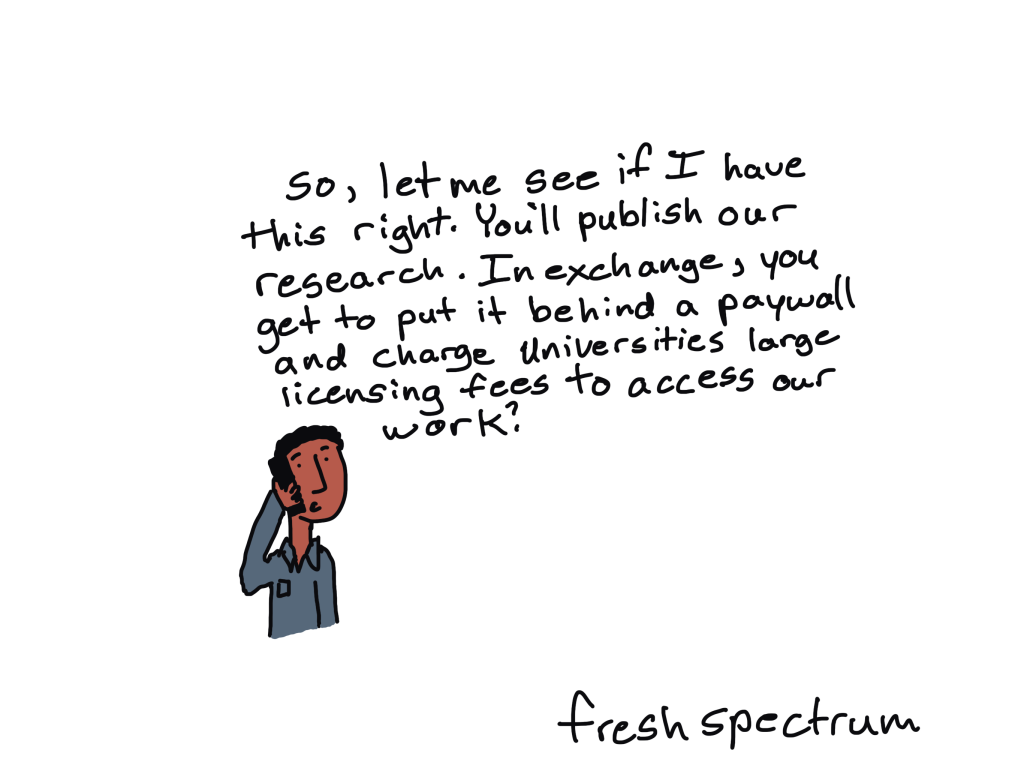
You see, after getting my start in academic research spaces, the appeal of evaluation immediately stood out to me. I was frustrated and disenchanted by participating in research projects that were published in journals behind paywalls and never shared back with the communities they were supposed to serve. I was thrilled to find a field that prioritized the questions that communities were asking and generated findings that could immediately be used to improve programs or services, shift ways of thinking, and shine a light on uncomfortable truths.

Cartoon guy on phone: So, let me see if I have this right.  You'll publish our research.  In exchange, you get to put it behind a paywall and charge universities large licensing fees to access our work.

But, enthusiasm is not always enough.

To me, the value of evaluation was so clear that I was genuinely surprised when I worked with teams who didn’t seem to see the value of evaluation. Sure, they knew the evaluator could help them write their grant reports. But otherwise, couldn’t I just leave them alone to do their important work?

It wasn’t on them to just go along with what I was saying about the importance of evaluation. It was my responsibility to earn their trust and to make the case for evaluation. I realized pretty quickly that a summative evaluation report shared back months after the program ended wouldn’t cut it; I had to show them how they could use and learn from the data they were gathering every week to improve program design and implementation.

Cartoon person talking to people at a table: Thanks for joining me for this evaluation kickoff meeting.

People at table.
Person One: Is this going to take long? I have a lot of important work to do.
Person Two: Me Too.
Person Three is just looking at their phone.

Enter: Adult Learning.

I took exactly one evaluation class in grad school. So, while I was familiar with approaches like “utilization focused evaluation,” I was largely on my own to figure out how to apply it to my current setting. 

I started experimenting – trusting teammates to articulate evaluation questions using their experiences on the ground, using team meetings to build awareness and knowledge around key evaluation concepts, and recognizing skepticism and pushback as valuable insights rooted in experience. I listened closely to their problems and pain points, recognized the many (many!) insights and experiences they were bringing into the work, and, whenever possible, connected the dots to show how evaluation could be a resource for their work.

Little did I know that many of these ideas and concepts were part of something bigger, something that even had a name! Adult learning.

Person talking to a table of three:
Before we wrap up, does anyone have any questions?
One person at table with their hand up: "I do...Why are we here?"

So, what is Adult Learning?

Adult learning theory, or “andragogy,” is the “art and science of adult learning” (as opposed to child learning, “pedagogy”). While Malcolm Knowles is credited with popularizing the idea in the 1970s, a quick search will reveal many adult learning frameworks with different numbers of principles and origins.

While there’s no one specific source or list that I follow, here are a few adult learning principles that continue to resonate with me:

1. Adults bring their backgrounds, experiences, and prior knowledge into learning spaces.

They are not blank slates. Invite them to share their knowledge and create ways for them to build on existing knowledge.

2. Adults are often motivated to learn because they have problems they want to solve.

Listen closely for problems and pain points; if you don’t know, ask! Tailor learning opportunities to help learners solve problems that are relevant to them.

3. Be clear about the “why.”

Nothing is worse than sitting in a sensemaking session or training and wondering, why am I here? Be clear and direct about the purpose behind activities. If the why isn’t clear to you, consider, “should I still be doing this?”

4. Practice makes permanent.

Adults need to practice skills and apply knowledge in order to internalize and integrate learning.

Cartoon person in front of a white board: There are three types of learning theory.
On the board:
Pedagogy: Kids
Andragogy: Adults
Overwhelmedagogy: Distracted People

Even better, these principles complement many other frameworks and approaches that our team uses in our daily evaluation work, including utilization-focused evaluation, culturally responsive and equitable evaluation, human-centered design, and appreciative inquiry.

How do I apply it to my work?

I’ve now had a few roles at a few different organizations since my first evaluation job. In 2022, I made the transition from internal evaluation roles in non-profit organizations to working as a consultant for a small firm that supports non-profits, grantmaking institutions, community-based organizations, and municipalities. Adult learning is now an official part of my job description. 

Here are a few examples of how it shows up:

1. Evaluation technical assistance and coaching.

I support non-profit clients and grantees to design and implement their own evaluations. In kickoff calls, you’ll hear me ask questions like:

  • What prior experience do you have with evaluation? 
  • What’s already working for you? What data systems and learning practices do you already have in place?
  • What are you stuck on? What’s a question that keeps coming up for you? How can evaluation help?

2. Reporting and sensemaking.

When writing reports, I ground myself in what problem our client is trying to solve and what decisions they need to make about it. I tailor the headings and executive summary to tell a brief, compelling story focused on use, while using links to make it easy to navigate to pages with more detail.

In sensemaking sessions, I open with an invitation to share what hopes and burning questions folks would like to explore together. I connect the report findings and visuals to these hopes and questions, and create ample space for folks to process findings and identify shifts or next steps for their work.

3. Workshops and trainings for fellow evaluators.

I had the privilege of co-facilitating a pre-conference workshop at AEA this year; it’s part of a larger training series for evaluators and researchers that Data+Soul Research is rolling out this year. While sharing content and ideas is great, most aha moments come when folks get to put things into practice – whether through individual reflection, sharing in pairs or groups, or using resources to try new practices out with their own teams. 

How is adult learning showing up in your practice? I’d love to hear in the comments below!

Written by cplysy · Categorized: freshspectrum

  • « Go to Previous Page
  • Go to page 1
  • Interim pages omitted …
  • Go to page 28
  • Go to page 29
  • Go to page 30
  • Go to page 31
  • Go to page 32
  • Interim pages omitted …
  • Go to page 304
  • Go to Next Page »

Footer

Follow our Work

The easiest way to stay connected to our work is to join our newsletter. You’ll get updates on projects, learn about new events, and hear stories from those evaluators whom the field continues to actively exclude and erase.

Get Updates

Want to take further action or join a pod? Click here to learn more.

Copyright © 2026 · The May 13 Group · Log in

en English
af Afrikaanssq Shqipam አማርኛar العربيةhy Հայերենaz Azərbaycan dilieu Euskarabe Беларуская моваbn বাংলাbs Bosanskibg Българскиca Catalàceb Cebuanony Chichewazh-CN 简体中文zh-TW 繁體中文co Corsuhr Hrvatskics Čeština‎da Dansknl Nederlandsen Englisheo Esperantoet Eestitl Filipinofi Suomifr Françaisfy Fryskgl Galegoka ქართულიde Deutschel Ελληνικάgu ગુજરાતીht Kreyol ayisyenha Harshen Hausahaw Ōlelo Hawaiʻiiw עִבְרִיתhi हिन्दीhmn Hmonghu Magyaris Íslenskaig Igboid Bahasa Indonesiaga Gaeilgeit Italianoja 日本語jw Basa Jawakn ಕನ್ನಡkk Қазақ тіліkm ភាសាខ្មែរko 한국어ku كوردی‎ky Кыргызчаlo ພາສາລາວla Latinlv Latviešu valodalt Lietuvių kalbalb Lëtzebuergeschmk Македонски јазикmg Malagasyms Bahasa Melayuml മലയാളംmt Maltesemi Te Reo Māorimr मराठीmn Монголmy ဗမာစာne नेपालीno Norsk bokmålps پښتوfa فارسیpl Polskipt Portuguêspa ਪੰਜਾਬੀro Românăru Русскийsm Samoangd Gàidhligsr Српски језикst Sesothosn Shonasd سنڌيsi සිංහලsk Slovenčinasl Slovenščinaso Afsoomaalies Españolsu Basa Sundasw Kiswahilisv Svenskatg Тоҷикӣta தமிழ்te తెలుగుth ไทยtr Türkçeuk Українськаur اردوuz O‘zbekchavi Tiếng Việtcy Cymraegxh isiXhosayi יידישyo Yorùbázu Zulu