• Skip to main content
  • Skip to footer
  • Home

The May 13 Group

the next day for evaluation

  • Get Involved
  • Our Work
  • About Us
You are here: Home / Archives for allblogs / cameronnorman

cameronnorman

Dec 14 2021

Prototype Death Rate

This simple metric can be a big determinant of innovation success.

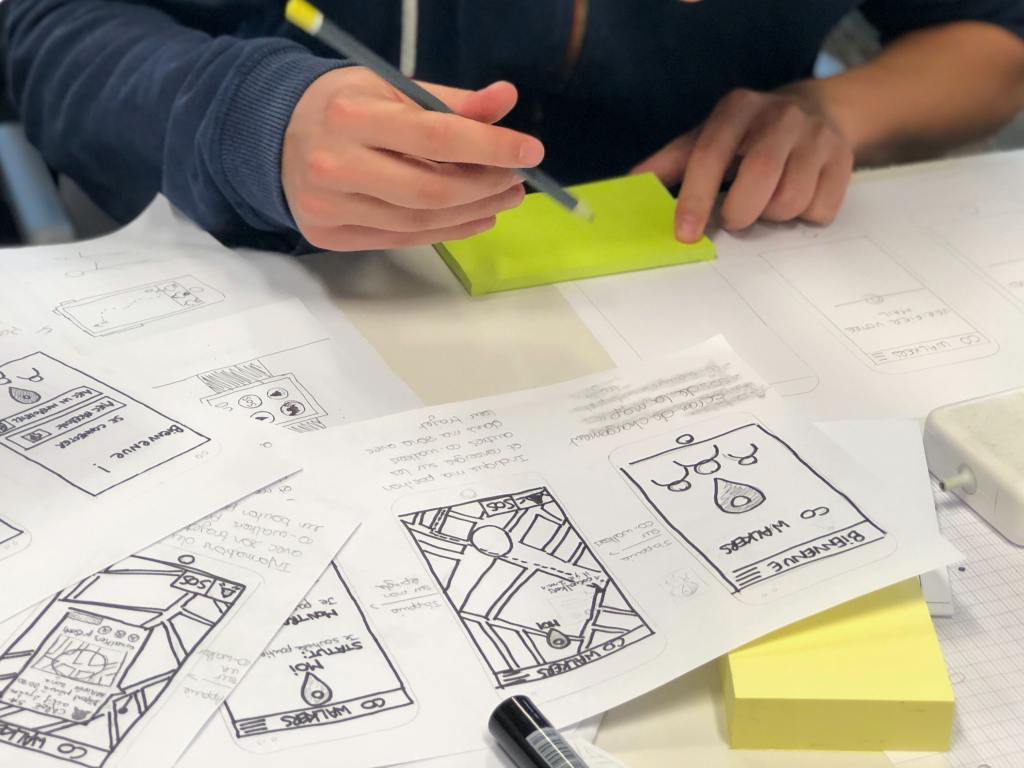
A prototype is developed when you’ve developed an idea to the point where building a conceptual ‘mock-up’ to test and challenge is possible and desirable. A prototype is the conceptual realization of an idea and allows us to test its fit for purpose ahead of full release to assess bugs, defects, flaws, strengths, and gaps in our design and knowledge.

Persistence in design and development is among the top predictors of innovation success. As we’ve heard from others: fail often and fast to succeed sooner.

The Prototype Death Rate is a simple metric that captures innovation attempts, successes, and the responsiveness of an organization.

Simple Math

Divide the number of prototypes that are stopped by the total number of prototypes developed overall.

This metric forces us to ask: what is a prototype? Have we generated one? In many cases, organizations have not fully thought through what a prototype might actually look like. As the UN Refugee Organization writes, a prototype is not a pilot test. What we consider a prototype to be is something that can be debated, but whatever is agreed on must guide design strategy.

The number of prototypes developed can correlate with the amount of attempts and the effort used to bring new ideas into focus and eventual development.

By tracking what is generated and how it is used, we also create a mechanism for responsiveness. We can start to track our progress, our actions, and our outcomes by paying attention to our attempts and their usefulness in results.

Try it out. Start with defining prototypes. Then build an inventory of prototypes and projects. Then do the math.

If you want help setting up your innovation metrics and system for design, reach out to us. We can help — this is what we do.

Photo by Amélie Mourichon on Unsplash

The post Prototype Death Rate appeared first on Cense.

Written by cplysy · Categorized: cameronnorman

Nov 23 2021

Copy Cat: Learning Through Observation

Is there a competitor or colleague that does something you admire? Is there a small pang of jealousy or envy in how another firm does what it does? Rather than lament it, embrace it.

We can channel our impressions of others into benefit if we transform our envy or observations into actions. This is a technique called Copy Cat.

Copy Cat is a simple technique that can be done as part of a monthly review and fit in with your regular strategy and sensemaking sessions. This technique allows you to focus learning on aspects of a competitor or peer’s behaviour and activities that you would like to learn from and maybe copy. Copy Cat is a form of appreciative inquiry. It works by focusing our attention on specific qualities or actions that we can adopt in our organization and practice.

How to be a Copy Cat

Copy Cat involves systematic attention and review of specific organizations and activities you admire or wish to copy. This is a technique based on the psychological concept of modelling and self-efficacy. Copy Cat begins by identifying those individuals, organizations, or groups that we admire or wish to emulate. It may be specific persons or it may also be behaviours or practices.

After we identify what it is that we wish to model, the next step is to begin observing the person/organization/behaviour/practice we are interested in. Literal observation, use of artifacts (e.g., articles, news stories, word of mouth, or marketing materials can all help. Your data gathering should be systematic, but it does not need to be comprehensive.

The next step is to engage in sensemaking. Sensemaking is a social process that allows us to make meaning of what we find. Bring together all your data, share it with those involved (this can be done independently, but is far more powerful in a small group), and make it accessible to everyone involved. Sensemaking helps us to ask questions about what we see and what it might mean for us in our work.

We use Copy Cat to see how others’ actions might apply to our work. Copy Cat provides guidance on what to do and how it can be done.

Applying Copy Cat

When we systematically, attentively watch others using Copy Cat we begin to consider how what we see can apply to us. This is where our design skills come into play.

We ask the following questions:

  1. What resources are employed in these actions? Do we have them?
  2. What knowledge or skills are required to do these activities?
  3. What circumstances are present in these actions? Did they help or hurt what was done?
  4. What outcomes emerged from these actions and can we tell what they are?
  5. What might this look like if we did those actions? What do we need that we don’t have?
  6. What negatives might emerge from these actions?

Copy Cat allows us to dissect the core components of someone else’s actions and consider how we might apply those lessons to our work.

By taking time to do this — we recommend spending 2-3 hours per month on this activity — some distinct benefits can be revealed.

  1. We sharpen our observation skills
  2. We begin learning more about our market
  3. We open our eyes to new ways to do something and the constraints others operate in
  4. It engages us in reflective practice about what we do and why
  5. It keeps us active in our market
  6. It builds systematic learning and praxis into our organization
  7. We enhance our curiosity and use it to channel energy in our organization

This simple method can have enormous benefits for an organization and helping build learning, innovation, and engagement in your people and your market. It requires little in the way of specialized tools and only a small amount of time.

If you want help building this into your learning and innovation practice, let’s talk. This is what we do and we’d love to help you do it, too.

Photo by Jonas Lee on Unsplash and Max Baskakov on Unsplash

The post Copy Cat: Learning Through Observation appeared first on Cense.

Written by cplysy · Categorized: cameronnorman

Nov 19 2021

(At)tractor Beams for Transformation

Many transformation efforts fail because they focus on what people say they want, not what holds their attention and are attracted toward. This is the role of attractors. We’ve written about attractors before and how to map them, however in this post we want to explore how they benefit strategy development more fully.

An attractor is just what it sounds like: something we are attracted to. That might be something positive (an opportunity), an area of activity like a part of the market, or it could be something we fear. The idea of attractors is rooted in complexity science although, unlike many areas within it, the application of our understanding of attractors is actually quite straightforward for decision making. Attractors help to establish coherence. That’s why they are useful in strategy development.

Aside from using it in mapping a system, how might we learn from what people pay attention to rather than what they think? That’s the role of attractors. They focus us on what humans — and by extension, organizations – find important even if they are not conscious of what that might be.

Using Attractors To Focus Discussion and Strategy

Just like the Death Star uses a tractor beam to pull spaceships into its orbit, we can use attractors to help us focus our strategic thinking. The first step is to determine what attractors we have. This might not be conscious — we can often find ourselves unaware of what is driving us. This is where having an evaluation plan can really help.

If not, here’s what we recommend doing.

  1. Talk. Ask questions and open up the conversation about what is not only valued, but what has value. This is about the narrative of what is important — what those stated goals are — and about what kind of evaluation metrics guide decision making. For example, consider a student who focuses on whether they get a grade of 94, an A, or a pass. Each of these are metrics that shape what is valued and what has value.
  2. Observe. This is where evaluation comes in. Evaluation is fundamentally an assessment of what is valued and how that value is expressed. Some say it’s about merit, worth, and significance. Regardless of how you define evaluation, the key is using methods and tools that can help you detect what an organization pays attention to and considers in its decisions. Take for example the role of evidence in decision making. If an organization claims to be evidence based, yet repeatedly neglects its research or fails to invest the energy in reviewing research, it shows that this value isn’t valued in practice.
  3. Sort Once you have the data from what is reported and what is witnessed it’s important to sort and to engage in a form of sensemaking that involves a social process of meaning-making from data that is usually complex and multi-layered. Our attractions and attractors are things that often fit this because they aren’t straightforward. There are issues of what we want and what we actually feel. It’s often why we experience feelings of cognitive dissonance — a separation between what we think and what we do.
  4. Design. The last part is to take what we learn and design a strategy around what we are attracted to — or want to avoid. By being conscious of what it is that we are looking to move toward or from we can be far more intentional in how we go about setting up systems and strategies to get us where we desire. This intention, design-driven process both works with how we are and who we want to be (as an organization or individuals).

Attractors, as their name suggests, can draw us to them and be powerful vehicles for focusing change if we’re aware of them and work with them, rather than against them.

We can help if you want some support in identifying and using attractors as a means to help you learn, grow, and focus your organization and generate impact. Contact us to learn more.

“Strange attractor?” by Kevin Dooley is licensed under CC BY 2.0.

The post (At)tractor Beams for Transformation appeared first on Cense.

Written by cplysy · Categorized: cameronnorman

Nov 04 2021

Five Why’s

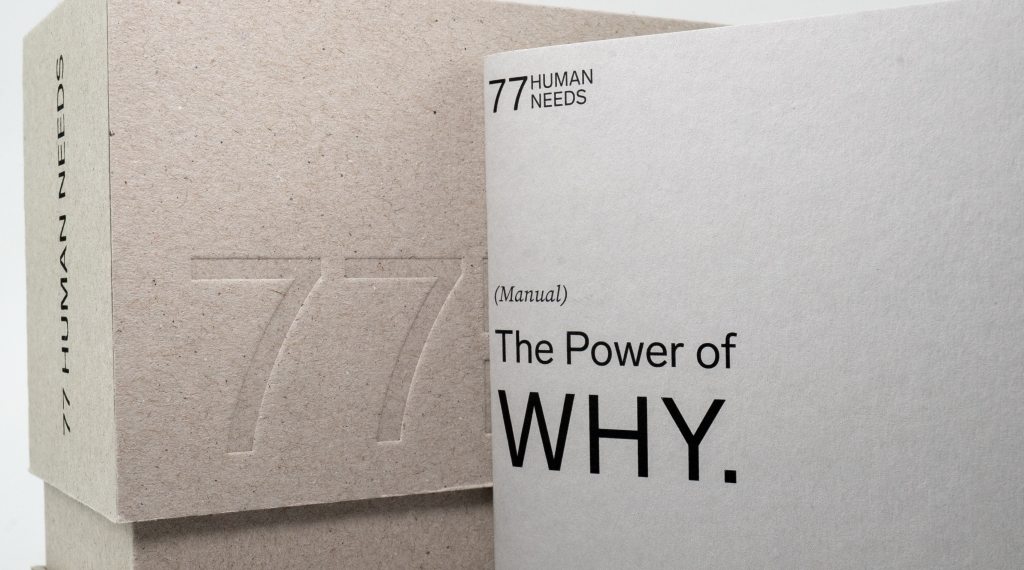
The Power of Why

Children learn a lot and quickly because they are curious. Children don’t stop asking questions, yet as adults we often do. The Five Why’s is a popular, simple, and powerful means to create that childhood sense of wonder and curiosity in your team. It is also a great means to do something called a root cause analysis.

The technique is said to have originated with Toyota, although the exact lineage is a little unclear. If you’ve spent any time around a 5-year old you know this technique by heart.

It starts out like this: Ask ‘Why?’ about something you encounter. Then repeat it for every answer you get up to or past five times.

The Five Why’s is a type of narrative interrogation that allows you to go deeper into understanding the motivations and actions of someone. The Five Why’s is a way for us to learn about what is behind a choice or decision so we can design better for it.

How to Use Five Why’s

The exchange below is based on a real-life example of using this technique. The context was part of a training activity for graduate students with the focus of inquiry on why students chose to pursue graduate studies in design. The program in question largely attracted mid-career professionals who were coming from a variety of different fields to study part-time while they completed their jobs.

Person 1: Question Asker (P1): Why did you choose to enrol in this graduate program?

Person 2: Question Answerer (P2): Because I generally have an interest in design and really wanted to do something that allowed me to be a little more creative.

Commentary (C) : This is the first exchange and focuses on the key question under consideration. Person 2 will respond with whatever they feel is appropriate and it is in this first response that Person 2 will find an aspect of the response that they want to focus on. The next ‘Why’ provides a chance for P1 to inquire about some aspect of this first answer to delve a little deeper.

Second Why

P1: Why is doing something creative important to you?

P2: I don’t have a lot of opportunity to do creative work in my job. I feel I just go through the motions with my job; it’s all very routine. I feel rather bored and unchallenged and I was hoping this program would help that.

C: In this exchange, Person 2 has introduced that creativity is an important part of their motivation to go back to school. The

Third Why

P1: Why do you want to be challenged in your work?

P3: I have a desire to accomplish something. I used to have dreams that I would make a difference in the world and do work that excited me and brought me joy. If I’m honest, I feel like I chose poorly with my career. I did what I was good at, not what I wanted to do.

C: We see here that this learner is addressing larger issues — much closer to the root cause.

Fourth Why

P1: Why was your choice a poor one?

P2: I kept pursuing what others expected of me. I do what others ask of me, not what I really want for myself. I saw this program and thought that this is something that’s important to me, not others.

C: What we see here is that the respondent is opening up about their reasons and connecting them to their career choices. Here, the questioner has many additional avenues to pursue

Fifth Why

P1: Why was it important to do what others wanted?

P2: I always felt I had to please people, especially my parents. They had a tough time and worked so hard to support our family. They were labourers — they didn’t see creativity as something that you could make a living at. I didn’t want to let them down. I felt perusing a creative career would do that and be seen as frivolous.

C: For this learner the choice to pursue graduate studies in design meant far more than a career change — it was a bold personal decision.

Practice Notes

It’s important to note that the pursuit of a root cause can yield some surprising results and that requires some caution. The above exchange got very personal quickly and this can yield some uncomfortable information for some participants. It’s important for facilitators to note that participants should only answer things that they feel comfortable with and should always have the right to pass on a cycle (e.g., do three Why’s instead of five).

Alternatively, there are times when responses do not get detailed and it may take more than 5 cycles to find something closer to a root.

With an understanding of those things that are closer to the root of a situation, the more options there are to design a program or service that meets more substantive needs. Using our example, the graduate program might seek to find ways to market its graduates in ways that can highlight the practical application of creativity. This would fit well with this students’ situation and more underlying motivations and needs.

The Five Why’s are simple to use and powerful in what they reveal. They can bring out your inner five-year old, too.

We can help you ask Why? What? How? and When? as part of our design process. Let us help you — contact us and we can help you implement this method in your work.

Photo by The 77 Human Needs System on Unsplash

The post Five Why’s appeared first on Cense.

Written by cplysy · Categorized: cameronnorman

Oct 26 2021

Fresh Start Effects and Change-Making

“The best time to plant a tree is 20 years ago. The second best time is now”

– The Internet.

The above quote points to two key truths about change-making: It’s always possible to create a new start and starting matters.

If you are looking to create change within your organization, team, or yourself you need to start somewhere. While it might be true that starting saving for your future makes a bigger difference when done early, that doesn’t negate what you can do today.

Starting and Starting Over

We don’t need elaborated moments for making change happen and waiting for the perfect opportunity to take action is usually a means of avoidance. We just need a new beginning.

The good news is that it’s available to us at any time.

Research by Katy Milkman and others has shed light on why we often use significant dates — things like birthdays, anniversaries, or calendar changes – to make a change happen. This is called the Fresh Start Effect.

Milkman’s research suggests people are much more likely to start and sustain changes if anchored to a specific date or event and that using a ‘start’ can enable them to re-start change attempts that fail. Considering that many of our change attempts end in failure, this is significant.

How To Fresh Start

What does a fresh start look like in practice? The first thing is having a date — the planned start to the change. Your date needs to be significant although that significance can be arbitrary. Whatever the reason, your date must have some meaning to you (and those you’re working with).

The second issue is commitment. Take the date seriously. It’s why anniversaries or significant cultural events (e.g., back to school, New Year’s Eve, holidays) are often chosen – they are symbolic.

The third is a need for persistence. Persistence means continually working on the change even if it starts to fail. The exception is if the change no longer is needed. If you fail, start again.

Evaluation is the last thing you need to do. Evaluate your efforts, make the feedback visible, and make changes to your strategy if it is not producing results.

Bring these together and you can create a new beginning today to create a better tomorrow.

Go plant that tree.

Do you need or want help setting this up for you and your organization? We work with leaders, managers, and founders to create change in people and organizations and create a fresh start for them. Contact us to learn more.

Photo by Johann Siemens on Unsplash

The post Fresh Start Effects and Change-Making appeared first on Cense.

Written by cplysy · Categorized: cameronnorman

  • « Go to Previous Page
  • Go to page 1
  • Interim pages omitted …
  • Go to page 8
  • Go to page 9
  • Go to page 10
  • Go to page 11
  • Go to page 12
  • Interim pages omitted …
  • Go to page 21
  • Go to Next Page »

Footer

Follow our Work

The easiest way to stay connected to our work is to join our newsletter. You’ll get updates on projects, learn about new events, and hear stories from those evaluators whom the field continues to actively exclude and erase.

Get Updates

Want to take further action or join a pod? Click here to learn more.

Copyright © 2026 · The May 13 Group · Log in

en English
af Afrikaanssq Shqipam አማርኛar العربيةhy Հայերենaz Azərbaycan dilieu Euskarabe Беларуская моваbn বাংলাbs Bosanskibg Българскиca Catalàceb Cebuanony Chichewazh-CN 简体中文zh-TW 繁體中文co Corsuhr Hrvatskics Čeština‎da Dansknl Nederlandsen Englisheo Esperantoet Eestitl Filipinofi Suomifr Françaisfy Fryskgl Galegoka ქართულიde Deutschel Ελληνικάgu ગુજરાતીht Kreyol ayisyenha Harshen Hausahaw Ōlelo Hawaiʻiiw עִבְרִיתhi हिन्दीhmn Hmonghu Magyaris Íslenskaig Igboid Bahasa Indonesiaga Gaeilgeit Italianoja 日本語jw Basa Jawakn ಕನ್ನಡkk Қазақ тіліkm ភាសាខ្មែរko 한국어ku كوردی‎ky Кыргызчаlo ພາສາລາວla Latinlv Latviešu valodalt Lietuvių kalbalb Lëtzebuergeschmk Македонски јазикmg Malagasyms Bahasa Melayuml മലയാളംmt Maltesemi Te Reo Māorimr मराठीmn Монголmy ဗမာစာne नेपालीno Norsk bokmålps پښتوfa فارسیpl Polskipt Portuguêspa ਪੰਜਾਬੀro Românăru Русскийsm Samoangd Gàidhligsr Српски језикst Sesothosn Shonasd سنڌيsi සිංහලsk Slovenčinasl Slovenščinaso Afsoomaalies Españolsu Basa Sundasw Kiswahilisv Svenskatg Тоҷикӣta தமிழ்te తెలుగుth ไทยtr Türkçeuk Українськаur اردوuz O‘zbekchavi Tiếng Việtcy Cymraegxh isiXhosayi יידישyo Yorùbázu Zulu