• Skip to main content
  • Skip to footer
  • Home

The May 13 Group

the next day for evaluation

  • Get Involved
  • Our Work
  • About Us
You are here: Home / Archives for allblogs / cameronnorman

cameronnorman

Feb 04 2022

Unpacking Change

Change through design is the fundamental feature of innovation. This page and the innovation toolkit that it’s a part of are one of the ways we seek to share our experience of innovation.

Innovation is very natural, but also something we can learn.

To provide alternative ways to learn about innovation and change-making we’ve launched a new podcast. Rather than serving as another web-based radio show, Censemaking is designed to do more. It’s a short-form summary of a new idea in practical change-making every episode.

The first season of Censemaking is focused on the fundamentals of change. Each episode in the first season will focus on one of the ten central pillars of change. Episodes are about 10 minutes long and, just like Censemaking itself, meant to be enjoyed over coffee or over your next break.

Ten Factors for Change

The ten factors of change are both individual and contextual and will be covered in each episode in the first season. These factors are:

  1. Knowledge. The bedrock – no knowledge or no change.
  2. Skills. How we apply knowledge and transform it into activities, action, and change. 
  3. Tools. These tools are what allow us to transform our knowledge and skills into something.
  4. Confidence. Confidence is the bridge between our dreams and vision and our capacity to undertake the work needed to make them real.
  5. Outcome Expectations. We are more likely to hit what we aim for than not.
  6. Time & Space. This is the most under-appreciated and poorly understood concept when it comes to real innovation.
  7. Conditions. Having the right conditions to innovate and having that creation play a useful function when those you seek to serve are ready is as much alchemy as it is science. That doesn’t make it worthy of neglect and it’s something we can design for.
  8. Social Support. Great change doesn’t happen working alone.
  9. Environment. The space around where we work — the context — matters.
  10. Glue. This highly non-technical concept reflects how we line things up together to hold them. This is our strategy and the design for how we transform it and learning into real change.

The podcast is introduced and hosted by Cameron Norman, our President, and this first episode explains how this came about and introduces these ten factors.

Photo by Erwan Hesry on Unsplash

The post Unpacking Change appeared first on Cense Ltd. .

Written by cplysy · Categorized: cameronnorman

Feb 02 2022

Design Thinking Practice: Designing for What’s Next

What does it mean to take Design Thinking and actually apply it in the world?

This was the subject of a series of webinars hosted by the Tamarack Institute for Community Engagement. The webinars featured Co-CEO Liz Weaver speaking with Cense Ltd. President Cameron Norman.

In this first in a series of posts, we outline the key steps in applying design thinking in practice by looking back at this series and begin with the idea of designing for what’s next.

A Framework for Change

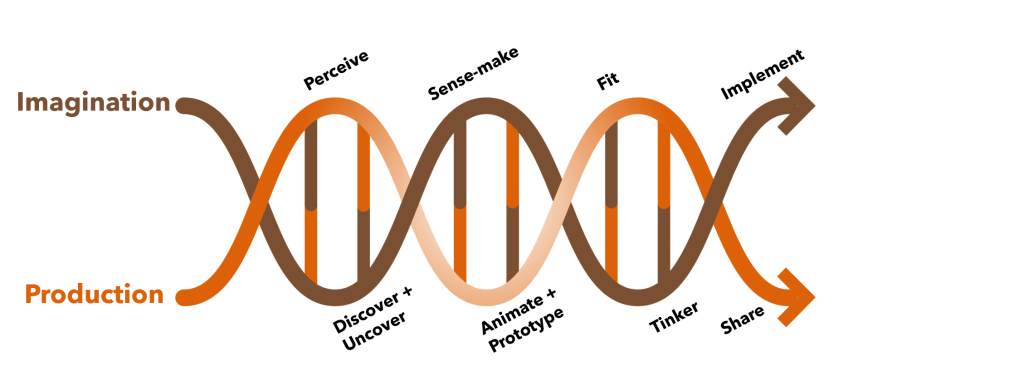
The series was set up by a look at designing for what’s next. In this discussion, Cameron Norman introduces the Design Helix – a multi-stage framework for putting design thinking into action.

The Design Helix (below) is based on our two decades of experience designing products, services, and systems at Cense and reflects the literature on design and design thinking. It’s a framework – a means of thinking about design — and not a prescription.

This multi-stage framework is designed like a helix partly to reflect the very fact that most of what humans engage with is created (designed). Design is at the DNA core of what we humans generate into the world — for good or otherwise.

The helix has two major strands that are tied together by activities that go in sequence but may have greater or lesser roles as one progresses through them. The framework is meant to guide design and provide a means to account for the key aspects of the design process. It is not prescriptive in the methods that articulate this design practice. Many different methods can be used to support this work.

Designs are rarely ‘one and done’ and are iterative, thus the helix actually winds its way around and connects multiple iterations together as illustrated in the image below.

Designing What’s Next introduced attendees to this design helix and what it means in practice. The helix will be further discussed and elaborated in a second series that we’ll cover in future posts. A recording of the conversation is below.

We will look at this process in greater detail in future posts as we walk through this series on applying design thinking and reviewing the Design Helix.

For more information on this approach and to apply it to your work, contact us. This is the approach we take with our clients and train those working alongside us.

The post Design Thinking Practice: Designing for What’s Next appeared first on Cense Ltd. .

Written by cplysy · Categorized: cameronnorman

Jan 27 2022

Third Position Strategy

When we are in a complex situation with much going on dividing our experience into halves is not often useful. How often have you encountered an either/or situation where neither option is particularly attractive?

Thinking in triads is far more useful for understanding complex situations. One of the simplest ways to do this is to adopt a Third Position. The third position is meant to create a simulated space for generating new insights and observations that are taken from a third-person perspective, that is not your own. Nor, is it of the competing party or those looking to take a contrary position.

The Third Position is not to be confused with the political movement of the same name, rather it is a means of framing negotiations and for scenario development.

How to take the Third Position

The strategy works in three steps.

  1. Recognize a context where you can observe something as a third party that you are / or were involved in. This could be some kind of interaction or a decision context. Create a vivid recollection or even write down what this scenario looks like and note what you are thinking, observing, and feeling. Also note what contrary or challenging positions there are to the one you are stepping away from.
  2. Next, try to step away from this position and shed any sensations you might have from the first scenario and bring in a curious attitude by asking questions about what you see, feel, sense, and experience from that first step. What does this look like and feel?
  3. The third step is to evaluate what you perceive from this ‘third position.’ Note where there are points of agreement, disagreement and where there are new insights that are not explored by either of the two sides. This allows you to see things from a dispassionate perspective and notice things that might influence how either of the two parties might be making a decision. This could include things like understanding the role of stress, situational factors like time pressures, or information and knowledge gaps that are previously unrecognized.

The Third Position is away of gaining alternative perspectives on a situation when there is no reliable third party to observe. It’s a means of doing checks on your thinking and actions as well as anticipating or hypothesizing what others might be doing. It’s useful for checking assumptions and recognizing where there are gaps in our understanding and knowledge.

By learning these and becoming aware of them we can better avoid the problems they create and take advantage of the benefits they offer.

Photo by Joshua Hanks on Unsplash

The post Third Position Strategy appeared first on Cense Ltd. .

Written by cplysy · Categorized: cameronnorman

Jan 07 2022

Clarifying Your Intent and Impact

There are a handful of universal practices that transcend technique, tools, and strategy. Paying attention is one of these. Choosing what to pay attention to is more tricky.

Intentional practice is just as it sounds: do something with purpose. This sounds simple — it is simple– but it’s among the most powerful practices for discovery, innovation, and performance. Being intentional requires that we know what we value, what value we seek to create, and how well we are doing.

This allows us to apply methods like the Copy Cat Method to learn from others. Our intentional practice also leverages something called attractors — energy directed toward an activity.

Noise Reduction

Noise — unhelpful information in its relevance, salience, or quantity – is everywhere. We find noise almost everywhere. Noise increases as data is generated and shared. Our ability to attend to it all is compromised by the volume available to us. What intentional practice does is it forces us to consider what is most important and when.

When we are intentional about what we are doing we create a noise filtering system that allows us to better judge data.

Getting intentional means being clear on what you want. It’s about working as an organization to ask explicitly about values and the kind of impact desired.

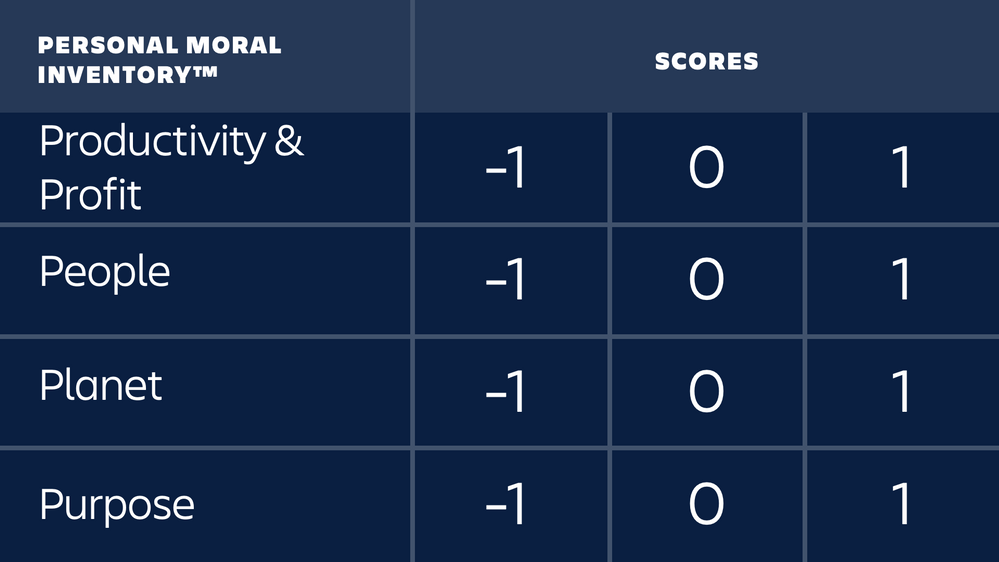
A useful tool to help this along is a variation of the Personal Moral Inventory Checklist developed by Dom Price. This checklist basically requires us to assess our performance across four different areas of impact outlined in the image below.

PMI.png
(See Atlassian’s article on the topic)

This tool designed for individuals can be modified for organizations in helping to generate a connection between the choice of activities and the perceived impact of those activities. This can only be done by creating a tighter, simple coupling of activity, intent, and perceived impact.

Using Simple Inventories

What the above inventory does is make things simple, reduce noise, and focus us on the core principles and values of our work. We recommend using something like this — there are many options — as part of a values and value clarification exercise. Bring together your team and give some time to ask yourselves three questions:

  1. What do we stand for?
  2. What kind of impact do we want to express through that stance
  3. How well are we doing?

These simple questions can help you to clarify your core beliefs and values, determine what kind of value you wish to create through your work, and assess progress on those values. It’s simple, powerful and something that ought to be done every 6-12 months to best capture variation, changing circumstances, and provide a means to calibrate your strategy and operations.

If you want help facilitating this process in your organization. Contact us and let’s talk.

The post Clarifying Your Intent and Impact appeared first on Cense Ltd. .

Written by cplysy · Categorized: cameronnorman

Dec 30 2021

Habit Design: A Starting Place

Among the greatest means to promoting sustained behaviour change is to create healthy (beneficial) habits. The science of behaviour change provides many recommendations for how to form, break, and maintain good habits.

While we often believe that beliefs change habits, we often find that behaviours themselves can just as profoundly affect our beliefs.

There are many ways to shape the design of habits with good research and we’re going to introduce you to a few of them.

  1. Pay attention. The first step toward understanding habits is recognizing which ones we have — as individuals and organizations. Doing sufficient research to observe and record the degree to which we perform an activity repeatedly is essential. A habit is something that requires little or no conscious decision-making. It’s not that we don’t know it doesn’t exist, we just do it with the most minimum amount of ‘friction‘. Observation, recording, and reflection all contribute to this part of the process.
  2. Model the benefits. All of our habits benefit us in some ways. The key is to determine what those benefits are and if those habits are harmful or detrimental to our goals. By knowing what we are doing we can begin to change what we do. By understanding the benefits of harmful or unproductive habits we can also start to determine how we might be able to replace them down the road with our designs.
  3. Understand history. How salient is a habit? Once we know what we do, it’s important to see how strong habits are. For example, someone who started using cigarettes two weeks ago will have a different habit structure than someone who’s smoked for 25 years. Whether its consumer habits, health, productivity, or otherwise, the salience and strength of a habit is tied partly to a person’s history with that behaviour.
  4. Model the context. It’s not enough to know what we do, it’s important to understand what context we do it. The environment is a powerful force in shaping what habits we engage in and to what degree. By understanding our context, including how and what triggers our habit, we can start to begin to re-design this context. This can be done by tracking what behaviour is performed, where, and what other variables were present at the time.
  5. Identify leverage points. A leverage point is something that can be adjusted — amplified or reduced — that can yield large benefits indirectly within a system of activities. Most of what we seek to change is one behaviour among many that are, as we’ve seen, often connected to one another. For example, to use the cigarette example, many smokers cite drinking alcohol as a co-habit (the two are done together). In this case, reducing or changing the way one behaviour is done can also affect the other. This is called habit stacking. It’s having one behaviour affect another .

By engaging in systematic inquiry — observation, interviews, surveys, or reflective practice — we can start to illuminate some of these powerful hidden forces that shape and direct our choices and behaviour.

Try these methods out. The application does not need to be complicated, just systematic.

Need help or want more detailed design research to help your organization change and design for something different? We can help you – contact us.

Photo by Drew Beamer on Unsplash

The post Habit Design: A Starting Place appeared first on Cense Ltd. .

Written by cplysy · Categorized: cameronnorman

  • « Go to Previous Page
  • Go to page 1
  • Interim pages omitted …
  • Go to page 7
  • Go to page 8
  • Go to page 9
  • Go to page 10
  • Go to page 11
  • Interim pages omitted …
  • Go to page 21
  • Go to Next Page »

Footer

Follow our Work

The easiest way to stay connected to our work is to join our newsletter. You’ll get updates on projects, learn about new events, and hear stories from those evaluators whom the field continues to actively exclude and erase.

Get Updates

Want to take further action or join a pod? Click here to learn more.

Copyright © 2026 · The May 13 Group · Log in

en English
af Afrikaanssq Shqipam አማርኛar العربيةhy Հայերենaz Azərbaycan dilieu Euskarabe Беларуская моваbn বাংলাbs Bosanskibg Българскиca Catalàceb Cebuanony Chichewazh-CN 简体中文zh-TW 繁體中文co Corsuhr Hrvatskics Čeština‎da Dansknl Nederlandsen Englisheo Esperantoet Eestitl Filipinofi Suomifr Françaisfy Fryskgl Galegoka ქართულიde Deutschel Ελληνικάgu ગુજરાતીht Kreyol ayisyenha Harshen Hausahaw Ōlelo Hawaiʻiiw עִבְרִיתhi हिन्दीhmn Hmonghu Magyaris Íslenskaig Igboid Bahasa Indonesiaga Gaeilgeit Italianoja 日本語jw Basa Jawakn ಕನ್ನಡkk Қазақ тіліkm ភាសាខ្មែរko 한국어ku كوردی‎ky Кыргызчаlo ພາສາລາວla Latinlv Latviešu valodalt Lietuvių kalbalb Lëtzebuergeschmk Македонски јазикmg Malagasyms Bahasa Melayuml മലയാളംmt Maltesemi Te Reo Māorimr मराठीmn Монголmy ဗမာစာne नेपालीno Norsk bokmålps پښتوfa فارسیpl Polskipt Portuguêspa ਪੰਜਾਬੀro Românăru Русскийsm Samoangd Gàidhligsr Српски језикst Sesothosn Shonasd سنڌيsi සිංහලsk Slovenčinasl Slovenščinaso Afsoomaalies Españolsu Basa Sundasw Kiswahilisv Svenskatg Тоҷикӣta தமிழ்te తెలుగుth ไทยtr Türkçeuk Українськаur اردوuz O‘zbekchavi Tiếng Việtcy Cymraegxh isiXhosayi יידישyo Yorùbázu Zulu