• Skip to main content
  • Skip to footer
  • Home

The May 13 Group

the next day for evaluation

  • Get Involved
  • Our Work
  • About Us
You are here: Home / Archives for allblogs / freshspectrum

freshspectrum

Jun 15 2021

Evaluation Subcontracting Business Model

Have you ever noticed how the large well-known consulting firms seem to consistently get the biggest contracts. How is a small business even supposed to compete?

Maybe you’re not. But if you can’t beat ’em, join ’em.

In this post:

  • Why the big companies tend to get the big contracts.
  • The subcontracting business model.
  • What are small business set asides and how do you specialize your services.
  • How to follow the money and search for existing contracts.
  • Rates, contract types, and other contracting things.
  • Preview of this week’s awkward evaluation networking session.
Why big companies get the big contracts?

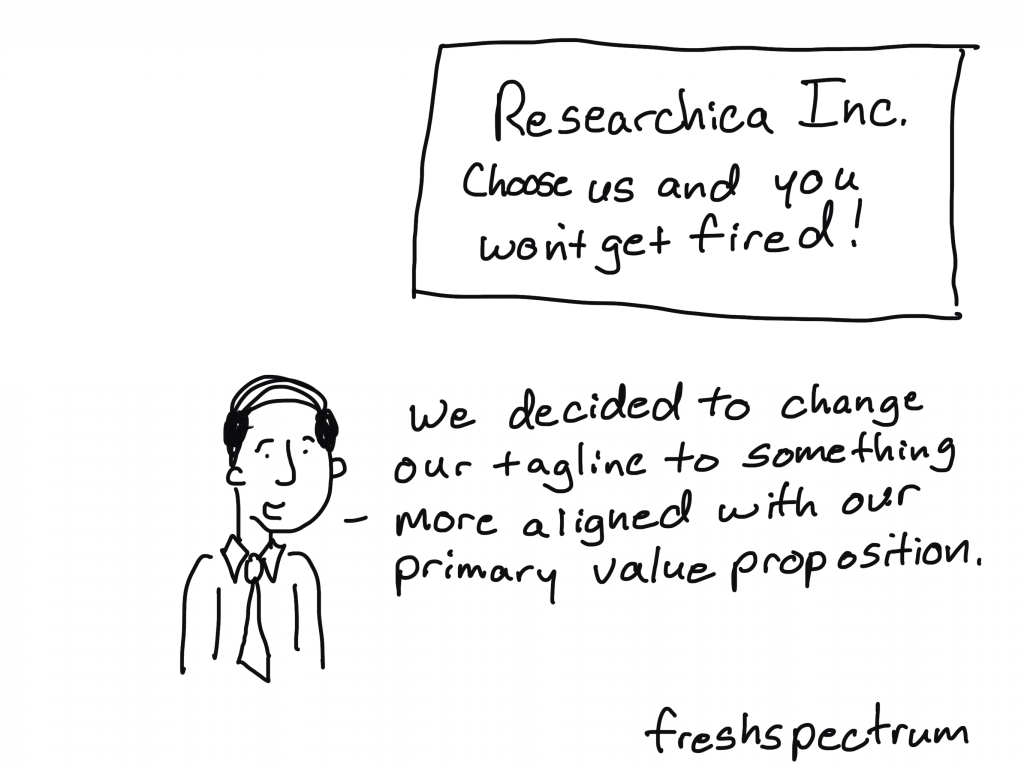
You don’t get fired for hiring IBM.

Quoting one of my mentors, she adapted this from an IT industry catch phrase, “Nobody ever got fired for buying IBM.”

Let’s say that two experienced IBM employees decided to leave their positions and start a consulting business. Their idea was to offer consulting, the same thing they did for IBM, but for half the cost of what IBM would charge. In their minds it was a win win. They make more money and the client spends a lot less.

Same people, less money, win, win, right?

Except here is the problem. For the person hiring the consultants there is a big difference between hiring IBM to do the work and hiring two people who used to work at IBM.

As a former mentor of mine would say, “you don’t get fired for hiring IBM.”
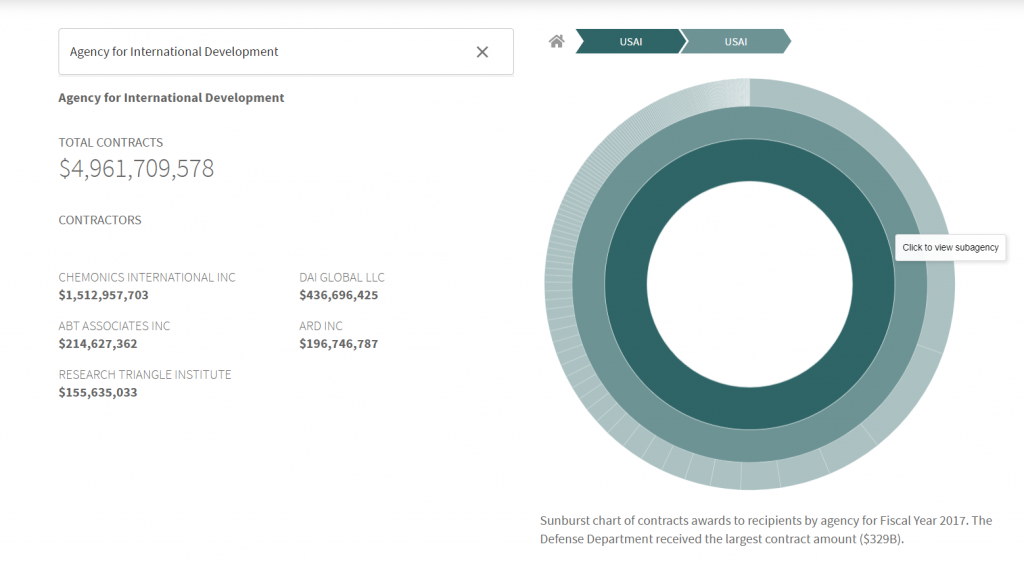
One contractor, Chemonics International Inc, received 1.5 billion dollars, over 30% of USAID’s contract awards in fiscal year 2017.

There is a reason that big consulting firms tend to win the big contracts. The client, let’s say the federal government, knows that if they choose one of their reliable steady partners, the work will get done. It might not be cutting edge and you could possibly get the work done cheaper elsewhere, but if your principal investigator retires, or the programmers quit, you know the positions will get refilled and the work will get done.

So this leaves you, as a small business person, with a choice.

You could fight the big competitors by pulling together an all start team and taking your best shot at a bid on that large federal contract.

Or, you partner with the big organization who has already shown they can win this kind of big contract.
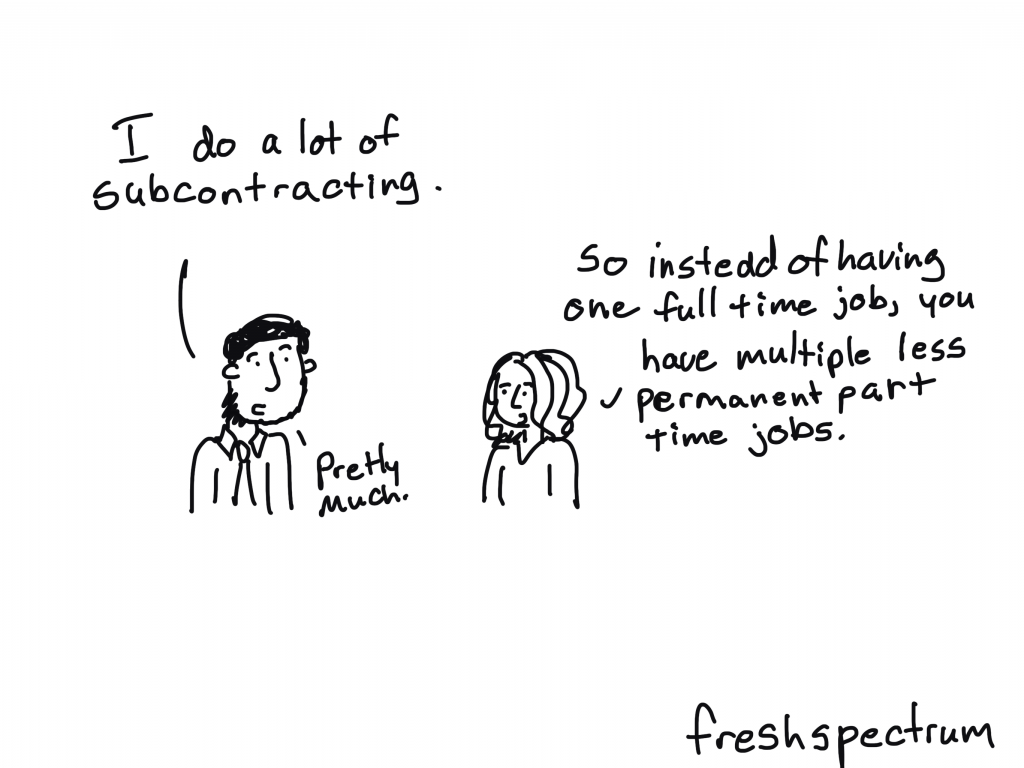
The Subcontracting Business Model

Be the remora, not the shark.

As an indie consultant or small business, you don’t need to win big contracts on your own to make enough money in the consulting world. Sometimes you don’t even need to participate in the proposal writing, just lending your name, bio, and resume can be enough if it adds something to the bid.

A successful subcontracting business model usually involves two things.

  • Being Special
  • Being Known

Let’s talk about how to do that.
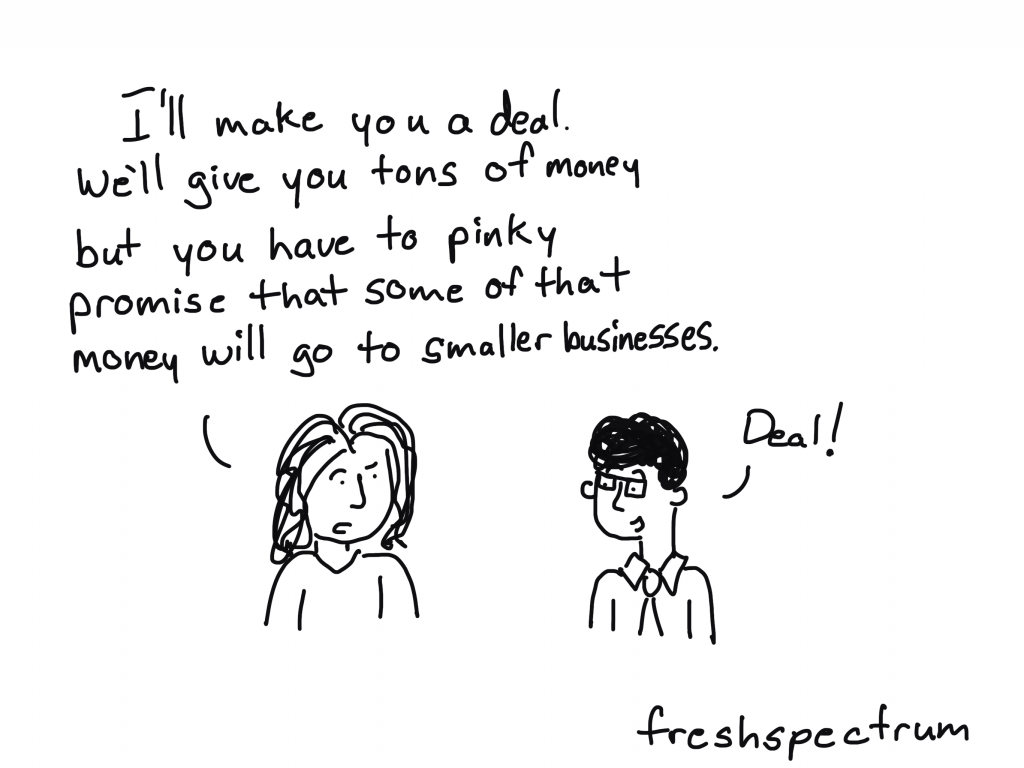
What are small business set-asides?

The federal government prefers to contract with small businesses whenever possible. Contracting officials can use set-aside and sole-source contracts to help their agencies meet their small business contracting goals.

How you should offer a contract will depend largely on two factors:

>The number and type of small businesses that are able to do the work
>How much the contract is worth

Set-aside Procurement from the SBA

The federal government does hire a lot of big companies to do their work. But that doesn’t mean that there is no support built into these contracts to assist small businesses.

Small business set-asides are designed to push government agencies to work with smaller contractors. In addition to opportunities designed specifically for bid by small businesses, requirements are also built into larger cooperative agreements. Those larger contractors need to meet their small business set-aside numbers or face penalties.

Also, all small businesses are considered in the same way. Generally there are six federal classifications for small businesses.

Small Business (SB), Small Disadvantaged Business (SDB), Women-Owned Small Business (WOSB), Historically Underutilized Business Zones (HUBZ), Service-Disabled Veteran-Owned Small Business (SDVOSB), and Veteran-Owned Small Business (VOSB). If you want to do business with the federal government, and any of that is you, you can register at the SAM website.
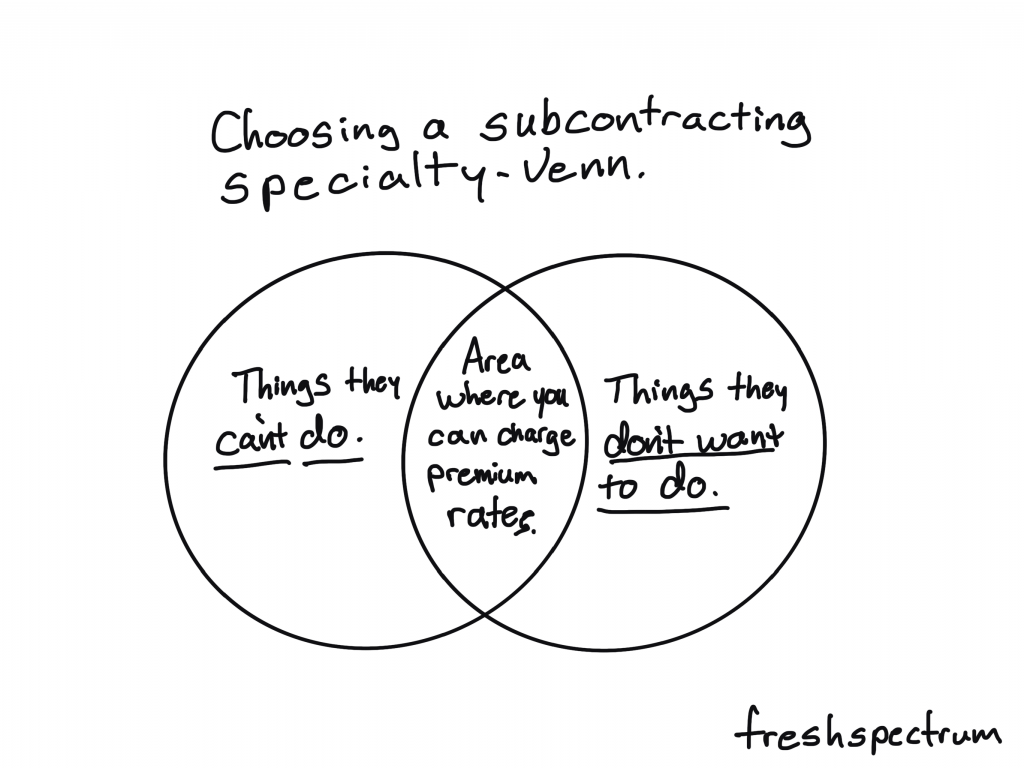
How to specialize your services.

Even the biggest consulting organizations have plenty of skill gaps.

Your best approach to securing more subcontracts is to offer something that the big organization cannot. Or offer something that the big organization does not have an interest in doing.

In my own work I tend to focus on services that fall into the overlap between design, tech, and evaluation. In larger organizations research/evaluation program staff, IT staff, and design/communications staff work out of different silos. If a project requires IT, you reach out to the IT team. If it requires design, you reach out to the design team.

But where they get thrown off is when something requires a mix of design, IT, and evaluation expertise. All of a sudden you need a room full of people to do what would be a simple project for someone like me. Plus, that room full of people can be filled with egos and occasional infighting because of office politics.

Sometimes an organization will subcontract, not because the organization doesn’t have the skill set (or a desire to develop the skill set) but because they would rather work with the people in the partner organization than certain people in their own.

Following the money and making new friends.

Lots of large consulting organizations have small business liaisons and offer partner applications on their websites (here is one for the aforementioned Chemonics). If you know you might want to work with an organization, you should know the liaison and put in a partnership application.

From my experience, I find it’s better to know the actual people doing the work that you would like to support. Making direct connections with people who run funded projects or people who bid on (and win) the kinds of projects you would like to support.

It’s easier to get paid consistently as a subcontractor if you can make yourself part of the original project bid. This requires relationship building, and collaboration. Use targeted networking strategies to get in front of the right people.

Exploring contract wins.

The federal government spends about $500 billion each year on contracts – that’s roughly the size of Sweden’s economy.

Ever wonder who’s getting federal contracts and what agencies are awarding them? This tool lets you explore contract-related information for FY 18, including which organizations received federal contracts, contract amounts, awarding agencies and sub-agencies, and the types of goods or services contract recipients provided to the federal government.

Contract Federal Explorer – USASpending

The good thing about federal spending is that there is a public paper trail.

You can find loads of information about the organizations receiving federal money through search at usaspending.gov. Through keyword searches you can find awards that match the type of work you support.

Once you find an interesting contract, go further and search some of the special numbers you’ll find, like the Procurement Instrument Identifier (PIID). Not only will you be able to find out what awards an organization receives, but how it plans to do the work, and how much it plans to pay it’s staff for different objectives.
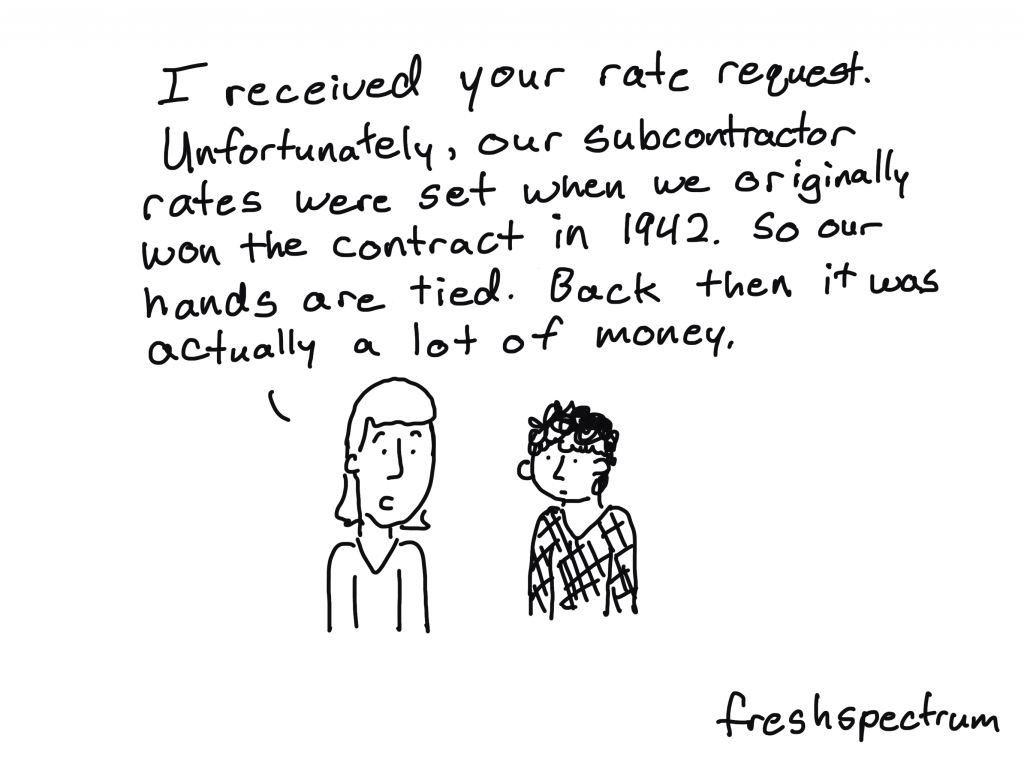
Rates, contract types, and other contracting things.

When working on Federal government contracts, some of your possible rates are going to be based on certain bureaucratic pay tables. This can limit some of your leverage as a professional, but it can also make your rate setting easier.

If your work requires travel, make sure to check out the GSA’s per diem rates.

There is a lot to learn when it comes to federal contracting. You don’t need to know it all to work as a subcontractor, but being informed about the type of contract/pay structure can certainly help you decide how target your services.
This week’s awkward evaluation networking session.

Join us for this week’s awkward evaluation networking session, on Wednesday, June 16 at 2PM Eastern. There is no featured networker this session but we do have a starter topic.

This week’s starter topic: Evaluation Subcontracting

You can register for the series and RSVP for the session, here: https://evaluationworkshops.com/p/evaluation-networking
Written by cplysy · Categorized: freshspectrum

Jun 09 2021

The Hotel Bar of Evaluation Communities

The last few weeks…a recap.

  • Launched a new evaluation networking group (Awkward Evaluation Networking).
  • Had our first virtual get together (went well, looking forward to the next one).
  • Planned the second virtual get together (today, Wednesday, June 9 at 3PM).

This afternoon at 3 we’ll have our second Awkward Evaluation Networking webinar. George Mount of Stringfest Analytics will open up the event with a short talk about his new book Advancing into Analytics: From Excel to Python and R.
Then we’ll dive into some conversation and open networking. You can register here.

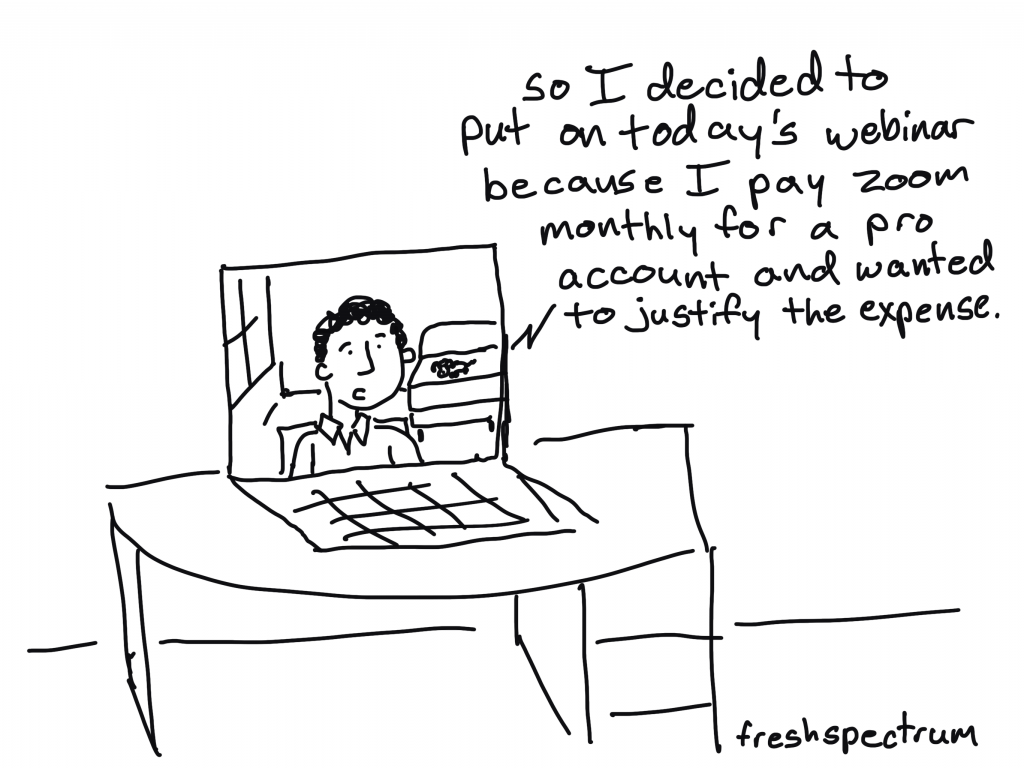
Freshspectrum Cartoon by Chris Lysy - So I decided to put on today's webinar because I pay zoom monthly for a pro account and wanted to justify the expense.

Online Community is a Webinar

For all the fanciness of new-fangled online community software, there is one lesson I’ve learned in the past that keeps getting reinforced.

If you want to build an online community, you should start with a webinar series.

Community sites, forums, blogs, and email listservs can be awesome tools, but it’s too easy to hide. To lurk instead of participate. To avoid the awkwardness that is necessary for connection.

It’s harder to hide on a webinar, especially if you use breakout groups and call on people to participate by name. Sure it can be uncomfortable, but it’s necessary.

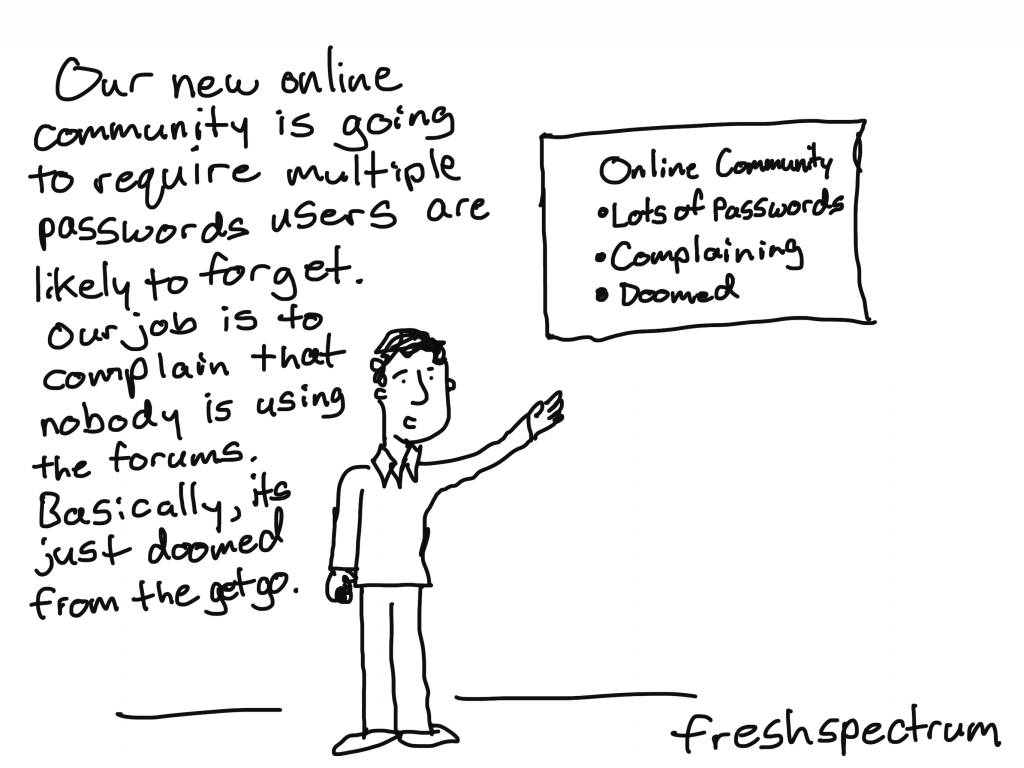
Freshspectrum Cartoon by Chris Lysy - Our new online community is going to require multiple passwords users are likely to forget. Our job is to complain that nobody is using the forums. Basically, it's just doomed from the get go.

The Hallway between the Webinars

Once people meet and open up to one another, then you need additional space where they can deepen their relationships.

At a conference this is the hallway between the rooms, the hotel lobby, or the hotel bar. This is where you can reinforce connections. The spot where you can follow-up with that person who shared an interesting story or connect with the presenter to ask your more specific questions.

This is the part that is often missing in the virtual world. It’s not the place to start, but it can be helpful to help the community grow.

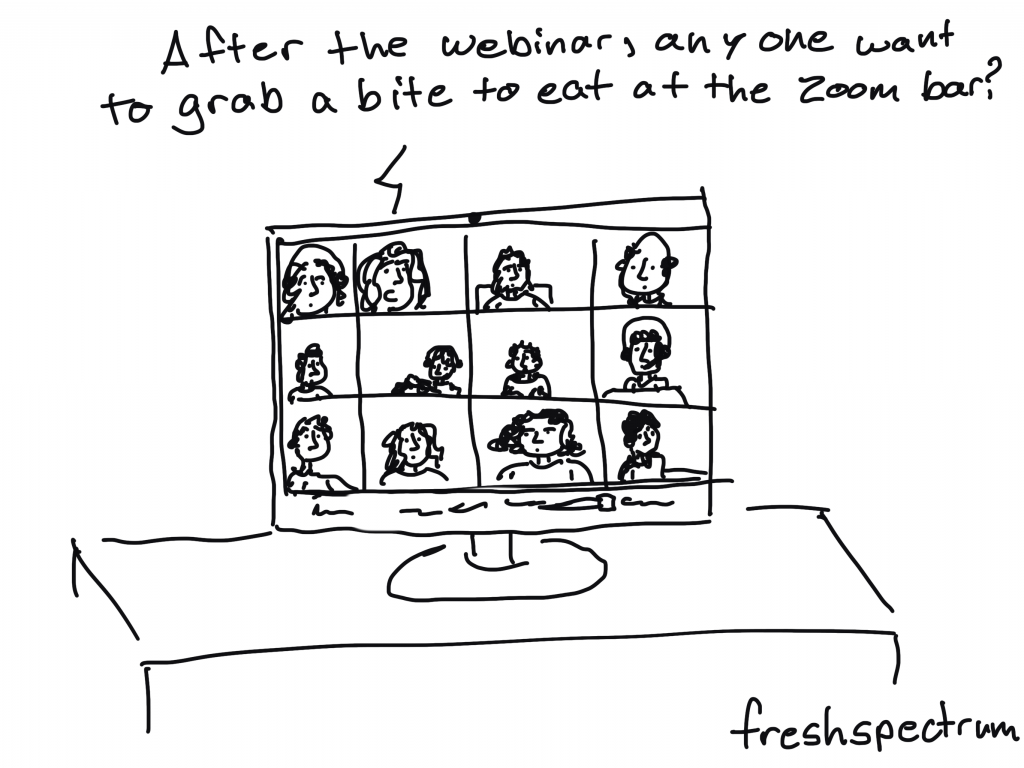
Freshspectrum Cartoon by Chris Lysy - After the webinar, any one want to grab a bit to eat at the Zoom bar?

Introducing the freshspectrum Community.

Consider this the hallway between the webinars.

Or maybe the hotel bar of evaluation communities.

It’s also a space that will tie together all of my personal digital initiatives.

What you’ll find.

  • Featured cartoons (I’ll share a few cartoons each week, some new and some from the archive)
  • An open evaluation networking section, designed to go in tandem with the live webinars but open to everyone.
  • A spot for my Cartoon patrons to request cartoons and get access to my cartoon dropbox folder.
  • An EvalCentral section, where you can submit your evaluation blog or suggest other evaluation blogs for inclusion.
  • An Evaluation Workshops section, where we will hold private discussion communities for people enrolled in the workshops I create for other evaluators (and for my own).
"Hello Neighbor Come on In" Sign.
Check out the New Community Site!

Written by cplysy · Categorized: freshspectrum

Jun 02 2021

Evaluation People

What makes a person an evaluator?

Is it the job they do? Is it the training they received in grad school? Is it through membership in a big professional association like AEA? Is it because they’ve taken enough courses and paid enough money to get a certificate from somewhere like the Evaluators’ Institute? Did they pass a test and get a professional designation?

Or is it something deeper, more personal. An artist can be an artist without ever selling a painting, can the same be true for an evaluator?

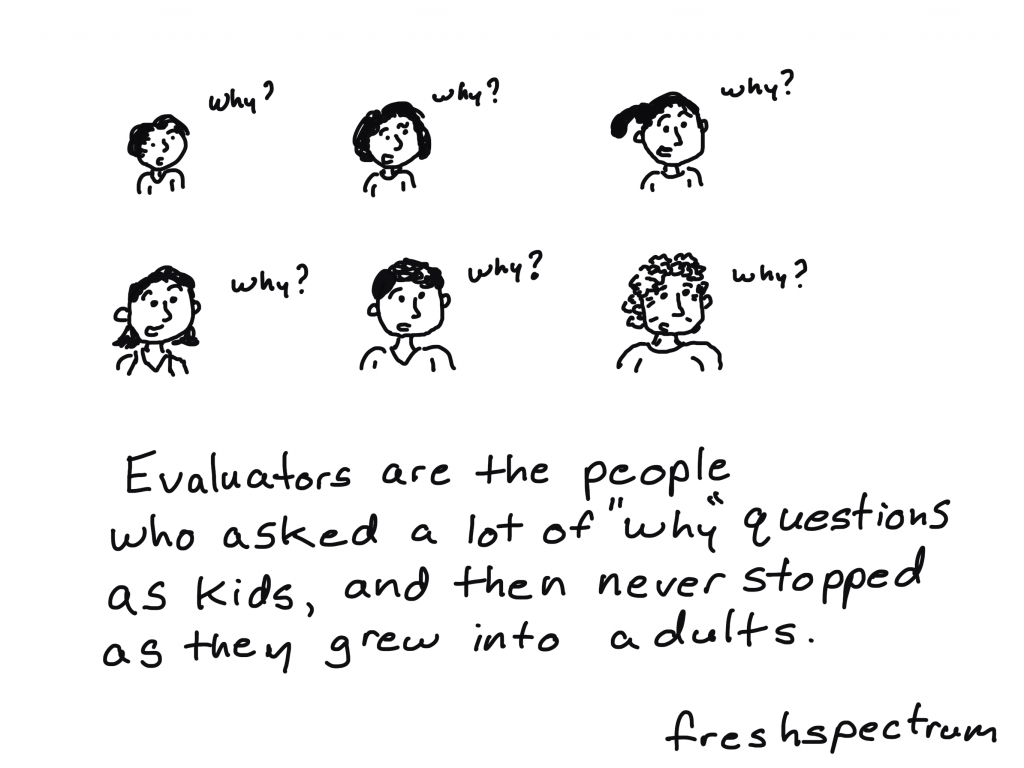
Freshspectrum cartoon by Chris Lysy. Evaluators are the people who asked a lot of why questions as kids, and then never stopped as they grew into adults.

I don’t have those answers.

Really, it’s weird that I draw evaluation cartoons.

My career has been a mix of professions. Over the past few years I have spent far more time designing/developing digital content, devising online strategies, and facilitating virtual communities of practice than I have evaluating anything.

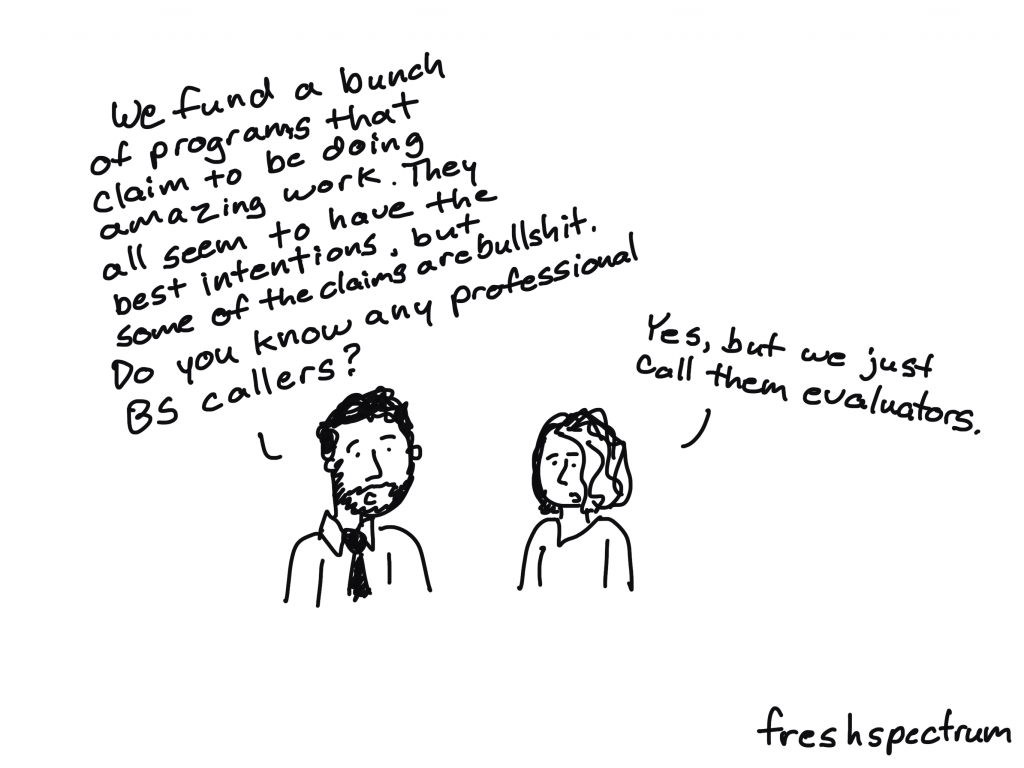
Freshspectrum cartoon by Chris Lysy. We fund a bunch of programs that claim to be doing amazing work. They all seem to have the best intentions, but some of the claims are bullshit. Do you know any professional BS callers?
Yes, but we just call them evaluators.

I studied sociology in grad school. Most of my evaluation knowledge is self taught or drawn from personal experience.

I have only published an evaluation journal article once, and that was years ago now. Occasionally I’ll pick up a journal and skim an article or two. But only to try and get inspiration for more cartoons.

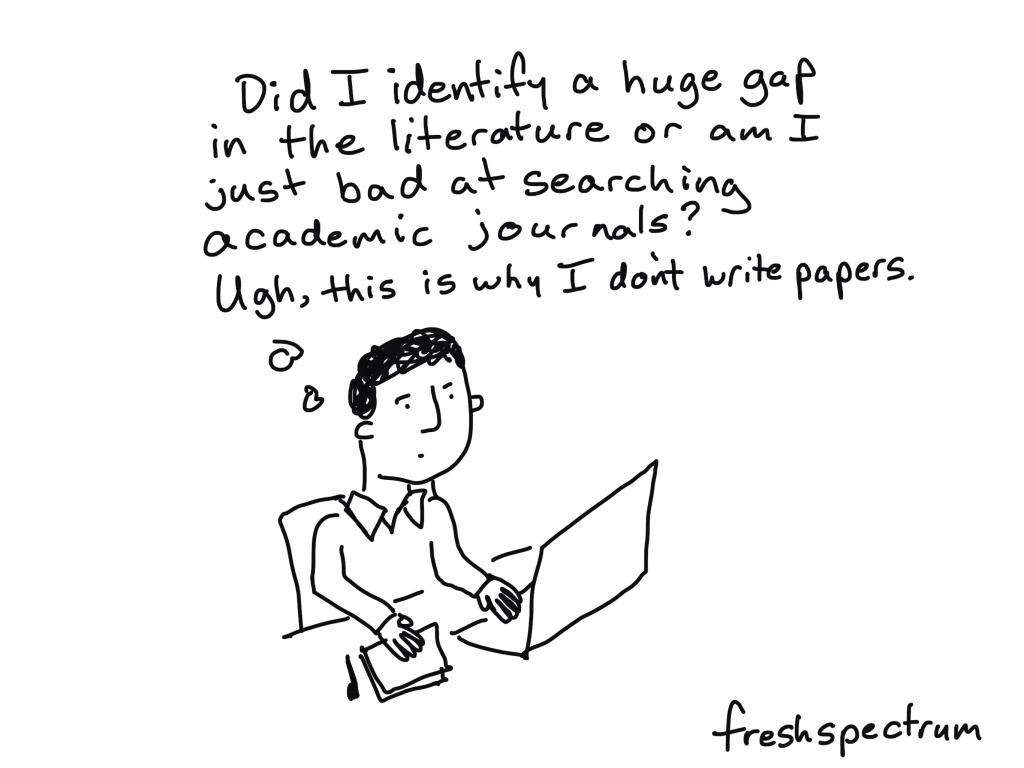
Freshspectrum Cartoon by Chris Lysy. Did I identify a huge gap in the literature or am I just bad at searching academic journals? Ugh, this is why I don't write papers.

I can’t help but feel like an imposter. Or at least I would if the evaluation community wasn’t so welcoming. And that’s really what’s kept me here over the years, the people.

When I connect with my evaluation friends I learn new things. They notice stuff that other people don’t notice. They go deeper down rabbit holes when most other people would just let it go.

Evaluation is such a diverse field, with all sorts of people doing all sorts of interesting things. But when hanging out with evaluators I feel a sense of shared spirit, of belonging, that I don’t get when I join friends in other fields.

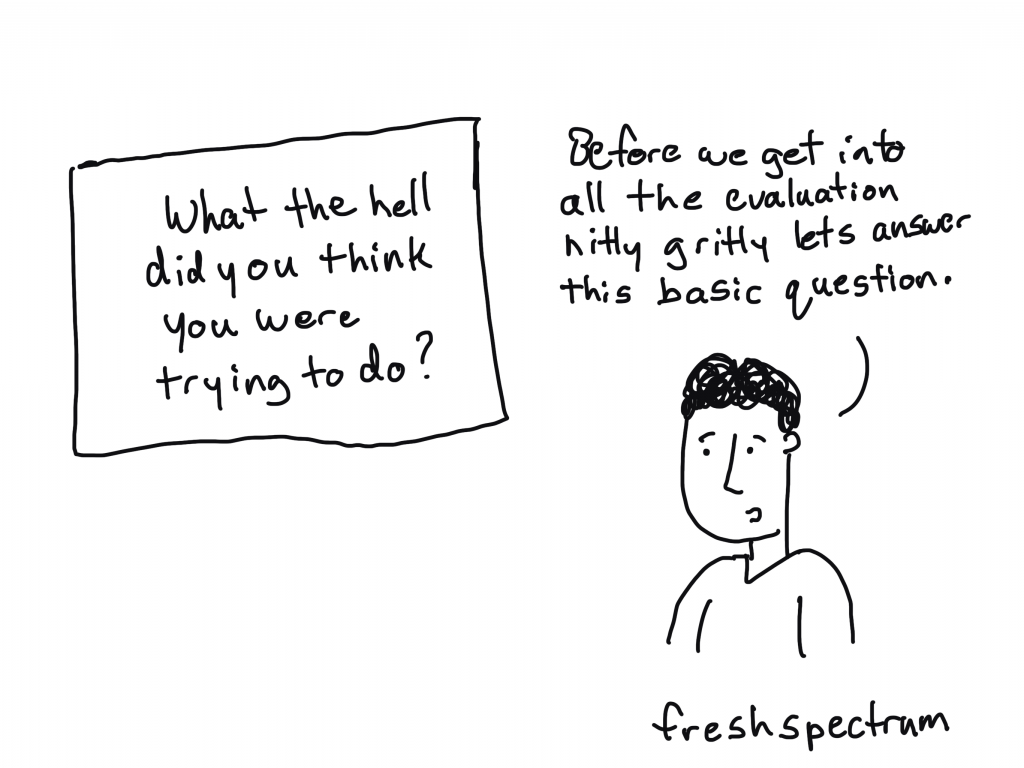
Freshspectrum cartoon by Chris Lysy. Before we get into all the evaluation nitty gritty let's answer this basic question.
What the hell did you think you were trying to do?

In all my other fields, people just seem to be so busy doing things. And they seem to spend a lot less time reflecting on what it is they are trying to accomplish.

It’s in the times that I’ve ventured into other communities that I’ve felt the most like an evaluator. Sure I could fit in talking UX design, developer-speak, social media stuff, entrepreneurship, or eLearning. But in all of those spaces I couldn’t help but notice questions that weren’t being answered. Or often, the questions that weren’t even being asked.

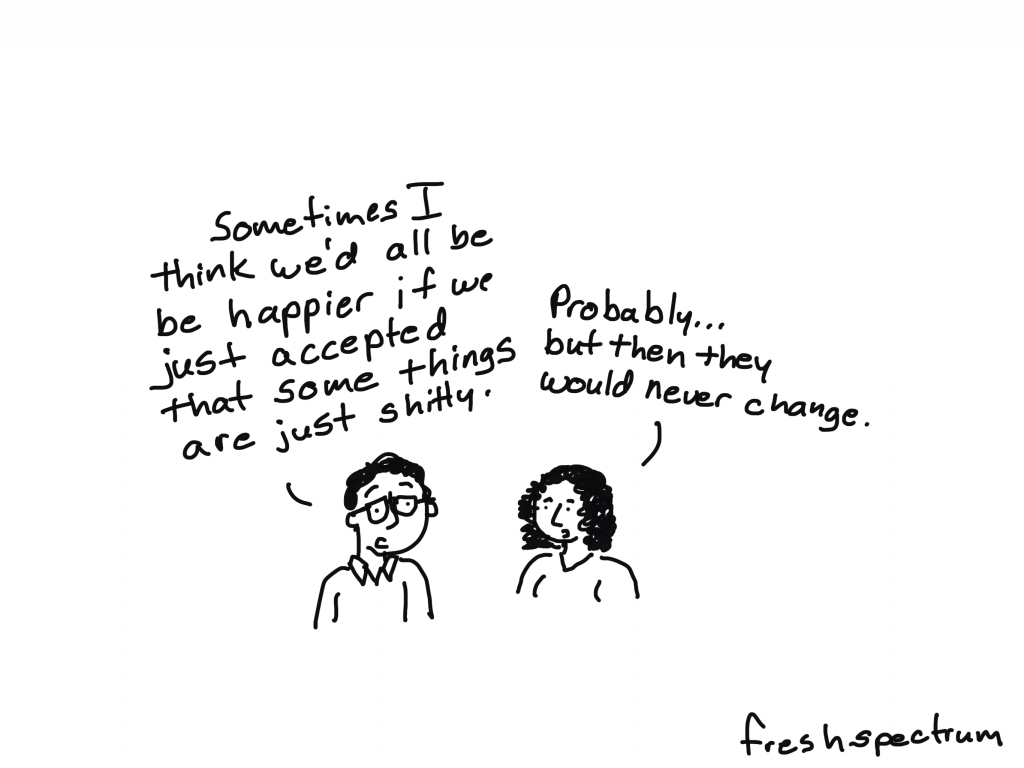
Freshspectrum cartoon by Chris Lysy. Sometimes I think we'd all be happier if we just accepted that some things are just shitty.
Probably...but then they would never change.

Today, June 2, at 2PM Eastern.

So this afternoon I’m starting something new.

It’s a series of networking sessions for evaluation people. I talked a little about it in last week’s post: Awkward Evaluation Networking.
Not sure what you’re up to this afternoon, but I’ll hope you’ll consider joining us.

Awkward Evaluation Networking. Join us. It's Free.

Written by cplysy · Categorized: freshspectrum

May 28 2021

Awkward Evaluation Networking
So I’m planning a new evaluation networking series. Skip down the page for more info.
Not sure if you’ve noticed, but COVID has done a number on our networking events.
Yes, we’ve been having virtual replacement events. But many of those are in the form of traditional webinars. There is a speaker who gives a talk, answers a few questions, and then boom, event over.
And sure, those events are valuable. But it’s not really the same thing as the live meeting.
With a virtual event you can get the same speaker to deliver the same talk to the same audience. But it won’t feel the same. And it won’t be the same. Because we almost always take something for granted when we host live in-person events.

That awkward 10 minutes where you are sitting in the room before the talk, and you strike up that conversation with the person in the seat next to you. The long line at the Starbucks filled with fellow conference attendees. That 15 minute chat you have with the professional acquaintance as you walk towards your car after the event. Overhearing the one on one conversation of the two people sitting next to you, one of which is talking way too loud, but then realizing a point of shared interest.

The things that we sometimes gripe about with live events are also incredibly important parts of our social experience. Sure it can be awkward or annoying, but so many of our close relationships are born out of awkward moments or shared somewhat annoying experiences.

Yes, this is my argument, I am making a call for more awkwardness and discomfort in virtual events.

Okay, but is this really all that critical?

Yes.

Here’s why.

If you already have a solid network, a job, a social circle, and a client base, then the shift to virtual has probably been just fine.

Now if you are an evaluation consultant without enough clients, a graduating evaluator without a job, or just a social creature who feels a little out of touch with the rest of the human world, then the shift to virtual has probably been taking its toll.

And a series of webinar talks is probably not going to make a big difference.

Free Evaluation Networking

Here is the plan.

I’m going to launch a virtual networking series.

Each event will open with a short talk 15-20 minutes followed by 10 minutes of Q&A. Then we’ll have 30 minutes of somewhat awkward breakout group networking.

It won’t be recorded, so if you don’t show up there is nothing to watch later. But that also should let you feel free to talk without worrying about showing up forever on the web.

What kinds of talks?

Book/Paper Talks – An evaluation author of some type (defined loosely) will present their work.

Job Talks – A working evaluator will talk about their evaluation job. The idea here is to just give an idea of the many different things self identified evaluators actually do for a living.

Consultant Intros – A consultant will introduce their business, what they do/who they serve.

Interested in giving a talk? Reach out and let me know.

When will it launch?

I’m going to launch it next week with a pretty informal, and probably extra awkward, kickoff on June 2.

Then on June 9 I’ll have my first actual presenter.

Interested? You can register here. And yes, it’s FREE.

Written by cplysy · Categorized: freshspectrum

May 12 2021

Rejecting the Null

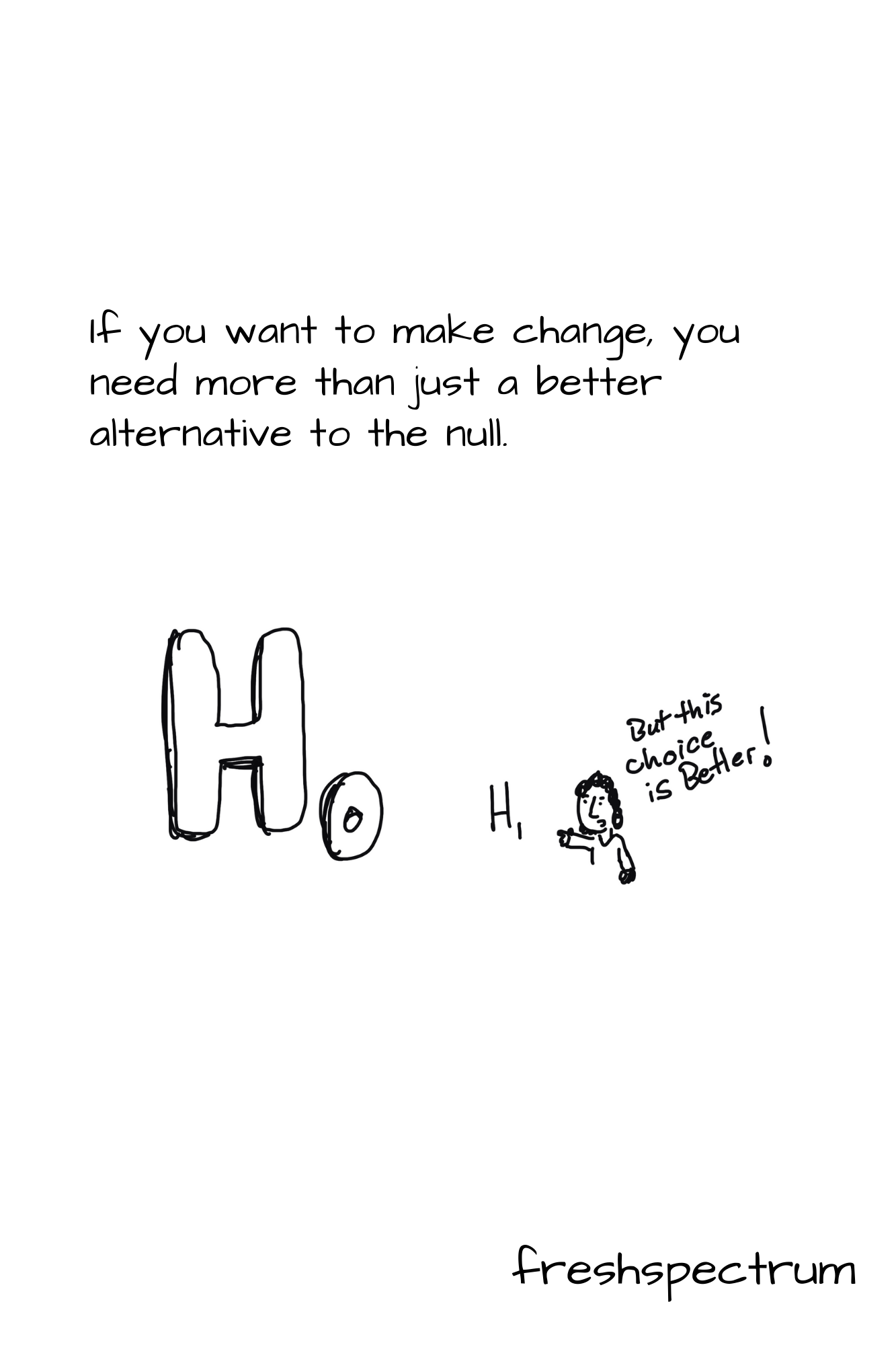
Today’s graphic novella is inspired by the concept of rejecting the null. I created a cartoon about the null hypothesis almost a decade ago.

I still find the concept really useful in thinking about evaluation. There is incredible power and importance in the choice that gets made when we don’t choose to change. So that’s the idea behind today’s story.

Rejecting the Null Illustration

Text Only Version

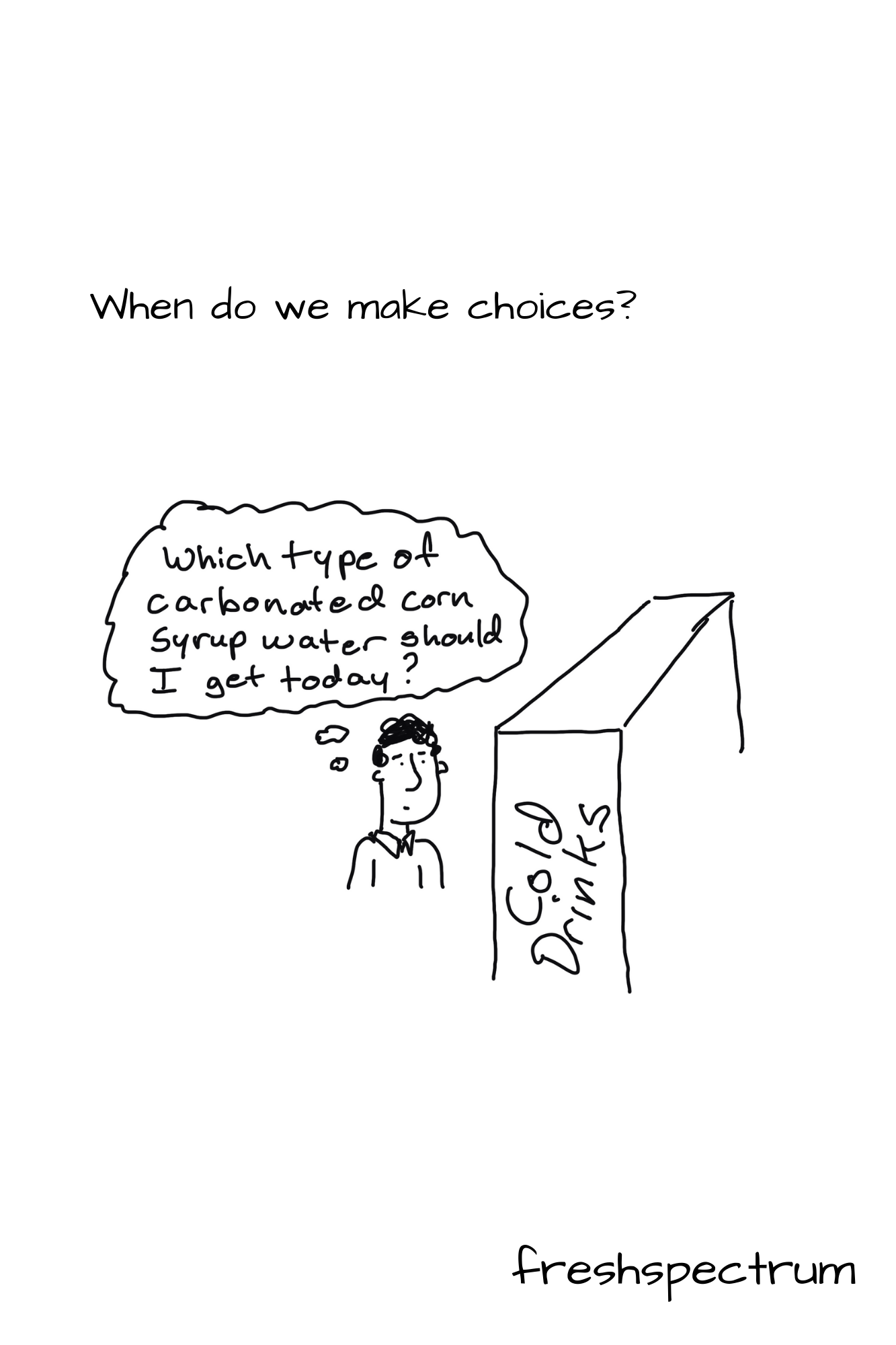
When do we make choices?

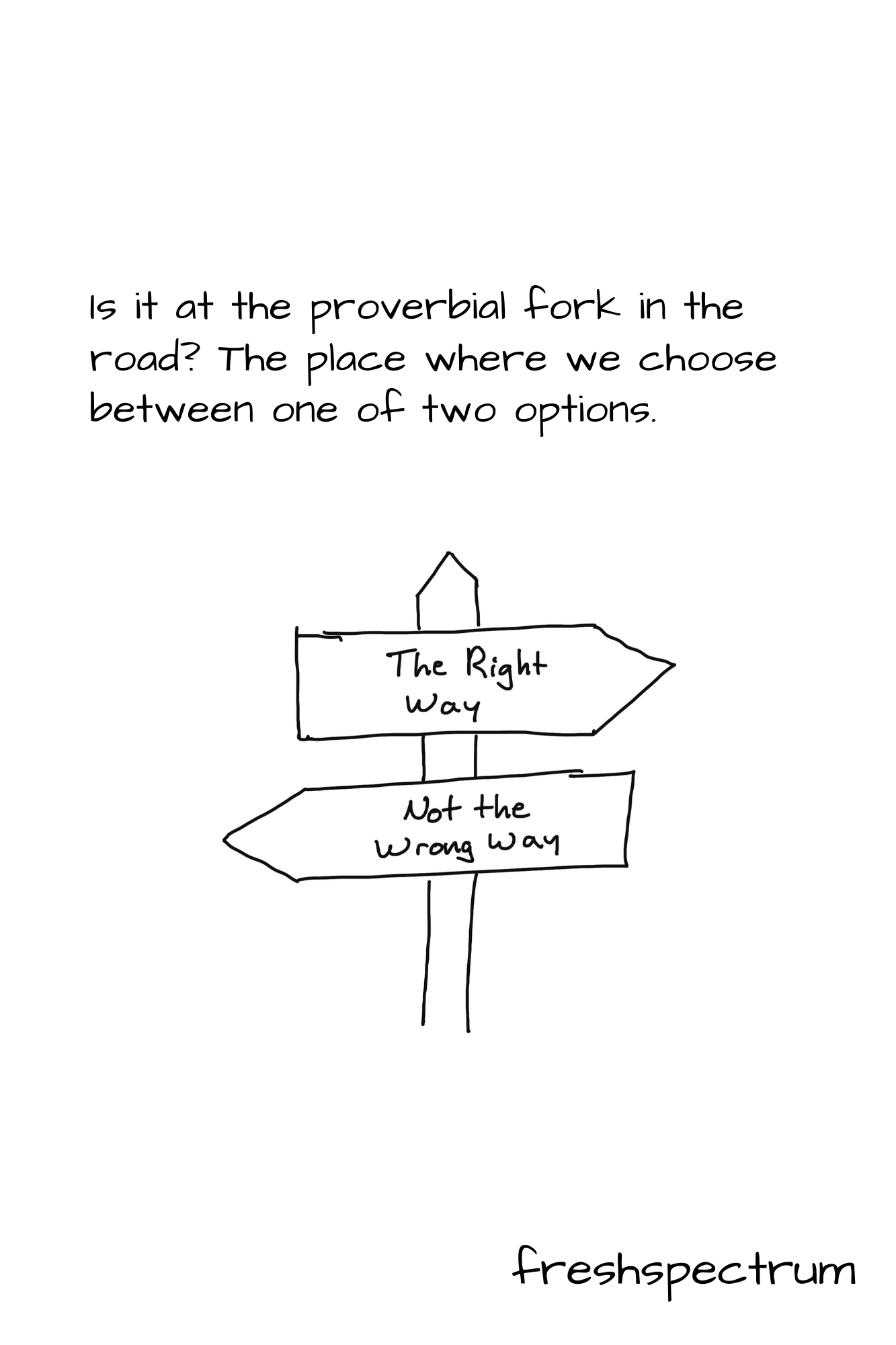
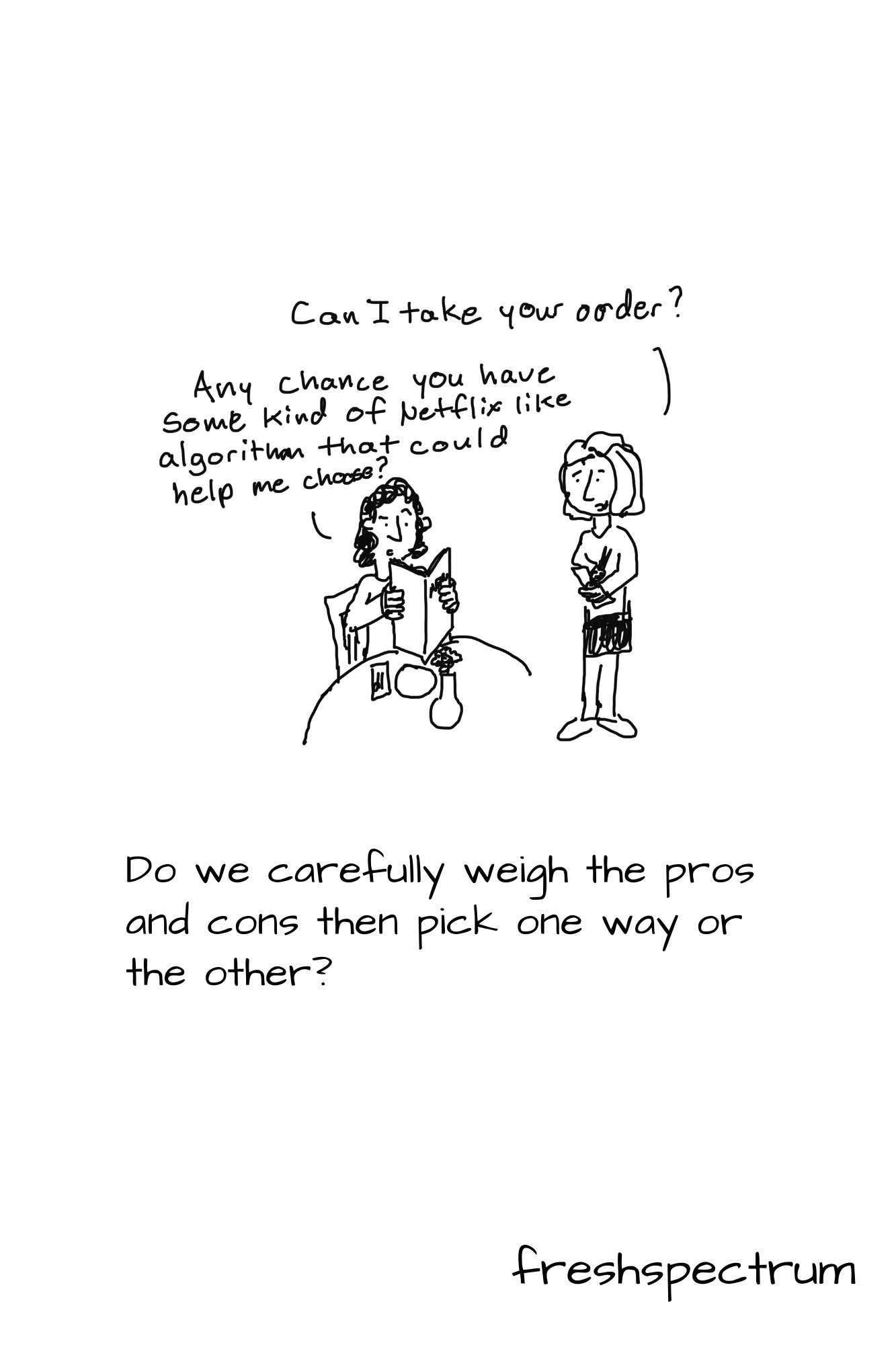
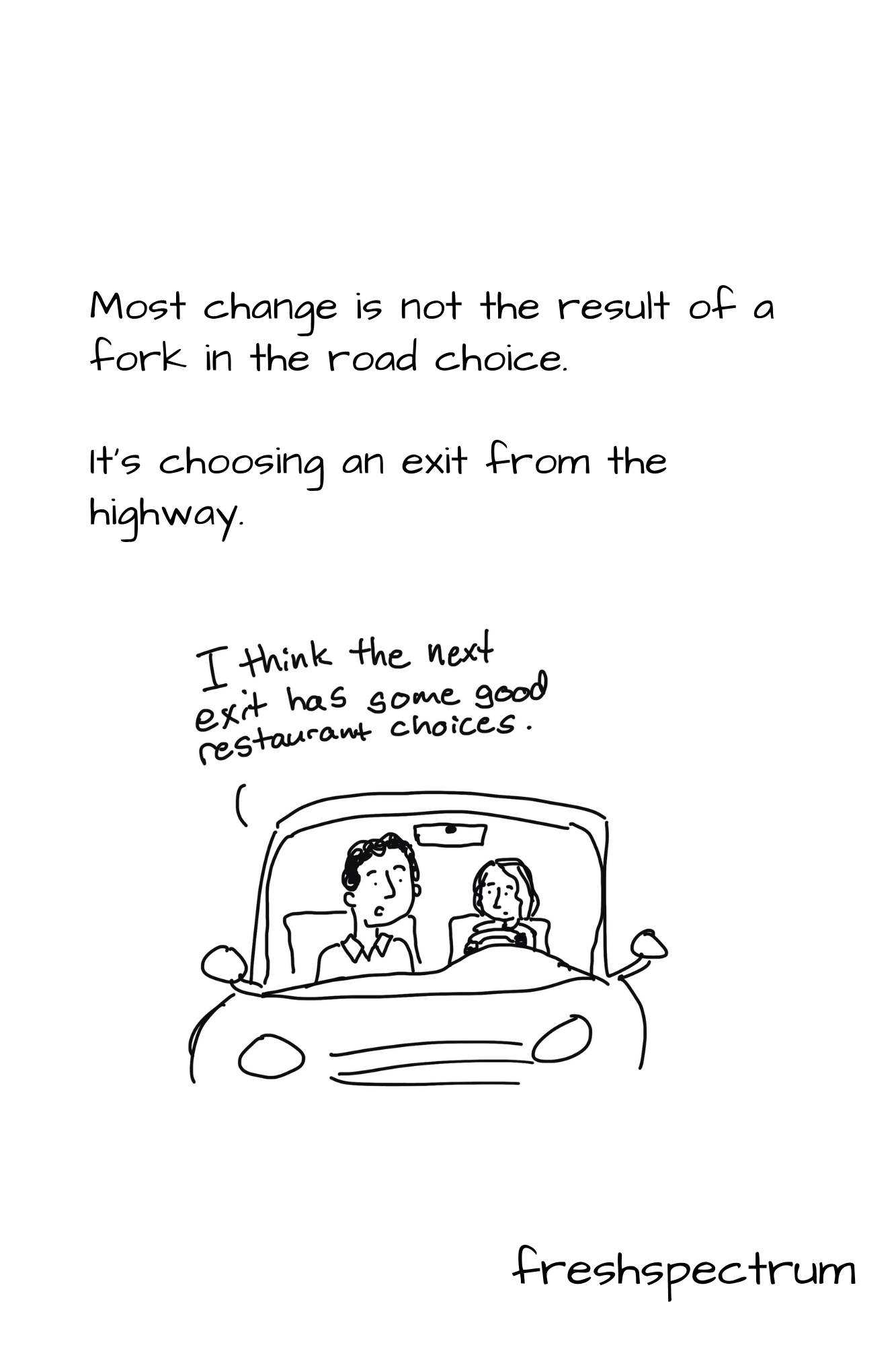
Is it at the proverbial fork in the road? The place where we choose between one of two options.  

Do we carefully weigh the pros and cons then pick one way or the other?

Sometimes maybe, but most of the time, no.

Choice is not something that happens once and a while.  Choice is a constant.

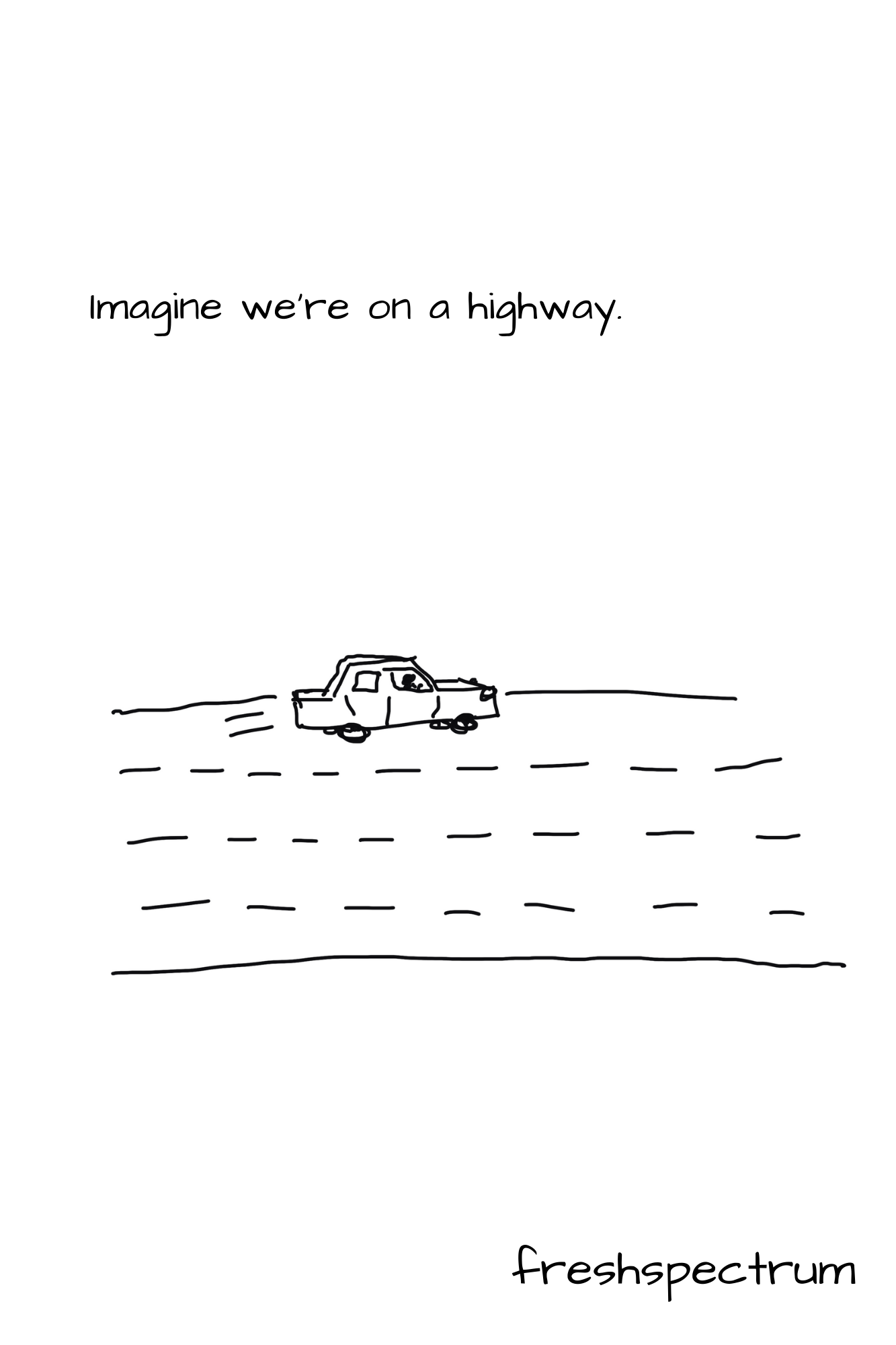
To use another metaphor. Imagine we’re on a highway.  

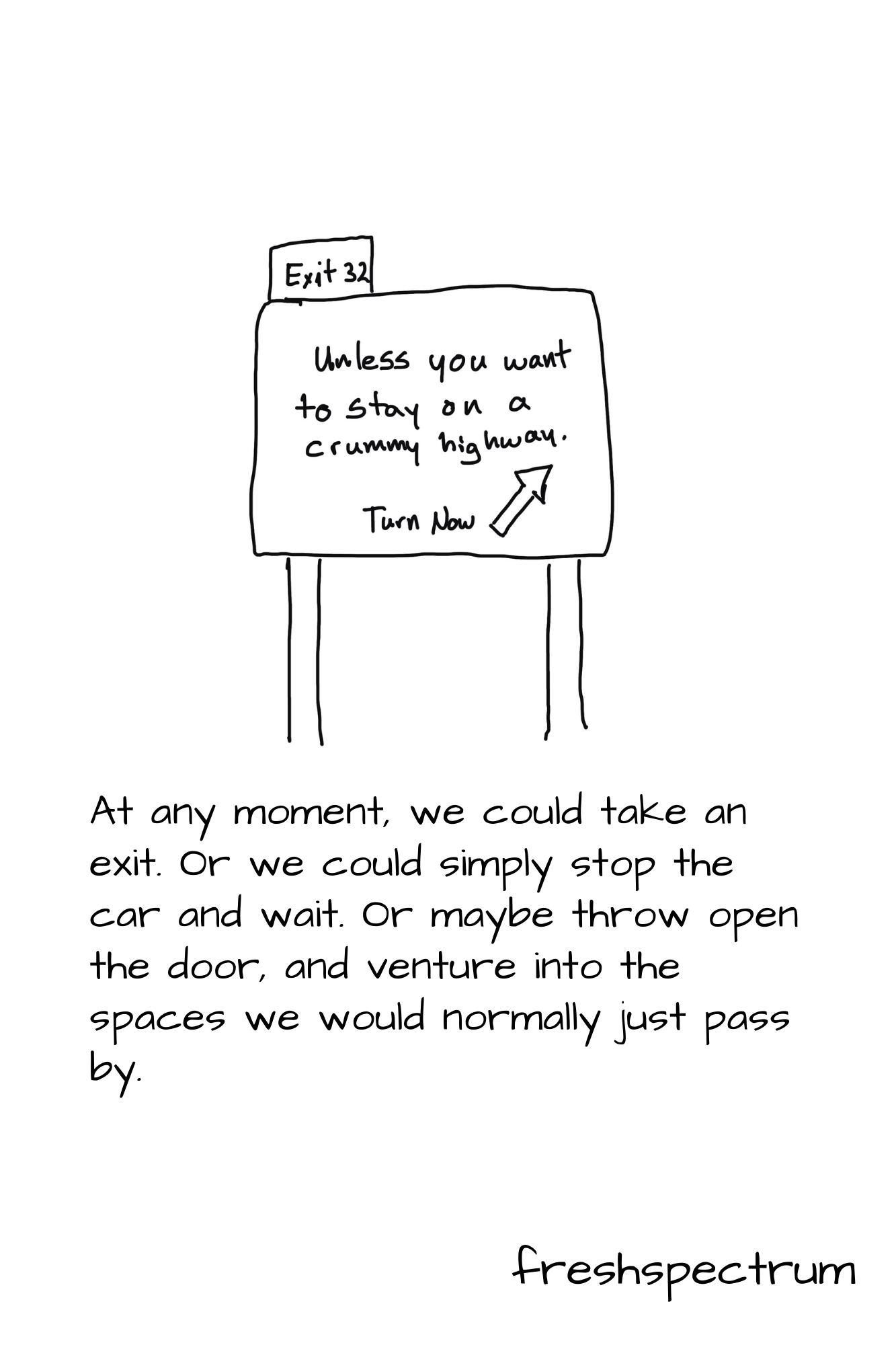
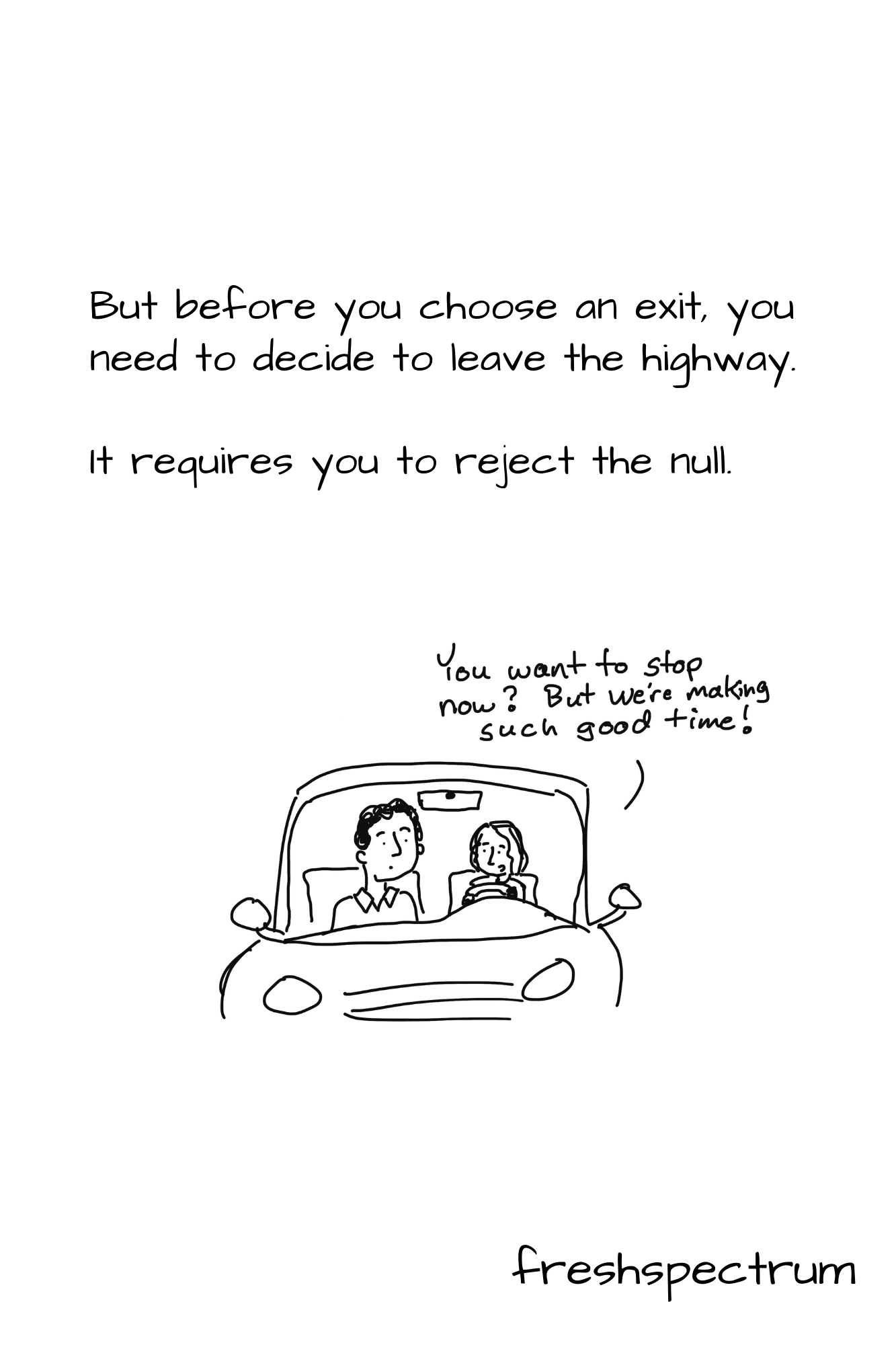
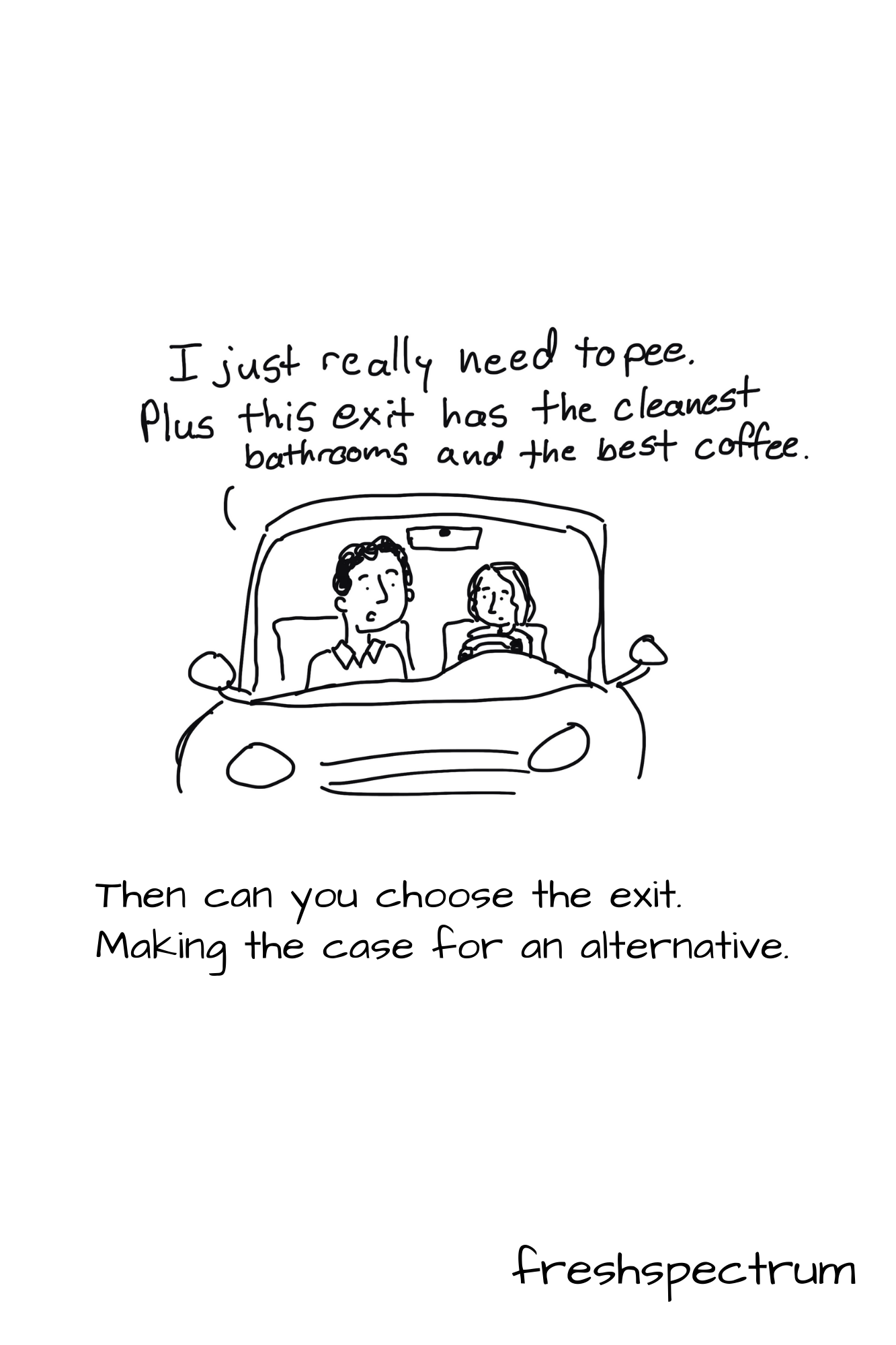
At any moment, we could take an exit.  Or we could simply stop the car and wait.  Or maybe throw open the door, and venture into the spaces we would normally just pass by.  

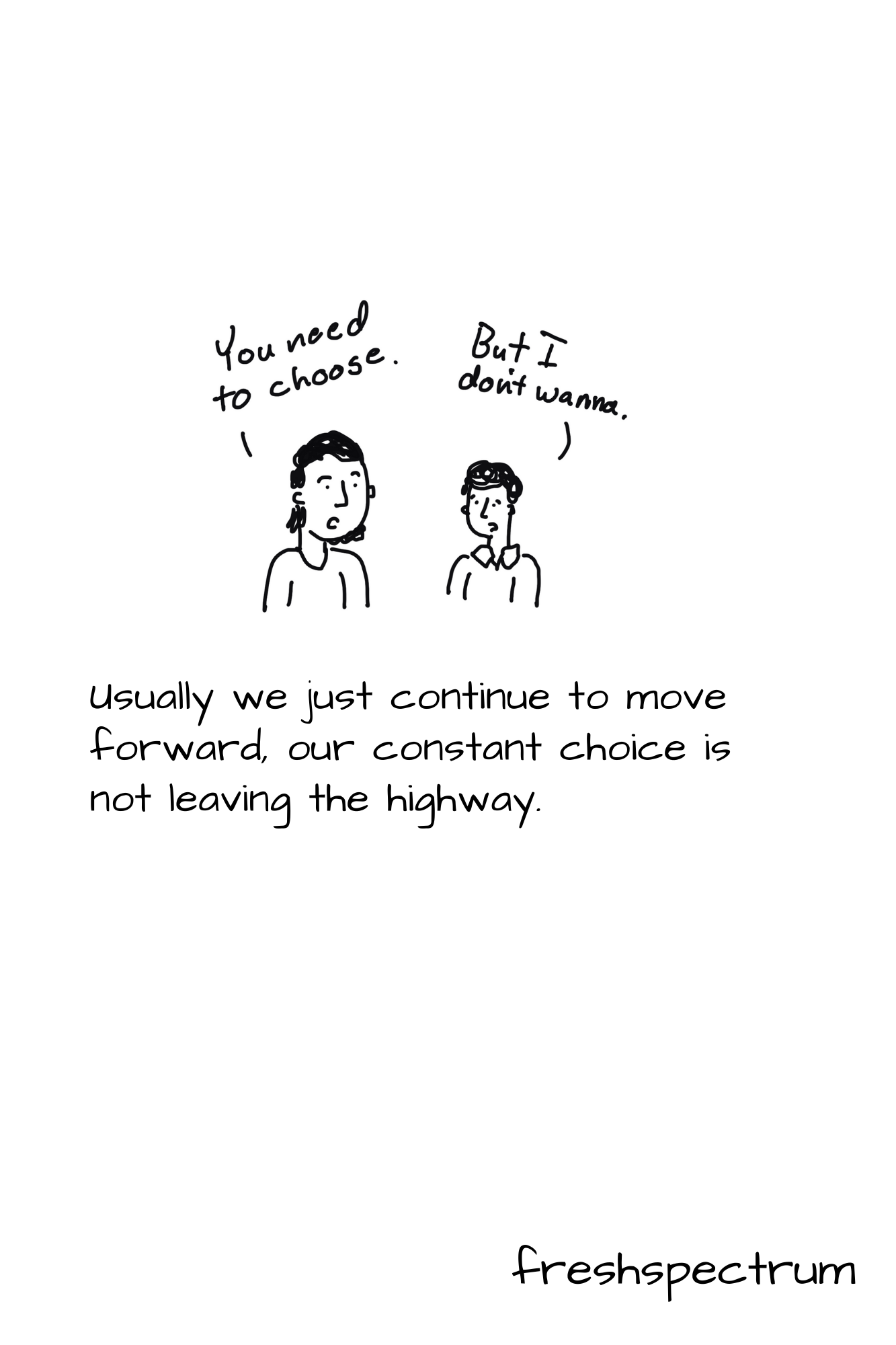
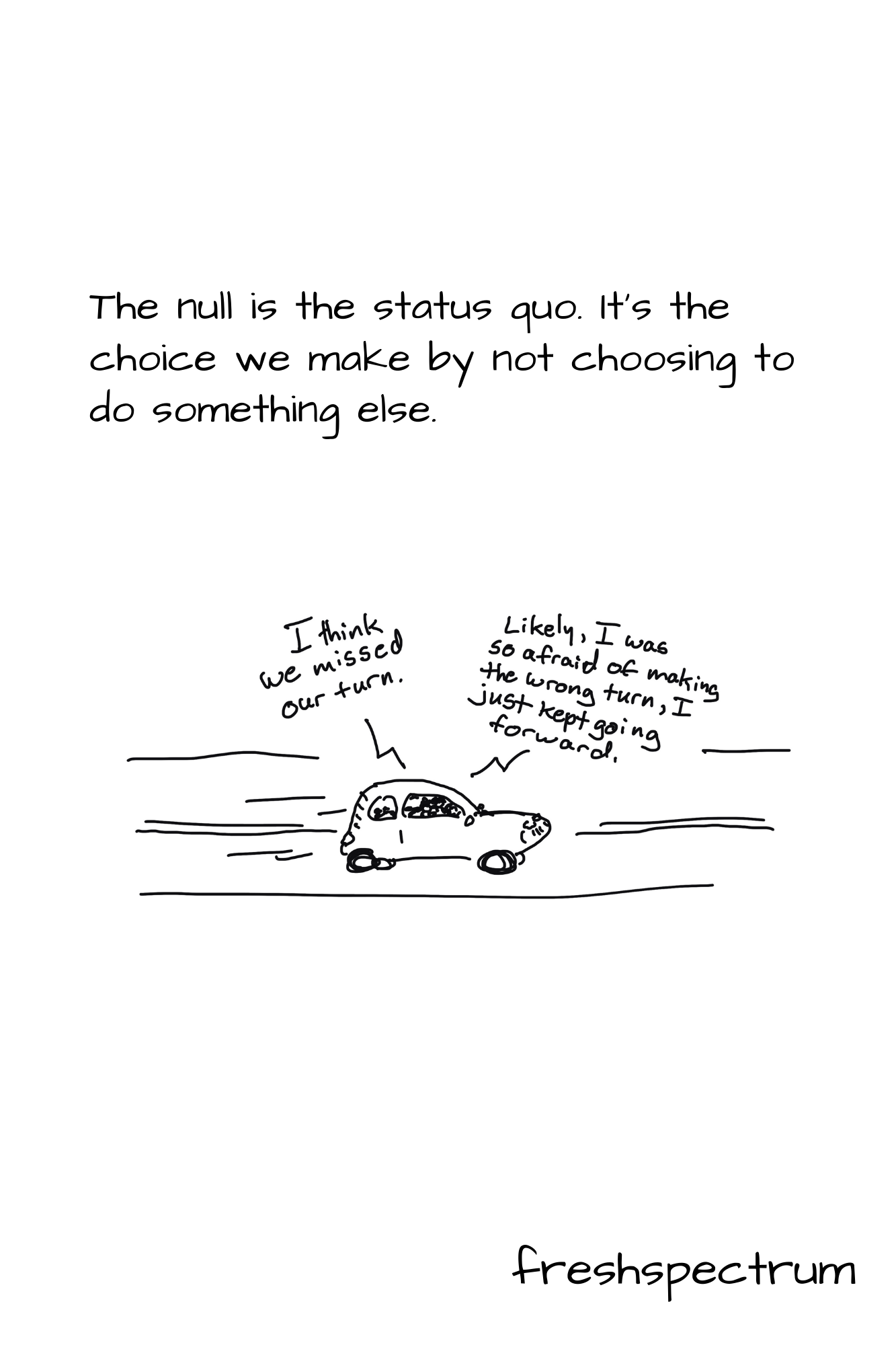
Usually we just continue to move forward, our constant choice is not leaving the highway.

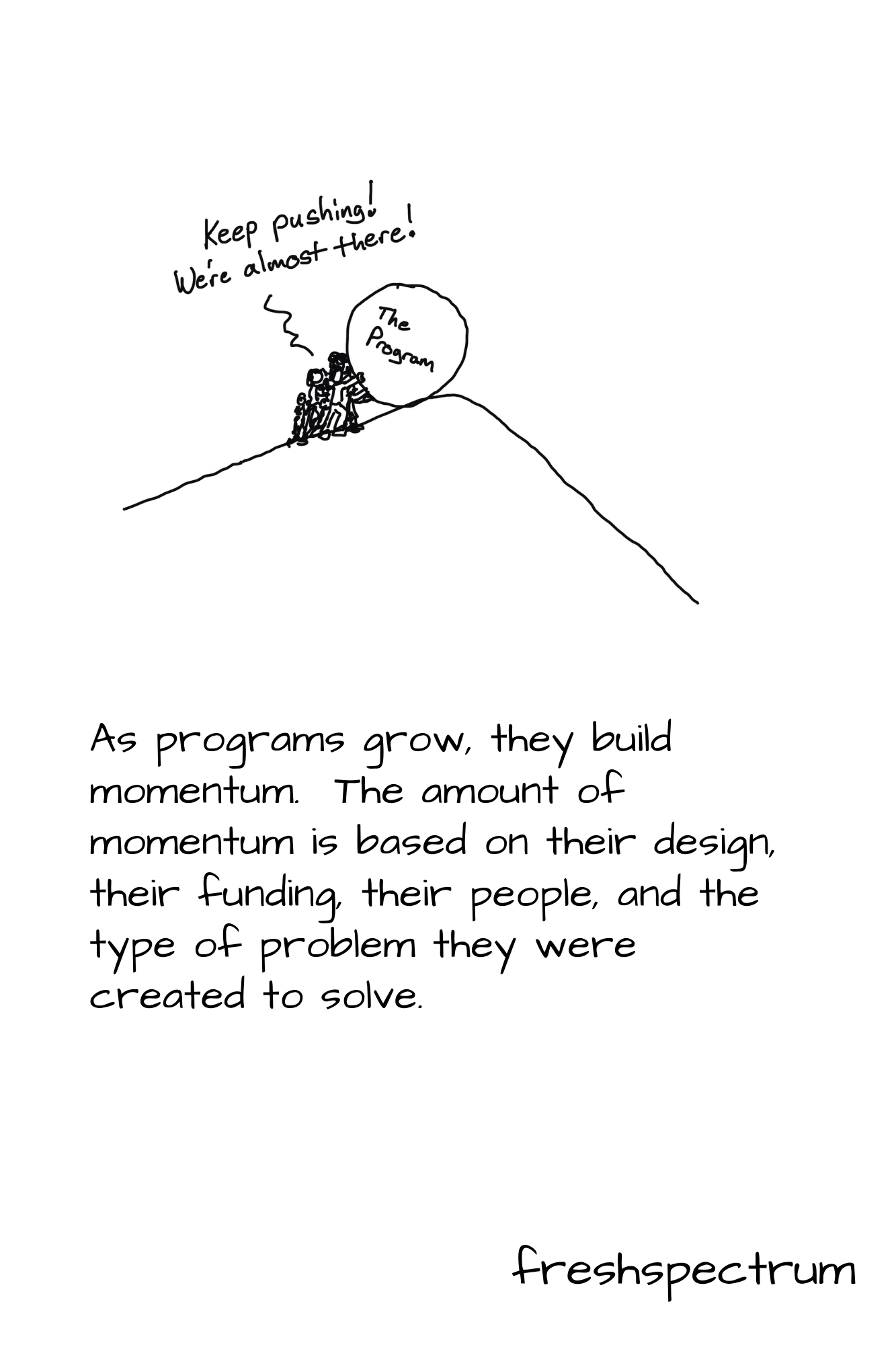
As programs grow, they build momentum.  The amount of momentum is based on their design, their funding, their people, and the type of problem they were created to solve.

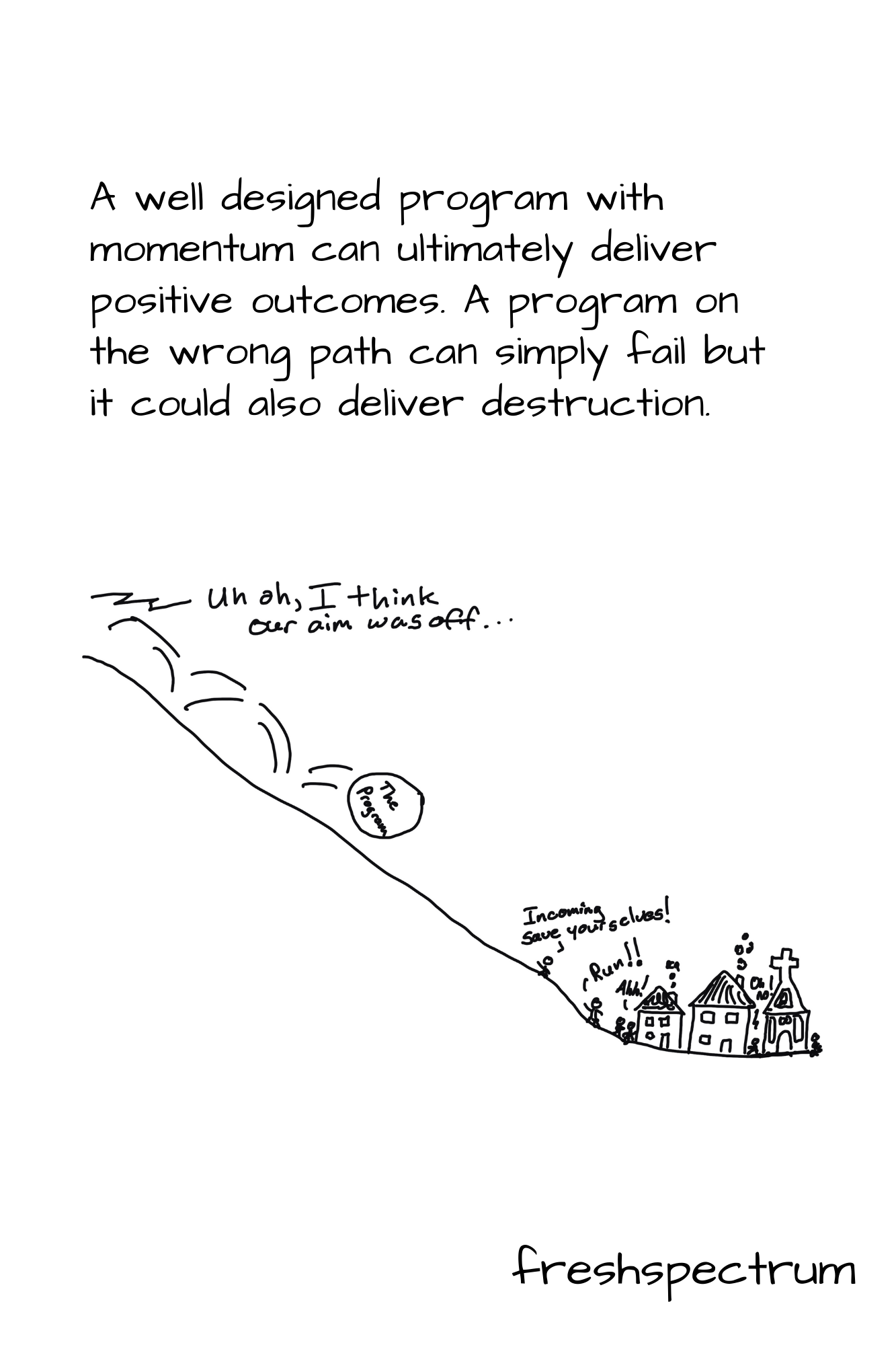
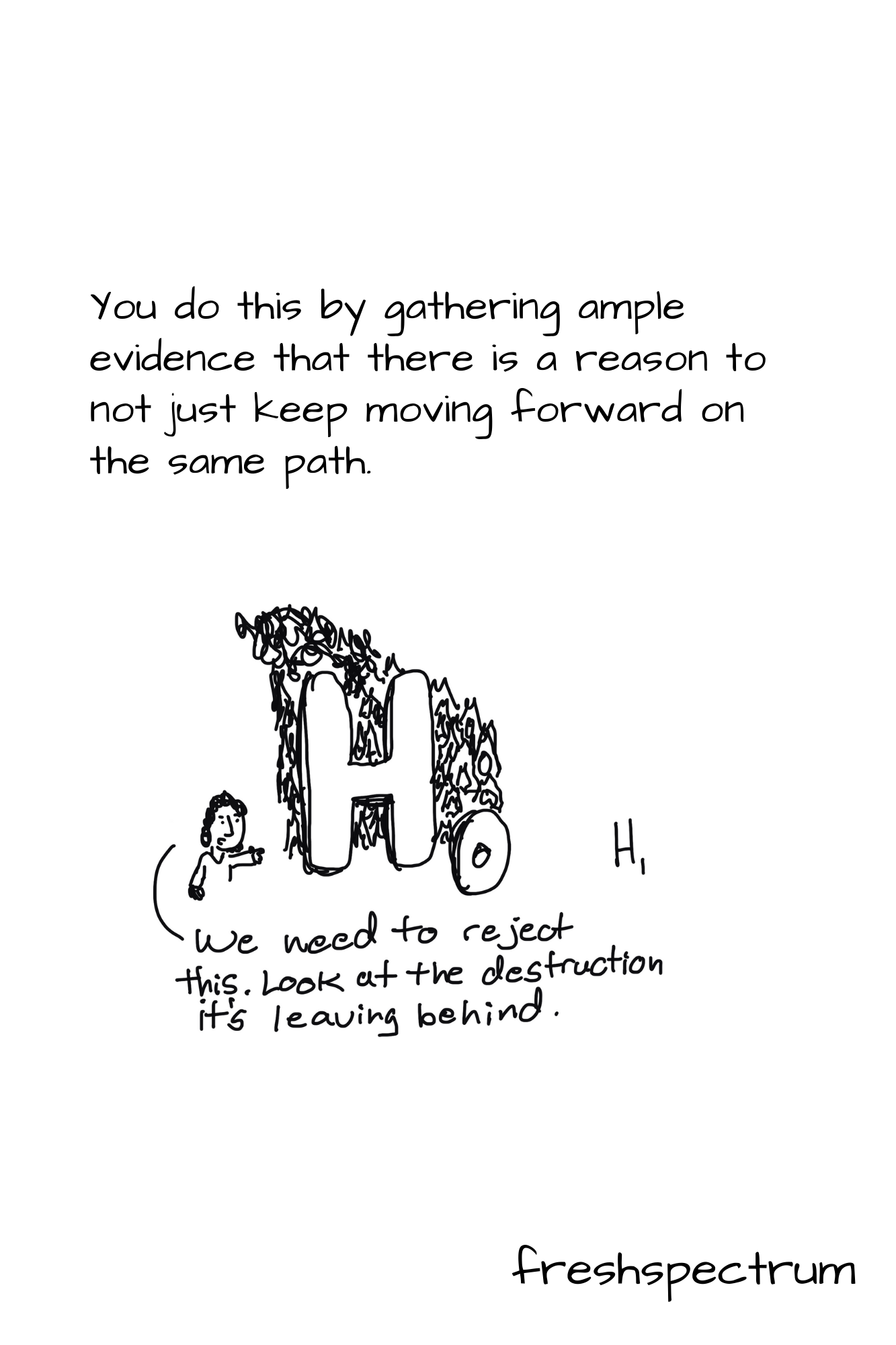
A well designed program with momentum can ultimately deliver positive outcomes. A program on the wrong path can simply fail but it could also deliver destruction.

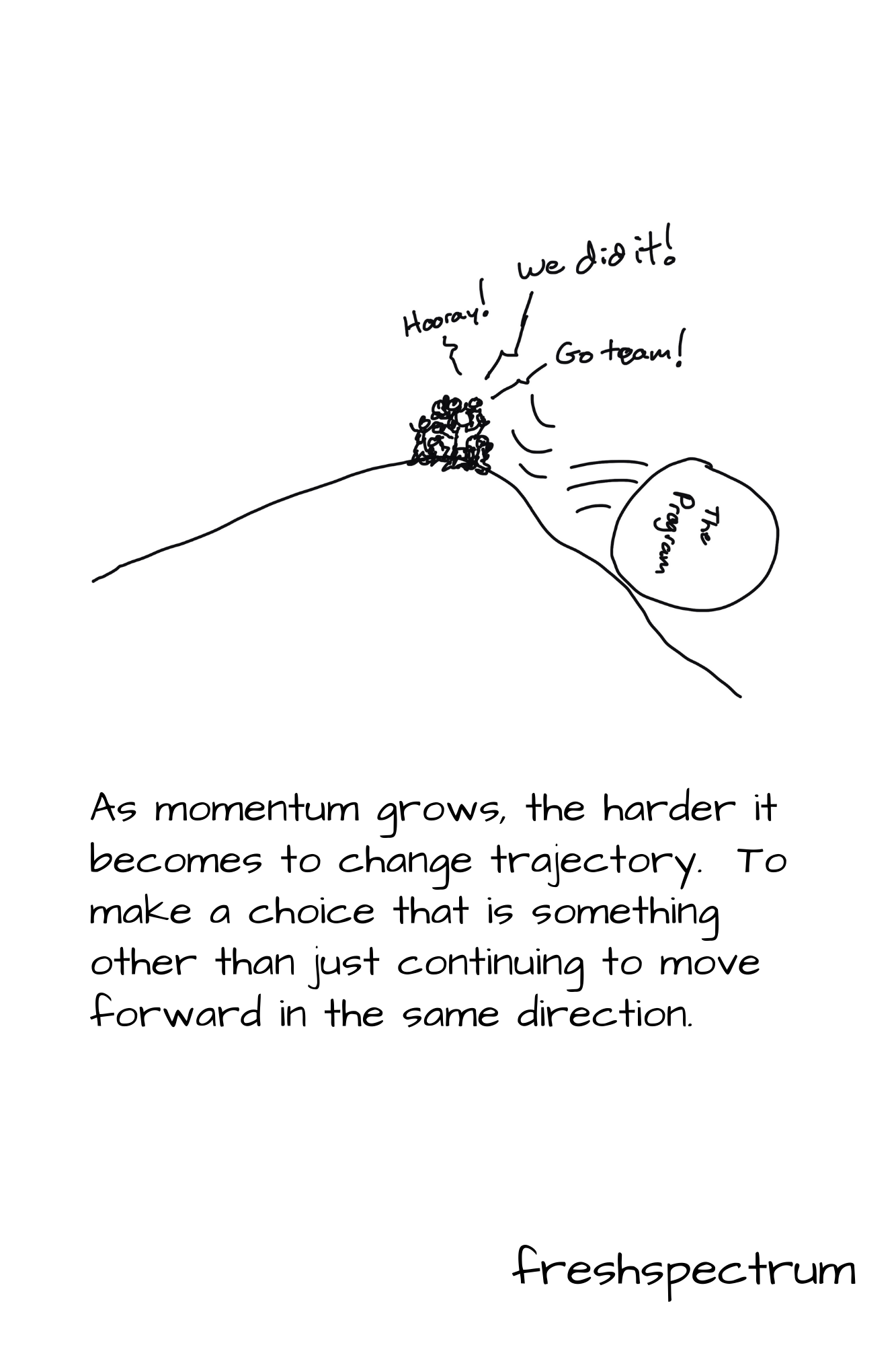
As momentum grows, the harder it becomes to change trajectory.  To make a choice that is something other than just continuing to move forward in the same direction.  

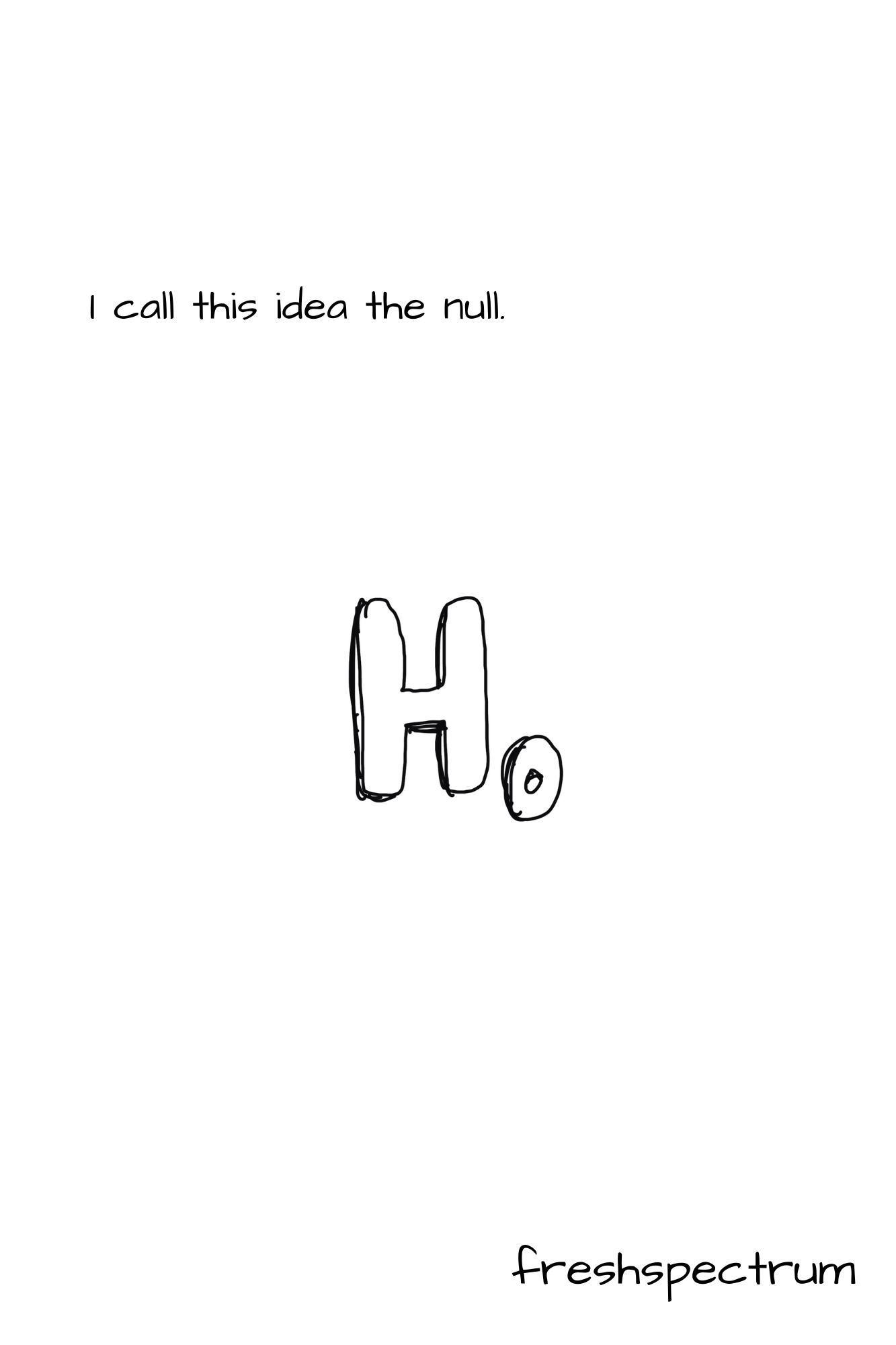
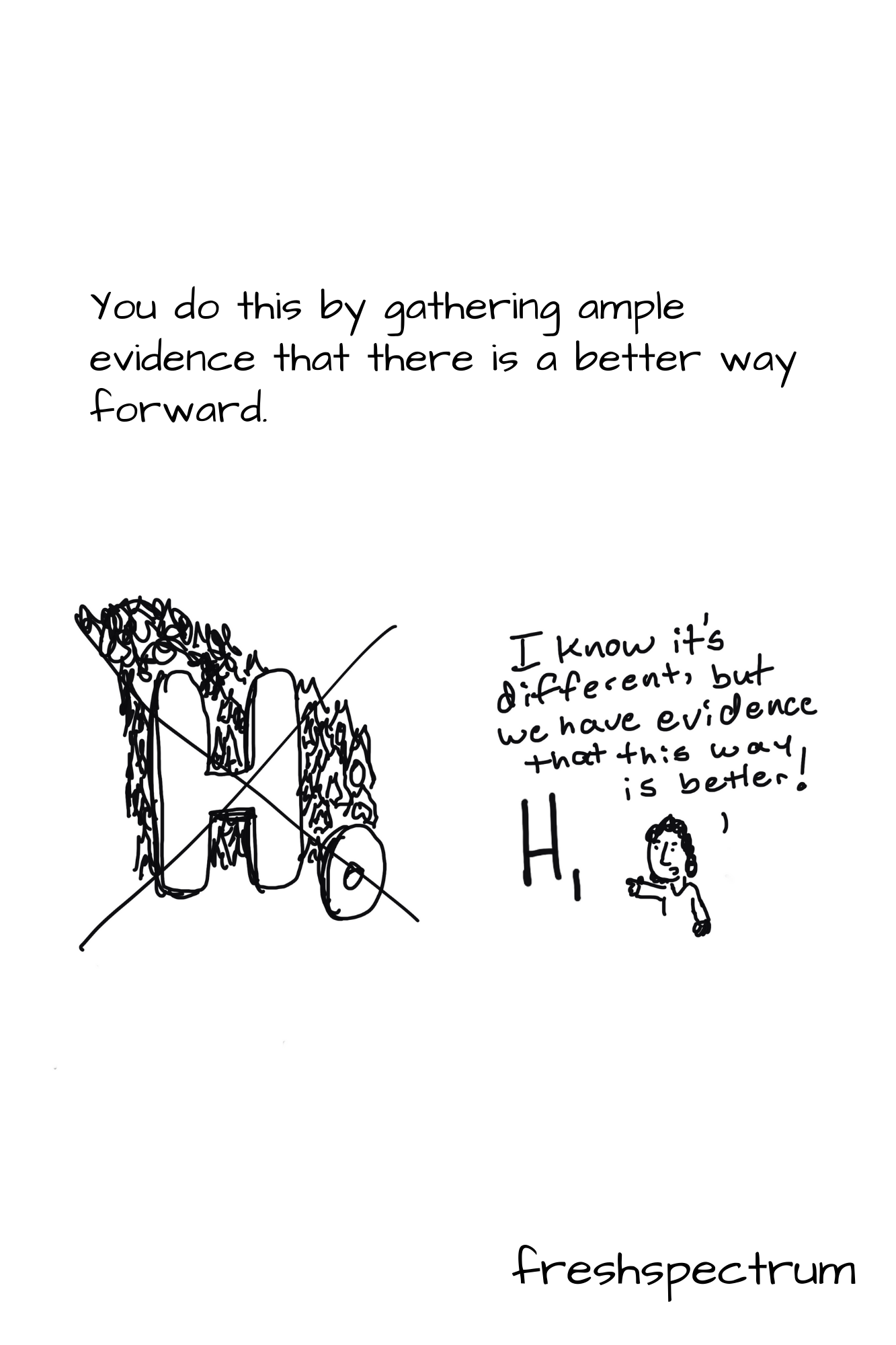
I call this idea the null.

The null is the status quo.  It’s the choice we make by not choosing to do something else.

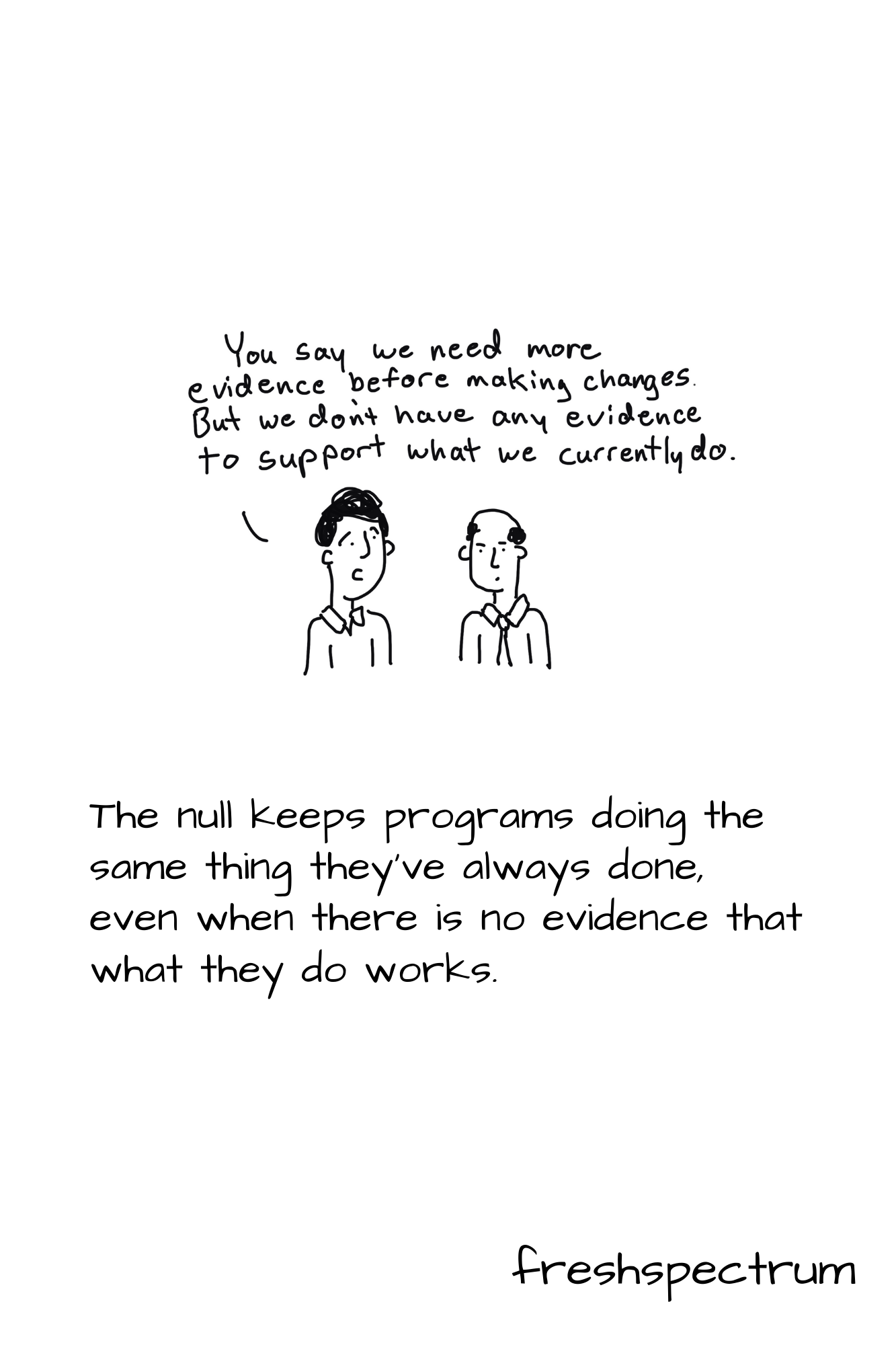
The null keeps programs doing the same thing they’ve always done, even when there is no evidence that what they do works.

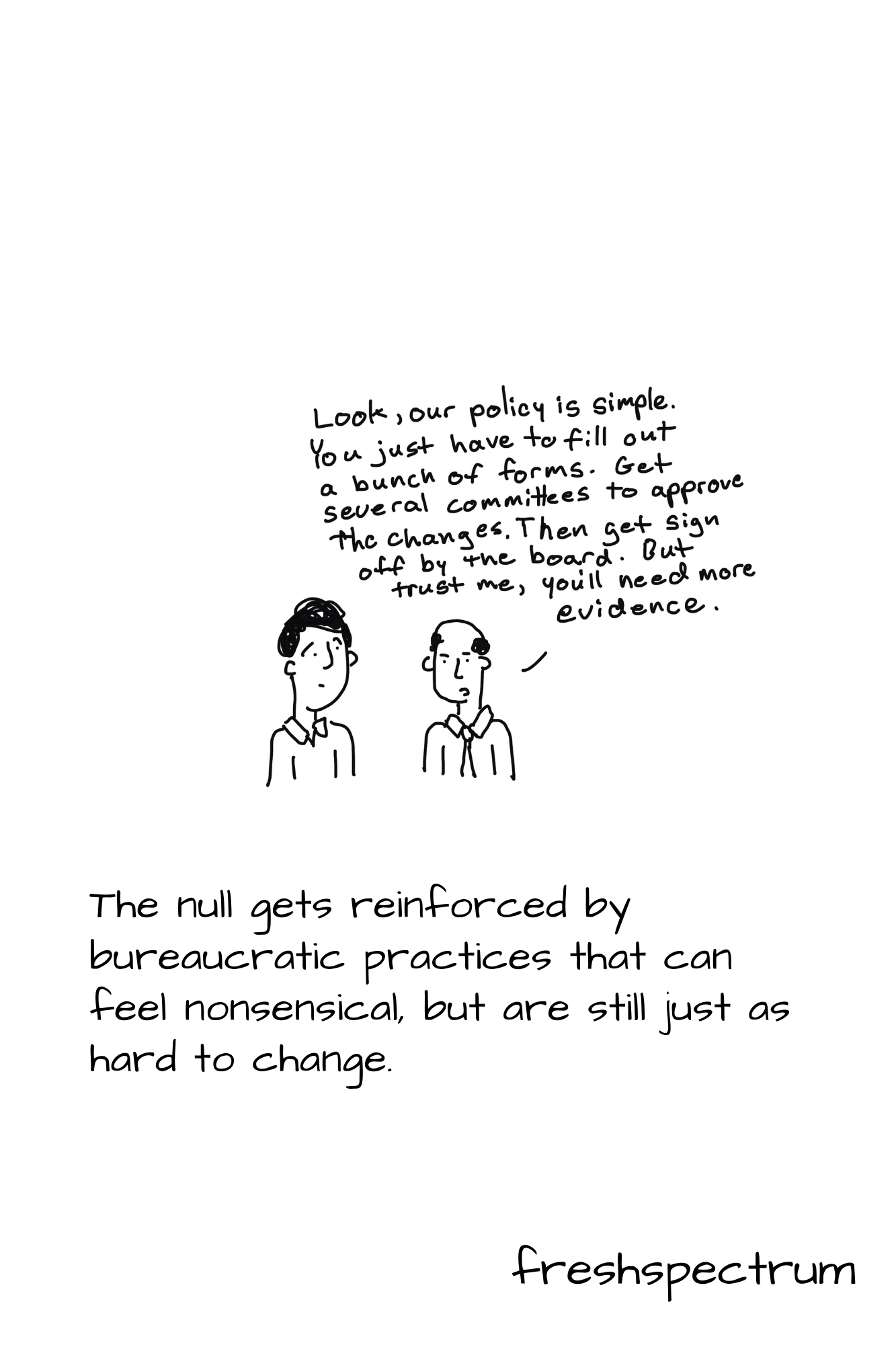
The null gets reinforced by bureaucratic practices that can feel nonsensical, but are still just as hard to change.

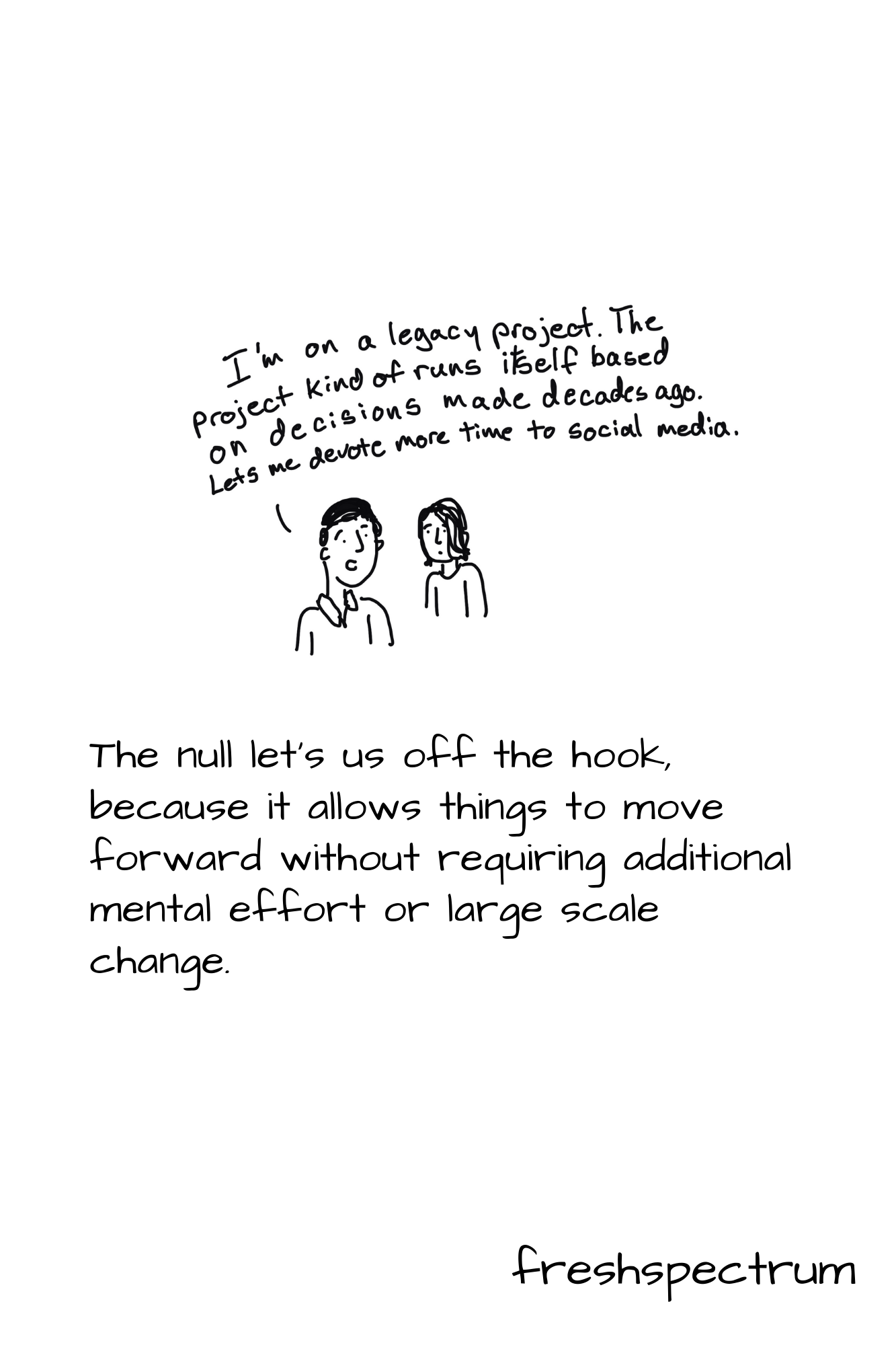
The null let’s us off the hook, because it allows things to move forward without requiring additional mental effort or large scale change.

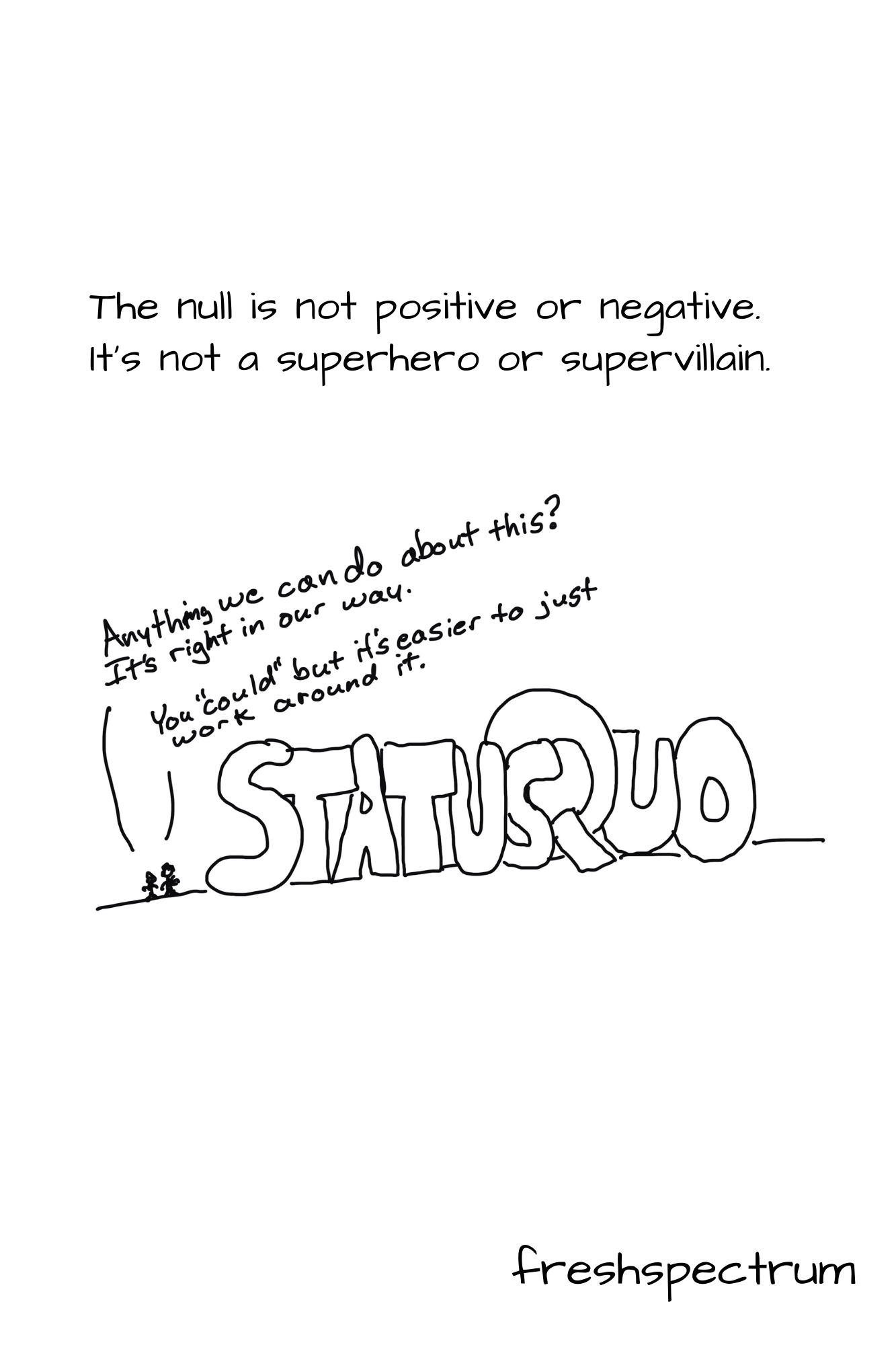
The null is not positive or negative.  It’s not a superhero or supervillain.

The null is powerful just because it is what it is.  

If you want to make change, you need more than just a better alternative to the null.

Most change is not the result of a fork in the road choice. It’s choosing an exit from the highway.

But before you choose an exit, you need to decide to leave the highway. It requires you to reject the null.

You do this by gathering ample evidence that there is a reason to not just keep moving forward on the same path.

And then you need to offer a better alternative.

You do this by gathering ample evidence that there is a better way forward.

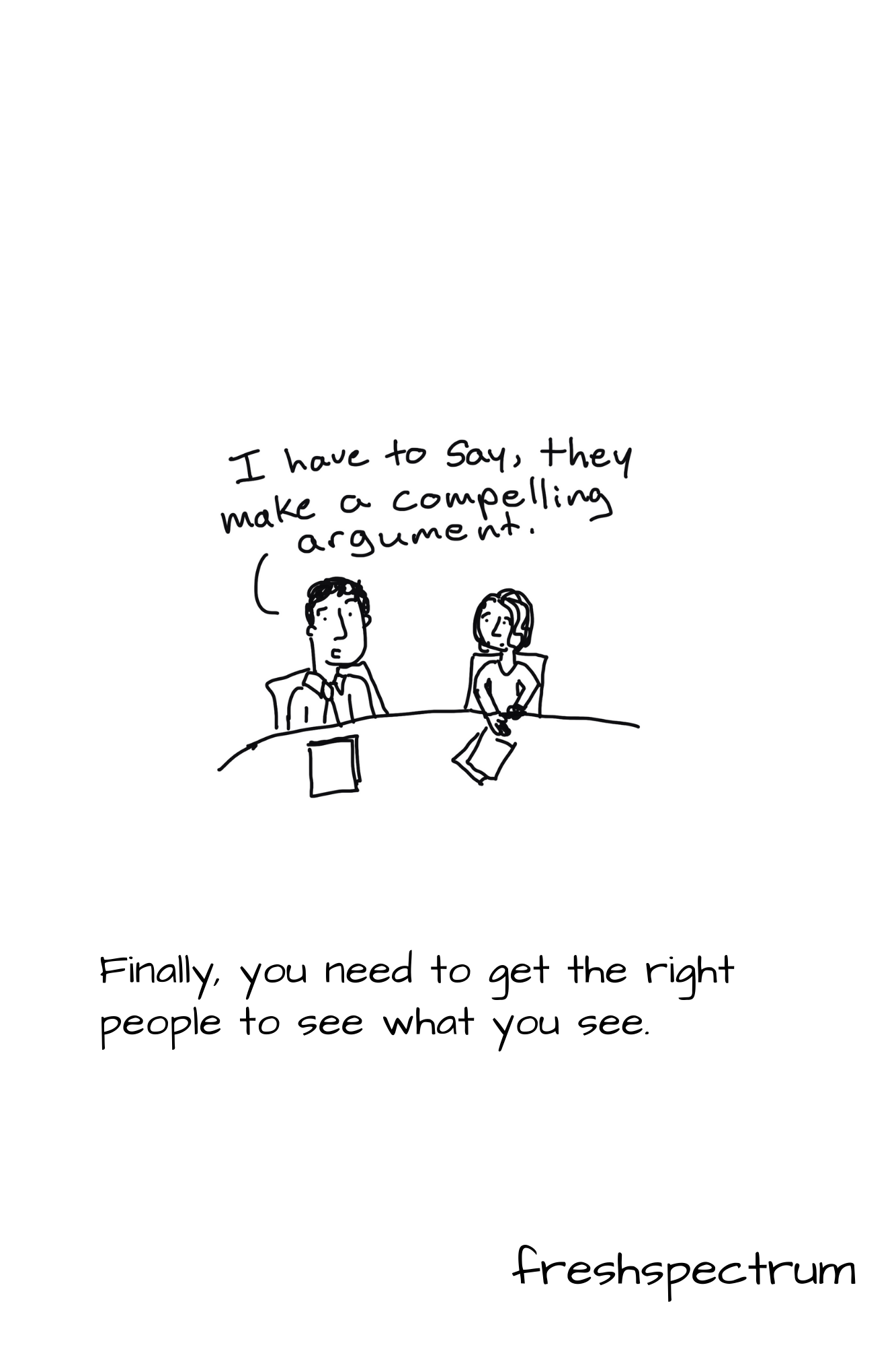
Finally, you need to get the right people to see what you see.

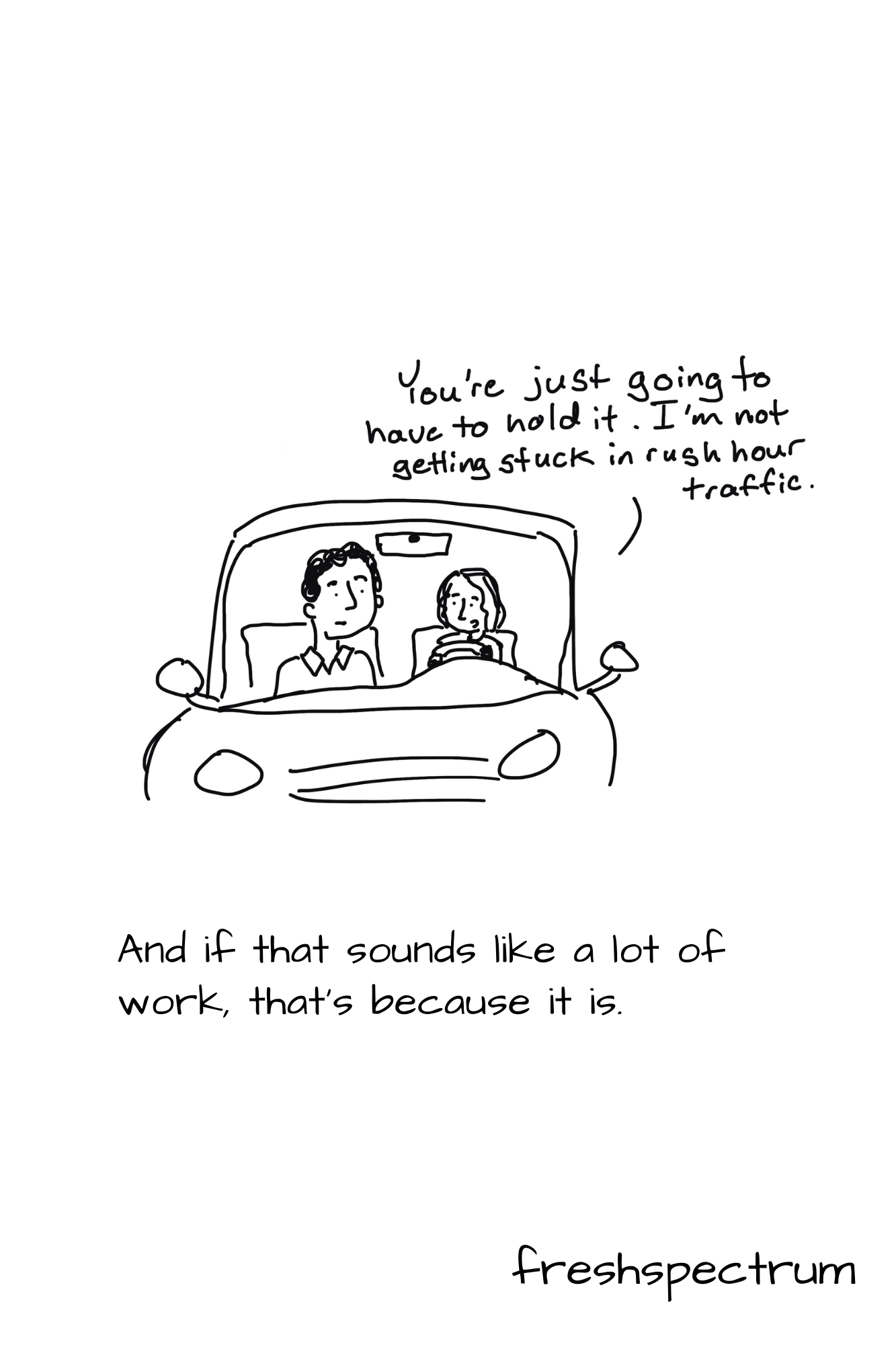
And if that sounds like a lot of work, that’s because it is. 

Written by cplysy · Categorized: freshspectrum

  • « Go to Previous Page
  • Go to page 1
  • Interim pages omitted …
  • Go to page 37
  • Go to page 38
  • Go to page 39
  • Go to page 40
  • Go to page 41
  • Interim pages omitted …
  • Go to page 54
  • Go to Next Page »

Footer

Follow our Work

The easiest way to stay connected to our work is to join our newsletter. You’ll get updates on projects, learn about new events, and hear stories from those evaluators whom the field continues to actively exclude and erase.

Get Updates

Want to take further action or join a pod? Click here to learn more.

Copyright © 2026 · The May 13 Group · Log in

en English
af Afrikaanssq Shqipam አማርኛar العربيةhy Հայերենaz Azərbaycan dilieu Euskarabe Беларуская моваbn বাংলাbs Bosanskibg Българскиca Catalàceb Cebuanony Chichewazh-CN 简体中文zh-TW 繁體中文co Corsuhr Hrvatskics Čeština‎da Dansknl Nederlandsen Englisheo Esperantoet Eestitl Filipinofi Suomifr Françaisfy Fryskgl Galegoka ქართულიde Deutschel Ελληνικάgu ગુજરાતીht Kreyol ayisyenha Harshen Hausahaw Ōlelo Hawaiʻiiw עִבְרִיתhi हिन्दीhmn Hmonghu Magyaris Íslenskaig Igboid Bahasa Indonesiaga Gaeilgeit Italianoja 日本語jw Basa Jawakn ಕನ್ನಡkk Қазақ тіліkm ភាសាខ្មែរko 한국어ku كوردی‎ky Кыргызчаlo ພາສາລາວla Latinlv Latviešu valodalt Lietuvių kalbalb Lëtzebuergeschmk Македонски јазикmg Malagasyms Bahasa Melayuml മലയാളംmt Maltesemi Te Reo Māorimr मराठीmn Монголmy ဗမာစာne नेपालीno Norsk bokmålps پښتوfa فارسیpl Polskipt Portuguêspa ਪੰਜਾਬੀro Românăru Русскийsm Samoangd Gàidhligsr Српски језикst Sesothosn Shonasd سنڌيsi සිංහලsk Slovenčinasl Slovenščinaso Afsoomaalies Españolsu Basa Sundasw Kiswahilisv Svenskatg Тоҷикӣta தமிழ்te తెలుగుth ไทยtr Türkçeuk Українськаur اردوuz O‘zbekchavi Tiếng Việtcy Cymraegxh isiXhosayi יידישyo Yorùbázu Zulu