• Skip to main content
  • Skip to footer
  • Home

The May 13 Group

the next day for evaluation

  • Get Involved
  • Our Work
  • About Us
You are here: Home / Archives for allblogs / freshspectrum

freshspectrum

Nov 05 2020

Not Politics

I didn’t want to send a regular email today. If you are feeling anything like I am feeling, you probably have enough on your mind.

So I decided to just do something completely and totally random. I created some stream of conscience cartoons and a little cartoon story. Not my usual, but not politics either.
Insert Cartoon Here
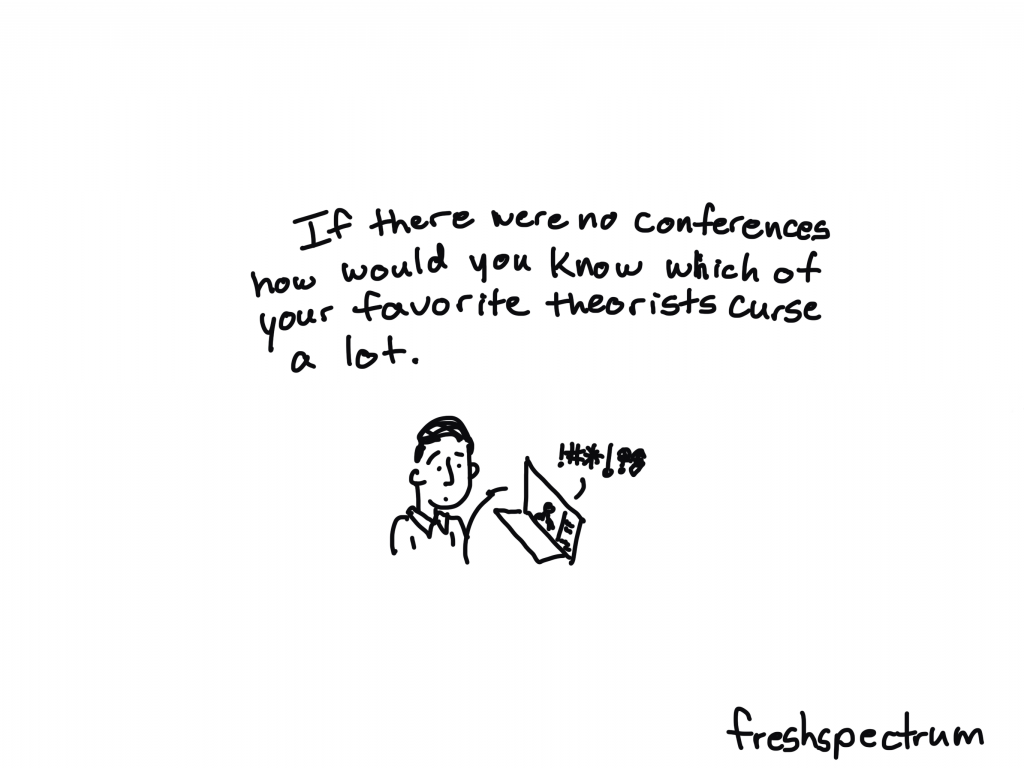
If there were no conferences how would you know which of your favorite theorists curse a lot?
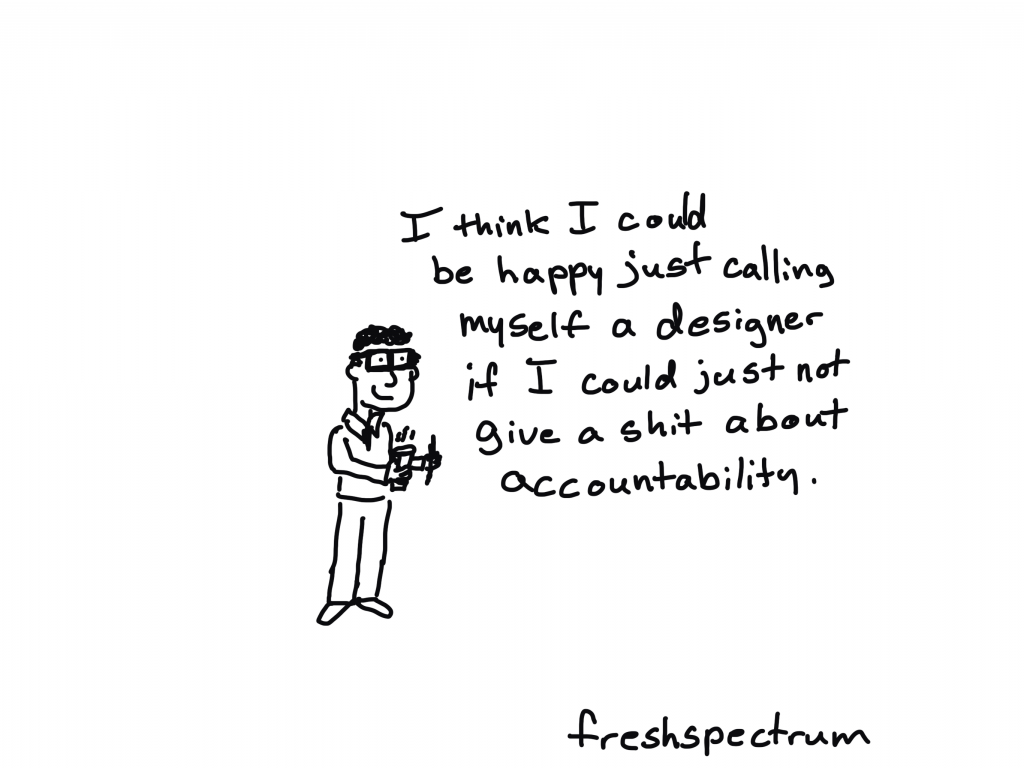
I think I could be happy just calling myself a designer if I could just not give a shit about accountability.
My first job was in fast food. You quickly learn, if you do a good job cleaning the bathroom, you will keep getting asked to clean it. Better to not do a good job.  

I always did a good job.
I read a lot of Mad Magazine as a kid.
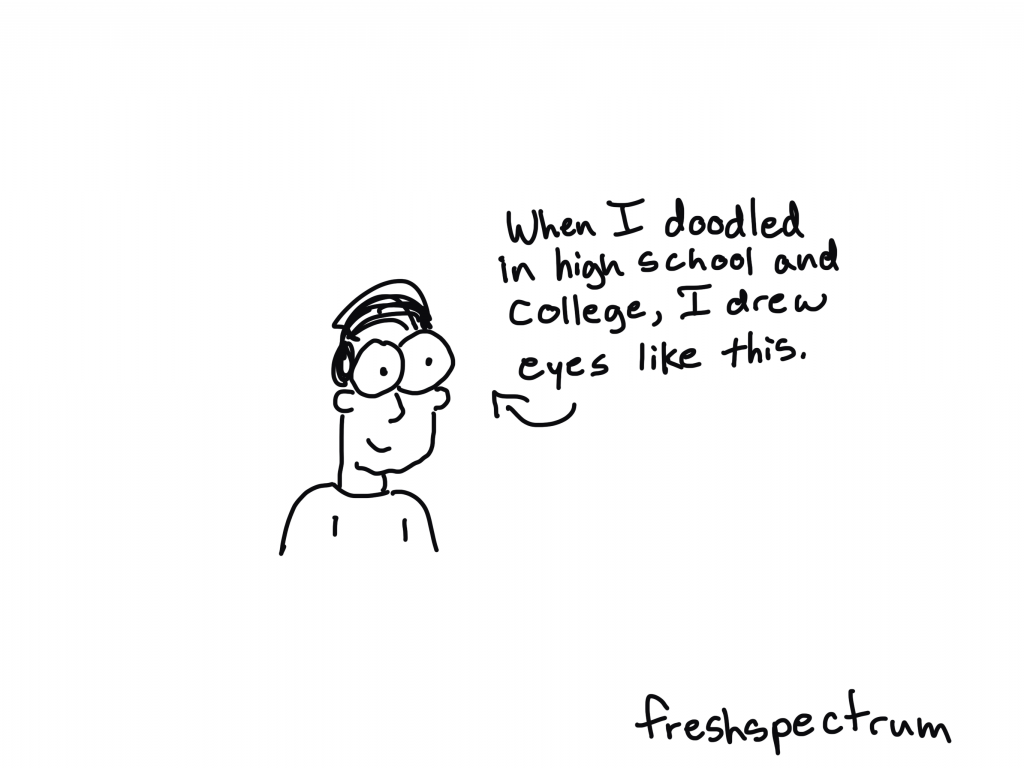
When I doodled in high school and college, I drew eyes like this (surrounded in big circles)
There are a lot of brilliant people who are just no good at the web
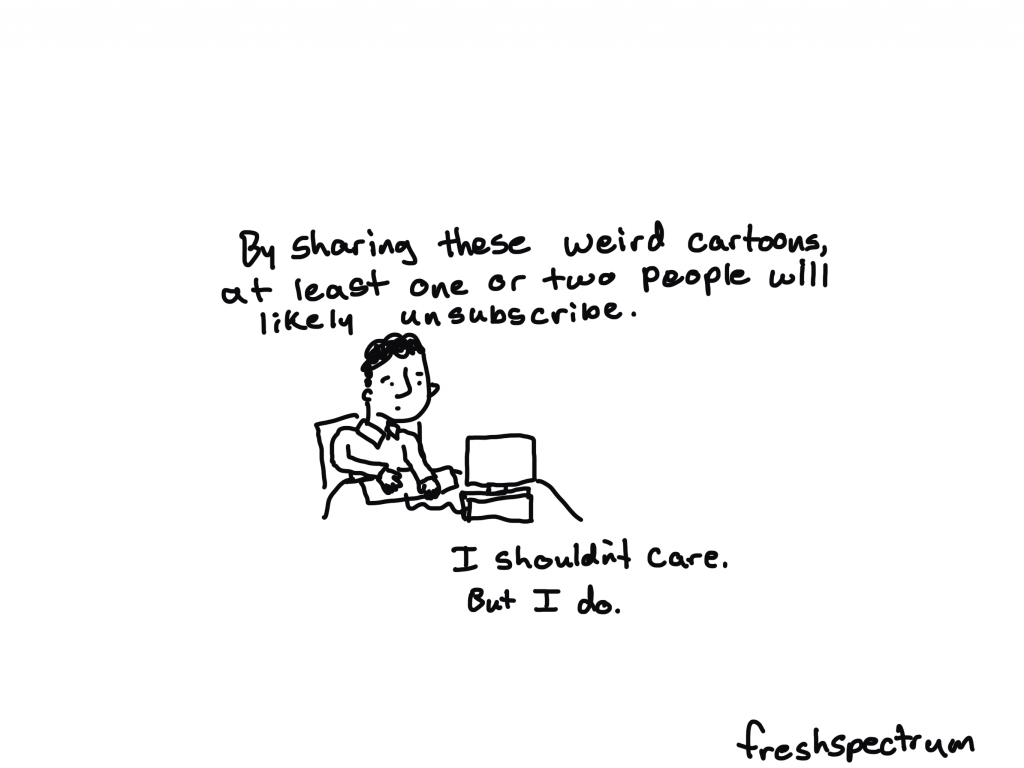
By sharing these weird cartoons, at least one or two people will likely unsubscribe. I shouldn't care. But I do.
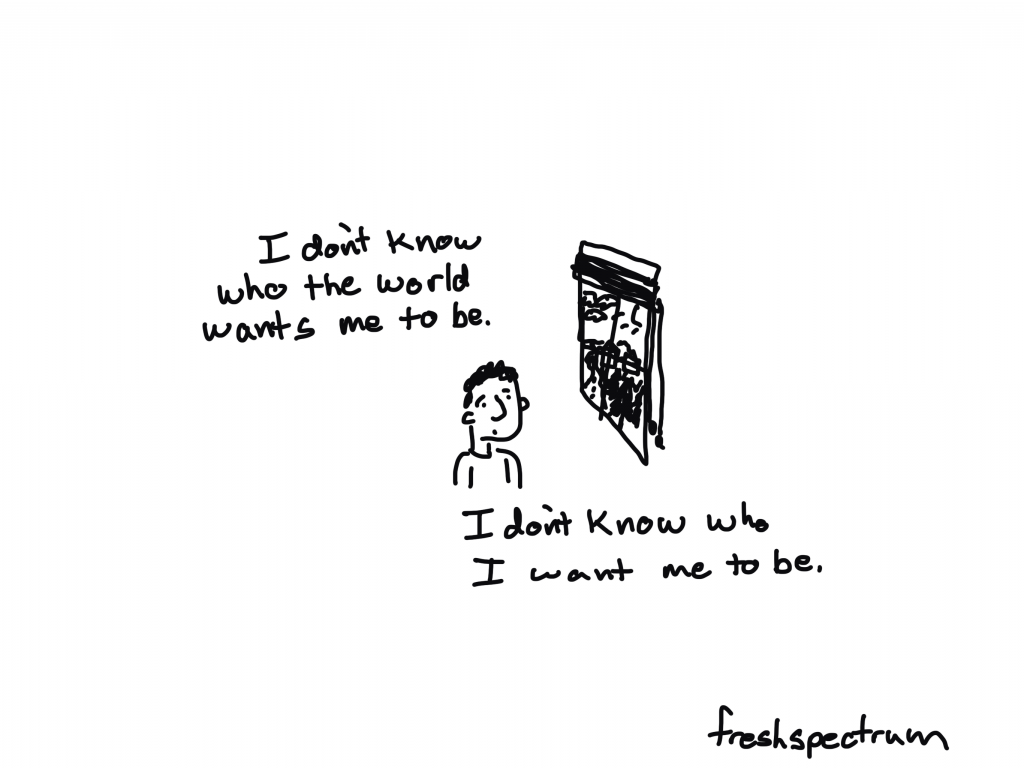
I don't know who the world wants me to be. I don't know who I want me to be.
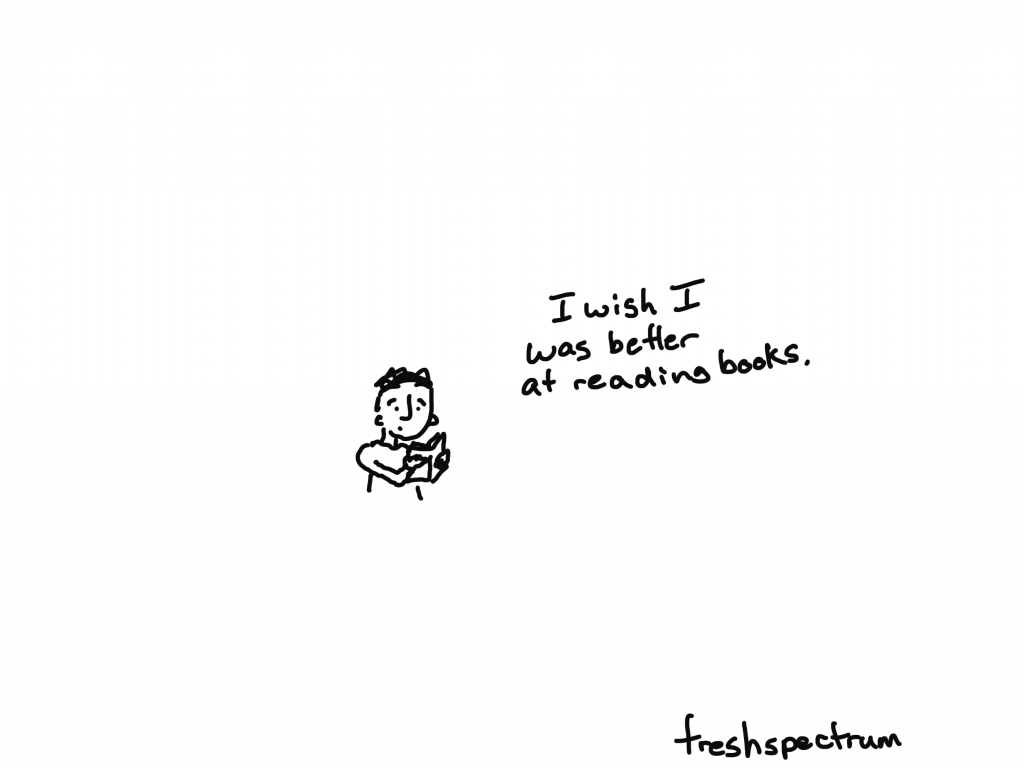
I wish I was better at reading books.
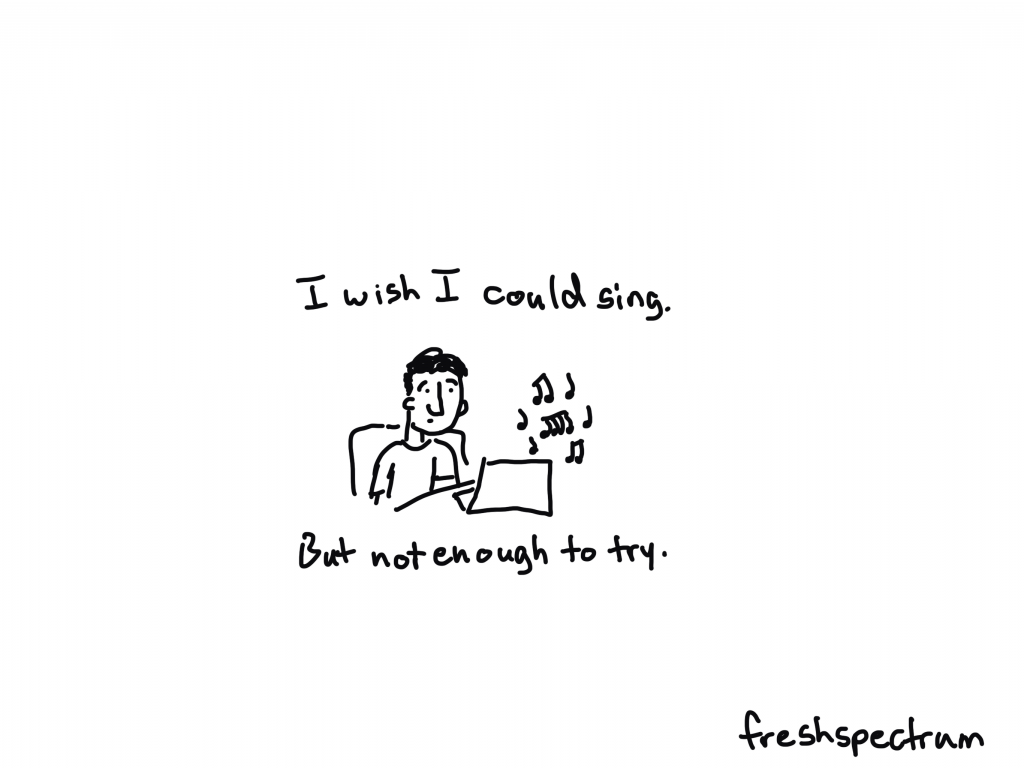
I wish I could sing. But not enough to try.
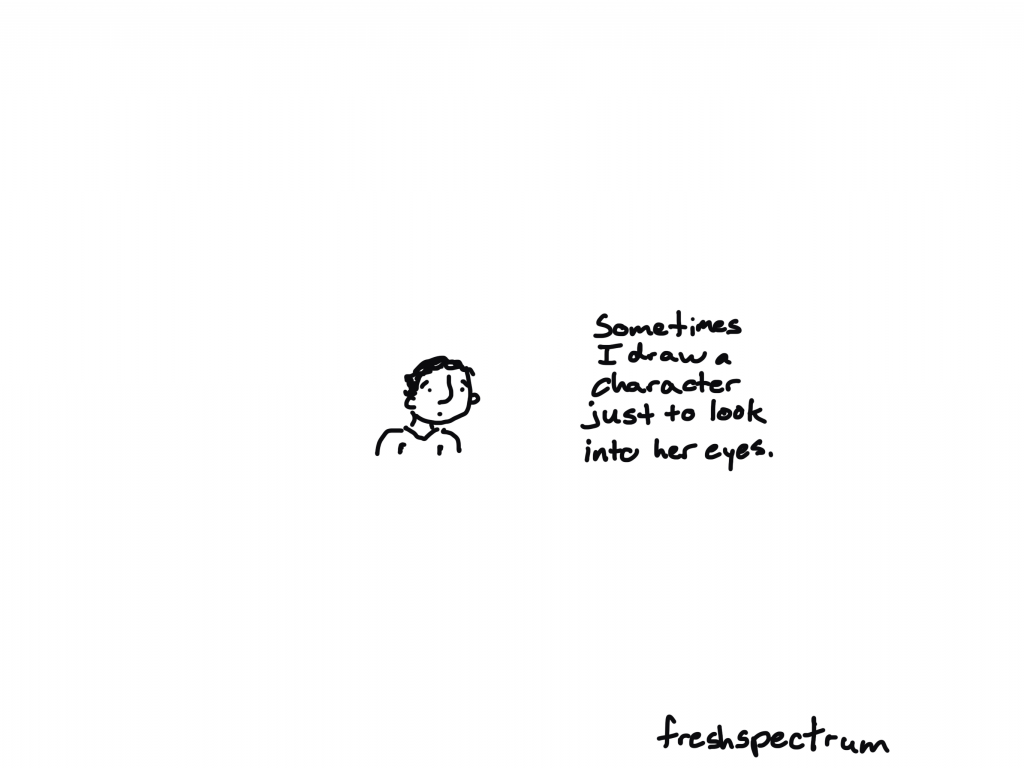
Sometimes I draw a character just to look into her eyes.

Throwing Stones
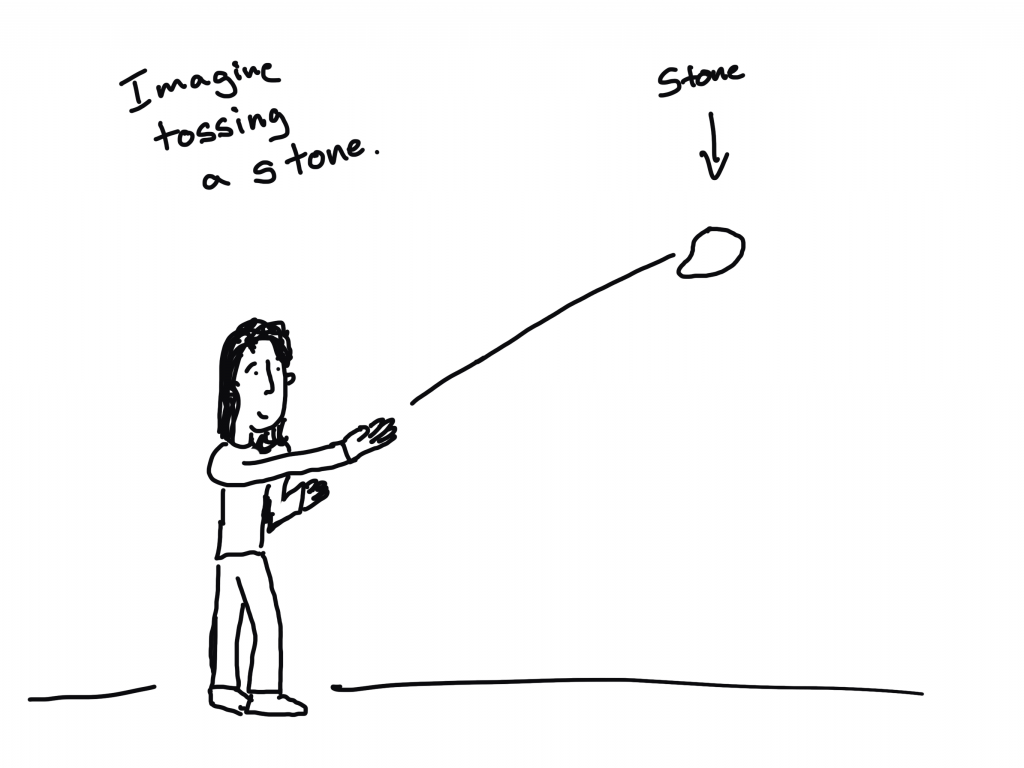
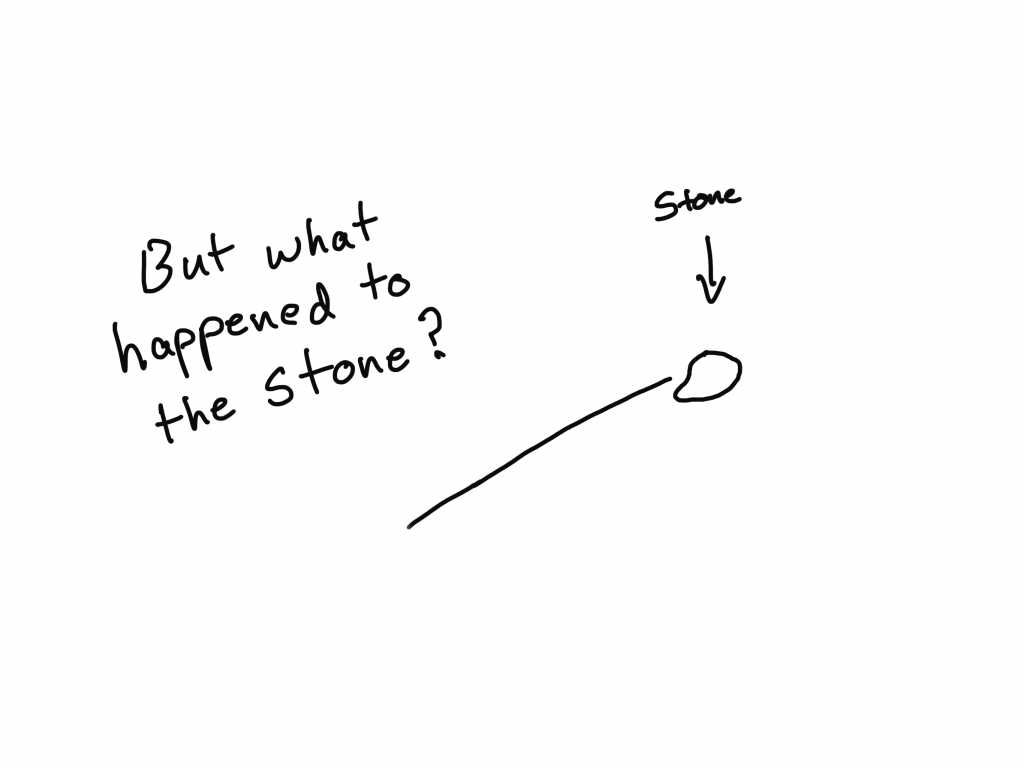
Imagine tossing a stone.
You just picked it up and threw it. Why? Who knows.
And then you turned and left.
But what happened to the stone?
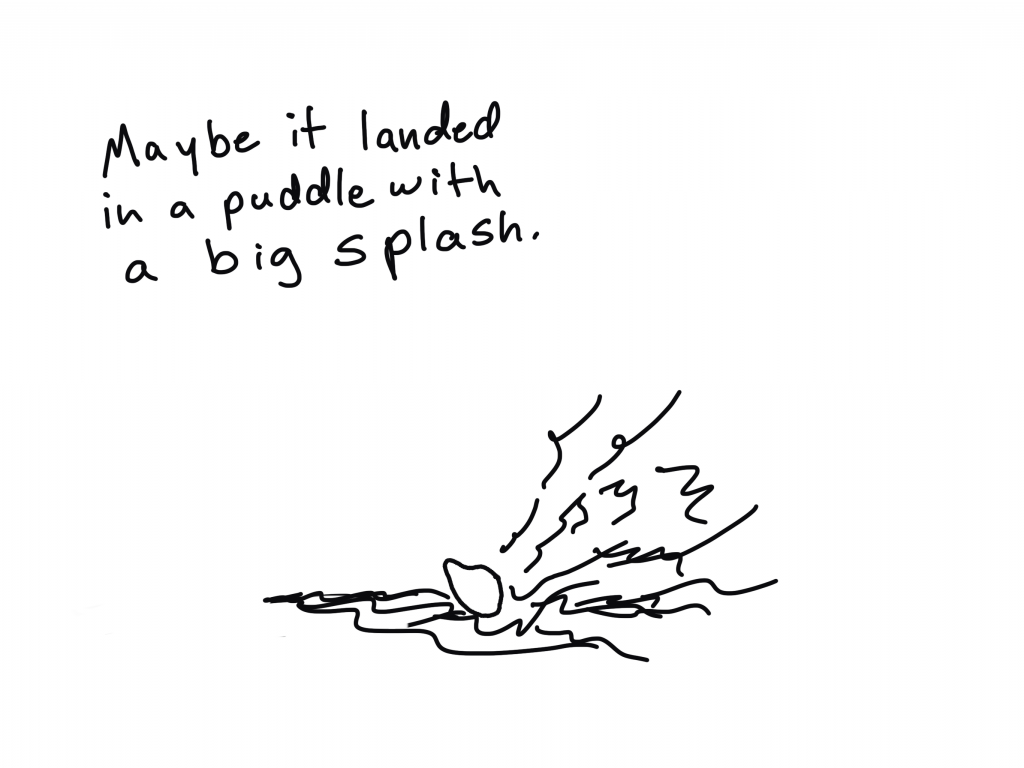
Maybe it landed in a puddle with a big splash.
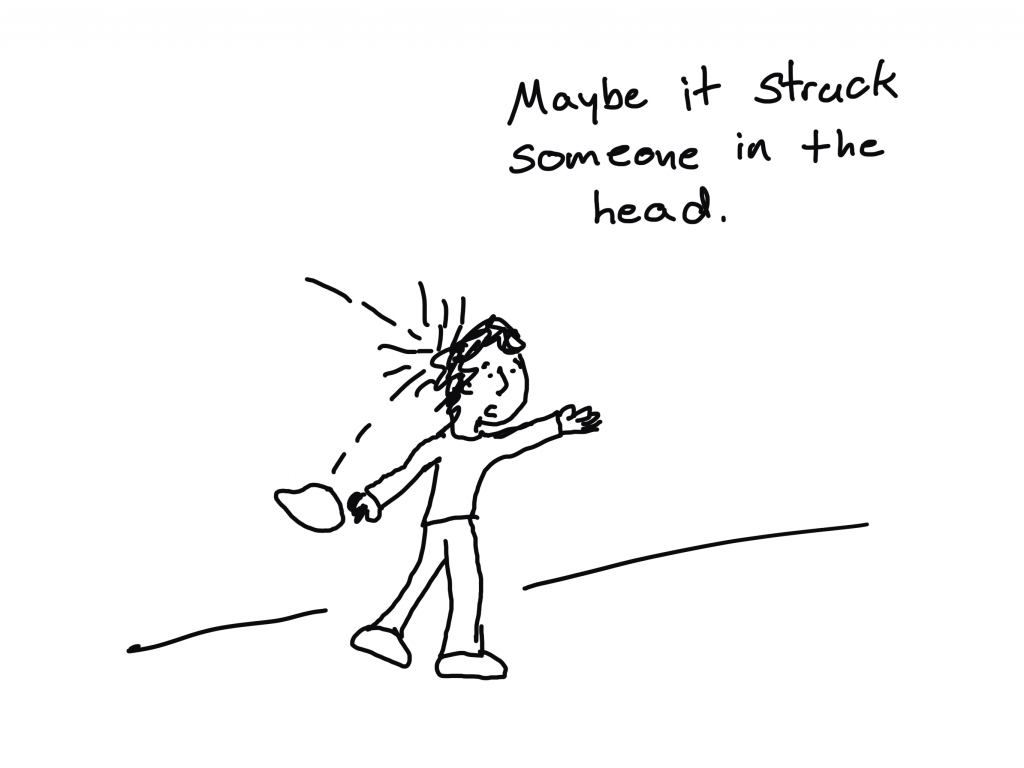
Maybe it struck someone in the head.
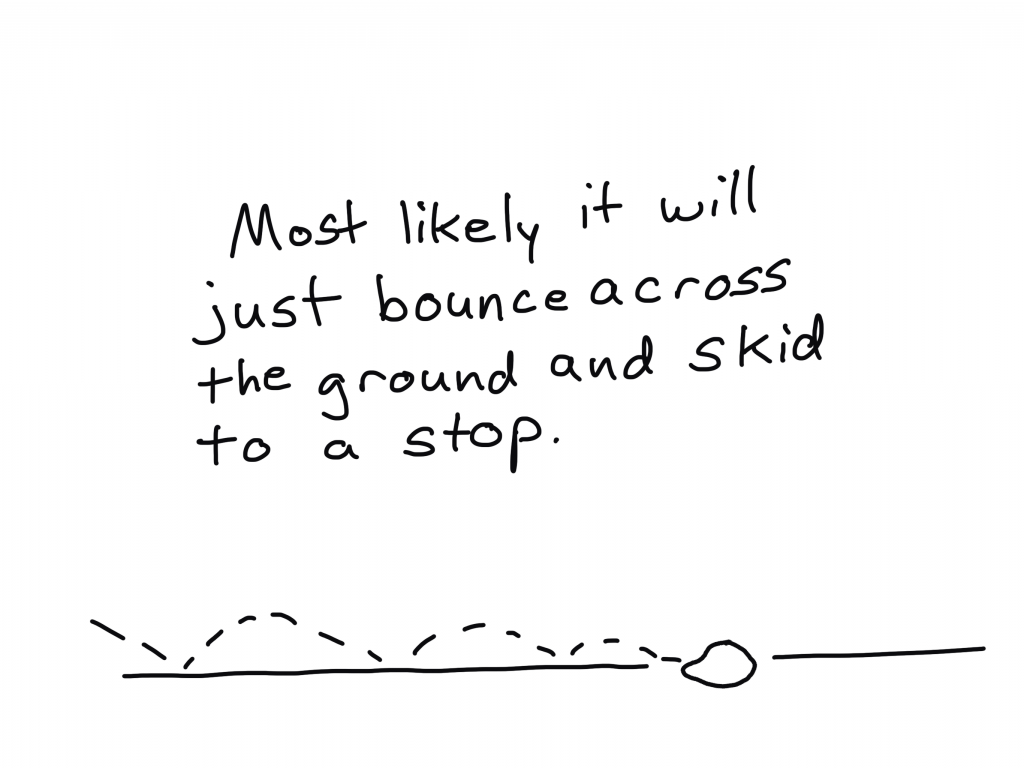
Most likely it will just bounce across the ground and skid to a stop.
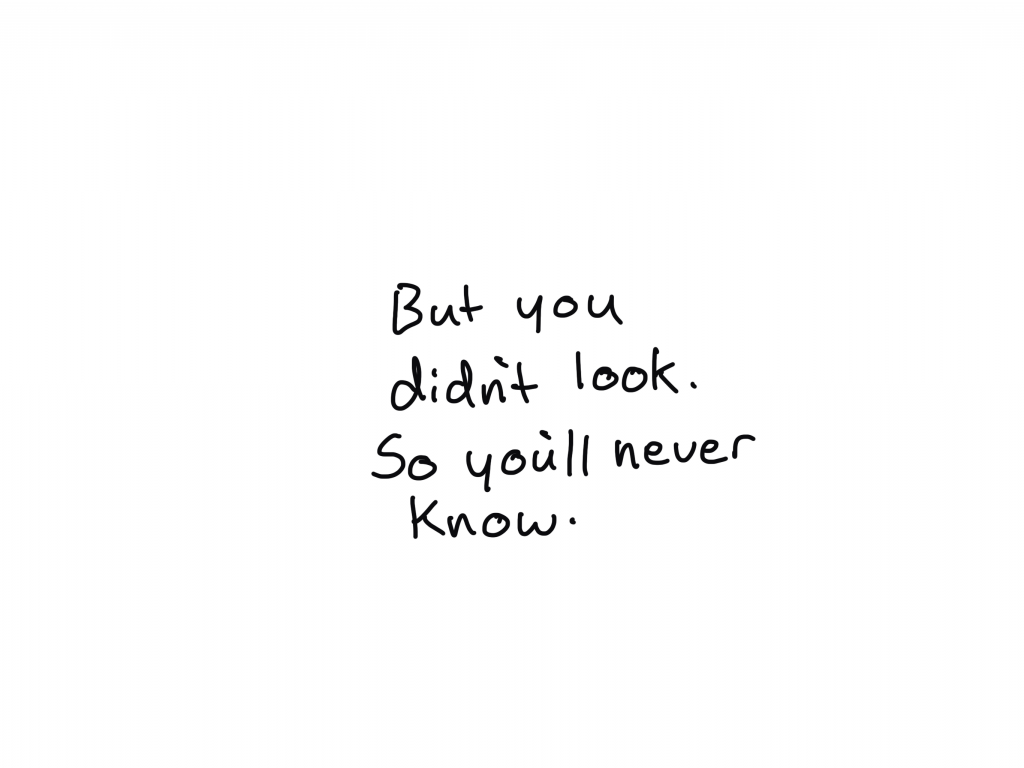
But you didn't look. So you'll never know.

Written by cplysy · Categorized: freshspectrum

Oct 28 2020

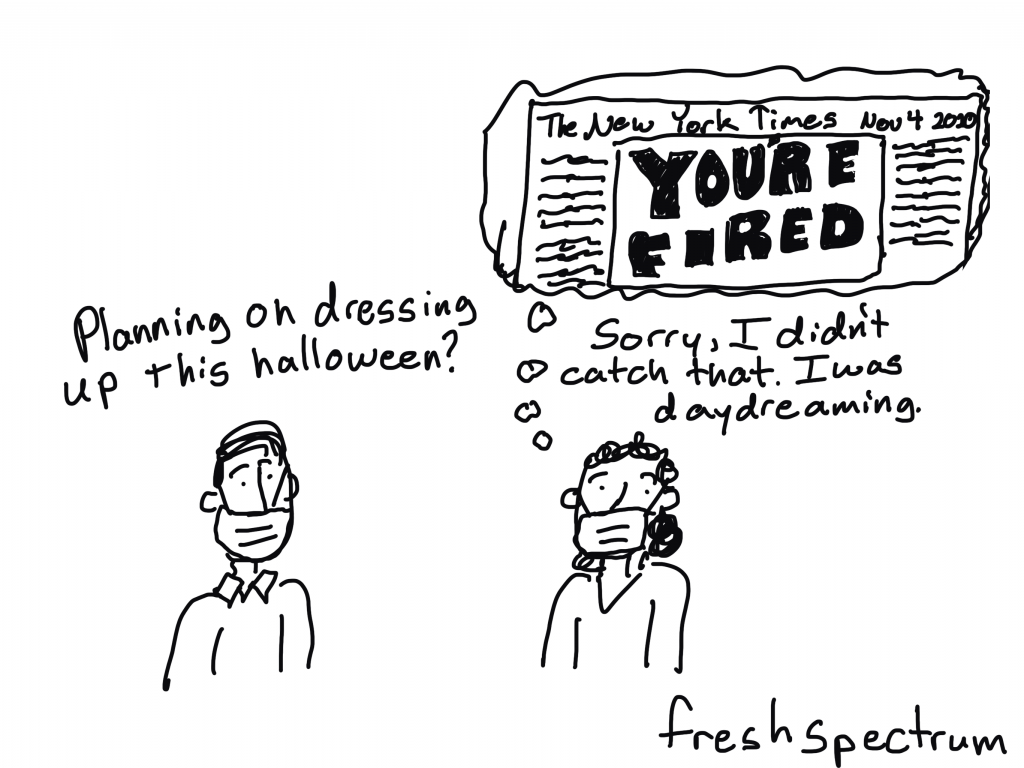
Halloween Cartoons 2020 Edition

Happy weirdo 2020 Halloween everyone!

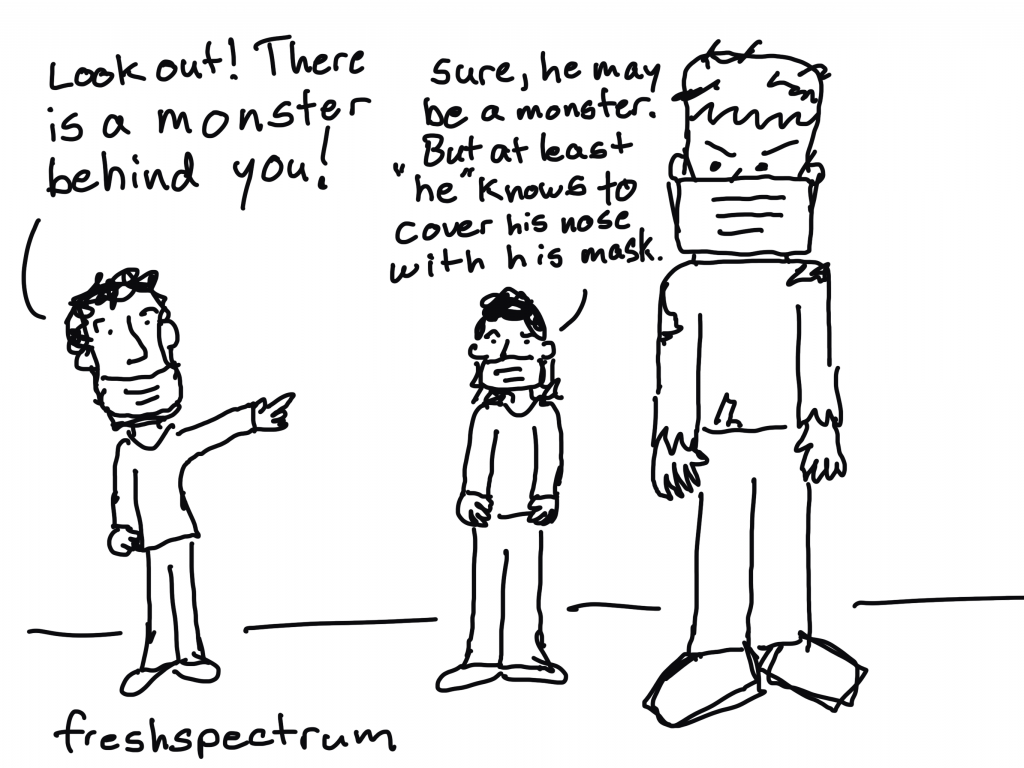
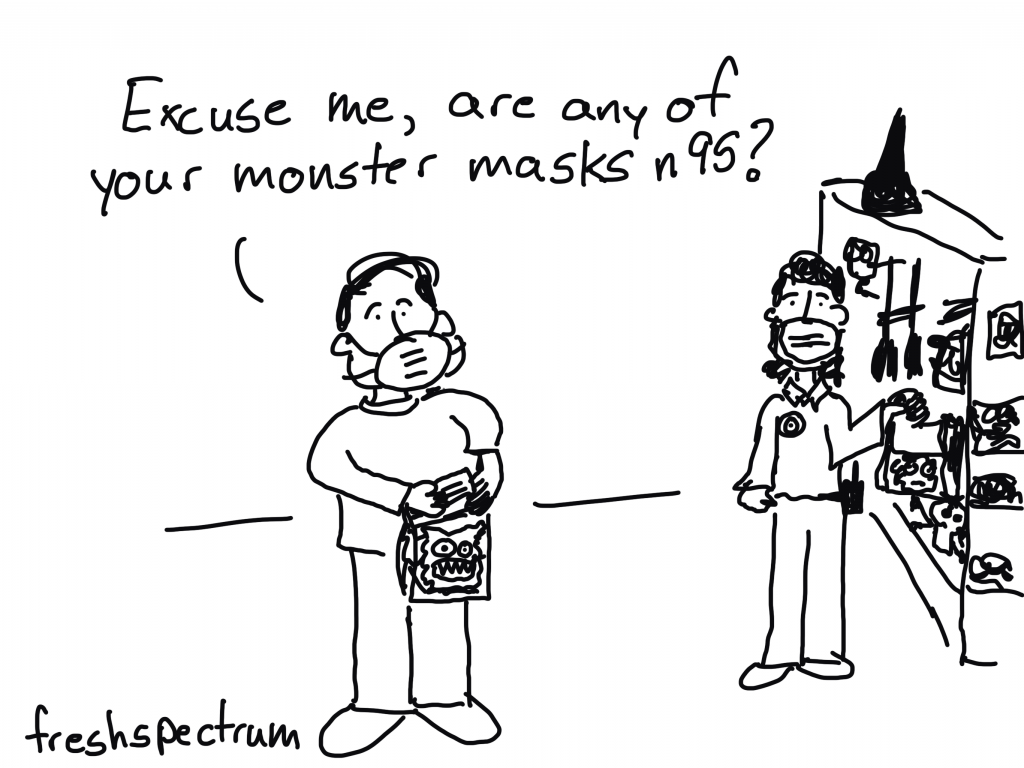
Mask Wearing Monster

Which one is really the monster?

Also, it’s hard to remember to cover the nose when drawing cartoon characters with masks.

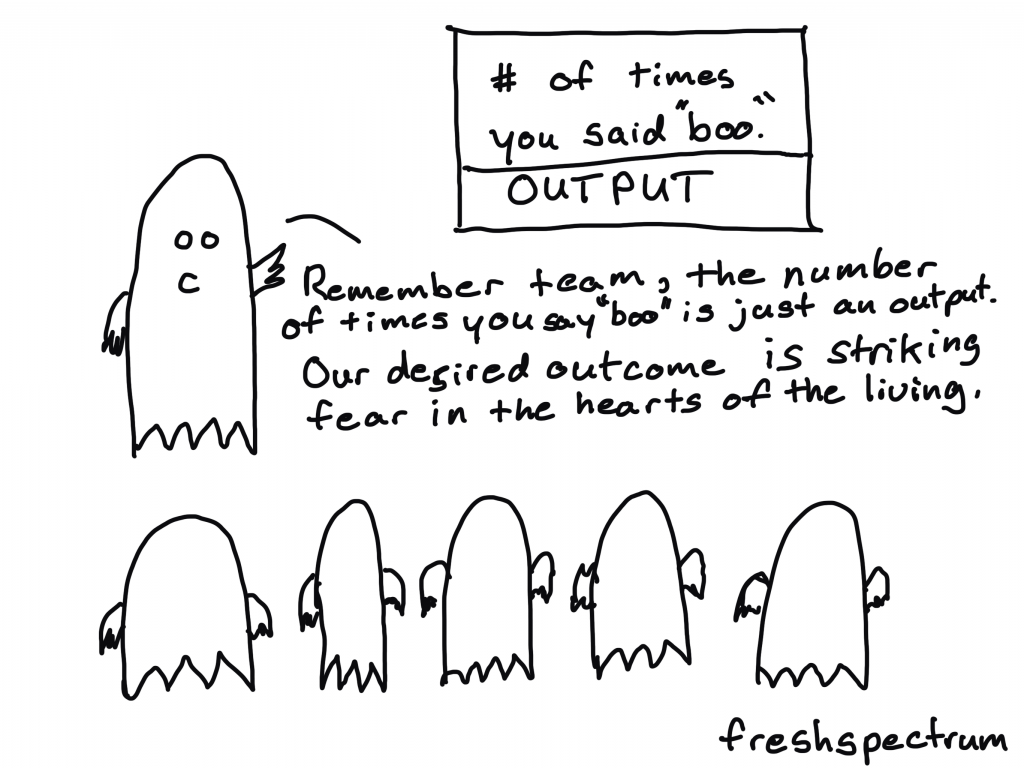
A boo is an output

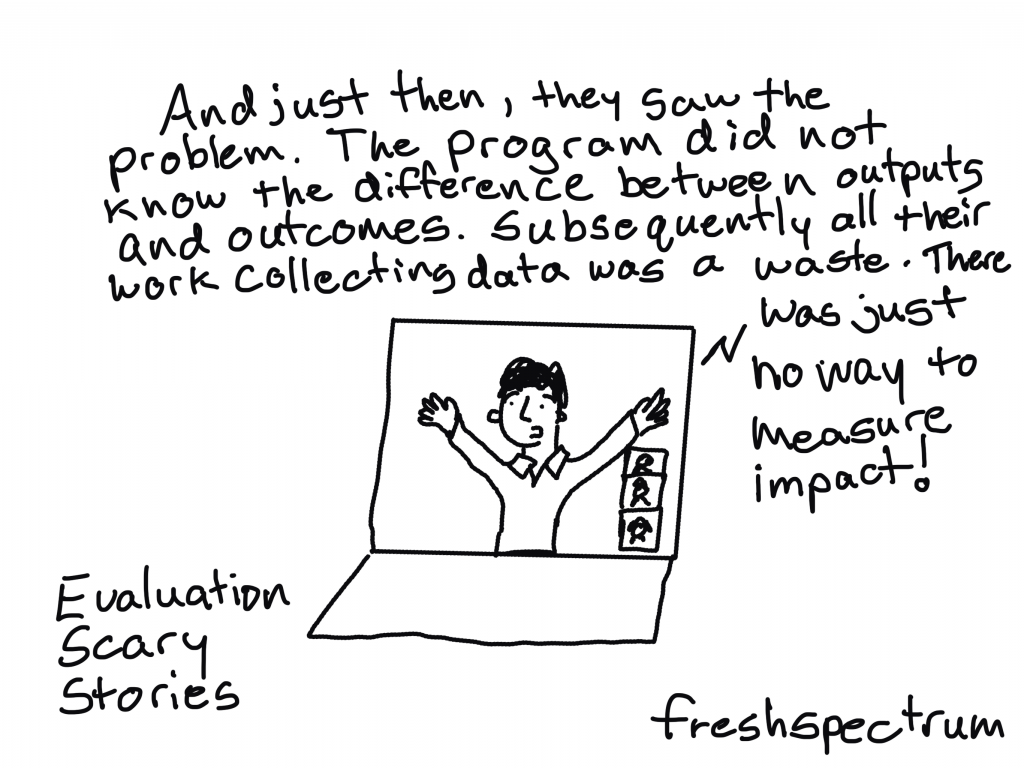
Not sure how many output/outcome cartoons a single illustrator needs to draw. But here is another seasonal version.

Oh no, we only have output data!

You know, I could probably do a whole book just riffing on outputs and outcomes. It would likely not be that good, but when has that ever stopped anyone.

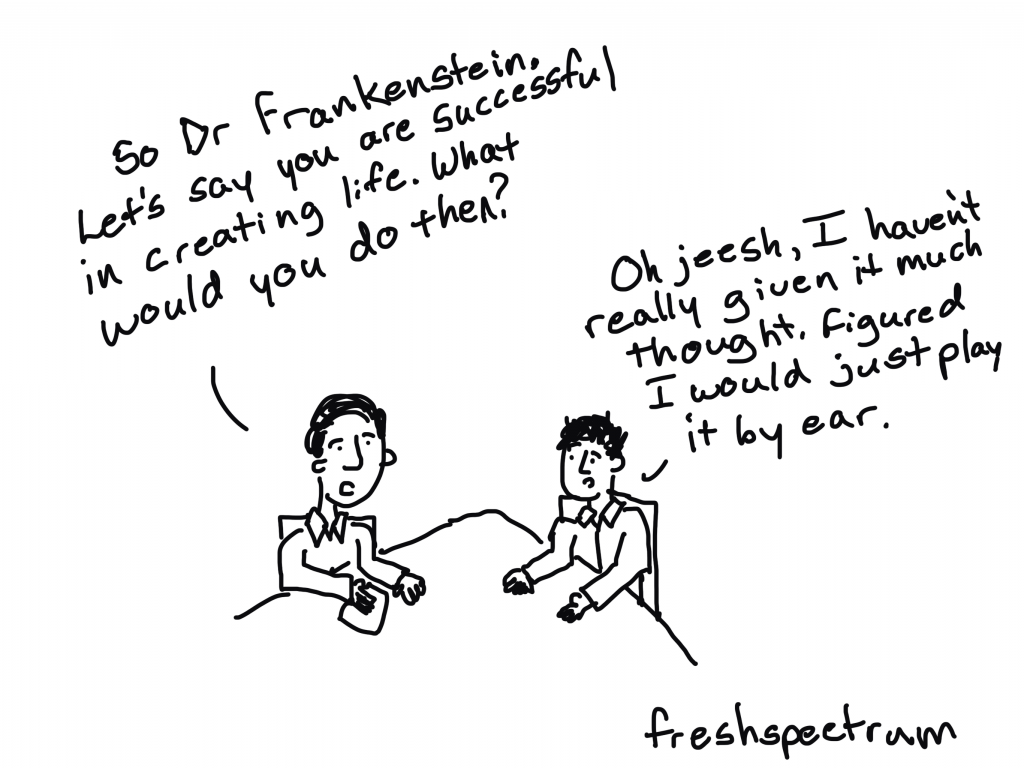
The candid conversation Dr. Frankenstein needed.

So I read the original Frankenstein for the first time last week.

Couldn’t help but think things would have gone way differently if Dr. Frankenstein had chosen to work with an evaluator before creating his monster.

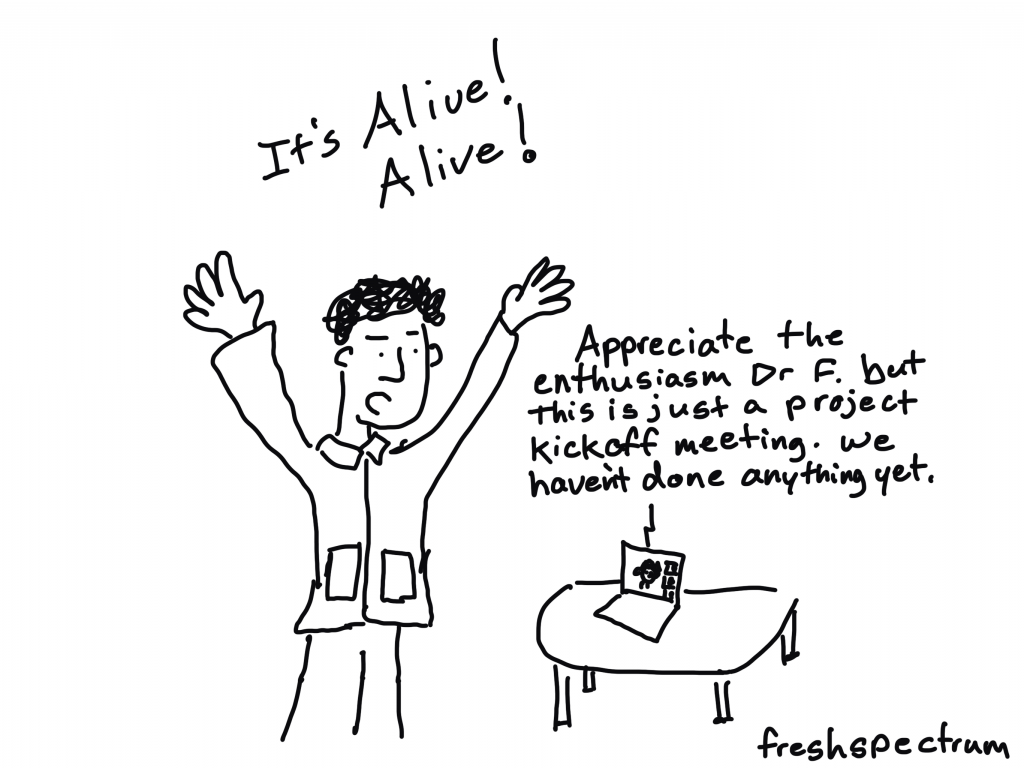
It’s Alive! Alive!

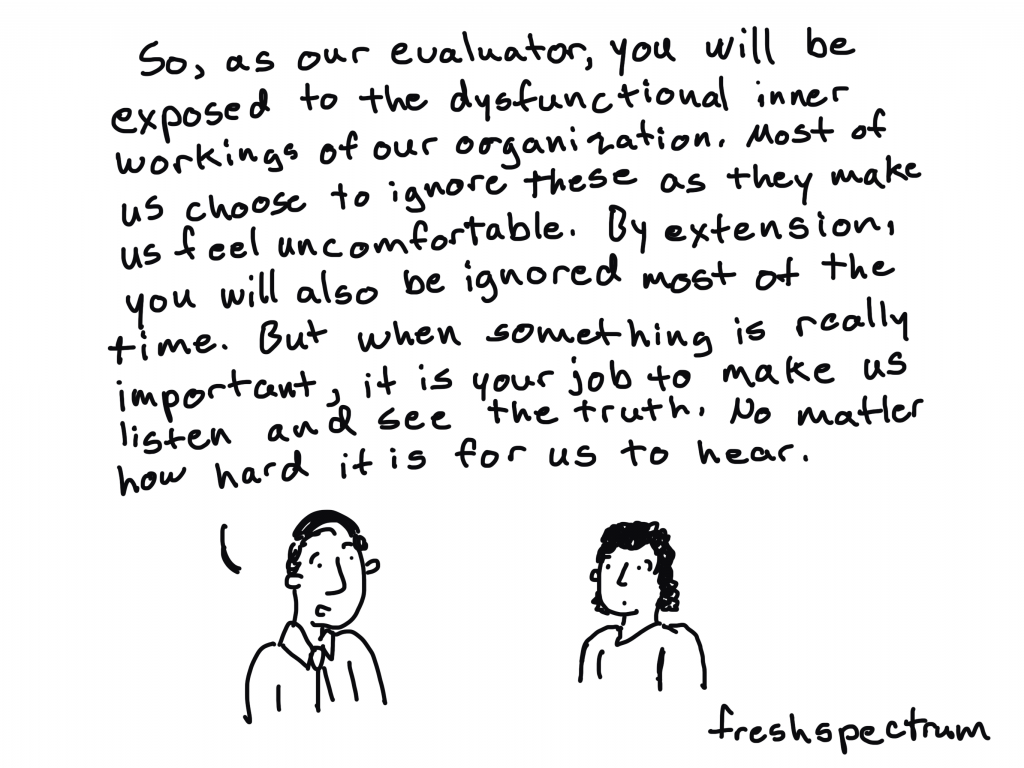
Thinking about Frankenstein’s work as if it were a program made me think about the kickoff meeting.

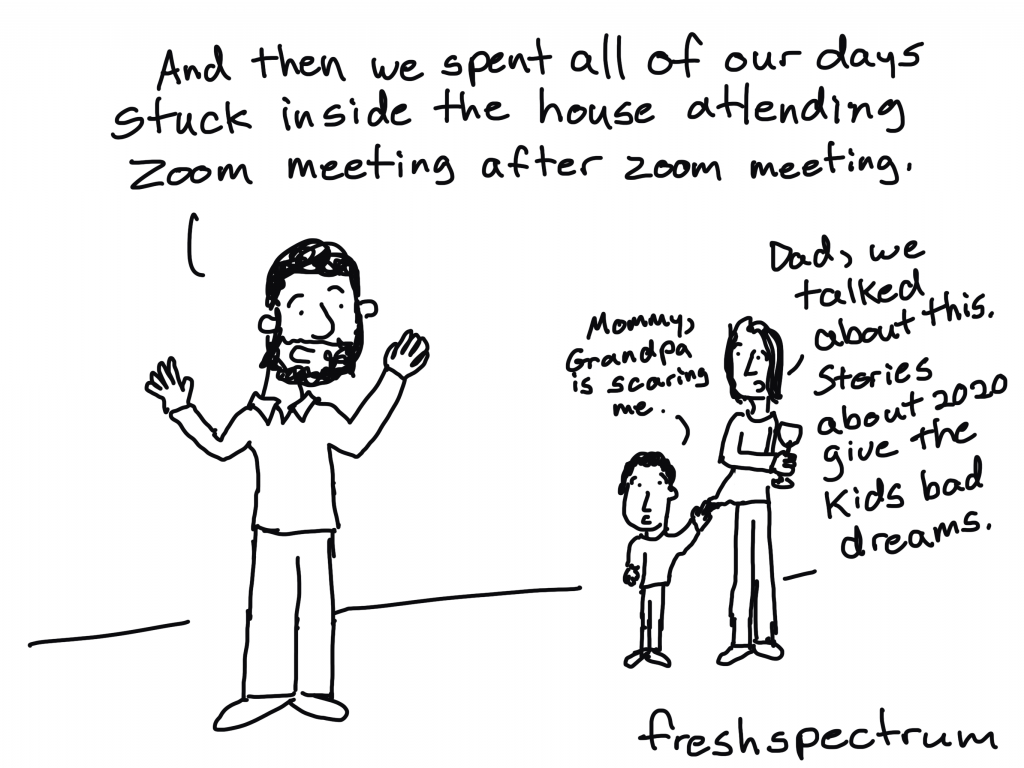
Been a little preoccupied this year.

This might not come as a surprise, but to be clear, I am one of those optimistic but anxiety-filled democrats you read about in the papers.

Yes, 2020 is scary.

But I think it would be much scarier if we didn’t see any real positive changes as a result of our collective experiences.

Coming in 2021?

As an aside, this seems like a real missed market opportunity.

ALL the Cartoons

So I just put a post up for all of my Patrons. In post there is a dropbox folder.

In that dropbox folder there are around 2,500 cartoons and illustrations. Pretty much everything I’ve drawn in one place (good, bad, published, unpublished).

Now is not a bad time to become a Patron of mine. Not only do you get access to ALL the Cartoons, join at even the lowest level and you’ll also get put into a drawing for an autographed copy of my book.

And at the higher levels, no drawing necessary, I’ll just send you the book.

Written by cplysy · Categorized: freshspectrum

Oct 21 2020

Evaluator Inspired Cartoons

The majority of what I would consider to be my best cartoons have always been the products of simple collaboration.

Here is how it works. I talk to another evaluator and ask them if there is anything they are struggling with or if there are any complicated things they are having a hard time describing to others. And then we talk.

Eventually, through the conversation, cartoon ideas appear.

Inspired by Jindra Cekan and posted to my Patreon feed

Years ago I started using Patreon as a way to fund my cartooning habit. I only have a handful of patrons (it’s gone up and down over the years), but their support has been instrumental in keeping my website alive.

I never really offered anything extra for my supporters. They helped because they valued the work I was already sharing.

But lately I find myself drawing more cartoons. Sometimes for others, sometimes for myself, and then weekly for this newsletter. They haven’t had a proper place to go (some of my cartoons don’t really fit on this blog and even though I use social media, I kind of hate it).

Inspired by Jennifer Puma and Rebecca Casciano of Glass Frog for an upcoming podcast and posted to my Patreon feed.

So I have decided to just start sharing ALL of my cartoons on Patreon. Whether the cartoons are destined for freshspectrum, some other website, a digital campaign, or simply my private collection, I’ll be sharing them.

Inspired by Ann Gillard and posted to my Patreon feed

So what does that mean for you?

Well, for most of you, nothing changes. I still plan to send out weekly newsletters with a handful of cartoons. All of my cartoons will still be creative commons licensed for use in presentations or blog posts. Basically, you’ll see the same number of cartoons you would normally see.

But if you are so inclined as to want to see more cartoons. I suggest becoming one of my patrons.

Inspired by Katherine Dawes and posted to my Patreon feed

By being a Patron, you get the opportunity to directly influence my cartooning. So if there are certain ideas you wish I cartooned, well, here is your chance.

Inspired by Richard Hooper and posted to my Patreon feed

Want an autographed copy of my book?

So I’m running a special offer right now on Patreon. If you become a VIP Patron or above ($15/month), and stay for two months, I’ll mail you an autographed copy of my book.

In addition to that, I’m also running a secret offer that only people who read this newsletter will know about. I’ll be giving away 5 signed copies of my book to a random set of my Patrons who are there on November 1st. Then I’ll have a second drawing, giving away 5 more signed copies on December 1st.

So even $3/month Patrons get a pretty decent shot of getting a copy of my book signed and delivered.

Random cartoon from my private collection posted to my Patreon feed

Join Us!

Become a patron today > https://www.patreon.com/freshspectrum

Written by cplysy · Categorized: freshspectrum

Oct 15 2020

The 2020 Election: A Little Context

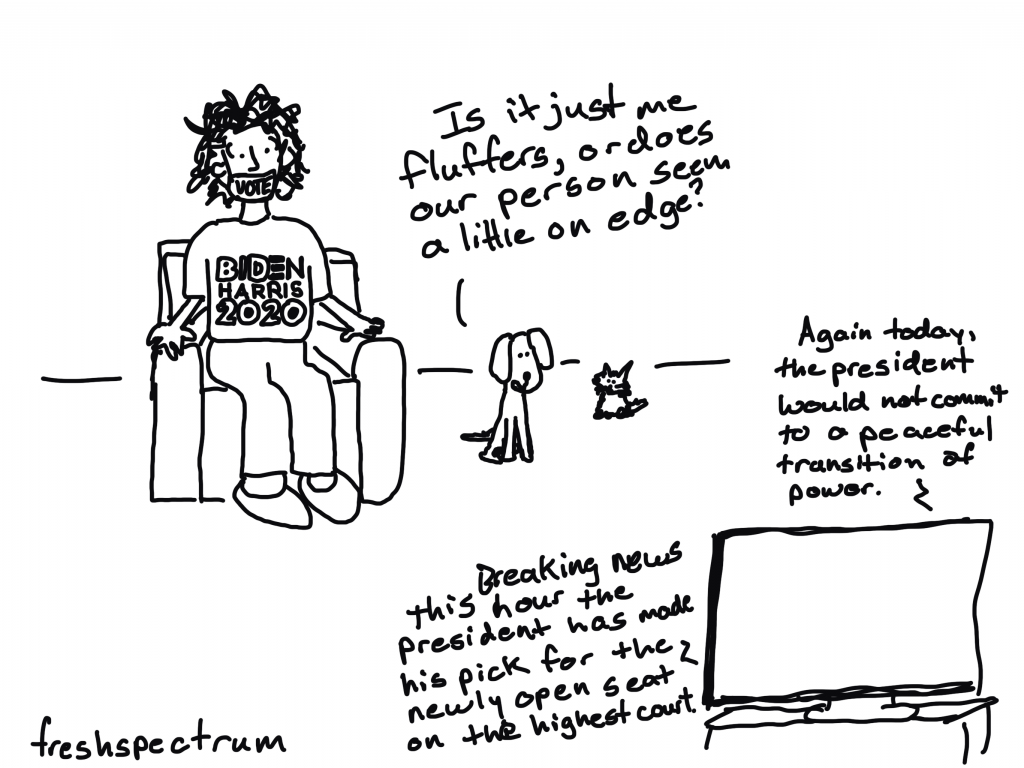
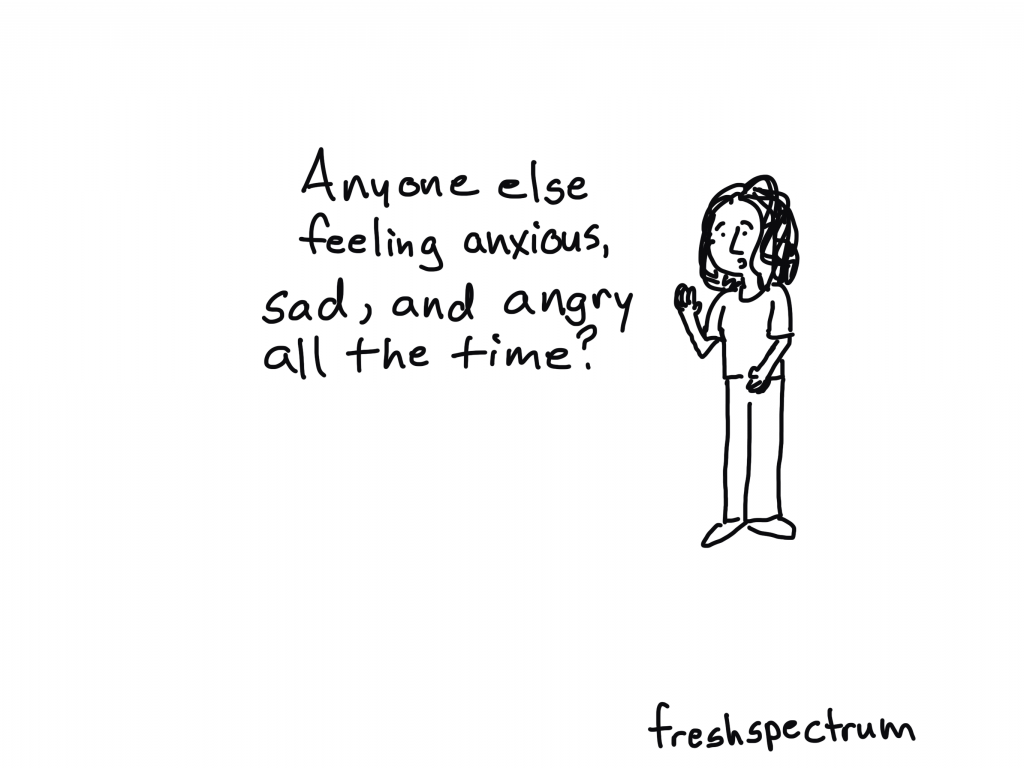
I am a little stressed out.

In the US, voting in the general election has begun. My wife and I dropped our ballots off at the post office yesterday.

It’s not that I don’t think we have good shot of voting Trump out office, I think we do. But after the events of 4 years ago, I take nothing for granted.

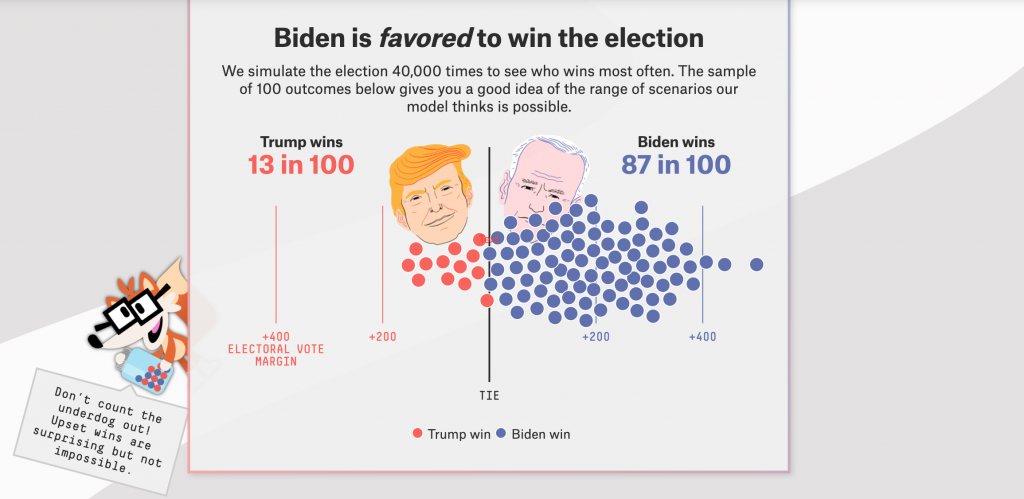
If you look at the national numbers, this election shouldn’t be particularly close. But unfortunately, that’s not how it works. While not the likely outcome, Trump still has the chance for an upset.

From Nate Silver’s election forecast on fivethirtyeight, this chart was pulled on October 14, 2020.

As a good number of you who follow my cartoons and receive this newsletter are not in the US, I thought I would provide a little bit of extra historical context. Cartoon Style.

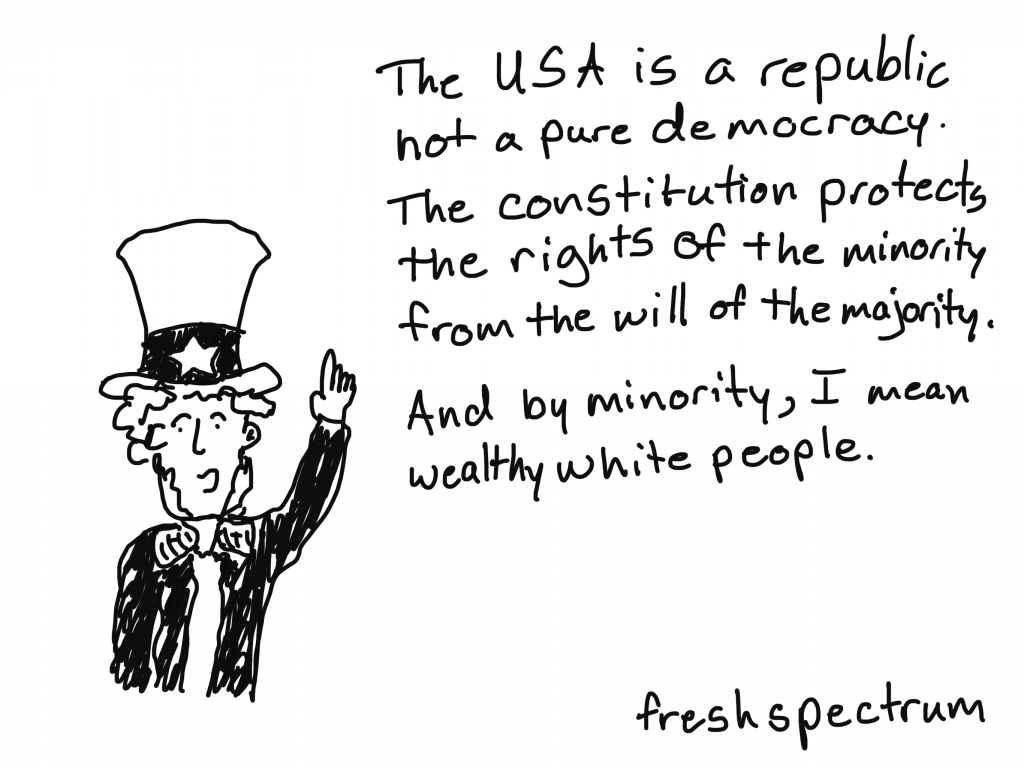
The United States is a representative democracy that slants toward a republic.

The United States, like most modern nations, is neither a pure republic nor a pure democracy. Instead, it is a hybrid democratic republic.

Republic vs. Democracy: What Is the Difference?

The popular vote doesn’t elect the president and vice president. Instead the election is the result of voting by the electoral college. This how Trump won in 2016 even though he did not win the popular vote.

The powers given to southern slave states during the founding of the US continue to reverberate.

Altogether, the three-fifths compromise had a detrimental impact on vulnerable populations, such as the enslaved and the nation’s Indigenous peoples. Slavery may have been kept in check rather than allowed to spread without it, and fewer Native Americans may have had their way of life upended, to tragic results, by removal policies. The three-fifths compromise allowed the states to unite, but the price was harmful government policies that continued to reverberate for generations.

The History of the Three-Fifths Compromise

The uneven representation within our political system has existed since the dawn of our democracy. Even as men and women were treated as though they were not men and women, southern representatives were fighting for enslaved people to be “counted” in the formulas that established political power.

This unequal political power continued well after the fall of slavery.

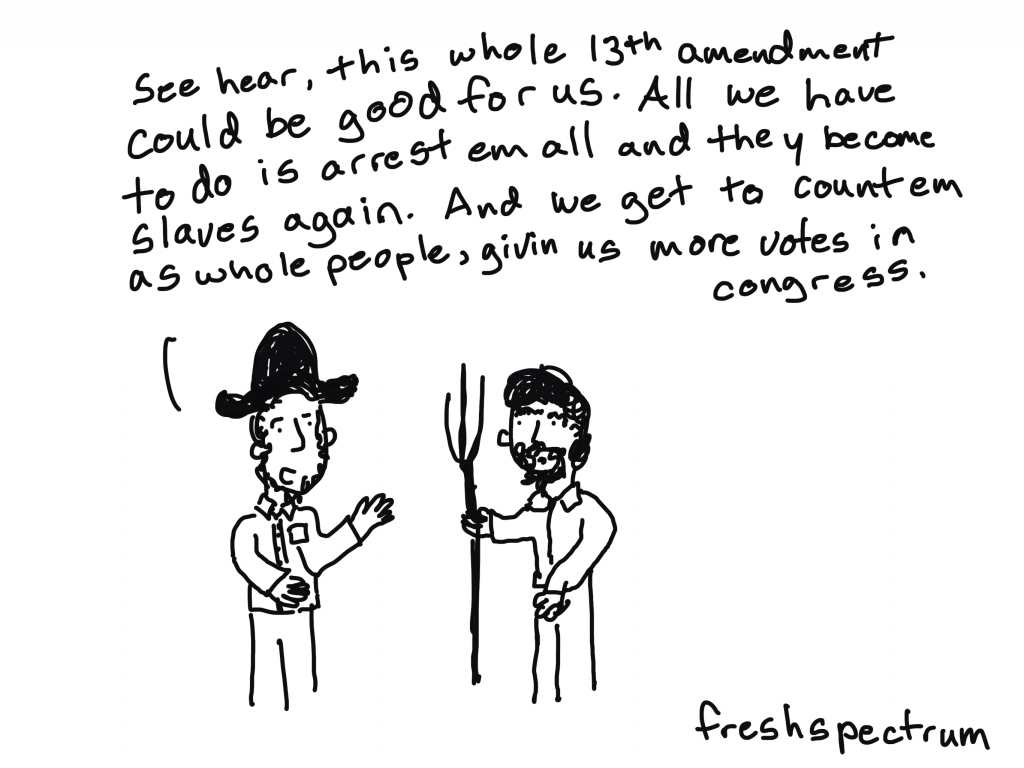
Even the 13th Amendment, written to end slavery, gave enough wiggle room for southern states to suppress the votes of black southerners (or re-enslave through the prison system) while accumulating additional representational power in congress.

Section 1. Neither slavery nor involuntary servitude, except as a punishment for crime whereof the party shall have been duly convicted, shall exist within the United States, or any place subject to their jurisdiction.

Language from the 13th Amendment

All 50 states in the US were established prior to the Voting Rights Act of 1965.

All but 2 states (Alaska and Hawaii) were established prior to the 19th Amendment in 1920, which gave women the right to vote (white women).

Each state is given 2 senators. And the senate holds a lot of power, including the power to confirm Supreme Court nominees.

Washington DC is home to approximately 700,000, and the majority group in the district is black. Washington DC is not a state, and has no voting members in the US Senate.

Wyoming is home to approximately 600,000, and the majority group is overwhelmingly white. Wyoming is a state (it become one in 1890). It has 2 voting members in the US Senate.

These states were created as the country broke treaty after treaty with the indigenous peoples who’s ancestors lived on this land long before the first colonists.

Interested in diving deeper into US history?

One book I would recommend is Paul Ortiz’ An African American and Latinx History of the United States.

Spanning more than two hundred years, An African American and Latinx History of the United States is a revolutionary, politically charged narrative history, arguing that the “Global South” was crucial to the development of America as we know it. Scholar and activist Paul Ortiz challenges the notion of westward progress as exalted by widely taught formulations like “manifest destiny” and “Jacksonian democracy,” and shows how placing African American, Latinx, and Indigenous voices unapologetically front and center transforms US history into one of the working class organizing against imperialism.

An African American and Latinx History of the United States.

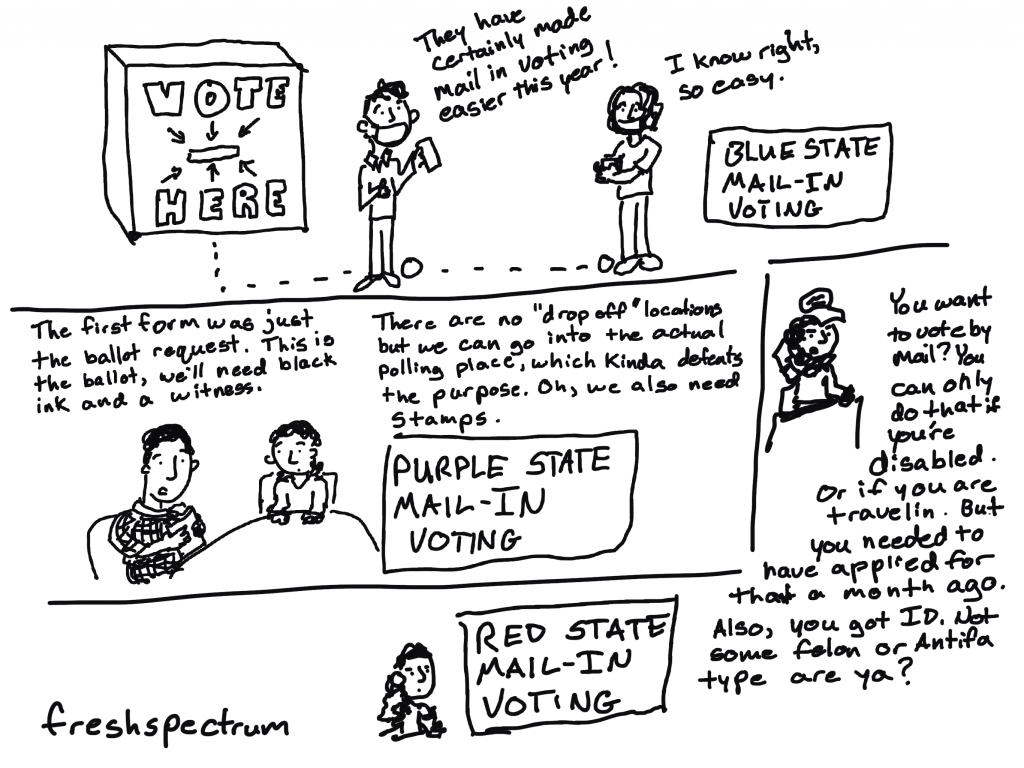
Why you see lines at polling stations.

I live in North Carolina, which is a purple state.

We have a governor who is a democrat, two republican senators, and a state legislature full of republicans.

Mail in voting here was not exactly easy, but it wasn’t impossible. We didn’t have to make an excuse, just request a ballot. And we had to have a witness sign our envelope before putting our ballots in the mail.

Friends in Maryland seem to have it easier. But some friends in the deeper south definitely do not.

I’ve written so far about just some of the history behind our country. Making it hard for some people to vote in order to gain an unfair advantage is simply an American tradition.

The United States is a Deeply Segregated Country

The United States is on track to be a majority-minority nation by 2044. But census data show most of our neighbors are the same race.

America is more diverse than ever — but still segregated

The US is know for its wide open spaces. And if you’ve ever had the opportunity to drive across this country, you’ve seen them. Where we live, and the people who surround us, shape our lives in so many ways.

I grew up in a red pocket of a blue state. It was a segregated (white majority) exurb about a half hour west of Baltimore. Many of the people where I grew up are now Trump supporters.

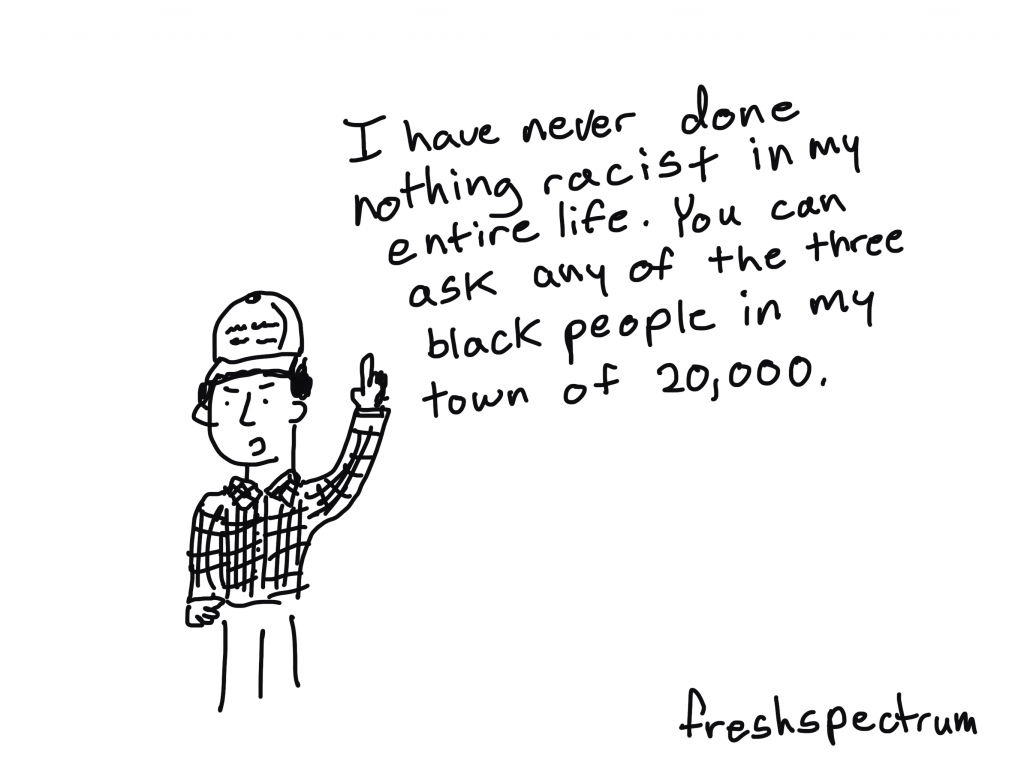
The vast majority would never consider themselves racist, even the ones who support overtly racist policies and laugh at horrible racist jokes/memes.
Living connected but very different lives
Neither racism nor segregation is just a southern thing in the US. Racism has had a huge impact in this country, north and south. And the north’s racist history has also shaped politics.

But in Vienna, as in hundreds of mostly white towns with similar histories across America, much is left unspoken. Around here, almost no one talks openly about the violence that drove out Black residents nearly 70 years ago, or even whispers the name these places were given: “sundown towns.”

Unless they’re among the handful of Black residents.

“It’s real strange and weird out here sometimes,” said Nicholas Lewis, a stay-at-home father. “Every time I walk around, eyes are on me.”

AP Road Trip: Racial tensions in America’s ‘sundown towns’

Building paranoia and fanning the flames

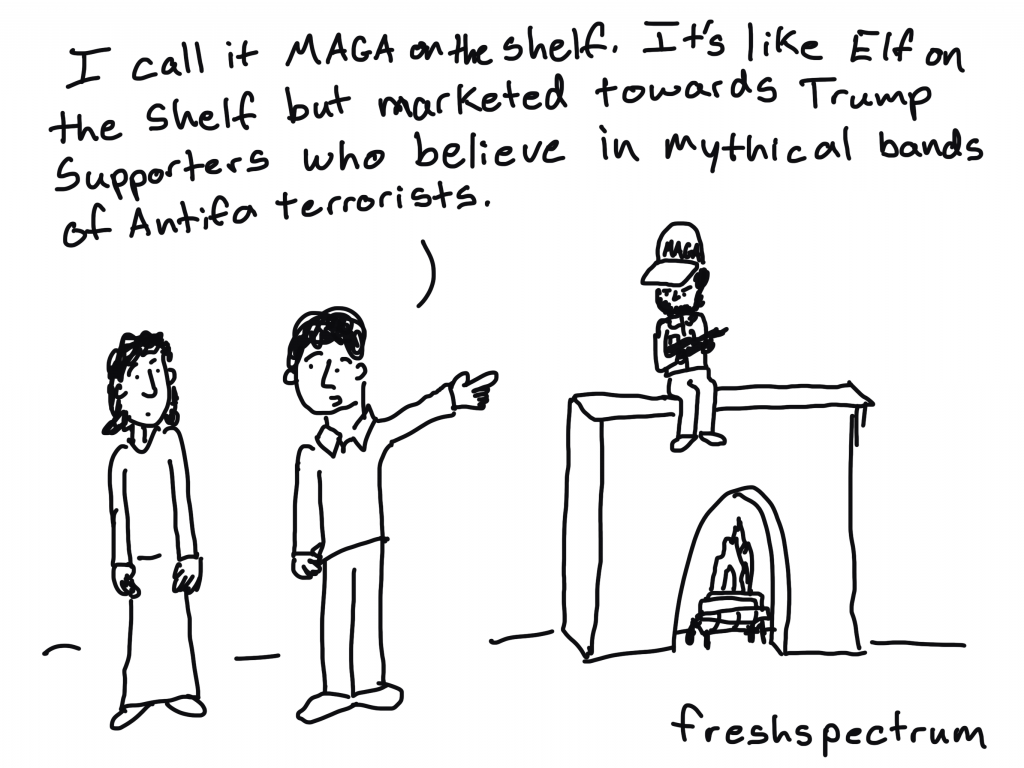
Popular right wing bloggers are doing their best to spread misinformation. And considering our internal disconnects from people who don’t think like us, and social media’s echo chamber creating algorithms, this misinformation is boosting dangerous rhetoric.

It’s a little too easy to draw parallels between current events and the McCarthy era red scare.

The far right has been shown to pose a far greater danger, so why are so many Americans afraid of anti-fascists?

Antifa and America’s revamped Red Scare

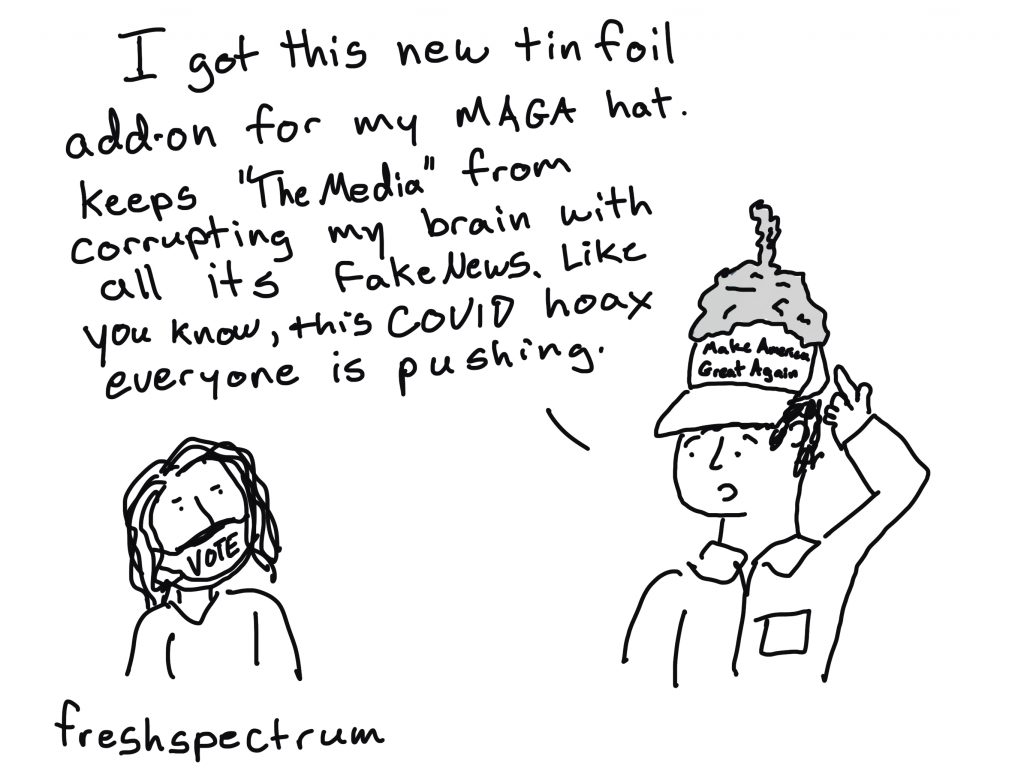
Whether COVID or ANTIFA, the president and his political allies are boosting the lies.

Politics have always come with a bit of “spin.”

But what the president has been doing consistently is not spin. It’s just plain lies. Lies that ramp up his base and trigger extreme actions.

President Trump, who announced overnight that he and first lady Melania Trump have tested positive for the coronavirus, has repeatedly downplayed the severity of the coronavirus pandemic and often contradicted public health experts and members of his own administration in their more grave warnings about the virus.

Timeline: How Trump Has Downplayed The Coronavirus Pandemic

They believe they are patriots

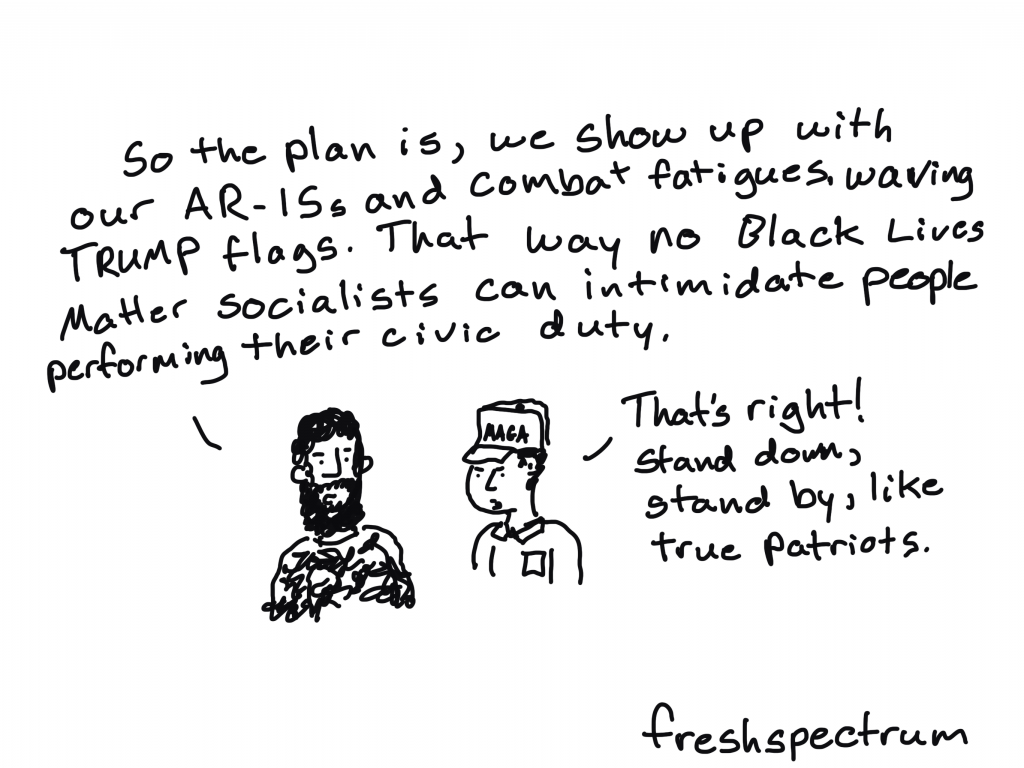
White supremacy and far-right terrorist groups have a supporter in the highest office in the country. When white guys wearing camouflage and holding assault rifle show up at polling places, they believe they are doing what’s right.

Even after the FBI disrupted an alleged terrorist plot to kidnap Michigan Governor Gretchen Whitmer, the president keeps fanning the flames of violence.

Trump Keeps Inciting Domestic Terrorism

Oh, and we are still a country run mostly by white men.

You’ll likely see a bunch of rhetoric tying Kamala Harris to socialism in a way that won’t be done for Biden. And the language used to talk about Harris is horrible. I mean just a week ago Trump called Harris a Monster.

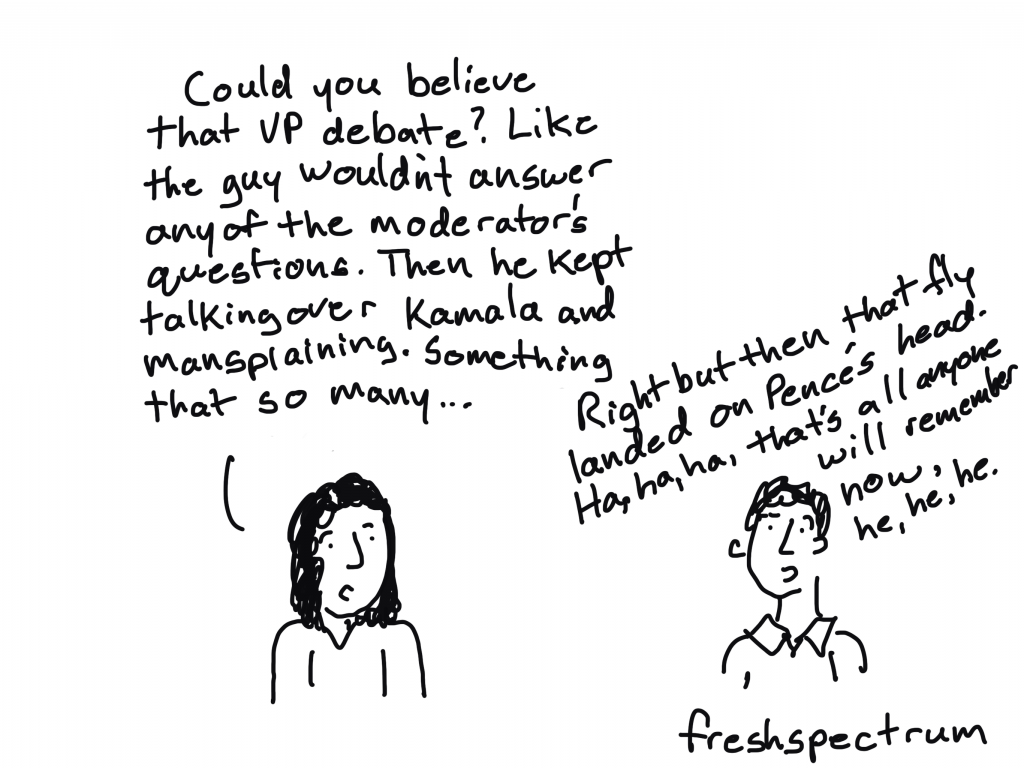
But as extreme as Trump can be, I think the insidious nature of misogyny in this country was more on display during the presidential debate. And then in discussions following the debate, which quickly shifted away from the constant manterruptions to the fly that landed on Pence’s head.

Yes, there was a fly on Vice President Mike Pence’s head during this week’s vice presidential debate. But before the insect stole the show, social media was already abuzz with comments about Pence’s multiple interruptions of his opponent, Senator Kamala Harris, and his refusal to stop talking when moderator Susan Page called time.

Page signaled to Harris to stop talking 13 times. She had to signal Pence 45 times.

#Manterrupting: Female academics saw their own experiences in the vice presidential debate’s gendered and racialized dynamics.

Vote

If you are in the US and reading this, please vote. Even if it’s hard. Even if it doesn’t seem like it will matter in your state. Please vote.

If you have family or friends in the US that you can encourage to vote. Please do. Don’t assume that everyone votes, because they don’t.

This election needs to be a referendum on how this country should be governed. And while I am not happy that this is an election between two old white guys, I do know that one is far better equipped to lead this country.

Written by cplysy · Categorized: freshspectrum

Oct 07 2020

Evaluation is a dangerous profession.

Evaluation is a dangerous profession.

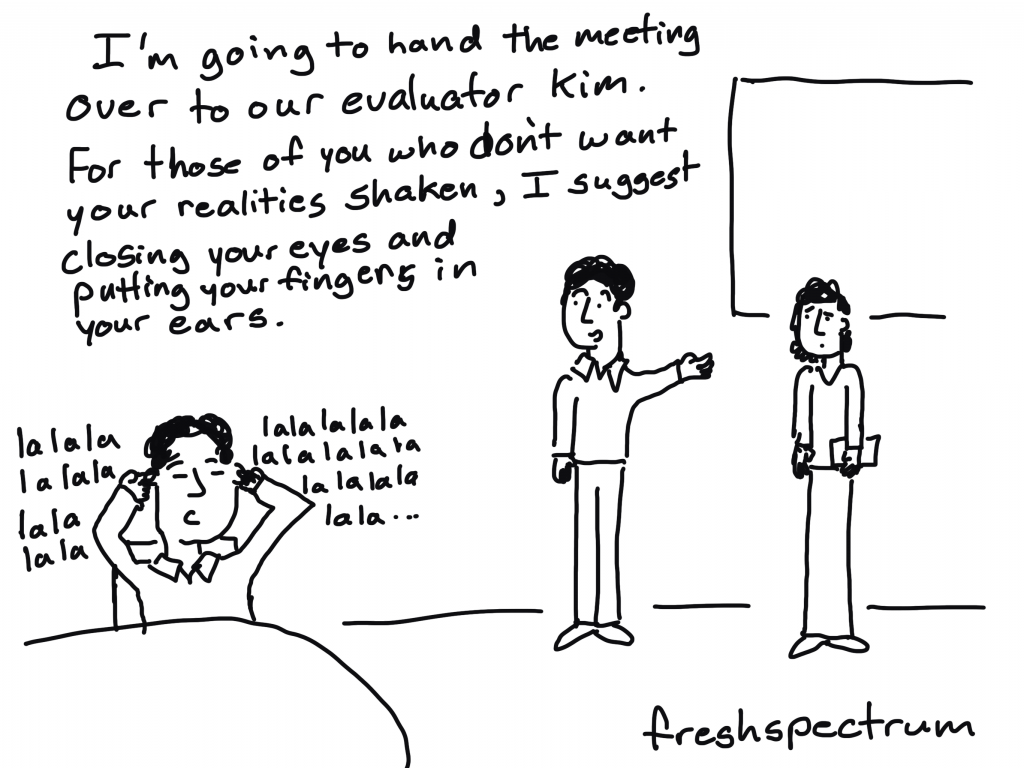
Not dangerous as in it requires hard hats or tethers. But dangerous in that it questions realities most would rather ignore. Traditions that are so deeply entrenched within organizational structures that merely hinting at their instability can lead to alienation and professional isolation.

Our frameworks and methods exist not only to allow us to answer important questions and make proper evaluative judgements of merit, worth, and significance. They provide the important structural scaffolding we, as evaluators, require to be effective.

Society must accept that some things are real; but he must always know that visible reality hides a deeper one, and that all our action and achievement rest on things unseen. A society must assume that it is stable, but the artist must know, and he must let us know, that there is nothing stable under heaven. One cannot possibly build a school, teach a child, or drive a car without taking some things for granted. The artist cannot and must not take anything for granted, but must drive to the heart of every answer and expose the question the answer hides.

James Baldwin from The Price of the Ticket: Collected Nonfiction

The real difference between research and evaluation.

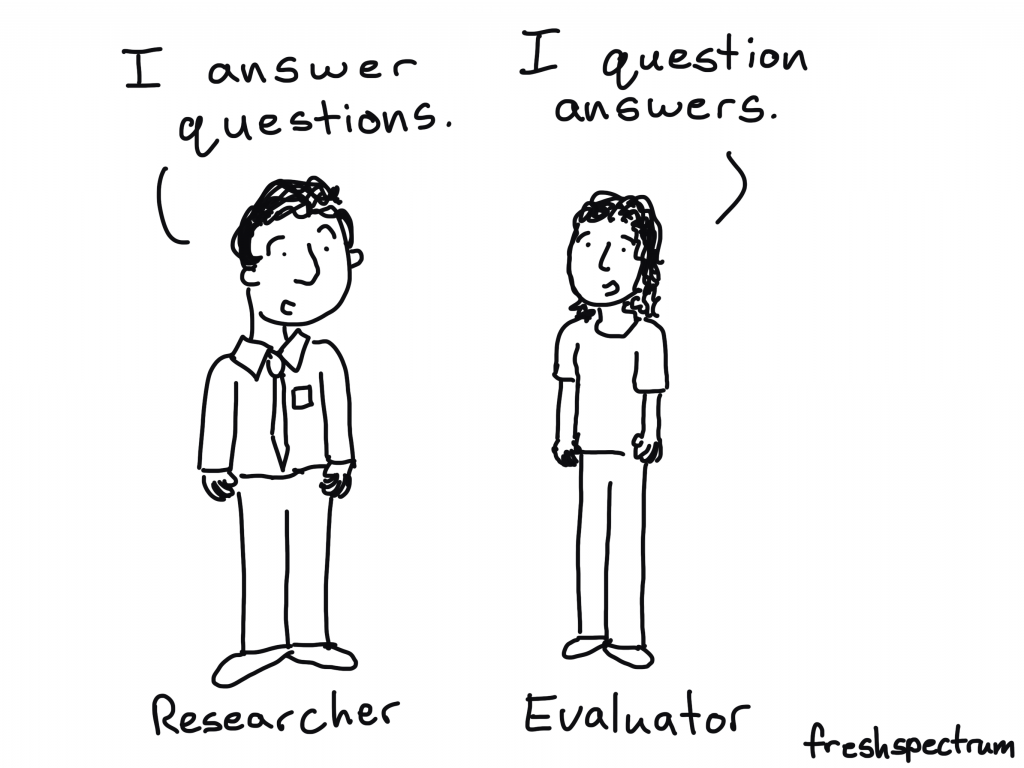
While researchers follow their intellectual curiosities in order to answer questions. Evaluators follow their own as they proceed to question answers.

For a non-profit executive director that has put their heart and soul into a mission that has become their life’s work, of course the program works. Because if it didn’t, what does mean?

For the civil servant who is sworn to protect the health and welfare of thousands, of course they are fulfilling their mission. If they do all they can and give it their best, how could they possibly be making things worse?

If the decisions made by a group of people around a table set into action teams of highly qualified professionals, the wrong decisions could waste not only the decisionmaker’s own money and time but also keep others from making a real difference elsewhere. So they just have to be the right answers. Even if they are not.

If a new political party assumes control of their government, changes to programs will occur. Because they are programs the other people put into place, therefore, they must not work.

Someone already knows the answer (that yes, the program works or no, the program does not work). Questioning those answers is the purpose of evaluation.

The entire purpose of society is to create a bulwark against the inner and outer chaos, in order to make life bearable and to keep the human race alive. And it is absolutely inevitable that when a tradition has been evolved, whatever the tradition is, the people, in general, will suppose it to have existed from before the beginning of time and will be most unwilling and indeed unable to conceive of any changes in it. They do not know how they will live without those traditions that have given them their identity. Their reaction, when it is suggested that they can or that they must, is panic… And a higher level of consciousness among the people is the only hope we have now or in the future, of minimizing damage.

James Baldwin from The Price of the Ticket: Collected Nonfiction

Uncovering inconvenient realities.

So as a data visualization designer I sometimes play a role in simplifying complexities.

But so often those complexities that evaluators want to simplify, are not the kind that need data visualization design. Because they are not complex in the way that they are hard to understand. They are complex in that they are inconvenient and call into question all sorts of other assumptions.

These types of complexities don’t need to be simplified. They just need to be communicated.

A chart can be a good medium for communicating things that are hard to hear. And it doesn’t even need to be a complex chart. It’s the reason why simple bar charts and line graphs have stood the test of time. Numbers have power, and charts can amplify that power, even when the source is suspect.

A cartoon can also be a good medium for communicating this type of complexity. The medium allows you to say things you would never put down with words on paper or even say out loud.

The crime of which you discover slowly you are guilty is not so much that you are aware, which is bad enough, but that other people see that you are and cannot bear to watch it, because it testifies to the fact that they are not. You’re bearing witness helplessly to something which everybody knows and nobody wants to face.

James Baldwin from The Cross of Redemption: Uncollected Writings

You are not alone.

To each his suff’rings: all are men,
Condemn’d alike to groan,
The tender for another’s pain;
Th’ unfeeling for his own.
Yet ah! why should they know their fate?
Since sorrow never comes too late,
And happiness too swiftly flies.
Thought would destroy their paradise.
No more; where ignorance is bliss,
‘Tis folly to be wise.

Ode on a Distant Prospect of Eton College by Thomas Gray

For a little while a few years back, I tried to pretend that I was no longer an evaluator.

I was disillusioned by the amount of money we as a society would spend collecting data and writing reports that would subsequently not be read. I began to doubt that even the best designed most useful reports would receive more than just a handful of skims.

But maybe I was expecting too much. Sometimes it only takes a few reads for a report to have an impact. Or maybe I was just working with the wrong clients. I just needed to work with the people who were open to change.

Either way, I can’t stop being an evaluator. I can’t stop questioning answers. Maybe what I say won’t be heard, but I have to try.

And from the feedback that I receive when I share my cartoons, my guess is that maybe you can relate.

Not everything that is faced can be changed. But nothing can be changed until it is faced.

James Baldwin from I Am Not Your Negro (currently streaming in the US on Amazon Prime).

Written by cplysy · Categorized: freshspectrum

  • « Go to Previous Page
  • Go to page 1
  • Interim pages omitted …
  • Go to page 46
  • Go to page 47
  • Go to page 48
  • Go to page 49
  • Go to page 50
  • Interim pages omitted …
  • Go to page 54
  • Go to Next Page »

Footer

Follow our Work

The easiest way to stay connected to our work is to join our newsletter. You’ll get updates on projects, learn about new events, and hear stories from those evaluators whom the field continues to actively exclude and erase.

Get Updates

Want to take further action or join a pod? Click here to learn more.

Copyright © 2026 · The May 13 Group · Log in

en English
af Afrikaanssq Shqipam አማርኛar العربيةhy Հայերենaz Azərbaycan dilieu Euskarabe Беларуская моваbn বাংলাbs Bosanskibg Българскиca Catalàceb Cebuanony Chichewazh-CN 简体中文zh-TW 繁體中文co Corsuhr Hrvatskics Čeština‎da Dansknl Nederlandsen Englisheo Esperantoet Eestitl Filipinofi Suomifr Françaisfy Fryskgl Galegoka ქართულიde Deutschel Ελληνικάgu ગુજરાતીht Kreyol ayisyenha Harshen Hausahaw Ōlelo Hawaiʻiiw עִבְרִיתhi हिन्दीhmn Hmonghu Magyaris Íslenskaig Igboid Bahasa Indonesiaga Gaeilgeit Italianoja 日本語jw Basa Jawakn ಕನ್ನಡkk Қазақ тіліkm ភាសាខ្មែរko 한국어ku كوردی‎ky Кыргызчаlo ພາສາລາວla Latinlv Latviešu valodalt Lietuvių kalbalb Lëtzebuergeschmk Македонски јазикmg Malagasyms Bahasa Melayuml മലയാളംmt Maltesemi Te Reo Māorimr मराठीmn Монголmy ဗမာစာne नेपालीno Norsk bokmålps پښتوfa فارسیpl Polskipt Portuguêspa ਪੰਜਾਬੀro Românăru Русскийsm Samoangd Gàidhligsr Српски језикst Sesothosn Shonasd سنڌيsi සිංහලsk Slovenčinasl Slovenščinaso Afsoomaalies Españolsu Basa Sundasw Kiswahilisv Svenskatg Тоҷикӣta தமிழ்te తెలుగుth ไทยtr Türkçeuk Українськаur اردوuz O‘zbekchavi Tiếng Việtcy Cymraegxh isiXhosayi יידישyo Yorùbázu Zulu