• Skip to main content
  • Skip to footer
  • Home

The May 13 Group

the next day for evaluation

  • Get Involved
  • Our Work
  • About Us
You are here: Home / Archives for allblogs

allblogs

May 13 2021

Surfacing Your Organization’s Identity

Have you ever asked questions about your organization’s identity before?

Who are you?

What do you stand for?

What kind of things motivate you to action and direct your attention?

The answers to all of these questions shape what we do in our work. Organizations that have a clear sense of what they do, why they do it, and who they do it for tend to succeed. The reason? These organizations have greater alignment between purpose and strategy. In short: they have an identity.

Our identity — who we think we are — is a powerful guide for our behaviour. So how do we answer this question in our work?

Bulls Eye

A simple starting point for finding what matters and moves you is to use a Bull’s Eye diagram. A Bull’s Eye Diagram illustrates priorities through three layers of importance. All that is needed is a diagram of the ‘target’, sticky notes, and a space to organize the notes. The example below is done using the Mural tool and a pre-set template for ease of use..
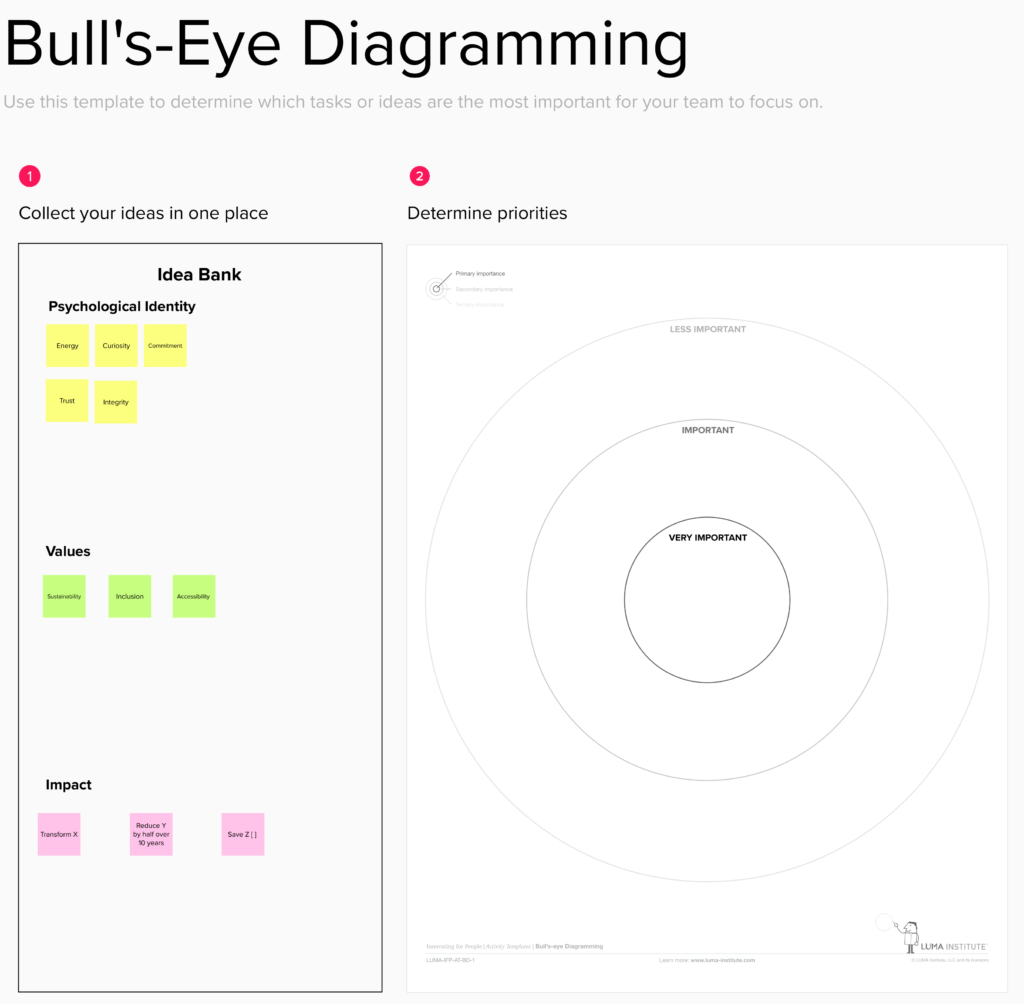
A Bull’s Eye diagram can be used with individuals or groups. We often use this for a project when a client is struggling to identify what is both important and necessary for their work.

We also recommend that you use the Bull’s Eye diagram at the start of an engagement.

Once the items from the sticky notes are placed, it’s easier to see themes in the ‘data.’ This approach allows organizations to see what their members think are most important. It is the aggregate of these ideas that shape the culture of an organization and when you know what they are it’s easier to design with them.

With this knowledge in hand your organization can better design a purposeful strategy and make your identity aspirations a reality in practice.

We help organizations to design their culture for success. If you want help using this or other tools like it, contact us.

The post Surfacing Your Organization’s Identity appeared first on Cense.
Written by cplysy · Categorized: cameronnorman

May 13 2021

Shifting Data Visualization Feedback From Criticism to Curiosity

Years ago, when I first learned about data visualization, I went all in. I read books and blogs, listened to podcasts, attended workshops, and poured over the guiding principles. I thought that if I understood the rules, then I could get it “right.”

But focusing on getting things “right” presents challenges. It perpetuates dichotomous thinking and stifles creativity. It often prioritizes Western ways of thinking and leaves out community voice. It raises criticism rather than encouraging conversation.

The post Shifting Data Visualization Feedback From Criticism to Curiosity appeared first on Elizabeth Grim.

Written by cplysy · Categorized: elizabethgrim

May 12 2021

Evaluación centrada en principios

Otra de las aportaciones de MQ Patton es sobre la evaluación centrada en principios. El pensamiento centrado en principios es para personas impulsadas por principios que participan en cambios basados ​​en principios. Un principio de eficacia proporciona una guía sobre cómo pensar o comportarse hacia algún resultado deseado (ya sea explícito o implícito) basado en normas, valores, creencias, experiencia y conocimiento. Un principio de alta calidad proporciona orientación sobre qué hacer, es útil para informar decisiones y acciones, proporciona inspiración como expresión de valores, es relevante para diversos contextos y situaciones y puede ser evaluado. Evaluar un principio implica examinar su significado para aquellos que se espera que lo sigan, si se está cumpliendo en la práctica y, si se cumple, si conduce a los resultados deseados.

¿Por qué principios?

Nos encontramos el cambio por todos lados, nos envuelve desde todas las direcciones, es omnipresente. Tenemos opciones sobre cómo afrontar, comprometernos y afrontar el cambio. Los principios informan y orientan esas elecciones. Lo hacen diciéndonos cómo actuar.

1.Los esfuerzos para el cambio generalmente se organizan e implementan como modelos estandarizados cuidadosamente planificados destinados a lograr los objetivos específicos del programa.

2.Las iniciativas impulsadas por principios, por el contrario, normalmente operan en entornos dinámicos que se esfuerzan por satisfacer y atender las diversas necesidades de los diversos participantes. Un mantra común de estos programas es que “se adaptan al contexto”:

-Los servicios se adaptan a las situaciones de los participantes.

-Los procesos varían según el participante. Los resultados varían para diferentes personas.

-La diversidad exige capacidad de respuesta.

-La capacidad de respuesta genera variabilidad en función de determinar qué es apropiado, posible y relevante. ¿Cuál es el ancla en medio de tal adaptación dinámica? Principios.

¿Por qué la evaluación centrada en principios?

La evaluación centrada en principios informa las decisiones sobre (1) qué principios son apropiados (2) para qué propósitos y (3) cómo, en qué contextos, lo que ayuda a navegar por el terreno movedizo y traicionero de las orientaciones contradictorias y los consejos contradictorios.

¿Qué principios funcionan para qué situaciones con qué resultados? es una pregunta de evaluación. Por tanto, desde una perspectiva de evaluación, los principios (a) son hipótesis, no verdades. (b) Pueden funcionar o no. (c) Es posible que se sigan o no. (d) Pueden conducir o no a los resultados deseados. Si funcionan, si se siguen y si producen los resultados deseados están sujetos a evaluación.

Aprender a evaluar principios y aplicar lo que se aprende al hacerlo, adquiere una importancia cada vez mayor en un mundo cada vez más complejo donde nuestra eficacia depende de la adaptación al contexto. Los principios guían esa adaptación.

La evaluación centrada en principios examina:

1. Si los principios son claros, significativos y viables, y de ser así

2. Si realmente se están siguiendo y, de ser así

3. Si están conduciendo a los resultados deseados.

Fuente:

MQ Patton Principles-Focused Evaluation, The Guide.

MQ Patton Desde <https://www.utilization-focusedevaluation.org/principles-focused-evaluation>

Written by cplysy · Categorized: TripleAD

May 12 2021

Rejecting the Null

Today’s graphic novella is inspired by the concept of rejecting the null. I created a cartoon about the null hypothesis almost a decade ago.

I still find the concept really useful in thinking about evaluation. There is incredible power and importance in the choice that gets made when we don’t choose to change. So that’s the idea behind today’s story.

Rejecting the Null Illustration

Text Only Version

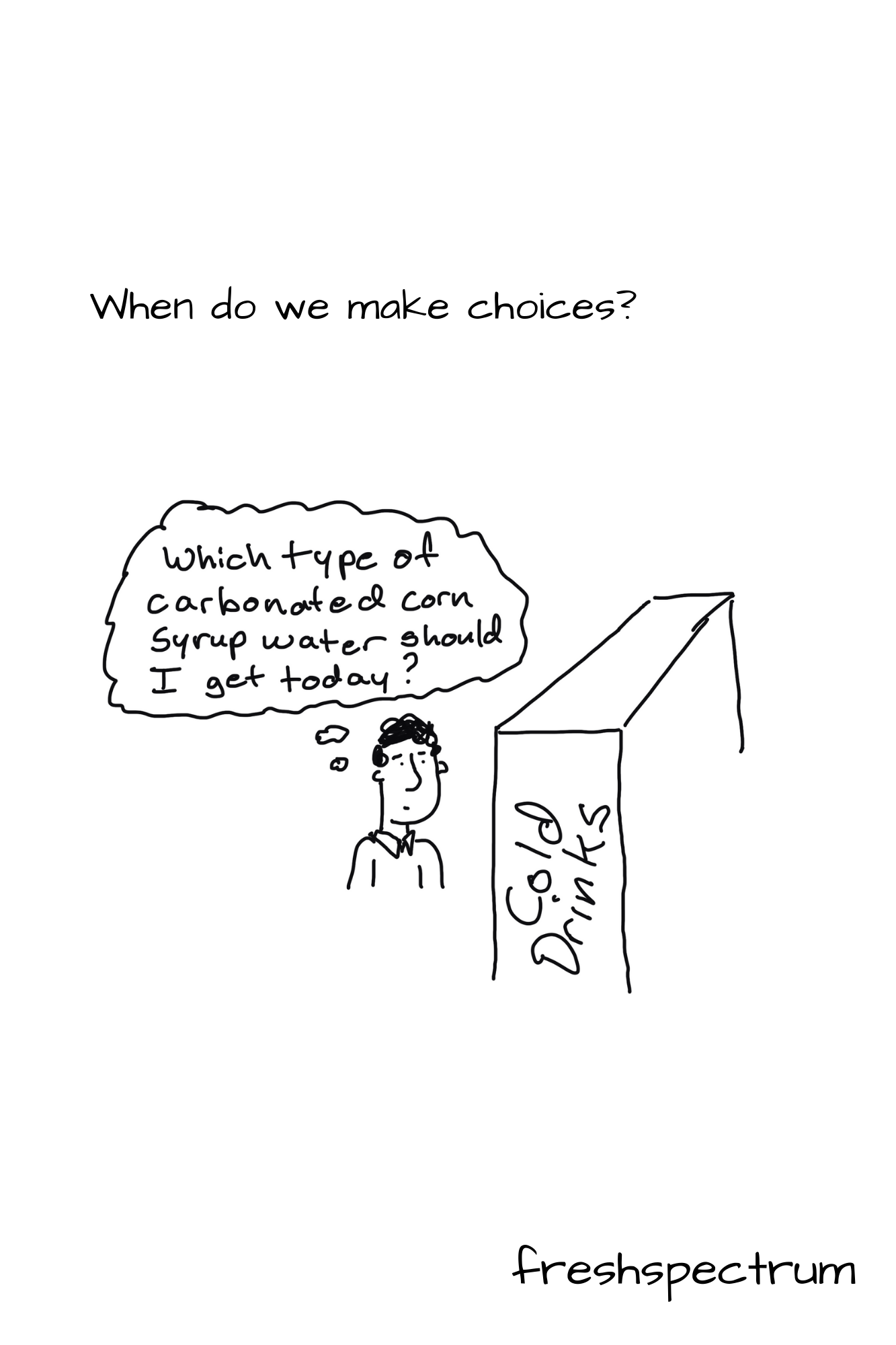
When do we make choices?

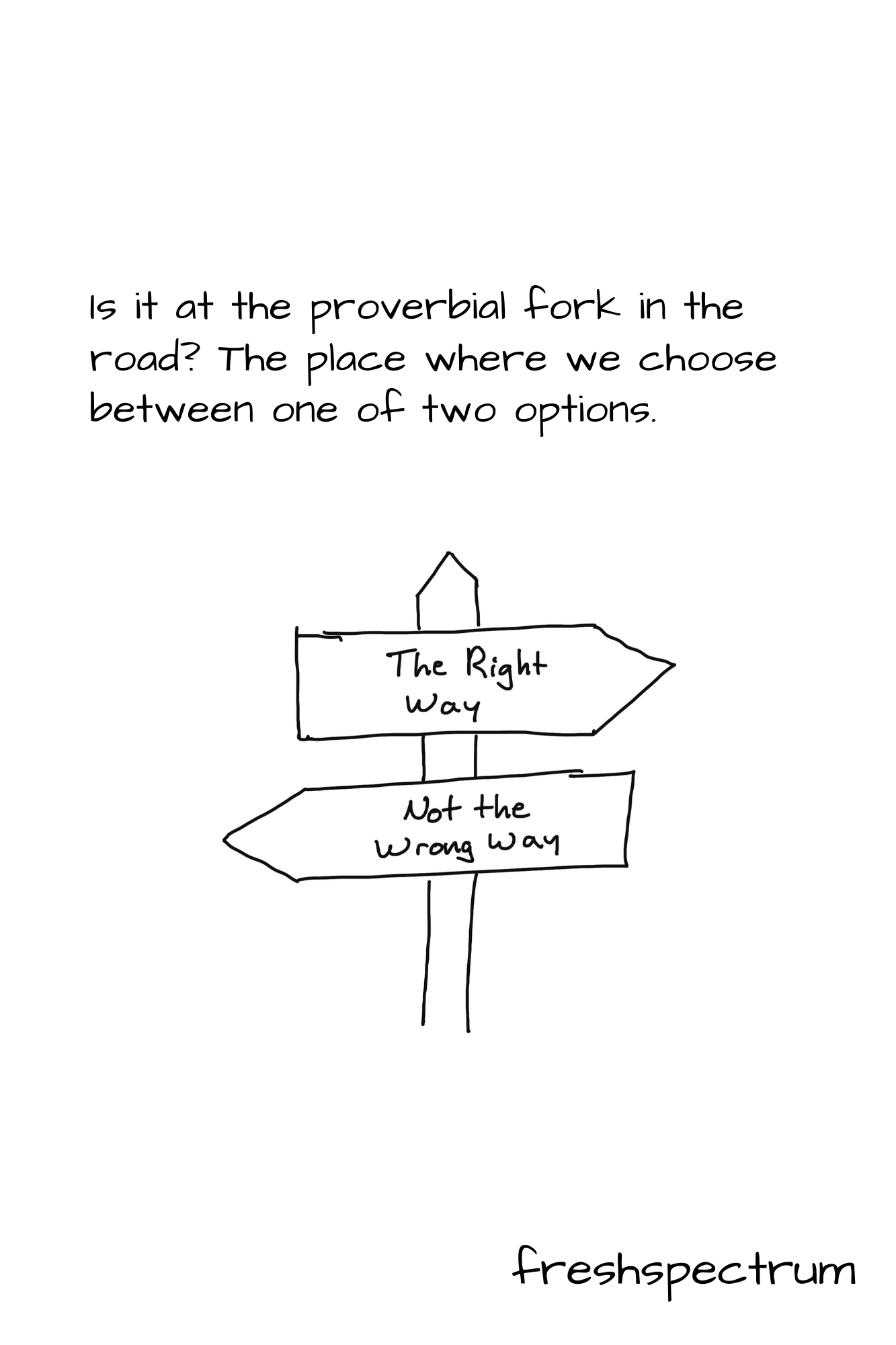
Is it at the proverbial fork in the road? The place where we choose between one of two options.  

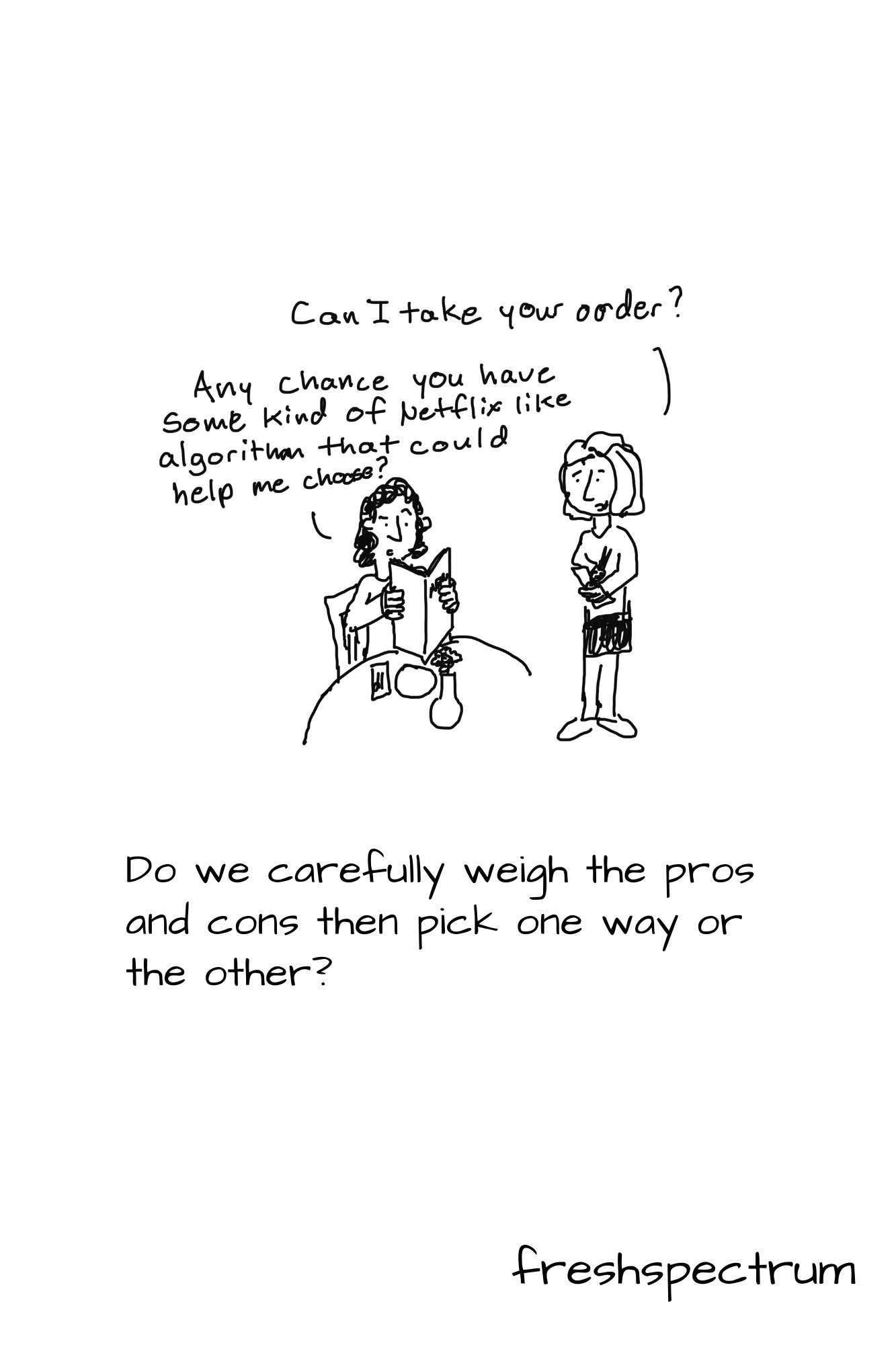
Do we carefully weigh the pros and cons then pick one way or the other?

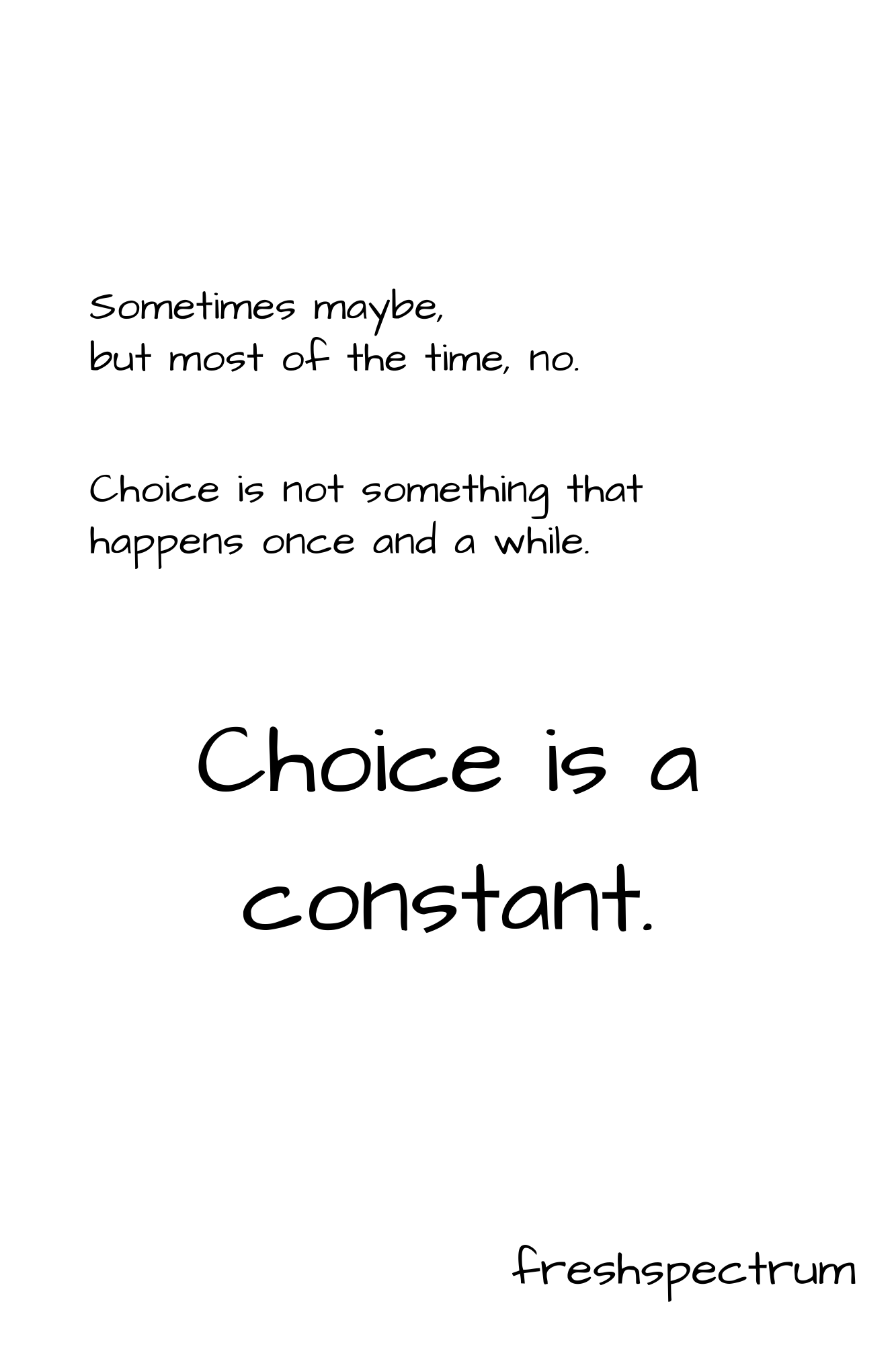
Sometimes maybe, but most of the time, no.

Choice is not something that happens once and a while.  Choice is a constant.

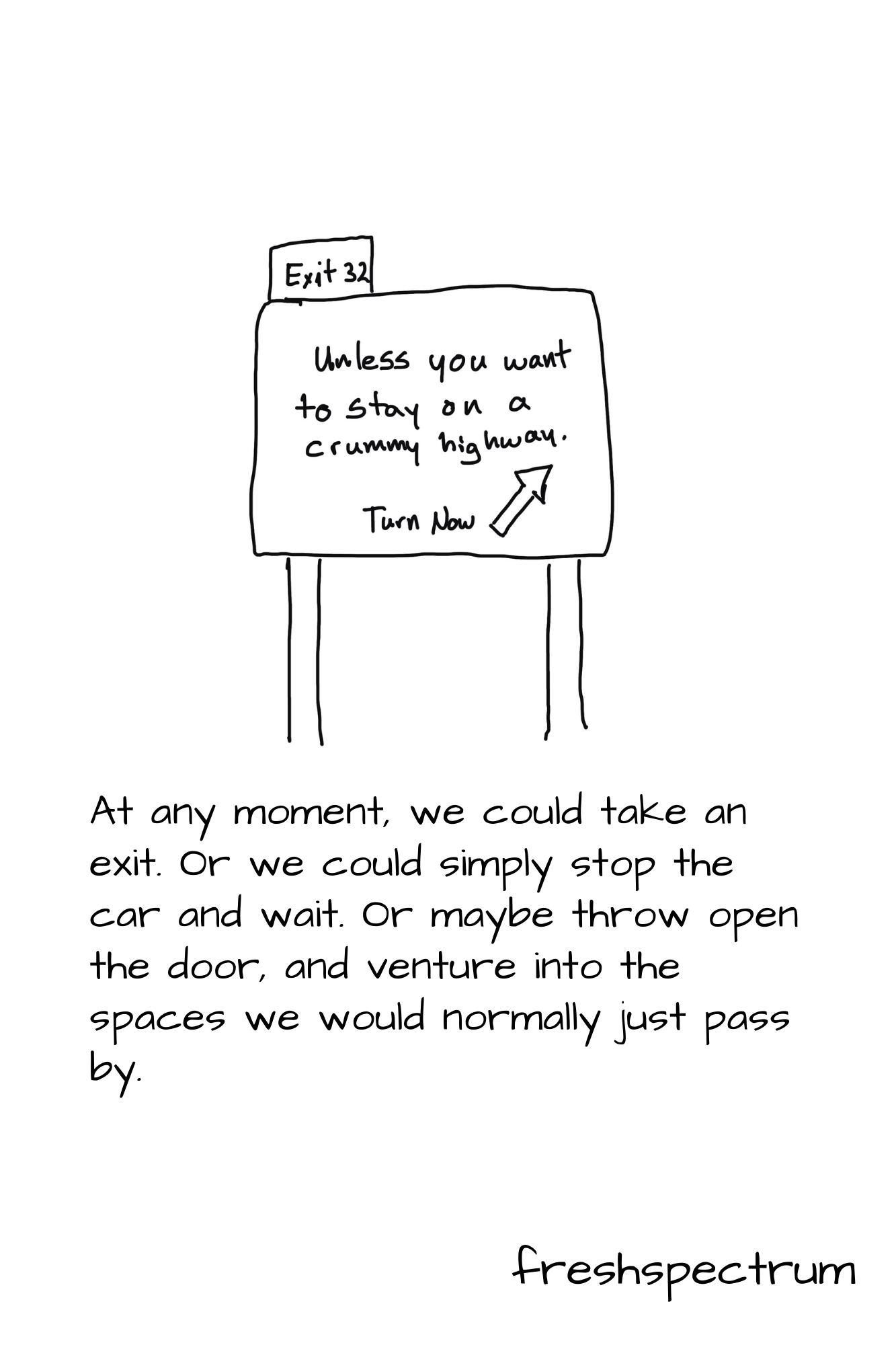
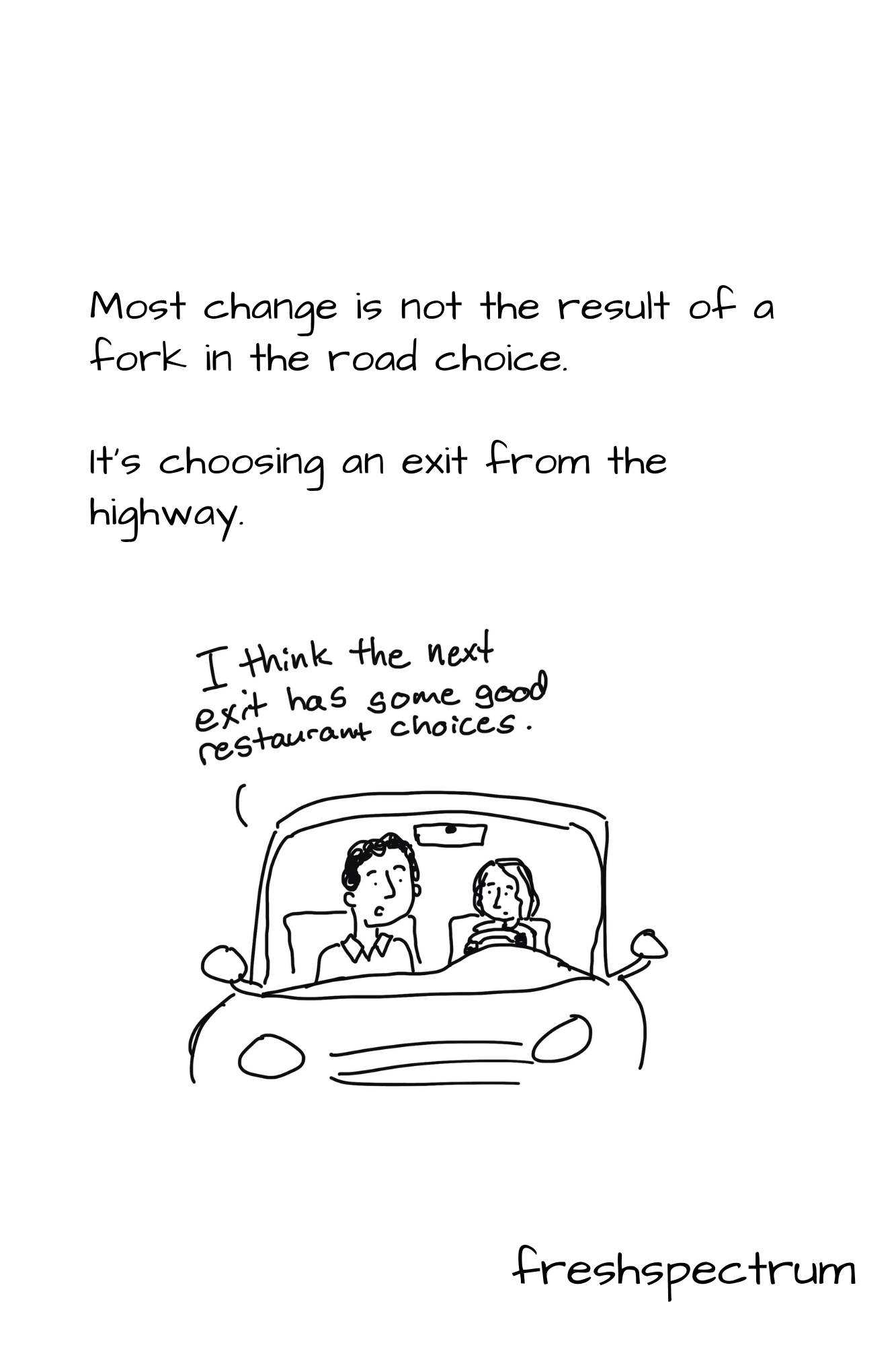
To use another metaphor. Imagine we’re on a highway.  

At any moment, we could take an exit.  Or we could simply stop the car and wait.  Or maybe throw open the door, and venture into the spaces we would normally just pass by.  

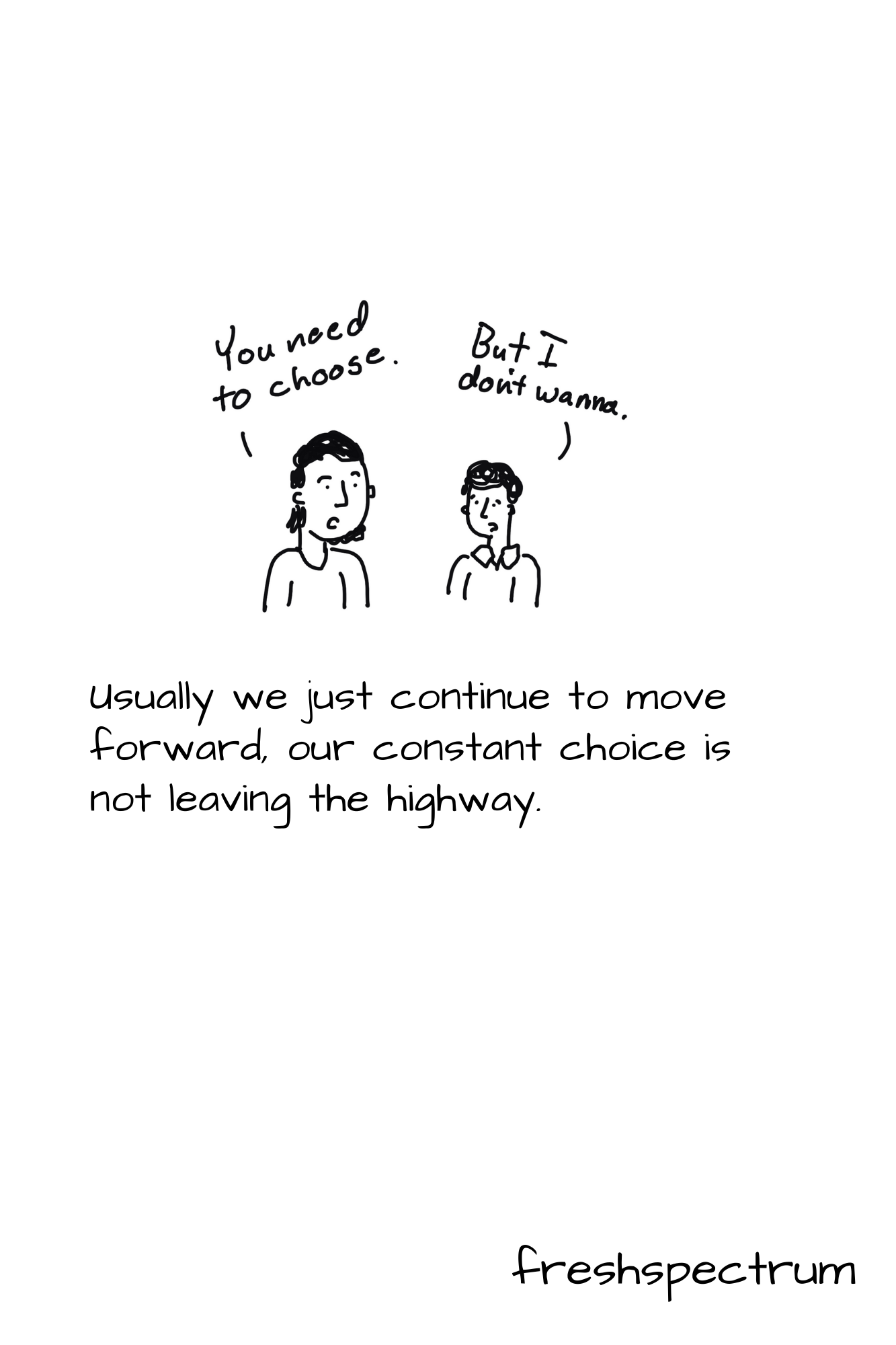
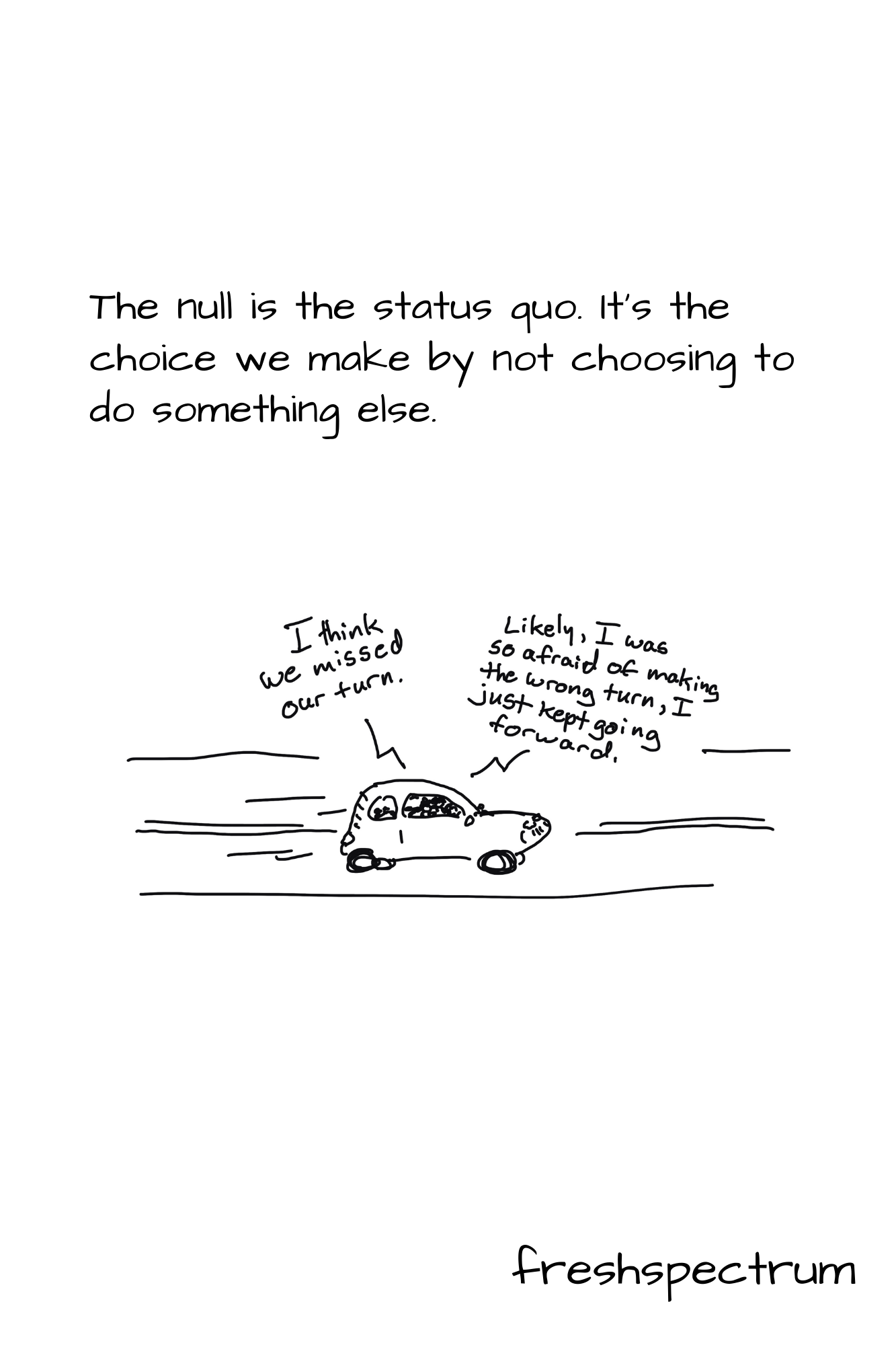
Usually we just continue to move forward, our constant choice is not leaving the highway.

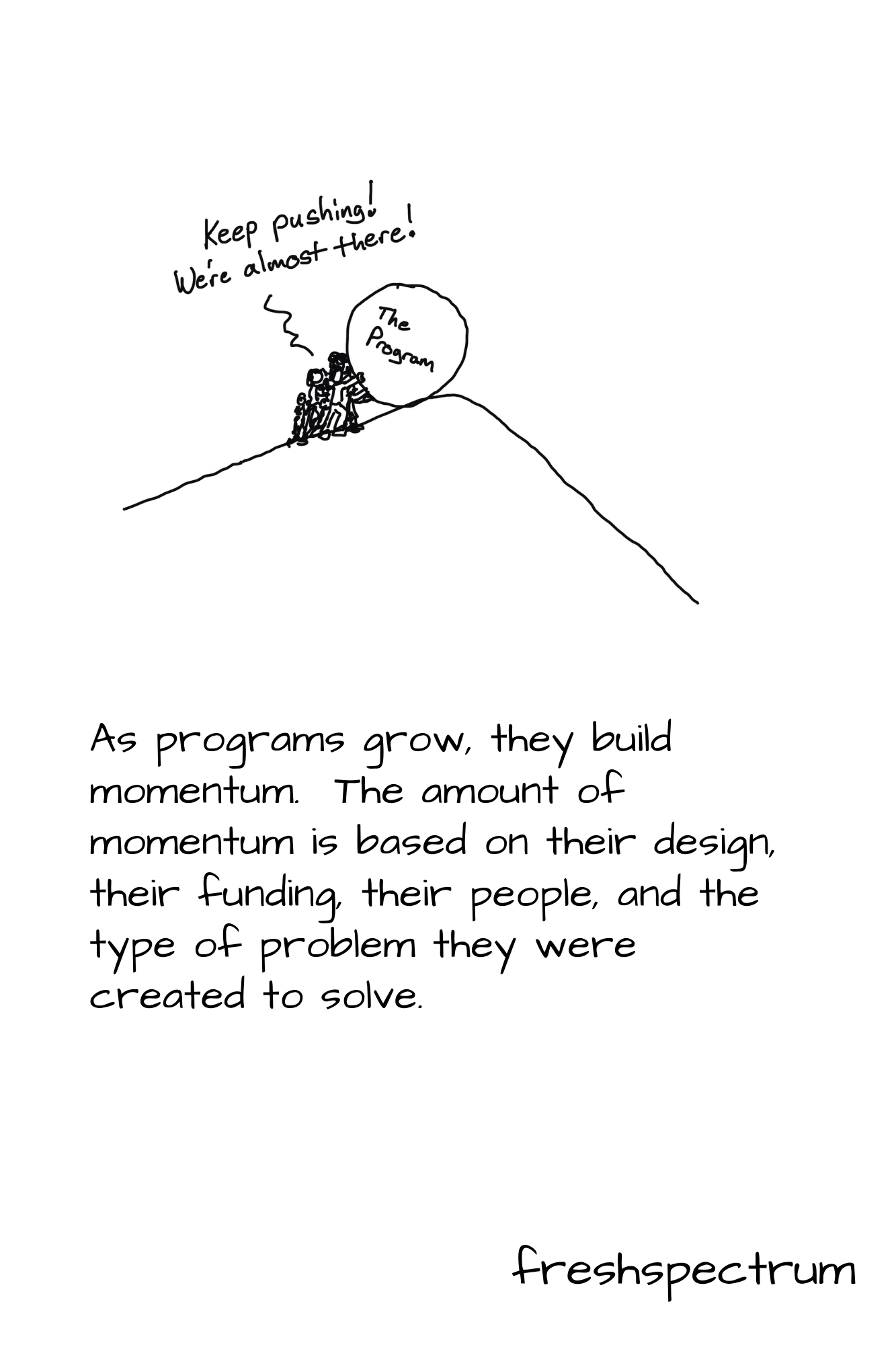
As programs grow, they build momentum.  The amount of momentum is based on their design, their funding, their people, and the type of problem they were created to solve.

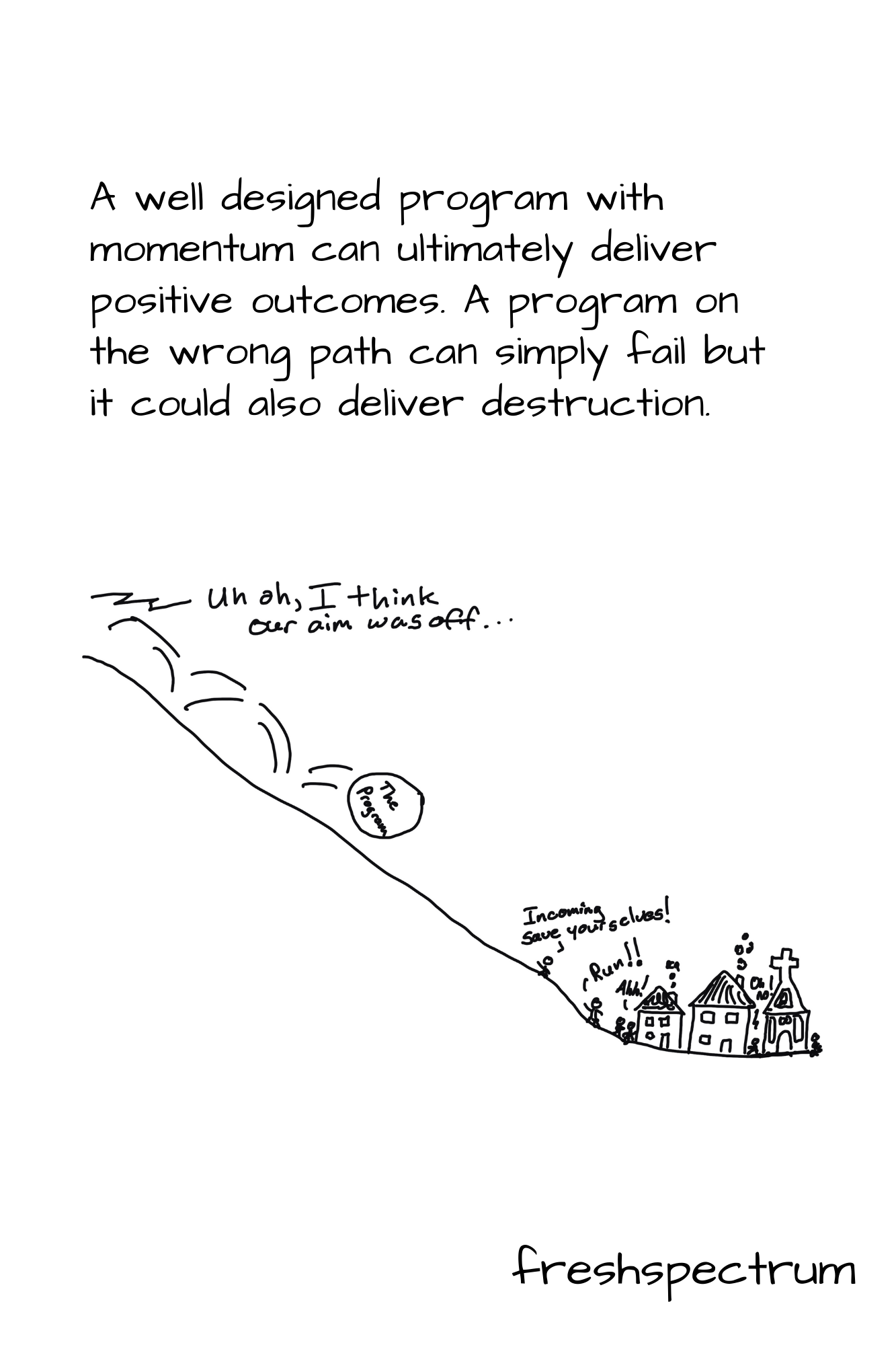
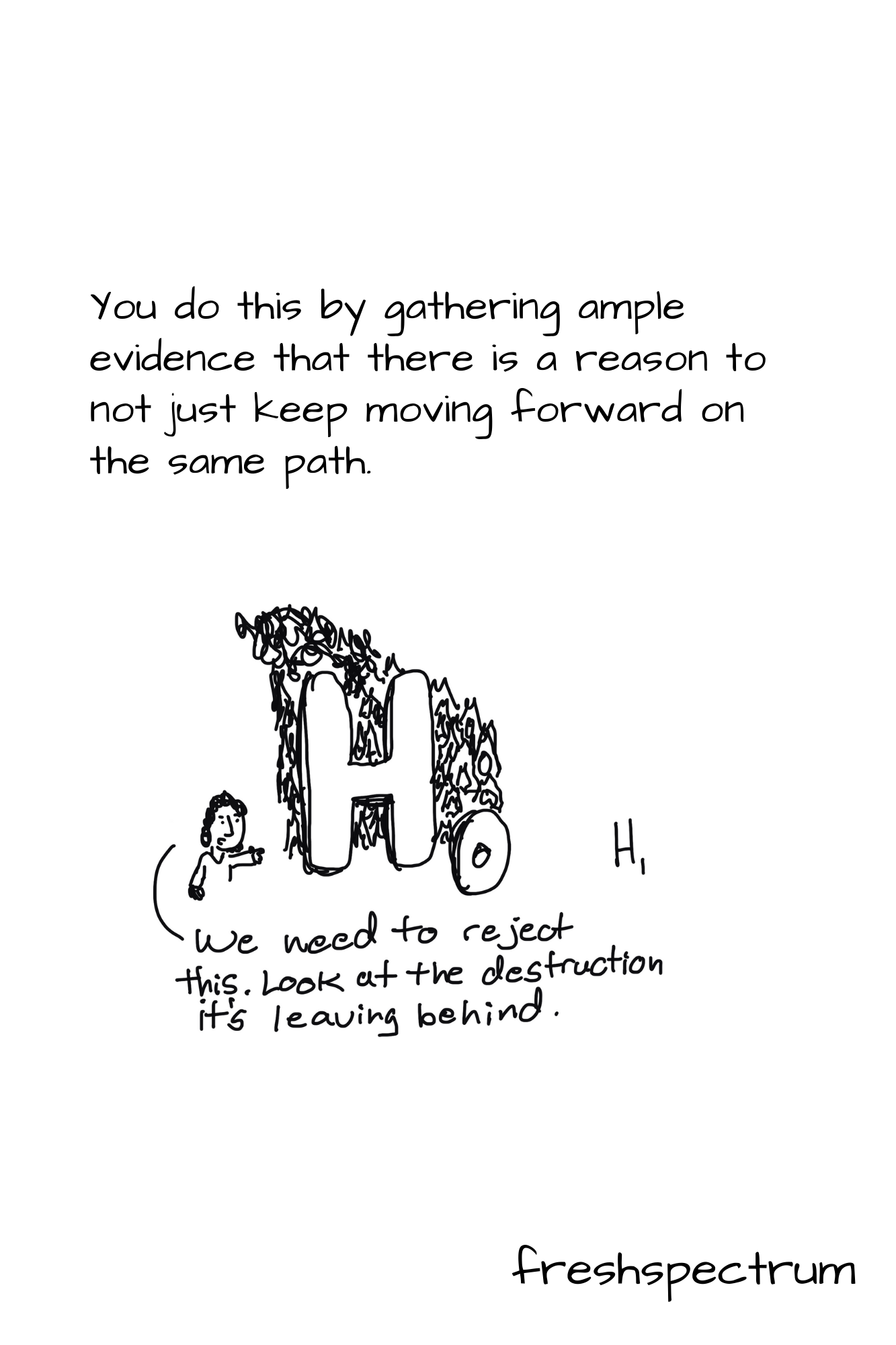
A well designed program with momentum can ultimately deliver positive outcomes. A program on the wrong path can simply fail but it could also deliver destruction.

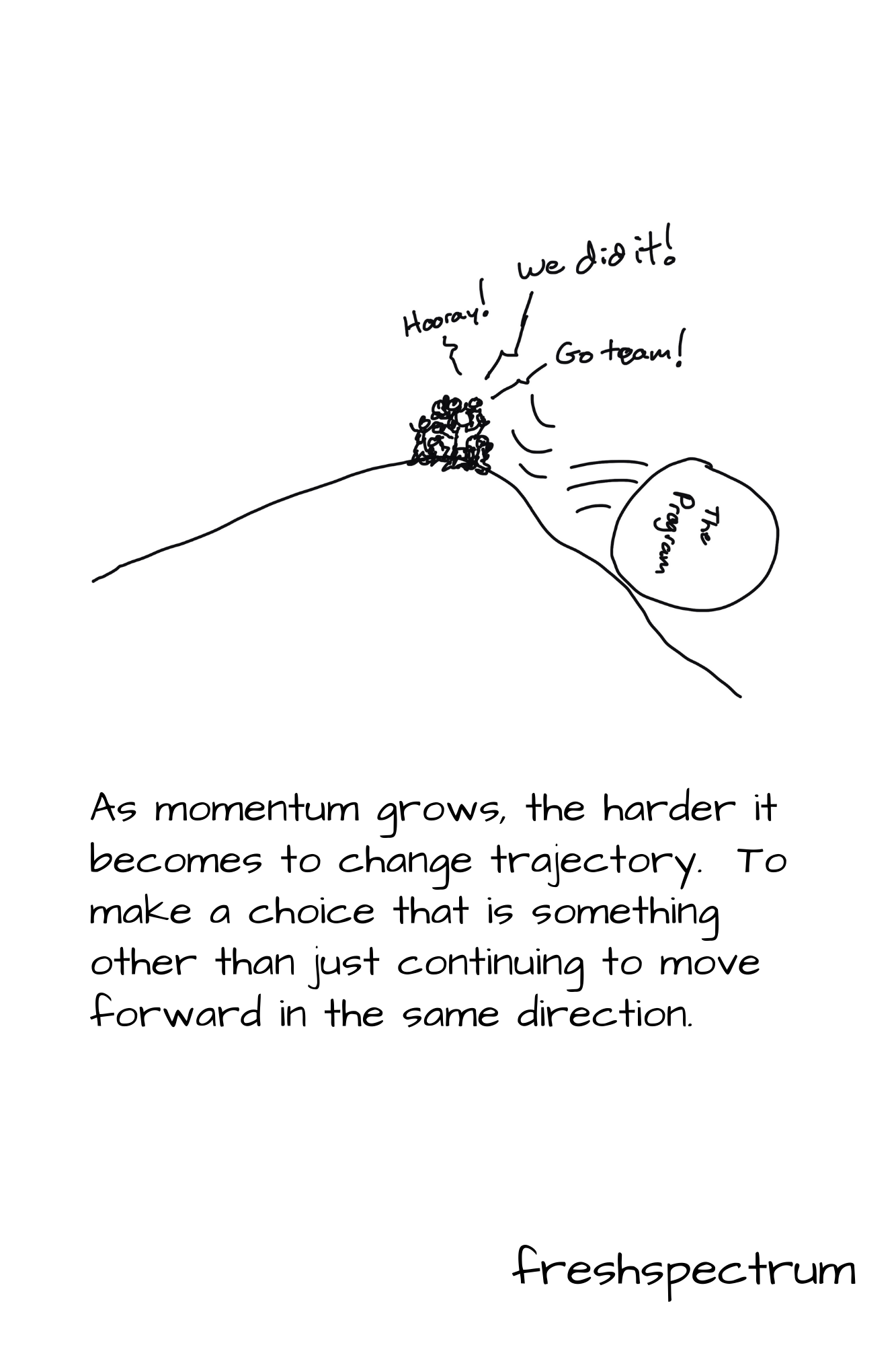
As momentum grows, the harder it becomes to change trajectory.  To make a choice that is something other than just continuing to move forward in the same direction.  

I call this idea the null.

The null is the status quo.  It’s the choice we make by not choosing to do something else.

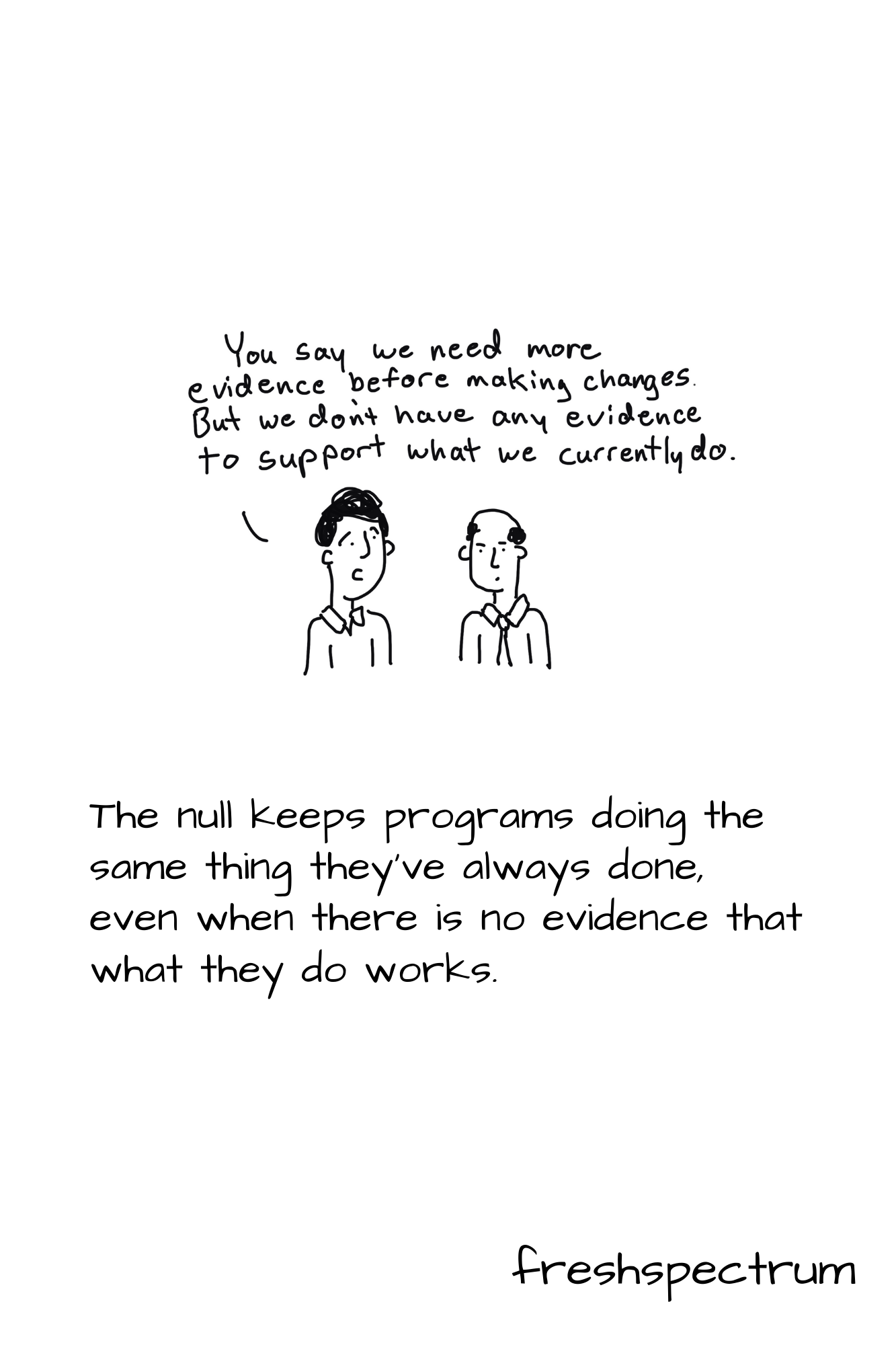
The null keeps programs doing the same thing they’ve always done, even when there is no evidence that what they do works.

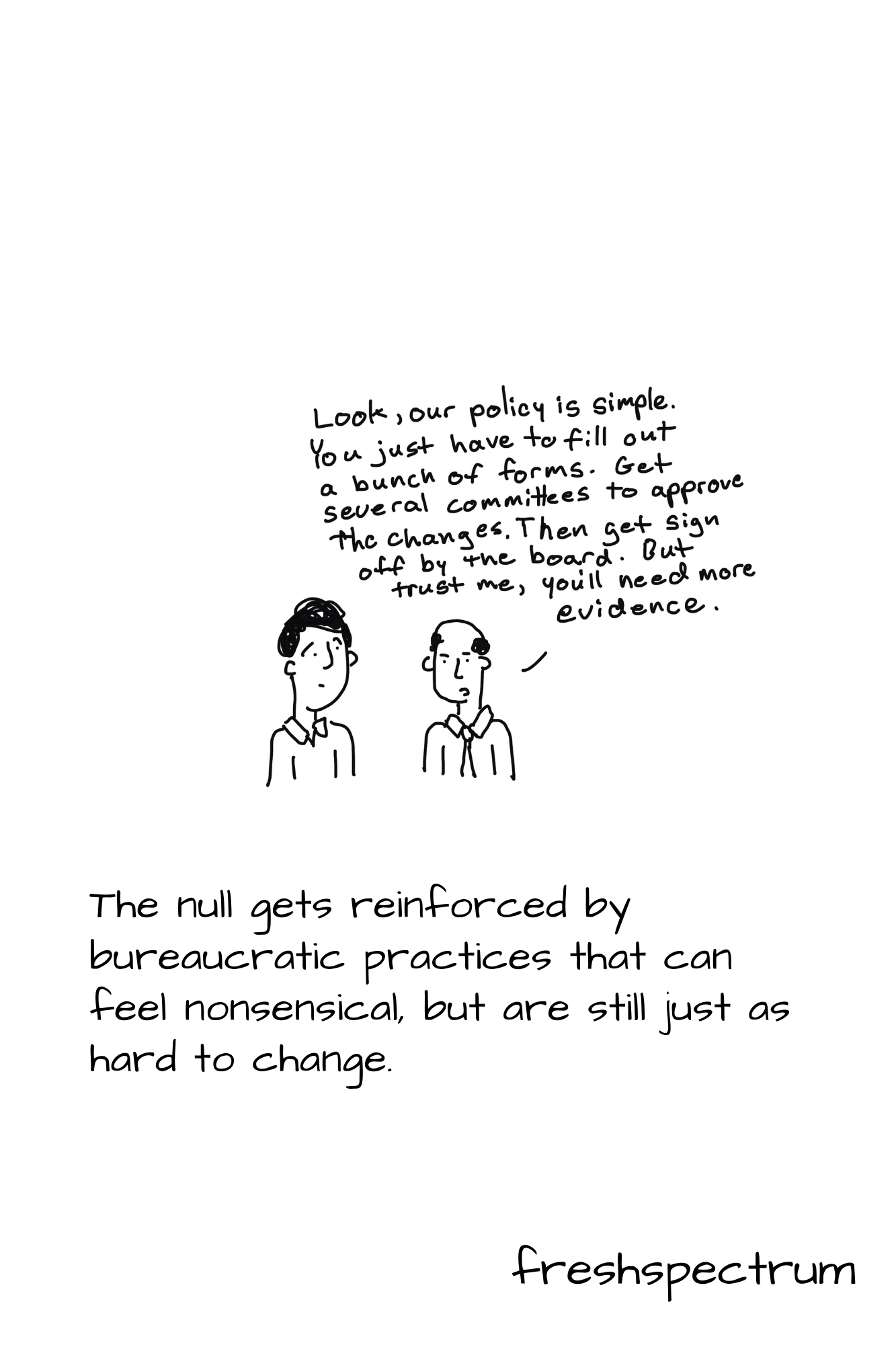
The null gets reinforced by bureaucratic practices that can feel nonsensical, but are still just as hard to change.

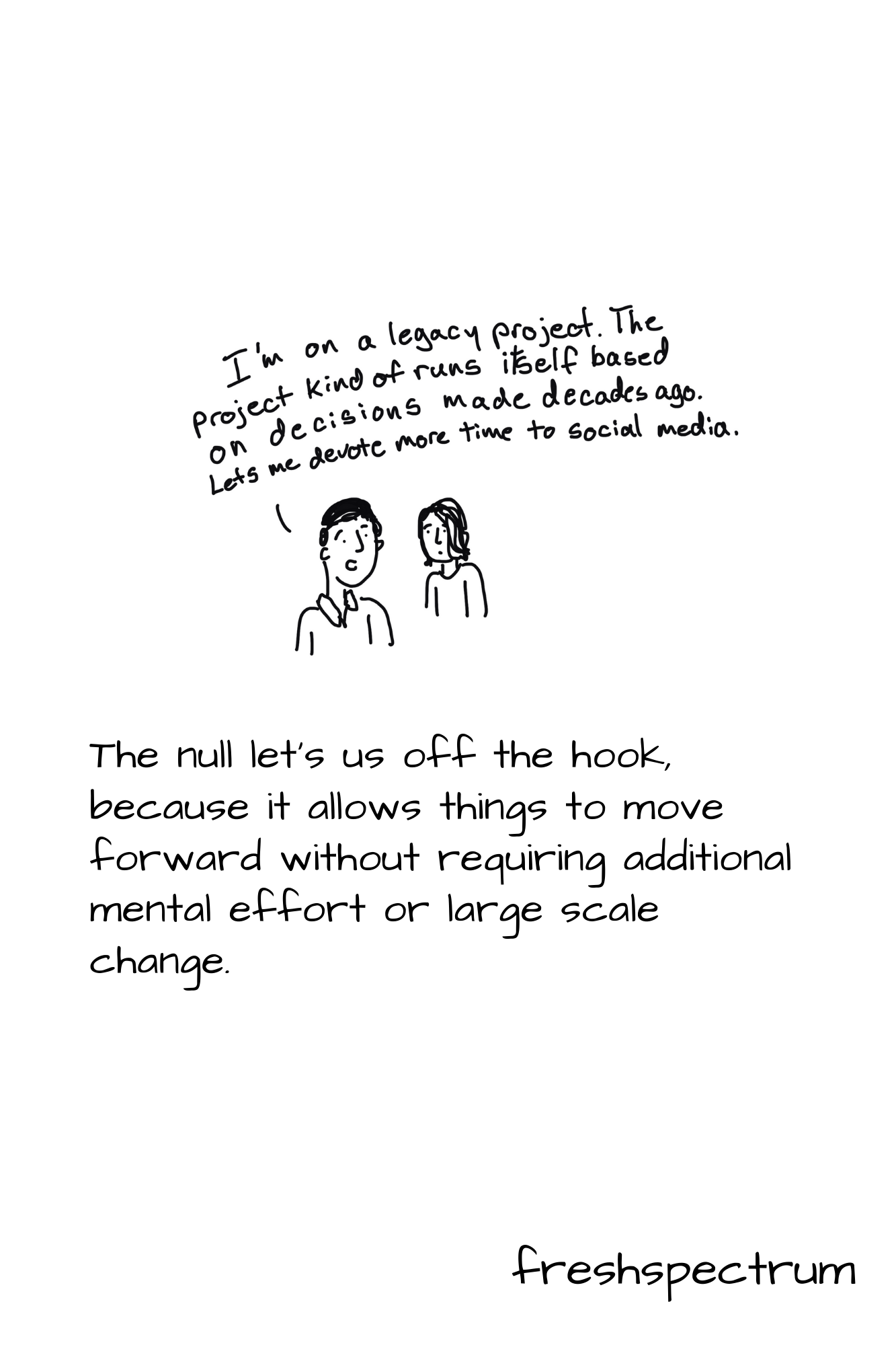
The null let’s us off the hook, because it allows things to move forward without requiring additional mental effort or large scale change.

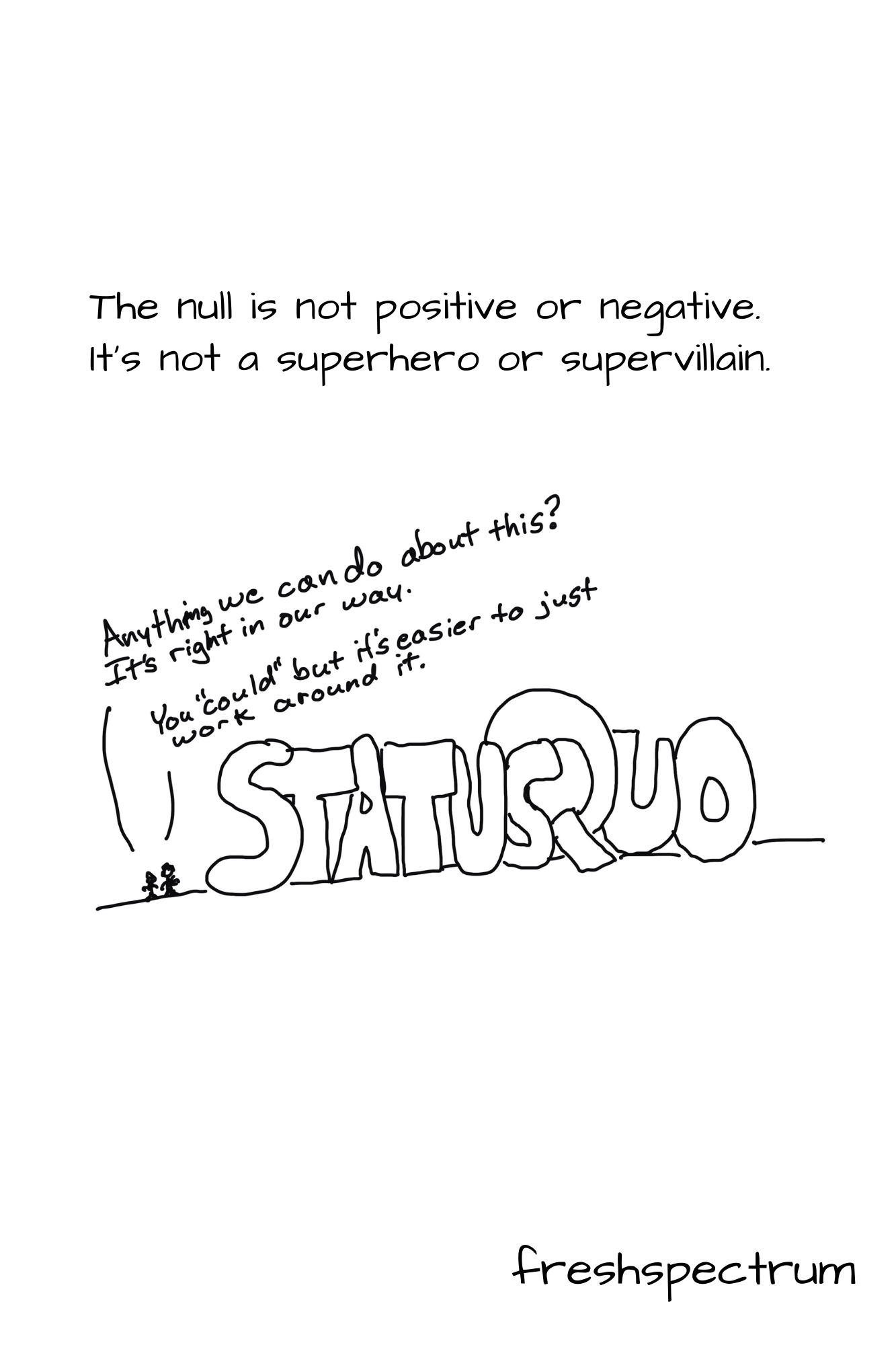
The null is not positive or negative.  It’s not a superhero or supervillain.

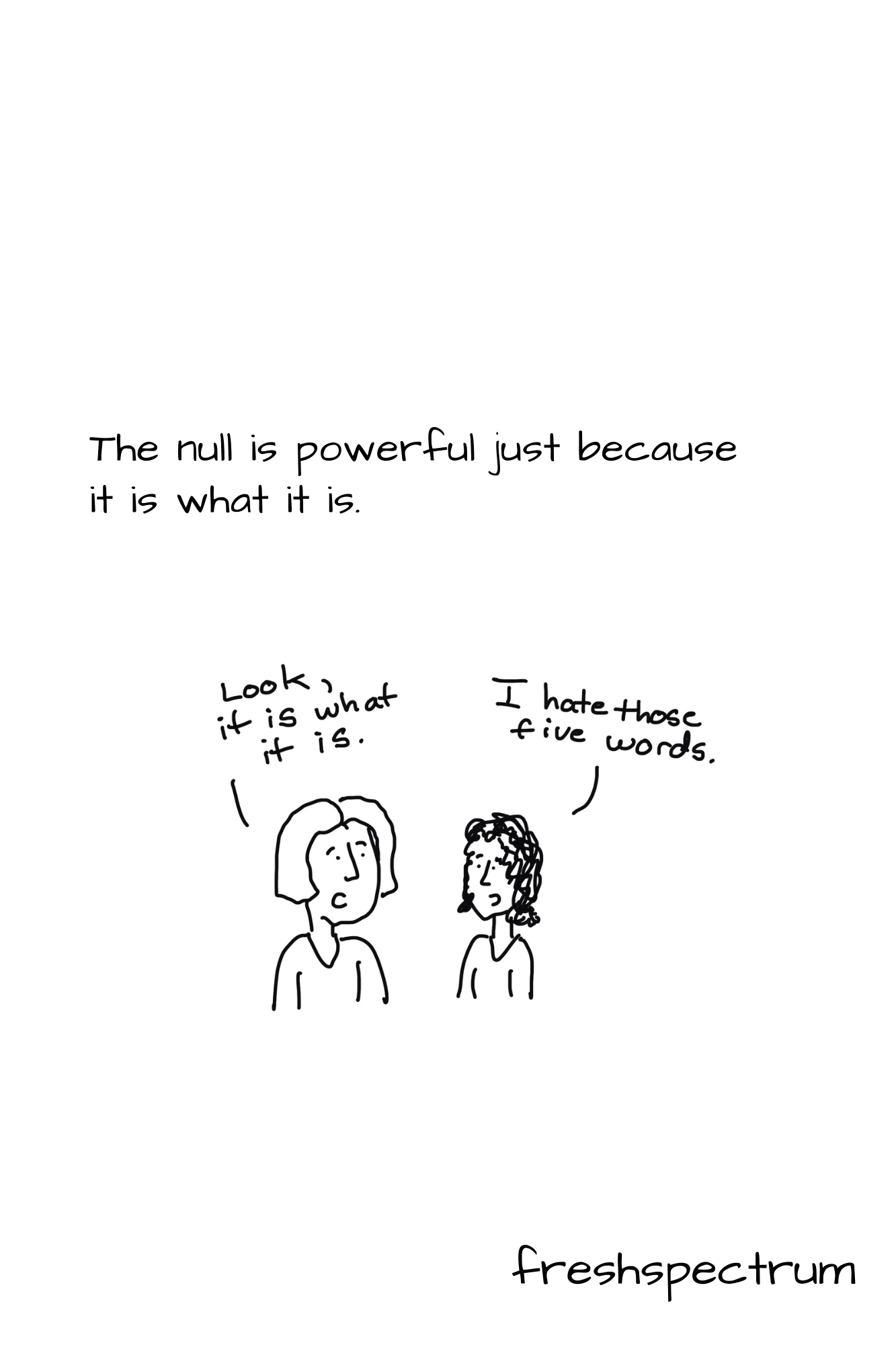
The null is powerful just because it is what it is.  

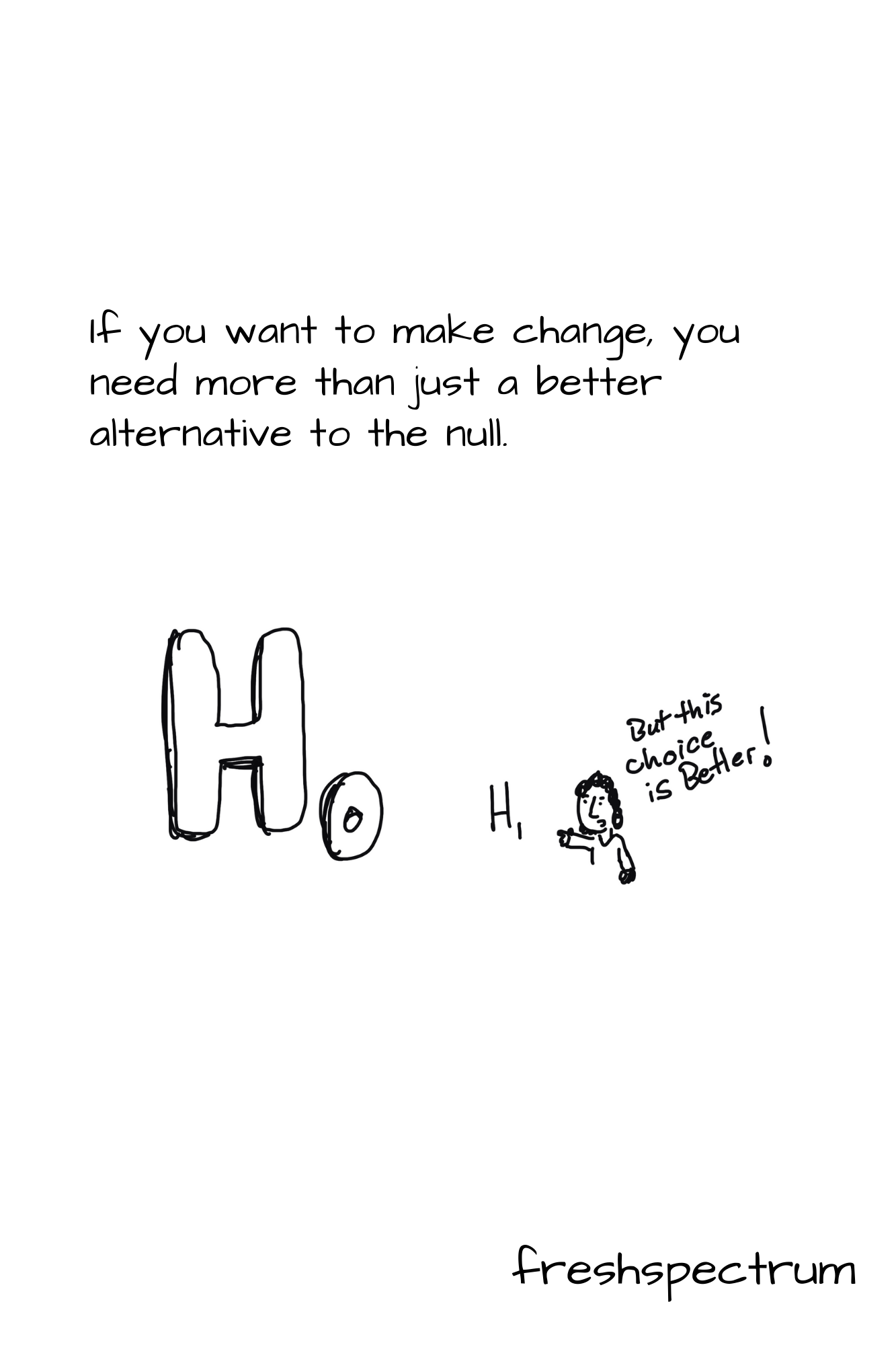
If you want to make change, you need more than just a better alternative to the null.

Most change is not the result of a fork in the road choice. It’s choosing an exit from the highway.

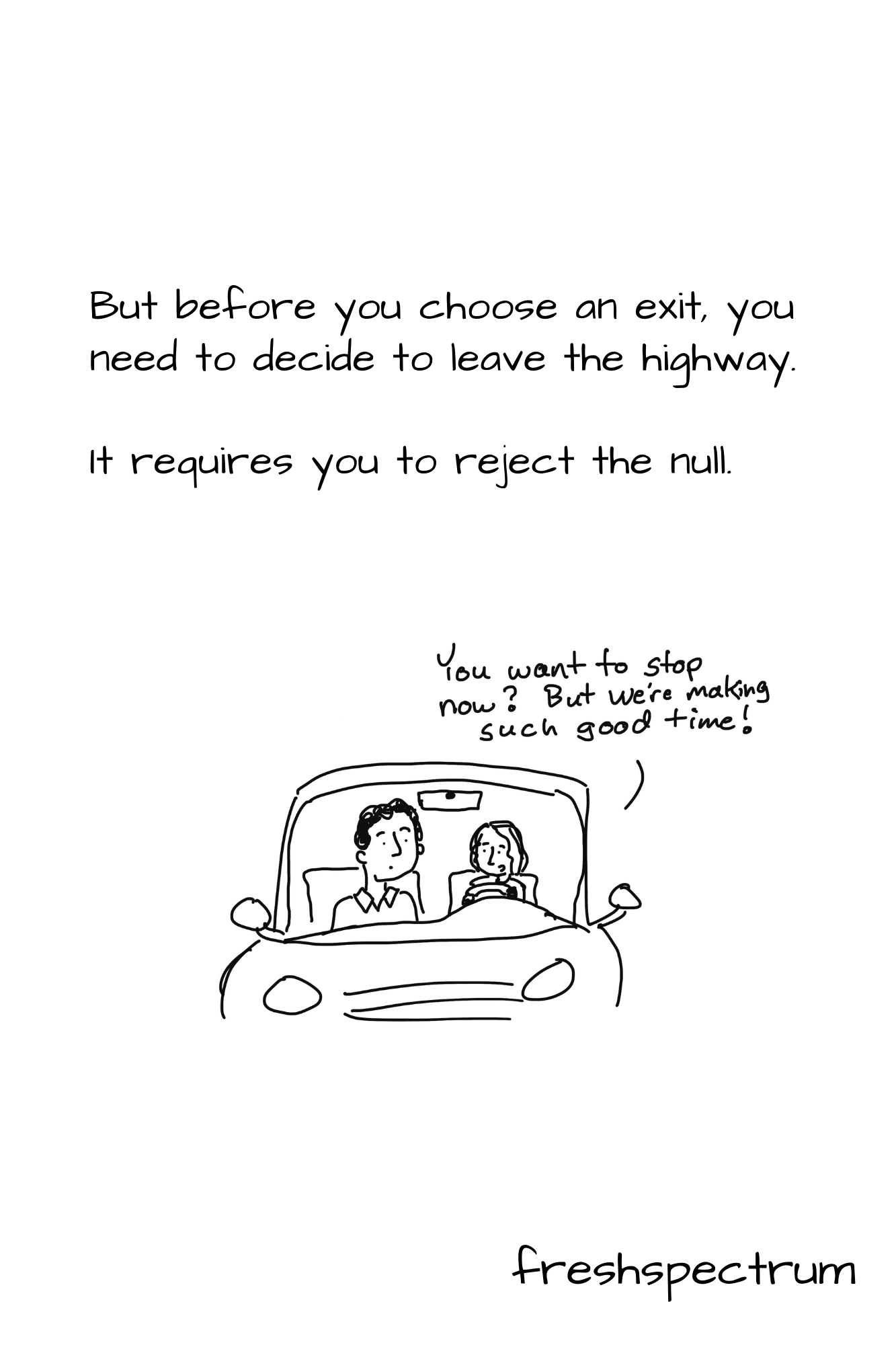
But before you choose an exit, you need to decide to leave the highway. It requires you to reject the null.

You do this by gathering ample evidence that there is a reason to not just keep moving forward on the same path.

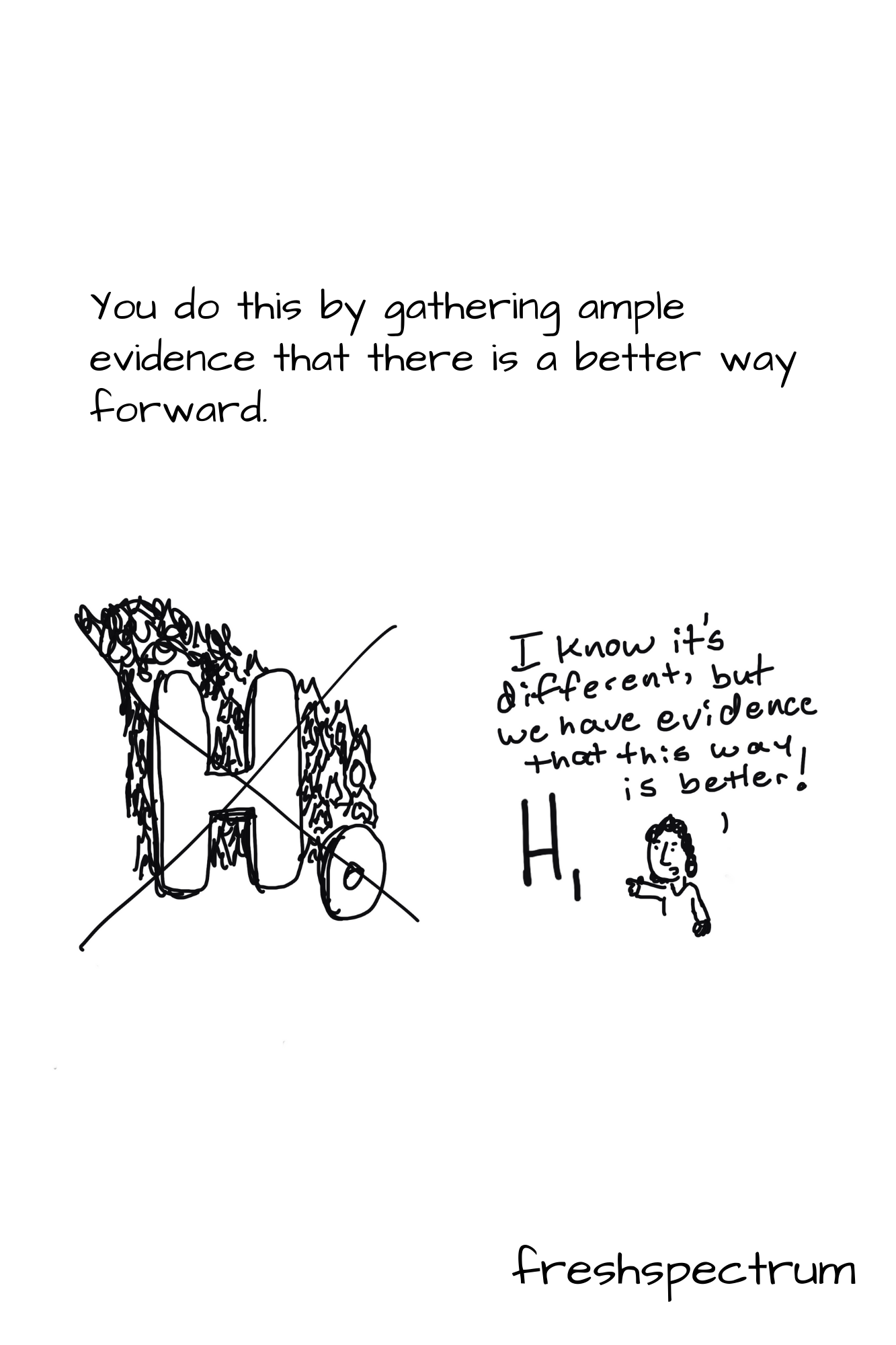
And then you need to offer a better alternative.

You do this by gathering ample evidence that there is a better way forward.

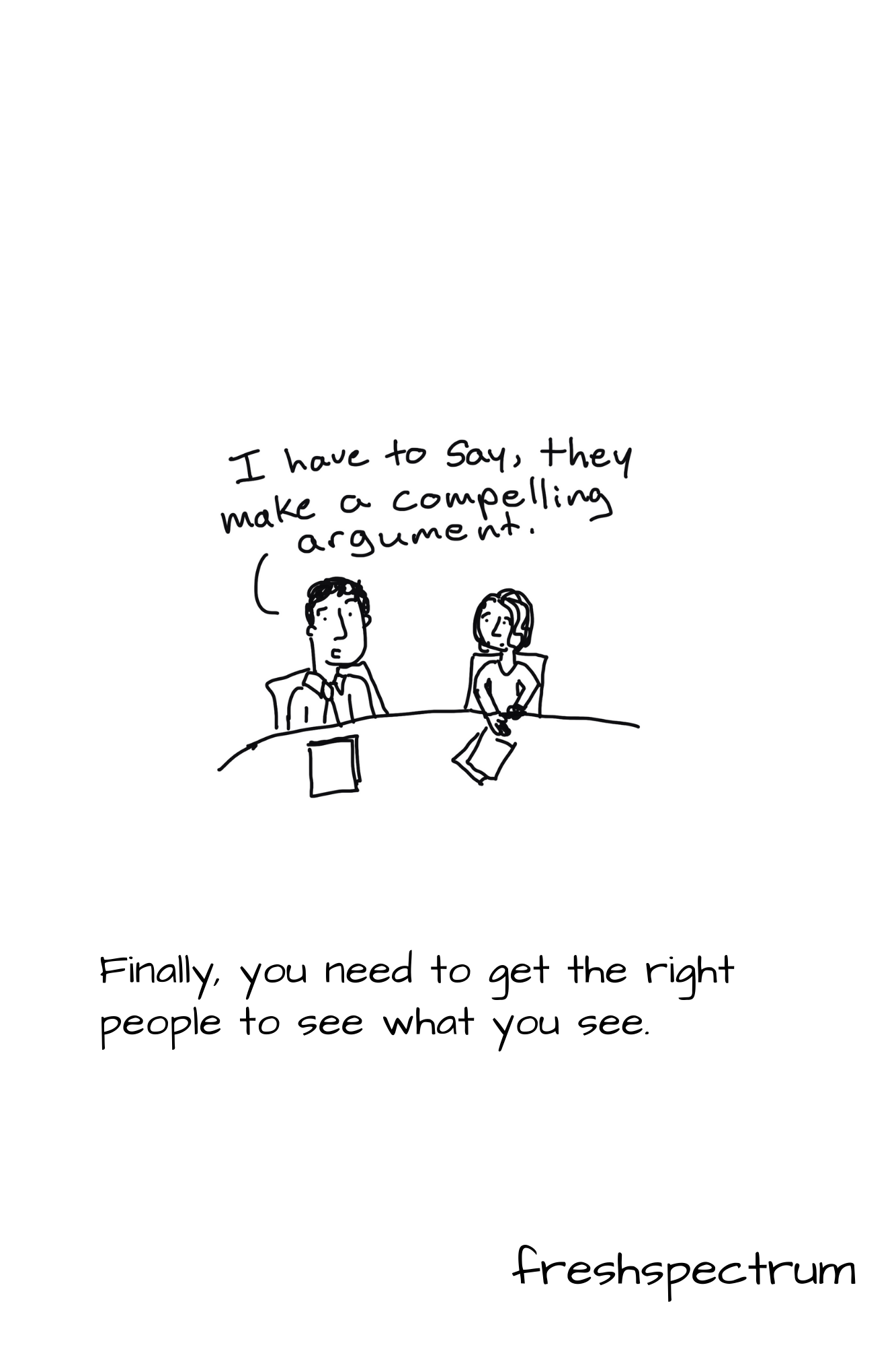
Finally, you need to get the right people to see what you see.

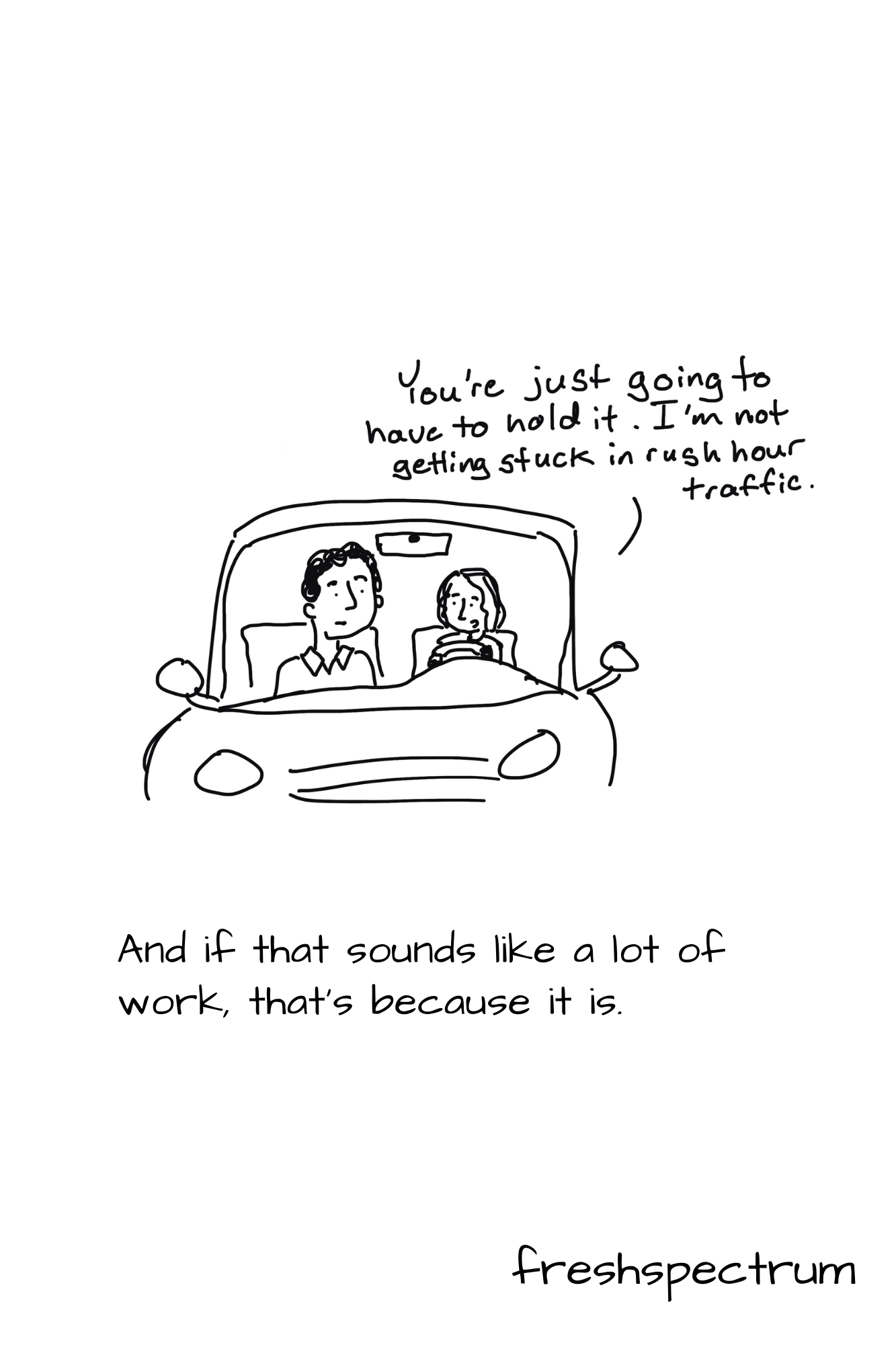
And if that sounds like a lot of work, that’s because it is. 

Written by cplysy · Categorized: freshspectrum

May 11 2021

Ma(nua)l para gestor@s: Cómo diseñar una evaluación y morir en el intento

Inspirado en el post “Principios metodológicos para diseñar evaluaciones de alta calidad” y en un taller reciente sobre “Estructuras liberadoras” en evaluación (en concreto de la estructura “Triz“), desarrollé en este post una tormenta perfecta, de cómo asegurar que un proceso evaluativo sea inútil, un fracaso, un infierno, una absoluta pérdida de tiempo y una pesadilla para l@s implicad@s. Aquí mis consejos para gestor@s de evaluación:

1.El evaluando nuestro enemigo a derrotar: Consideremos al programa y/ o equipo evaluado como como sujetos sospechosos, alumn@s díscol@s, siempre descontent@s e incómodos con ser evaluad@s, que siempre esconden algo y merecen un castigo. Tolerancia cero, nuestro objetivo es hacerles ver sus propias costuras que, además, son muchas.

2.El equipo evaluador, es@s importor@s. Desconfiemos del equipo evaluador, que por naturaleza son una élite aburridísima, malcriada y sabelotodo, pero que en el fondo están llen@s de prejuicios y ningun@ se libra del síndrome de dunning-kruger. Cuanto peor se les trate, más nos respetarán. Si hay que conseguir un cambio, que sea que los evaluador@s terminen con lo que se merecen, con el síndrome del/ la impostor/a.

3. A Nostradamus se le recuerda porque era un “oscuro”, nosotr@s no aspiremos a menos: No clarifiquemos el enfoque de la evaluación, no demos facilidades (al equipo evaluador), que para eso se les paga, y mucho, demasiado. Para nota: Tratemos de incluir algunas inconsistencias en los TdR para probar si l@s evaluador@s se los ha leído (si como de costumbre copiamos y pegamos los TdR la inconsistencia estará servida). Si alguien protesta le decimos que es una evaluación libre de objetivos, y si siguen protestando que es una “developmental” evaluación (y le miramos a los ojos y le decimos “porque lo dice Pattton”)

4. Más vale que sobre que no que falte: No adaptemos el diseño de la evaluación a las preguntas de la evaluación. Ah, cuantas más preguntas de evaluación más respuestas tendremos y (haciendo cálculos) más barata será la evaluación.

5. Minimax, o “lo quiero todo y lo quiero ahora”. Seamos ambiciosos (y eficientes): Mínimo precio y Maximicemos todo (a) maximicemos el alcance y la profundidad en evaluaciones multinivel y multi lugar (y todos los “multis” que se nos ocurran), (b) maximicemos las demandas de profundidad y amplitud analíticas, (c) ya que estamos, exijamos a los evaluadores peso además de calidad: todo muy explicadito, con un informe de 200 páginas (sin contar anexos), (d) de paso, calculemos la mitad de días reales de evaluación (como comentado, ya cobran suficiente est@s parásitos evaluador@s).

6. El mito de la participación: No importunemos a nuestros compañeros de organización. Si posible, evitar la participación de los usuari@s direct@s (los probres, con tanto taller y, además, ya nadie se cree esas mandangas de la evaluación). Convenzamos, la participación es otro de los falsos mantras: complejiza todo y en el fondo nunca tenemos tiempo o dinero para hacerlo. Además es un poco egoísta que los demás trabajen gratis para y por nosotr@s.

7.Lo anglosajón siempre vende: “Value for money“. Presupuestemos lo mínimo con máximo de tiempo, sin considerar si existen los datos o la calidad de los datos de partida (la evaluabilidad es una debilidad mental que se ha inventado alguien realmente retorcido: ¿hacer la evaluación antes de evaluar?, un lujo, vamos, que no está a nuestro alcance)

8. Algo que sí ha cambiado: la teoría del cambio es historia, está ya pasada de moda (de hecho nunca estuvo realmente de moda): Para qué mencionar los enfoques basados en la teoría, si luego nadie los utiliza para el análisis y comunicación. Seamos modernos y nórdicos: adornos los mínimos.

9.Seamos “casual”, sorprendamos con nuestra audacia: Licitemos la evaluación en y con el menor tiempo posible (si es “para ayer” mejor). L@s mejores evaluador@s están siempre disponibles, para hacer nuestra santa voluntad.

10.Terminemos como empezamos, uso garantizado: Después de tanta caña inicial, el equipo evaluador sabrá lo que se hace, el informe no hará falta revisarlo, ni validarlo (con un poco de suerte nadie se habrá enterado de la evaluación y tampoco habrá muchas quejas)…el uso es otro gran mito, del que hablaremos otro (gran) día.

.

..a pesar de todo, esperemos que oh tú, evaluación, sigas reinando, no podemos vivir sin ti…no hay manera…

Written by cplysy · Categorized: TripleAD

  • « Go to Previous Page
  • Go to page 1
  • Interim pages omitted …
  • Go to page 186
  • Go to page 187
  • Go to page 188
  • Go to page 189
  • Go to page 190
  • Interim pages omitted …
  • Go to page 310
  • Go to Next Page »

Footer

Follow our Work

The easiest way to stay connected to our work is to join our newsletter. You’ll get updates on projects, learn about new events, and hear stories from those evaluators whom the field continues to actively exclude and erase.

Get Updates

Want to take further action or join a pod? Click here to learn more.

Copyright © 2026 · The May 13 Group · Log in

en English
af Afrikaanssq Shqipam አማርኛar العربيةhy Հայերենaz Azərbaycan dilieu Euskarabe Беларуская моваbn বাংলাbs Bosanskibg Българскиca Catalàceb Cebuanony Chichewazh-CN 简体中文zh-TW 繁體中文co Corsuhr Hrvatskics Čeština‎da Dansknl Nederlandsen Englisheo Esperantoet Eestitl Filipinofi Suomifr Françaisfy Fryskgl Galegoka ქართულიde Deutschel Ελληνικάgu ગુજરાતીht Kreyol ayisyenha Harshen Hausahaw Ōlelo Hawaiʻiiw עִבְרִיתhi हिन्दीhmn Hmonghu Magyaris Íslenskaig Igboid Bahasa Indonesiaga Gaeilgeit Italianoja 日本語jw Basa Jawakn ಕನ್ನಡkk Қазақ тіліkm ភាសាខ្មែរko 한국어ku كوردی‎ky Кыргызчаlo ພາສາລາວla Latinlv Latviešu valodalt Lietuvių kalbalb Lëtzebuergeschmk Македонски јазикmg Malagasyms Bahasa Melayuml മലയാളംmt Maltesemi Te Reo Māorimr मराठीmn Монголmy ဗမာစာne नेपालीno Norsk bokmålps پښتوfa فارسیpl Polskipt Portuguêspa ਪੰਜਾਬੀro Românăru Русскийsm Samoangd Gàidhligsr Српски језикst Sesothosn Shonasd سنڌيsi සිංහලsk Slovenčinasl Slovenščinaso Afsoomaalies Españolsu Basa Sundasw Kiswahilisv Svenskatg Тоҷикӣta தமிழ்te తెలుగుth ไทยtr Türkçeuk Українськаur اردوuz O‘zbekchavi Tiếng Việtcy Cymraegxh isiXhosayi יידישyo Yorùbázu Zulu