• Skip to main content
  • Skip to footer
  • Home

The May 13 Group

the next day for evaluation

  • Get Involved
  • Our Work
  • About Us
You are here: Home / Archives for cplysy

cplysy

Aug 21 2020

Gestión del conocimiento: generador de valor organizacional

Actividades de Gestión del Conocimiento (GC) que, cuando se realizan de manera óptima, pueden generar el mayor valor para nuestras organizaciones:

  • Desarrollar la capacidad de los colegas para implementar actividades de GC
  • Captura de buenas prácticas y lecciones aprendidas
  • Colaboración transversal
  • Establecer y fomentar relaciones con socios estratégicos externos
  • Facilitar y administrar comunidades de práctica
  • Identificar y empaquetar productos de conocimiento de acuerdo a las necesidades de diferentes públicos.
  • Medir el uso y el impacto del conocimiento
  • Reempaquetado de productos de conocimiento para diversos fines
  • Reutilizar y adaptar lecciones y experiencias para nuevas actividades, proyectos o programas
  • Compartiendo conocimientos cara a cara o en línea
  • Usar el conocimiento y la evidencia para informar recomendaciones y acciones de políticas
  • Uso de las herramientas digitales del lugar de trabajo de la organización para respaldar nuestro trabajo
  • Utilizar varios canales, métodos y herramientas para la difusión de productos de conocimiento.

 

Written by cplysy · Categorized: TripleAD

Aug 20 2020

La síntesis de los hallazgos de las evaluaciones.

Como parte del “RTD TIG Week” de la AEA, “La síntesis de estudios de imitación ayuda a responder preguntas de política realmente importantes” Gretchen Jordan, pasaba el mensaje de que las grandes preguntas que nos piden que respondamos requieren que avancemos hacia el uso de marcos lógicos de evaluación acordados y adaptados al tipo y contexto del programa para aprender de la síntesis de los hallazgos de las evaluaciones.

Además nos indica cinco pasos para una evaluación de síntesis para informar la política de investigación e innovación:

1. Acuerde la (s) pregunta (s) que serán respondidas por la evaluación de síntesis. Un ejemplo es “¿Qué impactos técnicos, económicos y sociales han ocurrido y qué programas y otros factores contribuyen a ellos?”

2. Diseñe un conjunto de evaluaciones de tal manera que sus hallazgos puedan sintetizarse de manera creíble. Consulte los modelos lógicos genéricos, los indicadores y el glosario propuestos en “Evaluación de los resultados de la investigación financiada con fondos públicos…”, el documento del Grupo de interés temático sobre investigación, tecnología y desarrollo de 2015.

3. Elija múltiples programas de I + D y / o áreas de programas para participar con la participación de las partes interesadas clave, en particular los gestores de programas.

4. Implementar las evaluaciones individuales utilizando el diseño de evaluación común. Idealmente, habría hasta 30 estudios individuales.

5. Incluya todos los hallazgos de los estudios individuales, incluidos los datos sobre el contexto, en una base de datos. Realice un análisis de síntesis. Presenta la nueva evidencia y conclusiones.

Written by cplysy · Categorized: TripleAD

Aug 19 2020

Choosing the right images for reports, presentations, and blog posts.

You already know that images are important.

Without visuals there is no way we would be able to process the vast amount of information that we are now exposed to on a daily basis. 

An image is a trail marker, a waypoint.  It’s a preview of what’s to come, to help you decide before you click to the next page.  It’s a support to capture an audience’s attention while standing at a podium (or in a little box on Zoom) speaking our words.

This image has an empty alt attribute; its file name is 6-1024x768.png

I started drawing cartoons nine years ago because it was fun.  But I kept drawing them because it was important.  Hundreds of cartoons later, I’d like to think I’ve learned a thing or two about what makes for the right image.

In this week’s email I’ll share some of the important lessons I’ve learned over the years, along with some inspiration.

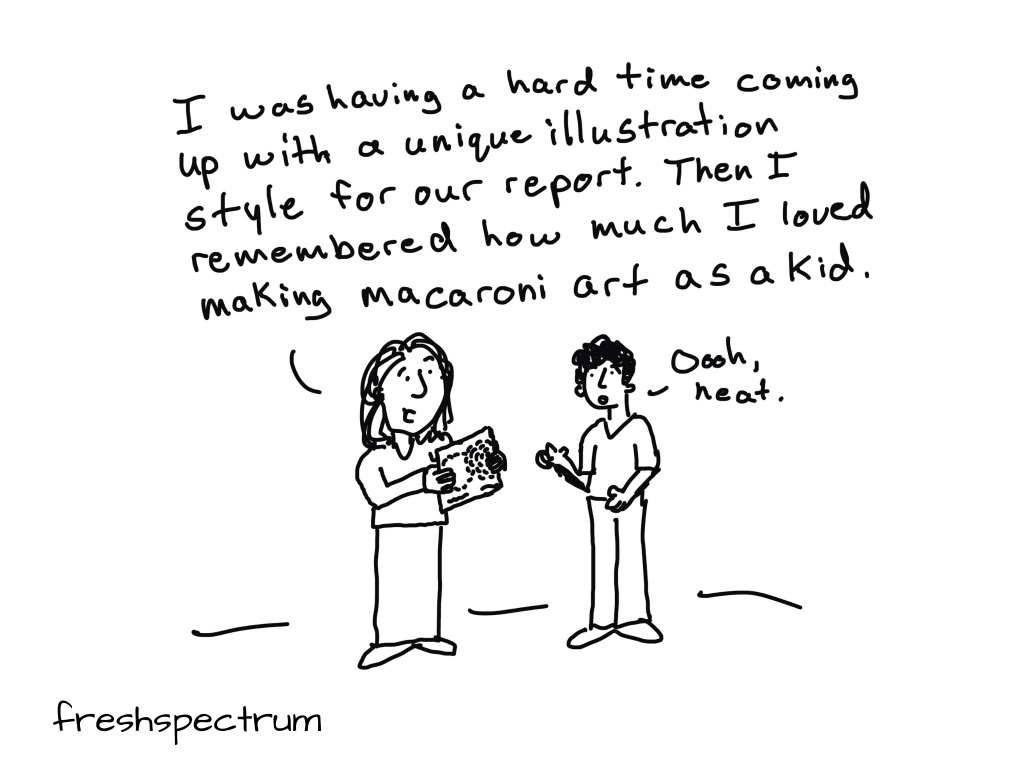
Your images should not just repeat what is written.

This image has an empty alt attribute; its file name is 3-1024x768.png

This is a lesson I learned from Maurice Sendak.  As an illustrator, slide deck designer, report writer, or data visualizer you have to fight the lazy tendency of just repeating what’s on the page with your visuals.  Is simply repeating your written analysis with a chart serving the words? 

An illustration is an enlargement, and interpretation of the text, so that the reader will comprehend the words better. As an artist, you are always serving the words.

You must never illustrate exactly what is written. You must find a space in the text so that the pictures can do the work. Then you must let the words take over where words do it best. It’s a funny kind of juggling act.

Sendak, Carle, Provensen, and 20 Other Beloved Illustrators’ Advice to Children on Being an Artist

There is nothing too serious for an image, even a cartoon.

This image has an empty alt attribute; its file name is 8-1024x768.png

There are times when it’s hard to find the words to approach a tough subject.  But I find that the right photograph, chart, cartoon, or comic can create an entry point when words fail.  

For inspiration, check out a piece of amazing work created by Ben Passmore.

Your black friend is sitting in a coffee shop, your favorite coffee shop…

Congratulations Ben Passmore on “Your Black Friend” winning the 2017 Igantz Award for “Outstanding Comic” at this year’s Small Press Expo!

Find your own visual voice.

This image has an empty alt attribute; its file name is 7-1024x768.png

There are many different styles of illustration. Find one that works for you.

I know evaluators who prefer to illustrate their work with art. I know some who prefer to use infographics. I know others who use memes. Katherine Haugh is an evaluator who has also built up expertise as a graphic recorder. Check out some of her work for inspiration.

In addition to presenting on visual note-taking and journey mapping as evaluations tools, I also attended a few interesting sessions. Take a look below to see my visual notes from the sessions I attended.

Contribution, Leadership, Renewal: A Visual Recap of Evaluation 2019

It’s not the quality of the illustration that matters.

This image has an empty alt attribute; its file name is 4-1024x768.png

Having the ability to create your own illustrations can save a lot of time.

Lots of evaluators are readers and writers. But many are… how do I say this… “creatively tentative.”  Mike Rohde is one of a number of graphic notetakers who has written books with advice for the people who self proclaim, “I can’t draw.”  

People relax, try, experiment and are blown away by what they are able to produce of value with visuals when judgement on the quality of the drawing is removed and replaced with a focus on the ideas behind them. I call it ‘Ideas, Not Art.’

“Make ideas, not art”: The Sketchnote Workbook by Mike Rohde

Think of Data Visualization as a form of illustration.

This image has an empty alt attribute; its file name is 1-1024x768.png

Mostly because it is a form of illustration.

But also because it gives you a purpose beyond simply representing numbers.  To play off Maurice Sendak’s advice, as a visualizer you are creating images to serve the data.

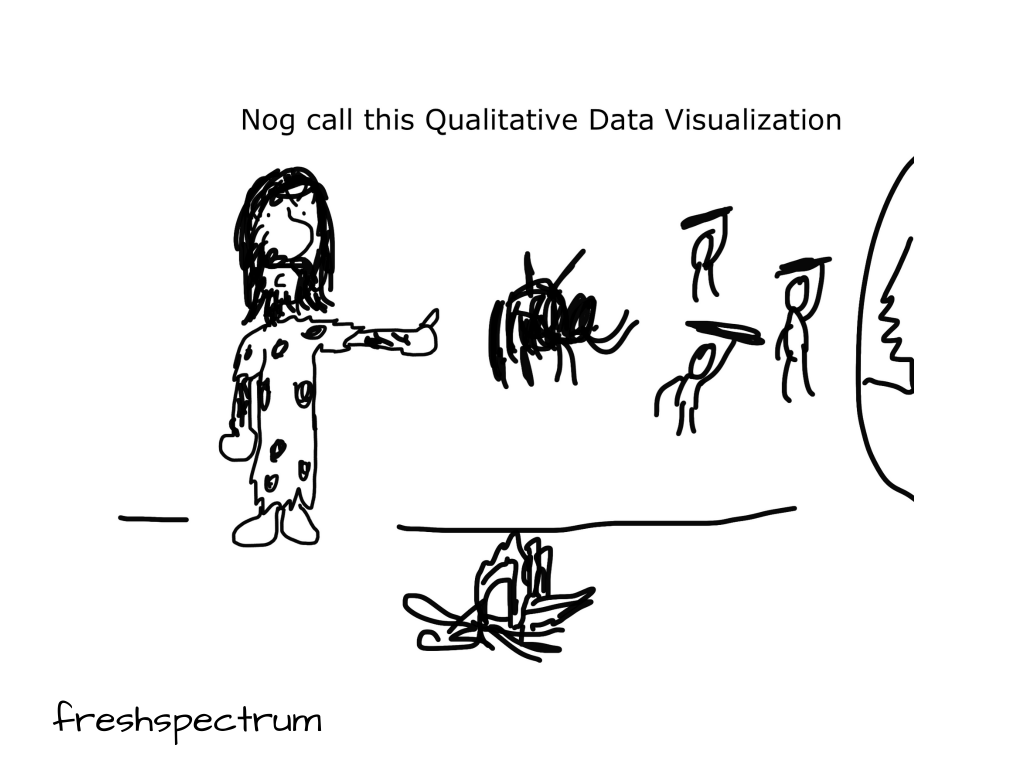
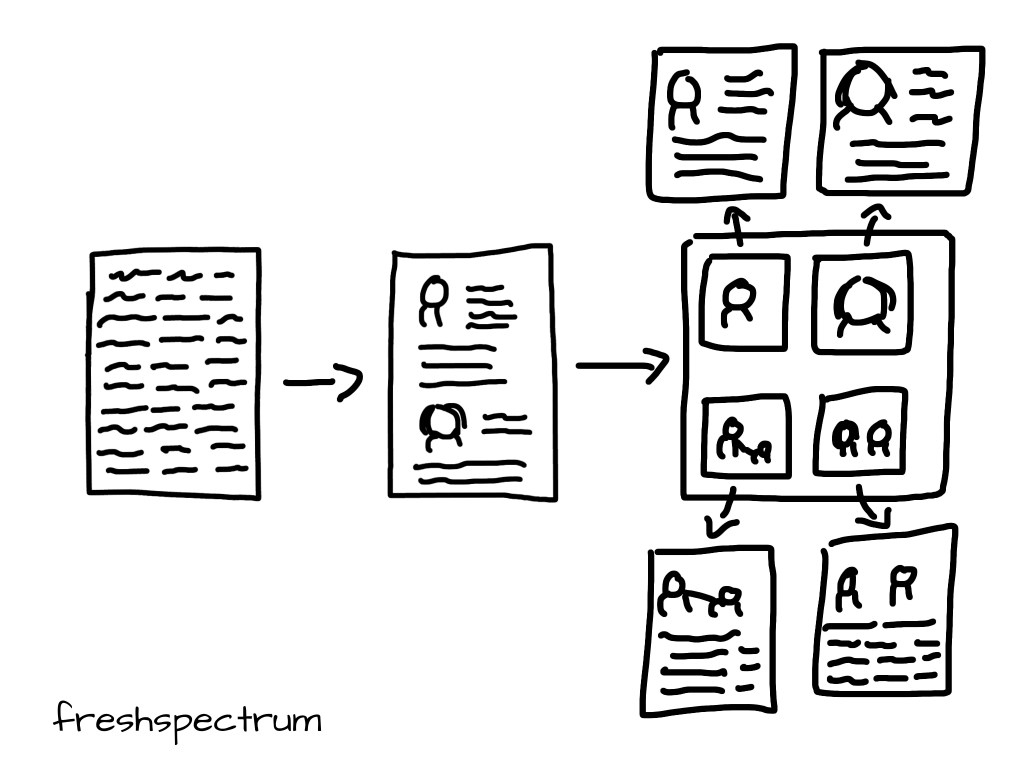
I get asked a lot for examples of how to visualize qualitative data, to which I always answer, illustration!  Ann K Emery wrote a nice post years ago summarizing a variety of styles.

Are you looking for ways to display your qualitative data? The vast majority of data visualization resources focus on quantitative data. In this article, let’s look at some of your options for qualitative data visualization, like word clouds, photographs, icons, diagrams, and timelines.

How to Visualize Qualitative Data

Images are a user-experience element.

This image has an empty alt attribute; its file name is 2-1024x768.png

So what does that mean?  Well your choice of image is going to interact with a reader’s experience of your work.  If you are really serious about how people receive your work, searching stock photo sites for just any image that “feels right” is insufficient.  

Also, there is a whole field who studies this kind of stuff.  Check out this post by Senior User Experience Designer Aurora Harley.

Videos, animated GIFs, images, and other multimedia components should not be added as “fluff” or to “jazz up” a website, app, or other medium. They are user-experience elements, and must be filmed, designed, and produced with an eye toward usability and interaction.

How to Film and Photograph Online Content for Usability: UX Details for Videos and Images

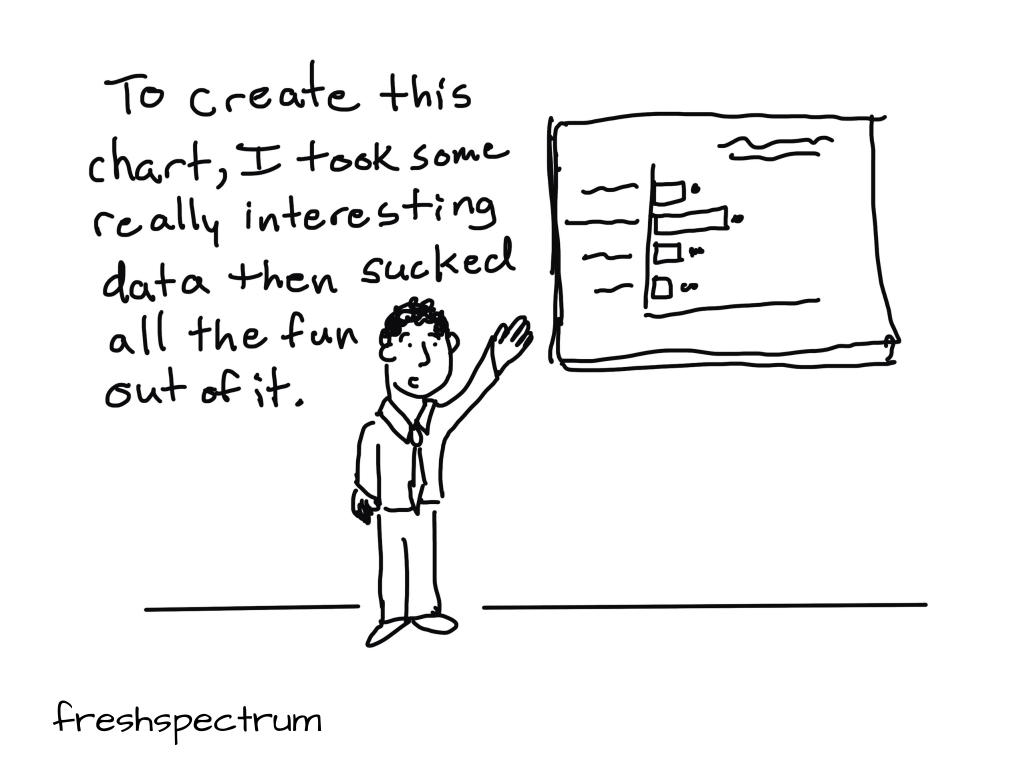
Just because it can be shared with a simple chart doesn’t mean it should.

This image has an empty alt attribute; its file name is 5-1024x768.png

I am a huge fan of Mona Chalabi and her ability to turn simple numbers into influential works of art.  Take this infographic for example.  The argument could have been made with a simple stacked bar chart or icon array.  But the way she presented it, the chart became a story book.

US courts have never looked like the populations they represent. But the overrepresentation of white men on federal benches had started to improve up until recently. According to the American Constitution Society (ACS), “under the Trump administration, this progress has stalled”.

Datablog: Trump’s courts takeover is male and white

Written by cplysy · Categorized: freshspectrum

Aug 19 2020

What is Evaluation? A Review of AEA’s Recent Post


Evaluators are equipped to ask and answer some pretty complex questions. We are not afraid to tackle abstract ideas and make sense of messy data. However, there is one question that can be tough to succinctly answer – what is evaluation?

As evaluators, you can likely recall sitting at family dinners or catching up with a friend when they ask you “what is evaluation?” You may have even had this conversation with colleagues or clients. My initial reaction is “where do I begin?” or “how do I explain evaluation to a non-evaluator?”

Many evaluators and evaluation societies have attempted to answer this question. The Canadian Evaluation Society (CES) consulted members and published their findings on this very topic. This is the definition they came up with:

Evaluation is the systematic assessment of the design, implementation or results of an initiative for the purposes of learning or decision-making.

The need to explain evaluation is likely to come up again and again for evaluators. Fortunately, the American Evaluation Association (AEA) recently created a series of videos and short summaries to explain evaluation. Their post is intended to help us define our profession and better explain the value of evaluation to outsiders.

AEA presents evaluation in the context of three sectors: Organizational, Teaching, and Independent or Consultant. To better understand the work of evaluation in the sectors, AEA interviewed three evaluators. The remainder of this article will review learnings from the AEA post as well as some potential implications for the future.

Evaluation Sectors

Organizational Evaluation

This sector refers to working internally within an organization. Some examples may include: government, non-profits, charities, foundations, or even industry. AEA interviewed Eric Barela, the first Measurement & Evaluation professional hired by Salesforce. Here is a summary of what he had to say about being an internal evaluator:

  • Approach evaluation by asking three questions:

    • What? To gain an understanding of what an organization is doing

    • So what? To see if anything is happening

    • Now what? To use the information to make change or move from “good” to “great”

  • Evaluation is becoming more applicable to other industries, including for-profit organizations. He feels this is driven by the desire to focus more on social impact.

  • As an internal evaluator, he helps his organization ask questions, understand data, and then act on it. He poses two other questions that help him in his evaluation role at Salesforce:

    • How do we know this is happening?

    • What do we need to know in order to improve what we’re doing?


Teaching Evaluation

The teaching of evaluation within academic settings is viewed by AEA as a main sector of practice. AEA recognizes that evaluators come from diverse backgrounds and there is currently no set educational pathway nor is there a licensing body for the profession. However, there are academic institutions that offer evaluation courses to help students prepare for a career in evaluation.

Karen Jackson, from the Leadership Studies and Adult Education department at North Carolina A&T State University, was interviewed to gain more insight into the teaching of evaluation. Here are some key takeaways from her interview:

  • Defining evaluation is a complicated task, but the definition should be flexible to allow for adapting in diverse settings.

  • Academic institution, like hers, offer evaluation courses that focus on the methodology, cultural competency and application of skills.

  • She often starts a course by asking her students “what is evaluation?” The initial perspective is that evaluation is a means of assessment, testing, or a way to meet funder requirements.

  • As her courses progress she encourages her students to ask themselves “why they are doing an evaluation.” This leads to answers that include learning, improvement and trust – which she argues are at the root of evaluation.


Independent Evaluator or Consultant

The final sector described by AEA refers to external evaluations that are conducted by independent evaluators or consultants. AEA views independent evaluation as a way to boost public confidence or verify what an organization is doing. AEA interviewed two consultants about their experience in independent evaluation: Jara Dean-Coffey and Karen Jackson. Both interviewees aim to discover insights to help their clients make decisions. Here is a summary of what they had to say:

Jara Dean-Coffey

  • Relies on six areas to help her clients:

    1.     Evaluative thinking

    2.     Evaluative practices

    3.     Strategy

    4.     Communication

    5.     Capacity building

    6.     Coaching

  • She recommends always starting with evaluative thinking to understand: “the context, the assumptions, the values, and the outcomes” of her client. This includes reviewing the organization’s theory of change.

  • One strategy she offers is to start with what the client feels is most important for them to answer at the moment.


Karen Jackson

  • Karen Jackson views her purpose as “help[ing] organizations learn more about themselves.”

  • She seeks to understand if clients are achieving their goals and if not, help them take the steps to do so.

  • She believes that independent evaluators have the opportunity to give people a voice and work with communities.

Next Steps

The breakdown of the definition by sector combined with the three evaluator perspectives was a helpful way for AEA to explain evaluation. There were also common themes that emerged across the sectors, such as: learning, helping others to ask meaningful questions, and identifying ways to improve. Revisiting Eric Barela’s use of the question “now what?”, I have some suggestions on how to use the AEA post and insight moving forward.

  • Ask yourself the same questions to understand your practice: What does evaluation mean to you? How do you approach evaluation? And what do you find rewarding about your work?

  • Look for sectors that may be missing from AEA’s overview. For example, should ‘Evaluation Research’ be included in the definition?

  • Create your own definition of evaluation. Using AEA’s recent post and/or other definitions (such as the one offered by CES), create your own definition of evaluation and what you do in your role.  

  • Advocate for evaluation in these three sectors and beyond. Large for-profit companies, like Salesforce, are starting to see the importance of evaluation – let’s keep that momentum going!


Conclusion

AEA’s post does a good job at explaining evaluation in a succinct way. For me, I have never worked in the Learning Evaluation sector, but I still found Karen Jackson’s approach and perspective on evaluation to be both relatable and useful. Likewise, I think movement between these sectors is expected – both in terms of the definitions put forward, the skillsets used and the nature of evaluators having the ability to work in multiple sectors. 

AEA’s explanation of evaluation is similar to many other definitions put forward by societies (i.e CES). I think what differentiates this post from other definitions is that it incorporates the experiences and perspectives of multiple evaluators by effectively using video. The use of interviews result in an overview of evaluation that is meaningful to evaluators as well as outsiders.

I think the question “what is evaluation?” and our attempt to define it is an on-going process with no end in sight. I think this is what makes evaluation interesting – it continues to expand and evolve by incorporating new ideas and entering new settings. A flexible definition is key to our profession and I think AEA’s post does a good job at showing the complexity, yet inclusivity of evaluation. 


Sign up for our newsletter

We’ll let you know about our new content, and curate the best new evaluation resources from around the web!


We respect your privacy.

Thank you!


Written by cplysy · Categorized: evalacademy

Aug 18 2020

Políticas y plataformas de apoyo al aprendizaje en Naciones Unidas

Continuando con el informe de la “Joint Inspection Unit” de Naciones Unidas: “Políticas y plataformas de apoyo al aprendizaje: hacia una mayor coherencia, coordinación y convergencia“, al que nos referimos en nuestro anterior post El aprendizaje como fuerza transformadora que puede romper los silos, aquí las principales hallazgos y conclusiones:

1.El acuerdo de que el aprendizaje es estratégico no siempre se sustenta en hechos

2. La creación de una nueva cultura de aprendizaje debe ser más programática

3. Falta una perspectiva amplia y sistemática de la cooperación interinstitucional

4.El uso de oportunidades que brindan las nuevas tecnologías sigue siendo aleatorio e inconsistente

5.El aprendizaje electrónico puede interpretarse como un paso hacia la agilidad de las organizaciones de Naciones Unidas

6.Es necesario un mayor compromiso y compromiso por parte del propio personal

7.Cómo avanzar hacia un sistema de aprendizaje de las Naciones Unidas: tres vectores

El primer vector está relacionado con las políticas: el desarrollo de un marco de aprendizaje institucional de las Naciones Unidas visionario y estratégico a nivel de todo el sistema, que debe abarcar principios y acciones basados ​​en los valores y necesidades comunes de todas las organizaciones interesadas de las Naciones Unidas.

El segundo vector es institucional: la mejora y consolidación del papel de la Escuela Superior del Personal del Sistema de las Naciones Unidas como institución de aprendizaje y gestión del conocimiento a nivel de todo el sistema, mediante el fortalecimiento de su mandato y la mejora de sus recursos.

El tercer vector es de naturaleza operativa: un uso coordinado, más riguroso, sistemático y pragmático de las plataformas de aprendizaje electrónico, incluidas las plataformas conjuntas.

Written by cplysy · Categorized: TripleAD

  • « Go to Previous Page
  • Go to page 1
  • Interim pages omitted …
  • Go to page 240
  • Go to page 241
  • Go to page 242
  • Go to page 243
  • Go to page 244
  • Interim pages omitted …
  • Go to page 304
  • Go to Next Page »

Footer

Follow our Work

The easiest way to stay connected to our work is to join our newsletter. You’ll get updates on projects, learn about new events, and hear stories from those evaluators whom the field continues to actively exclude and erase.

Get Updates

Want to take further action or join a pod? Click here to learn more.

Copyright © 2026 · The May 13 Group · Log in

en English
af Afrikaanssq Shqipam አማርኛar العربيةhy Հայերենaz Azərbaycan dilieu Euskarabe Беларуская моваbn বাংলাbs Bosanskibg Българскиca Catalàceb Cebuanony Chichewazh-CN 简体中文zh-TW 繁體中文co Corsuhr Hrvatskics Čeština‎da Dansknl Nederlandsen Englisheo Esperantoet Eestitl Filipinofi Suomifr Françaisfy Fryskgl Galegoka ქართულიde Deutschel Ελληνικάgu ગુજરાતીht Kreyol ayisyenha Harshen Hausahaw Ōlelo Hawaiʻiiw עִבְרִיתhi हिन्दीhmn Hmonghu Magyaris Íslenskaig Igboid Bahasa Indonesiaga Gaeilgeit Italianoja 日本語jw Basa Jawakn ಕನ್ನಡkk Қазақ тіліkm ភាសាខ្មែរko 한국어ku كوردی‎ky Кыргызчаlo ພາສາລາວla Latinlv Latviešu valodalt Lietuvių kalbalb Lëtzebuergeschmk Македонски јазикmg Malagasyms Bahasa Melayuml മലയാളംmt Maltesemi Te Reo Māorimr मराठीmn Монголmy ဗမာစာne नेपालीno Norsk bokmålps پښتوfa فارسیpl Polskipt Portuguêspa ਪੰਜਾਬੀro Românăru Русскийsm Samoangd Gàidhligsr Српски језикst Sesothosn Shonasd سنڌيsi සිංහලsk Slovenčinasl Slovenščinaso Afsoomaalies Españolsu Basa Sundasw Kiswahilisv Svenskatg Тоҷикӣta தமிழ்te తెలుగుth ไทยtr Türkçeuk Українськаur اردوuz O‘zbekchavi Tiếng Việtcy Cymraegxh isiXhosayi יידישyo Yorùbázu Zulu