• Skip to main content
  • Skip to footer
  • Home

The May 13 Group

the next day for evaluation

  • Get Involved
  • Our Work
  • About Us
You are here: Home / Archives for cplysy

cplysy

Apr 20 2024

¿La Inteligencia Artificial está transformando la evaluación?

En «5 maneras en que la IA está a punto de transformar la evaluación«, por el equipo de Evaluación del Programa Mundial de Alimentos en 4 de julio de 2023, nos dicen que la Inteligencia Artificial (IA) crea oportunidades incomparables y al mismo tiempo plantea nuevos riesgos para todas las organizaciones. La IA no solo es capaz de procesar y analizar grandes cantidades de datos a gran velocidad, sino que también puede realizar razonamientos paso a paso y tomar acciones para lograr objetivos determinados.

1. La velocidad salva vidas: La IA puede ayudar a aprovechar la evidencia existente en momentos críticos de respuesta, generar conocimientos, que hasta ahora son costosos de producir, y posee la capacidad de crear simulaciones complejas que ayudan a predecir los resultados de diversos escenarios globales. . Entregar la evidencia correcta a las personas correctas en el momento correcto nunca ha estado tan cerca.

2. Aumentar la eficiencia, eliminar prejuicios y mejorar la confianza: Las tecnologías de inteligencia artificial como el procesamiento del lenguaje natural (PLN) poseen el poder de analizar, categorizar, etiquetar, recuperar y traducir textos en múltiples idiomas, mientras interpretan y comprenden los sentimientos en las comunicaciones.  La IA puede aprovechar una multitud de evaluaciones pasadas, resumiendo y sacando a la luz tendencias en los resultados, factores recurrentes de éxito y deficiencias.

La IA promete recuperar información relevante de prácticamente todos los informes de evaluación existentes en un abrir y cerrar de ojos, frente a un proceso que ahora lleva días. Y al revisar sistemáticamente los documentos, la IA puede enriquecer el contenido de los productos de evaluación y eliminar el sesgo selectivo que inevitablemente surge con los enfoques manuales y dirigidos por humanos. Además de responder automáticamente a consultas específicas, la IA ayudará a preparar nuevos productos de evidencia a partir de los documentos seleccionados y de calidad garantizada que se le introduzcan.

3. Analizar el contexto y seguir el progreso: La IA puede acelerar la planificación y formulación de evaluaciones, apoyando el análisis del contexto de una intervención y ayudando a identificar desafíos y riesgos vinculados a un programa mientras se desarrollan estrategias de mitigación apropiadas. La IA podría realizar un seguimiento en tiempo real e informar sobre los resultados del programa, mejorando la transparencia y la rendición de cuentas. El acceso en tiempo real a la evidencia evaluativa reforzaría el papel de la evaluación como socio de aprendizaje y apoyaría la gestión adaptativa.

4. Intercambio de conocimientos, sistemas de recomendación: La IA no sólo podrá responder inmediatamente a las solicitudes de evidencia de los usuarios sino que, como Netflix o Spotify, ofrecerá una selección (de evidencia de evaluación) adecuada a su área de interés.

5. Humanos con robots: La aportación humana es esencial para establecer objetivos, ser garante de valores éticos, dar sentido a contextos complejos y garantizar la precisión del contenido generado por IA. Para ello, la educación y la gestión eficaz de los sistemas de IA son cruciales para maximizar los beneficios y minimizar los riesgos asociados. La implementación de salvaguardias técnicas y estrategias de gobernanza holísticas es imprescindible a medida que comenzamos a poner a prueba la IA generativa.

La tecnología de IA nunca ha sido más accesible, más atractiva para usar y vislumbrar el futuro. La IA pronto pasará de ser una curiosidad a ser un lugar común.

Written by cplysy · Categorized: TripleAD

Apr 17 2024

Who is the Hero? Storytelling Methods for Data People.

Good stories always have heroes, even data stories. So who is the hero in your story?

So technically, a story is just a sequence of events. And you can layout a sequence of events without the use of characters. But thinking of your stories, and telling them, through the eyes of characters (especially a good protagonist) can really elevate the quality.

So how do you do that with data stories? That’s what we’ll discuss in today’s post.

For a little extra context, a couple of weeks ago I put out a course waitlist wondering what my readers really wanted to learn related to data design. And out of all the topics I listed, data storytelling rose to the top. So as I dive down the rabbit hole that is storytelling, preparing for a course to be launched (perhaps in May?), I thought I would share some basic methods here on the blog.

The Hero’s Journey and Us

The hero’s journey is a really common story template that has been adapted to meet all sorts of needs from literature to script writing to business planning. We won’t dive in too deep at this moment, but it does give us a good starting point for talking about the hero (a.k.a. our main protagonist).

Out of all the various character archetypes you could include in a story, a hero is almost certainly the most important.

But who is the hero in a story about a program’s performance? Is it the program? Is it the board or leadership? Is it a member of the program staff? Is it a funding recipient? Is it the ultimate beneficiary?

Honestly, you can center any of these as the hero of your stories. But some points of view will definitely give you more compelling stories than others.

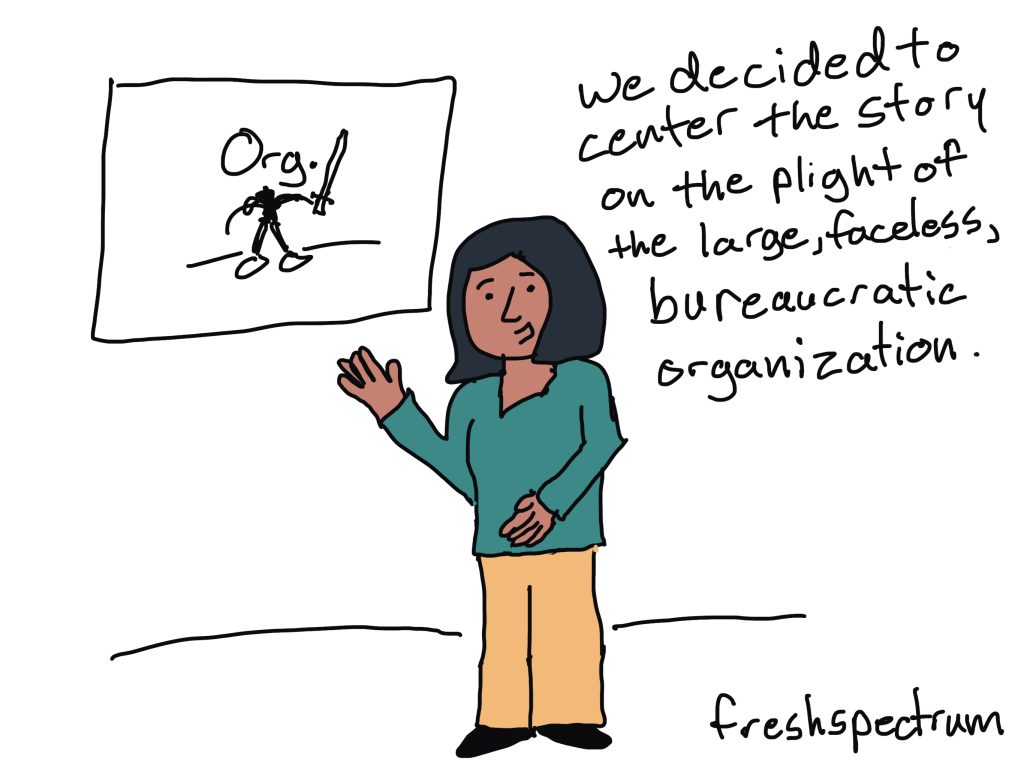
Centering the Organization as the Hero [Don’t Do This]

For some reason I feel like this has become the default. Which is unfortunate.

Organization heroes make for pretty dull stories.

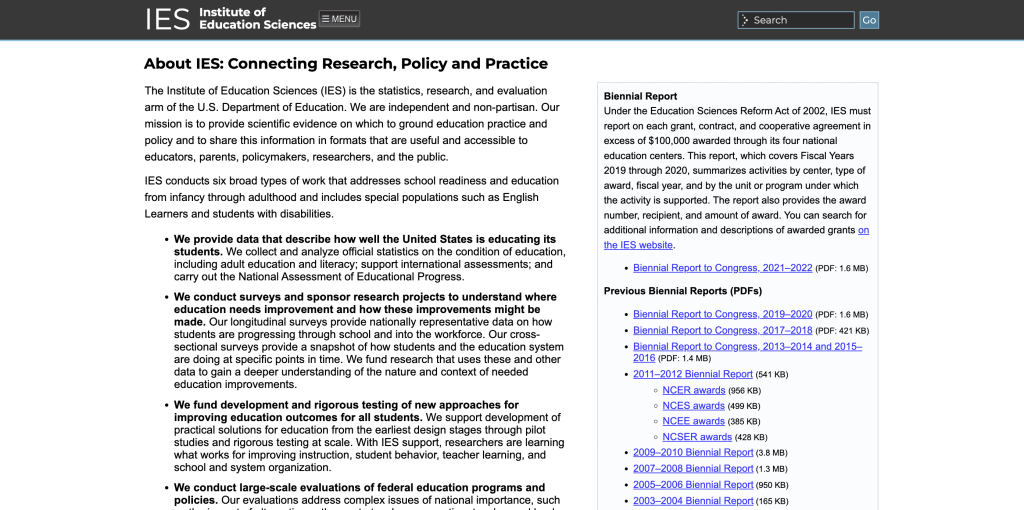
Let’s look at how the Department of Education’s Institute of Education Sciences centers itself in its web page copy and reports. Here is an example from the web page.

IES Home Page Image Screenshot

Driving Innovation through Research. IES invests in high-quality research that sparks innovative solutions to real-world challenges in education.

Who is the hero? Clearly it’s IES that’s doing the investing that is leading to innovation.

This kind of language gets continued on the “About Us” page. Look at the number of sentences that start with we.

IES About Page Screenshot

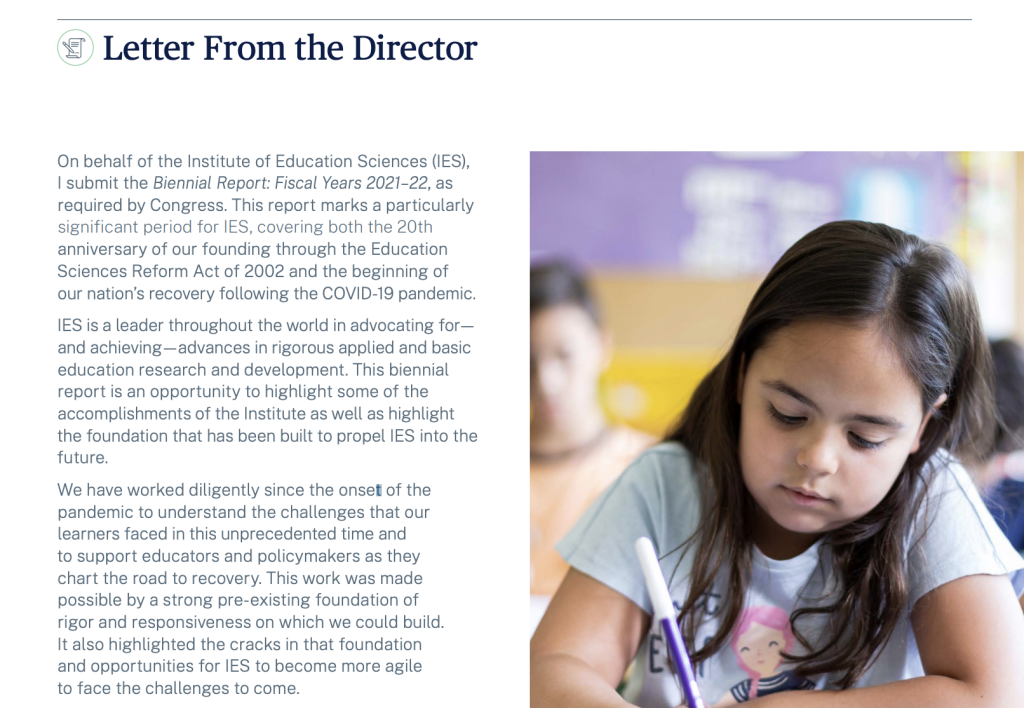
Okay, now let’s dive into their latest Biennial Report to Congress.

IES Report Screenshot

IES is a leader throughout the world in advocating for-and achieving-advances in rigorous applied and basic education research and development. This biennial report is an opportunity to highlight some of the accomplishments of the Institute as well as highlight the foundation that has been built to propel IES into the future.

Who is the hero? Clearly it’s the Institute.

This kind of centering becomes a habit that starts from the top and then permeates through an entire organization. It’s one of those “mindless centering of self” kind of things that we all tend to do.

Centering Beneficiaries and Direct Service Providers as Heroes [Consider This]

UNICEF offers us an alternative example in how to think about organizational storytelling.

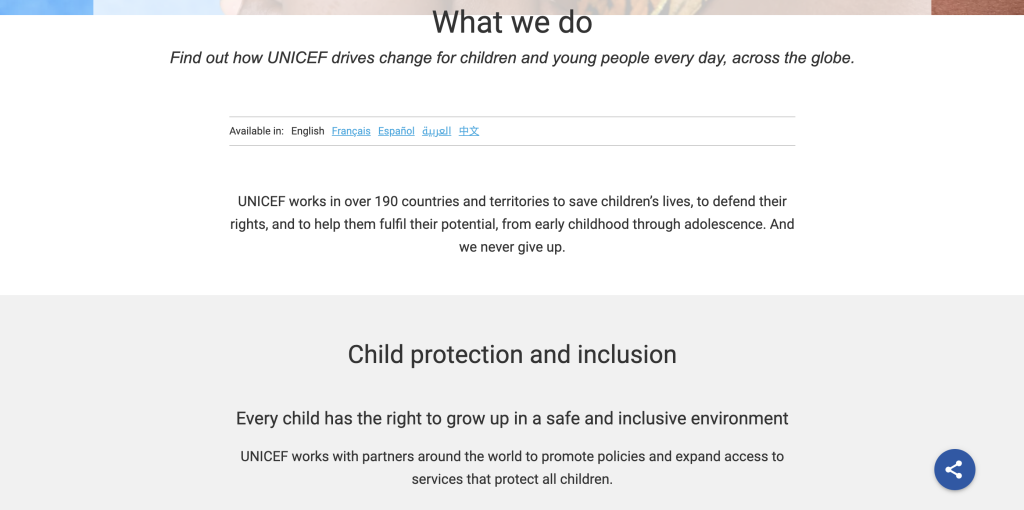
Here is the current top of the “What we do” page.

UNICEF What We Do Page Screenshot

While the language does do some centering of the organization it quickly switches perspective. The text adds a new character, “children.”

By saying “Every child has the right to grow up in a safe and inclusive environment,” the child becomes the central figure (which then gets repeated throughout the page). UNICEF becomes the mentor, or guide, that supports the child’s journey.

Who is the hero? On the about page, I would suggest the hero is the child.

Perhaps you might think that’s a stretch. So let’s take a dive into one of UNICEF’s flagship reports. The State of the World’s Children 2023.

The first few stories center children.

UNICEF Child Story Screenshot

In Yemen, 7-year-old Hind has grown up in a country where health services have been deeply affected by conflict. But a team of committed health workers, whose mission it is to protect their community, reach children like her with life-saving vaccines.

UNICEF Child Story Screenshot

In Pakistan, 4-year-old Iman received her polio vaccine. Her grandmother was initially hesitant to get her immunized. But thanks to the dedication of a health worker, who helped the family access health services, trust was built and Iman was vaccinated.

Who is the hero? The Children.

These are stories that show each child’s journey towards getting vaccinated. Health workers are heroic figures that appear in these specific stories, but not as the central figure.

This approach changes as the report goes on (there are many stories included in this report). We move from centering children to centering health workers. And it becomes clear that the organization is not centering itself in any of these stories, we can only assume that they had some role in the background.

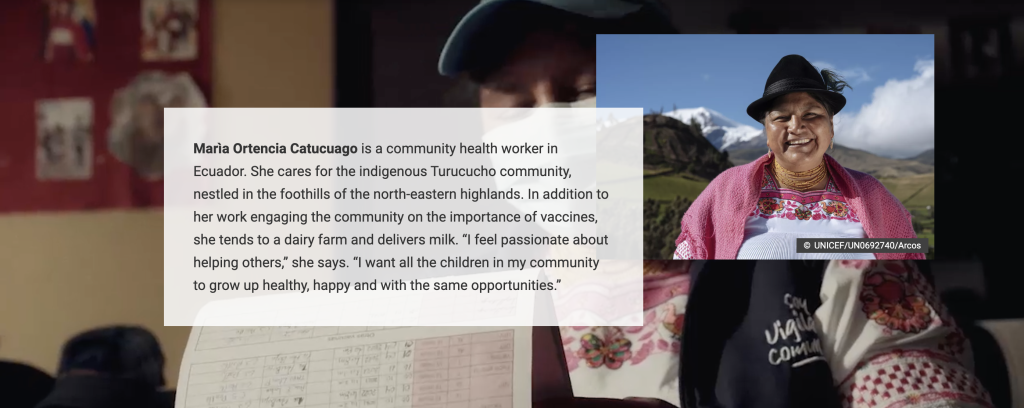
UNICEF Healthcare Worker Screenshot

Marìa Ortencia Catucuago is a community health worker in Ecuador. She cares for the indigenous Turucucho community, nestled in the foothills of the north-eastern highlands. In addition to her work engaging the community on the importance of vaccines, she tends to a dairy farm and delivers milk. “I feel passionate about helping others,” she says. “I want all the children in my community to grow up healthy, happy and with the same opportunities.”

UNICEF Healthcare Worker Screenshot

For Ghada Ali Obaid, vaccinating children is not a job. It’s a calling. She dashes through the Dar Sa’ad Medical Compound in Yemen, counselling mothers about the benefits of immunization and takes to the road to reach children who might otherwise miss out. Ghada’s husband, Ehab, takes time off from his job as a taxi driver to bring her to more remote areas. “I encourage her to show up every day because she is so passionate, and she has my full respect,” Ehab says.

Who is the Hero? The Health Workers

How will you apply this lesson to your own reporting stories?

Who do you center when you write a report?

How often do you treat an organization as if it were a person? Would it be better to center individual project staff members in some of your stories? Could you center some of the program’s direct beneficiaries?

Written by cplysy · Categorized: freshspectrum

Apr 17 2024

Ask Nicole: Managing Nonprofit Mission & Funder Demands

Have a question you’d like to be featured? Let me know. I’ve been fortunate to work with a variety of client organizations, including philantrophy. Navigating grantee-funder relationships while staying true to your mission is complex. It’s a landscape where aspirations to create meaningful change often intersect with the practicalities of securing funding. However, amidst the […]

The post Ask Nicole: Managing Nonprofit Mission & Funder Demands appeared first on Nicole Clark Consulting.

Written by cplysy · Categorized: nicoleclark

Apr 11 2024

What is Card Sorting? UX Methods for Data People

Card sorting is a user experience research method useful in discovering how people organize and prioritize different topics.

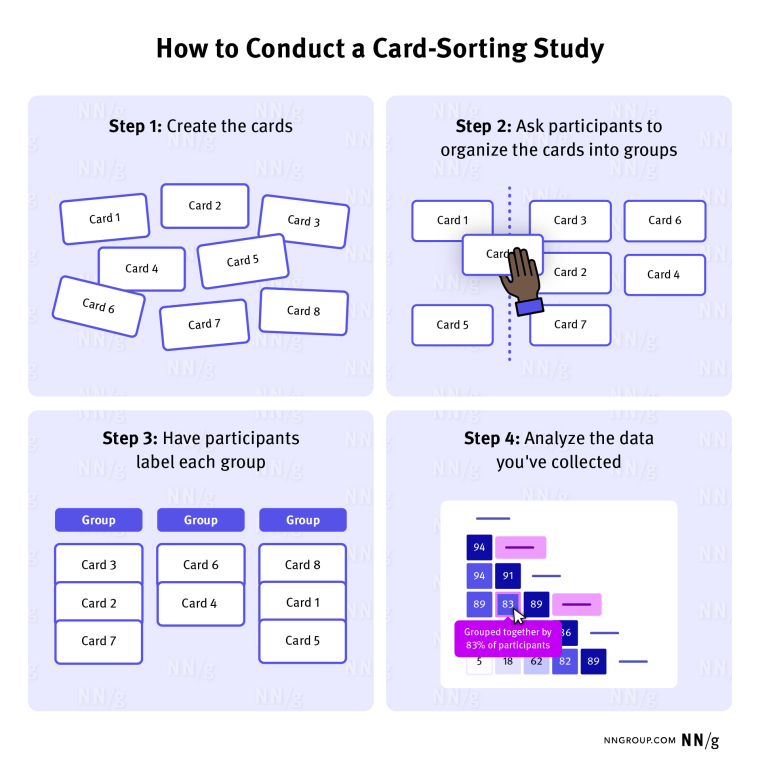
The method is pretty simple. You start with a set of topics on notecards or sticky notes. Then you ask your research participant to organize those cards in a way that makes sense to them.

At least that’s the basics, there are all sorts of card sort variations (open, closed, hybrid, moderated, unmoderated) which has been covered on the web in lots of detail. Here are a couple of good sources if you want an in-depth method guide.

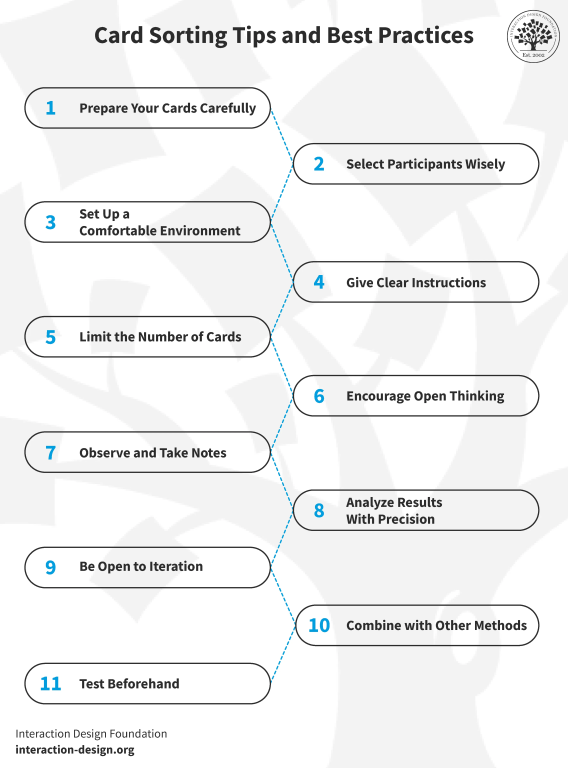
  • Card Sorting: The Ultimate Guide (in 2024) – Interaction Design Foundation
  • Card Sorting: Uncover Users’ Mental Models for Better Information Architecture – Nielsen Norman Group
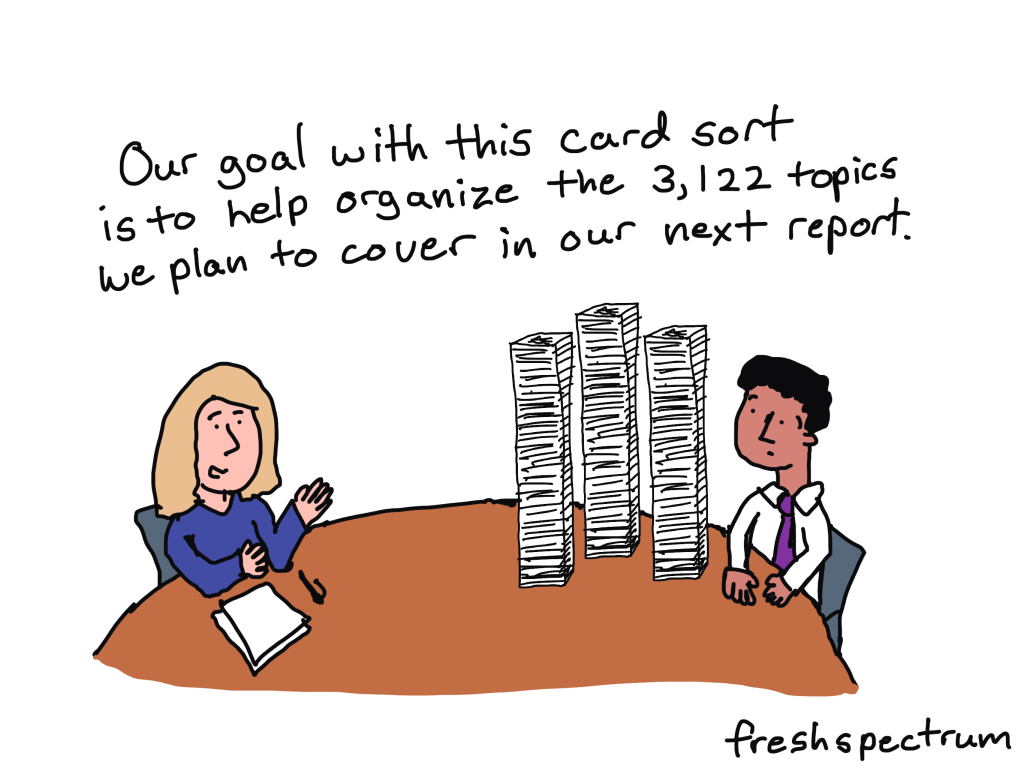
Comic person to second person, "Our goal with this card sort is to help organize the 3,122 topics we plan to cover in our next report."

Card sorting can be used for more than just user interface and web design.

A lot of the guides you’ll find on the web are written to show you how to use card sorting for information architecture. And it is a really good method for discovering where people would expect to find certain pieces of information on a website.

But there are definitely all sorts of different situations where are a card sort could be a really useful research method. Off the top of my head, here are just a few potential uses for researchers and evaluators.

NNGroup - How to Conduct a Card-Sorting Study

Card sorting to prioritize reporting information.

Are you trying to create a short visual report but don’t know what information should be included or not included? Why not try a card sort with different potential section headings?

Card sorting to determine survey response items.

If you have a really important survey, testing your questions with real survey respondents can provide a lot of insight. Taking it one step further, you can also card sort different response items to see which are most important for inclusion. Or you can card sort the actual survey questions, to determine which questions might provide the best insights.

Card sorting to organize outcomes and activities.

Understanding some of the importance between different program elements, activities, and outcomes could also be discovered through card sorting.

Interaction Design - Card Sorting Tips and Best Practices

Why you should consider leading a moderated card sort.

Moderated card sorting involves a researcher being present in the room while the user participates in the card sort. The researcher will encourage the participant to think aloud during the process and probe into why they are making certain choices.

dscount People Nerds – Card Sorting

Card sorting can provide a lot more insight than just the order and groupings of different topics. By asking participants to think aloud, you can get a ton of added insight into their thought process.

Bonus: Card sorting is a visual qualitative method.

A lot of data people struggle with visualizing qualitative data. Which is not surprising because many “qualitative data visualization” methods involve quantifying the data first.

Card sorting is a visual method. At the beginning and end of the sort you have a natural visual artifact that can be used when illustrating your qualitative reports. Just take a picture (or if you are leading the card sort virtually, take a screenshot).

Unlike most stock photos, process pictures of visual methods are highly relevant and easy to use illustrations.

How to lead a Card Sort using Canva and Zoom.

There are a bunch of virtual tools that can used to lead a card sort. But here is a simple approach using Zoom and Canva.

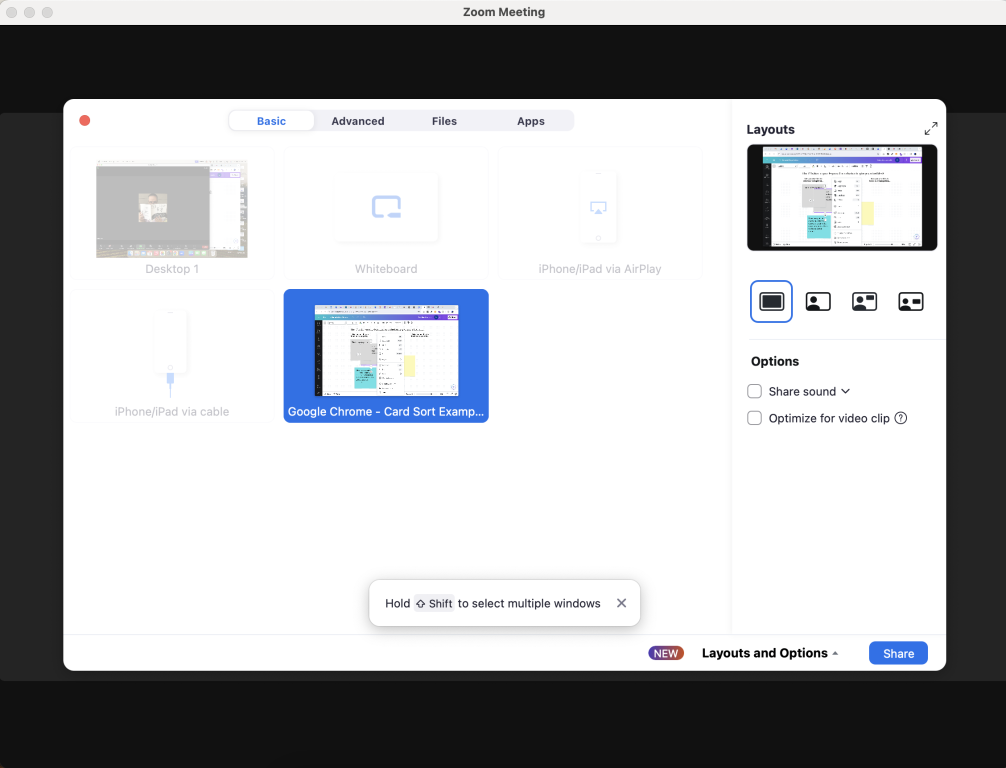
1. Start a Zoom meeting and share your screen (optional)

This is totally optional, but running a card sort in Zoom (or other video meeting tool) will give you the ability to share your screen and record the process.

Screenshot - Sharing Screen on Zoom

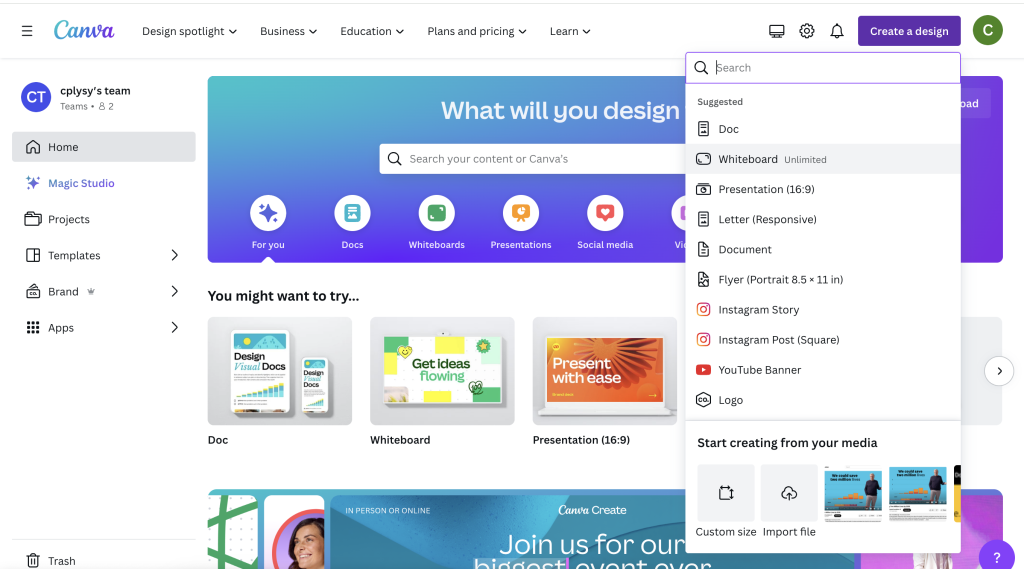
2. Create a Whiteboard in Canva

In Canva, go to create a design and choose “Whiteboard.”

Screenshot - Creating a Whiteboard in Canva

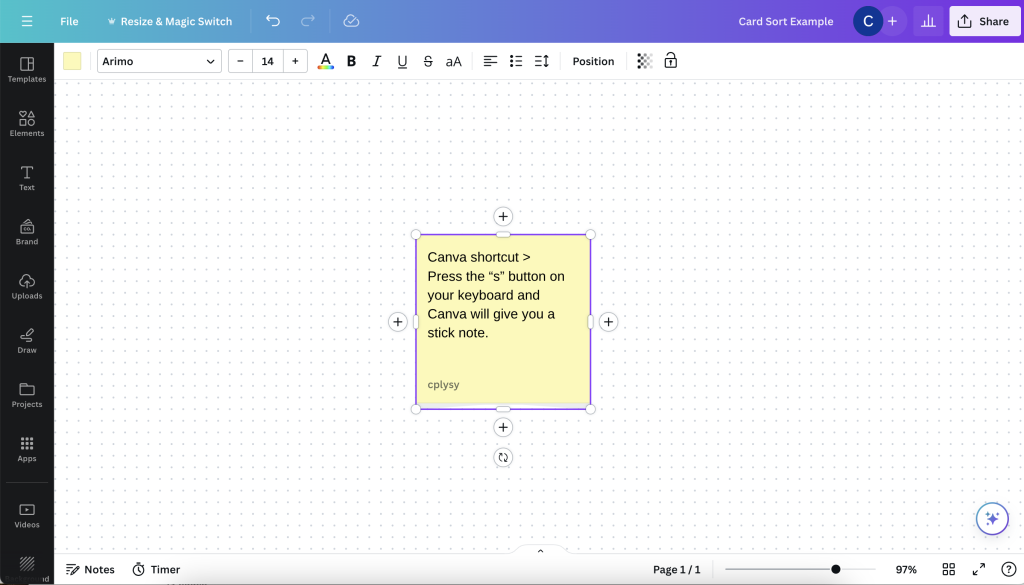
3. Add sticky notes.

If you already have the topics you want your participant to organize, go ahead and create sticky notes to share them. There is a Canva shortcut, just click “s” and a sticky note will appear.

Screenshot - Creating a sticky note in Canva

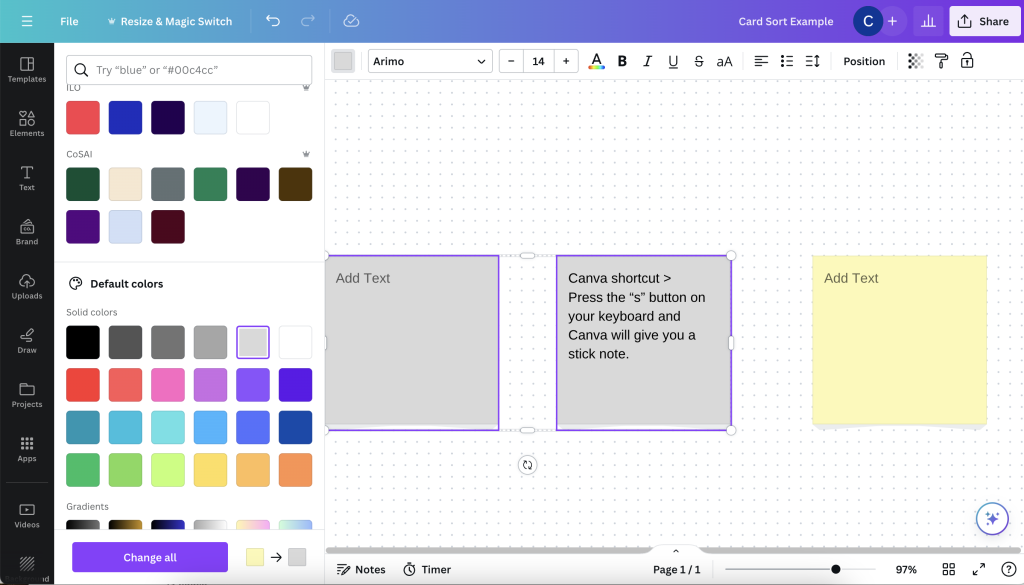
4. Change sticky note colors (optional)

The default sticky note is yellow, but you can always change the colors by selecting the sticky notes and clicking on the color button at the top left of the page.

Screenshot - Changing sticky note colors

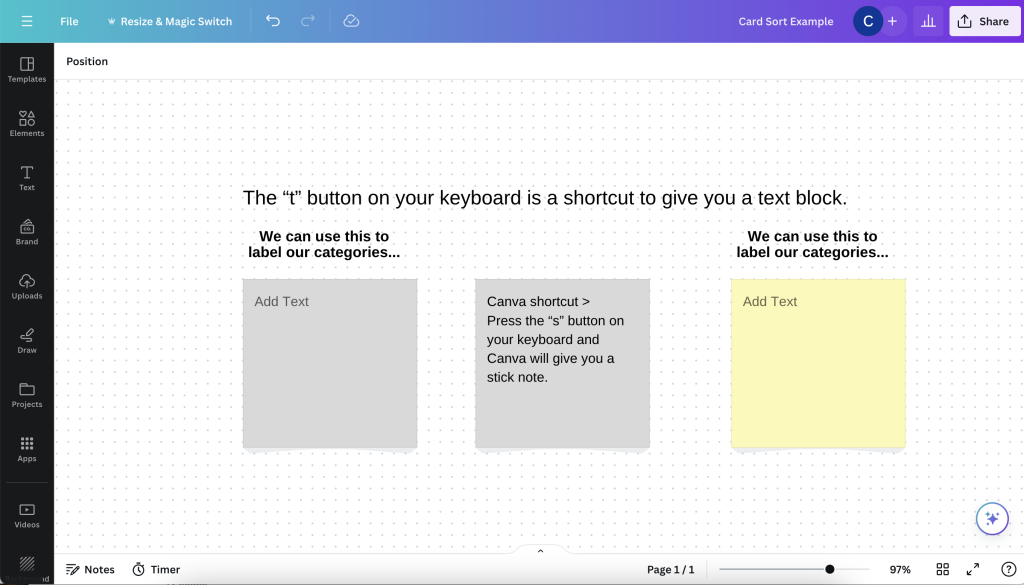
5. Add organizing text blocks.

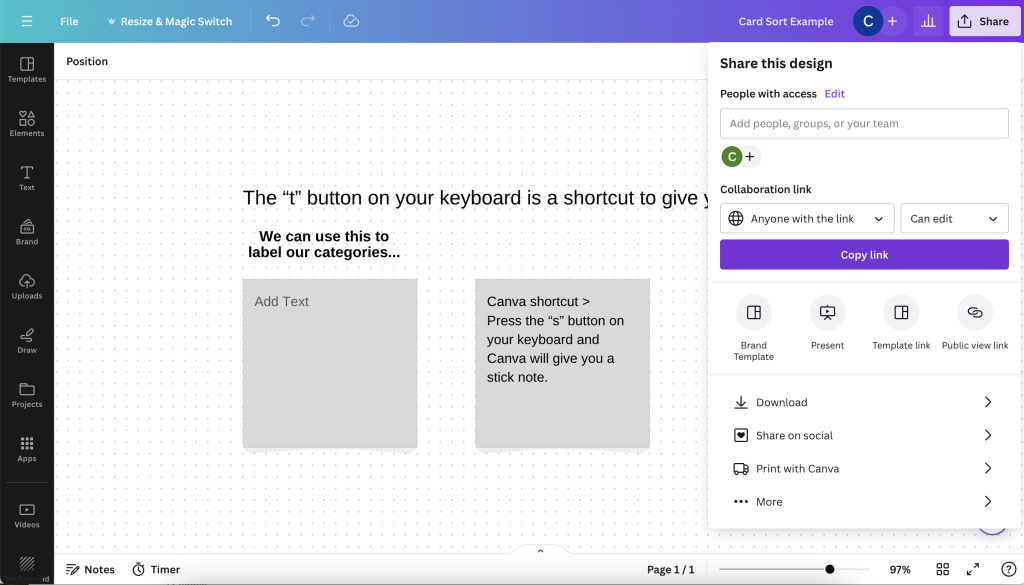
Here is another Canva shortcut. If you hit the “t” button on your computer a text block will appear. You can use these to include labels on the page.

Screenshot - Canva text block shortcut

6. Invite your participant to the Canva file.

You can share your canva document directly with your participant. You just need to click share and then send a “Collaboration link” that anyone can edit.

Screenshot - Sharing an edit link in Canva

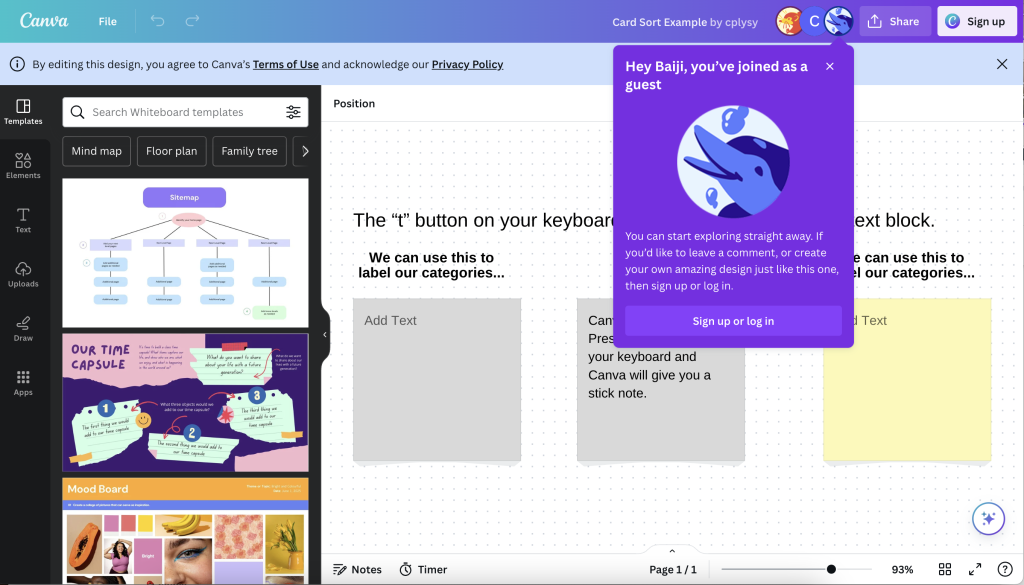
7. Your participant does not need a Canva account to engage with the document.

By sharing an open link, your participant can just open the link in a web browser. They will be able to interact with the design without signing up or logging into a Canva account. They will just show up in the Canva document as a generic user.

Screenshot - Opening a Canva link without logging into Canva

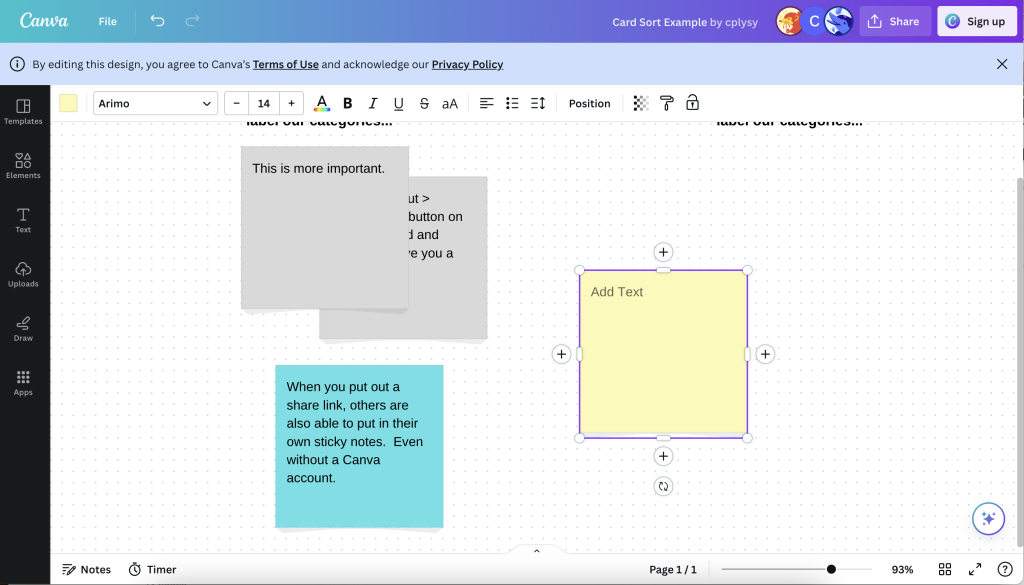
8. Let your participant move the sticky notes around the page and ask them to talk through the process.

Your user will be able to move sticky notes around, change sticky note colors, and even add new sticky notes. It’s just up to you to show them how.

Screenshot - Moving sticky notes around

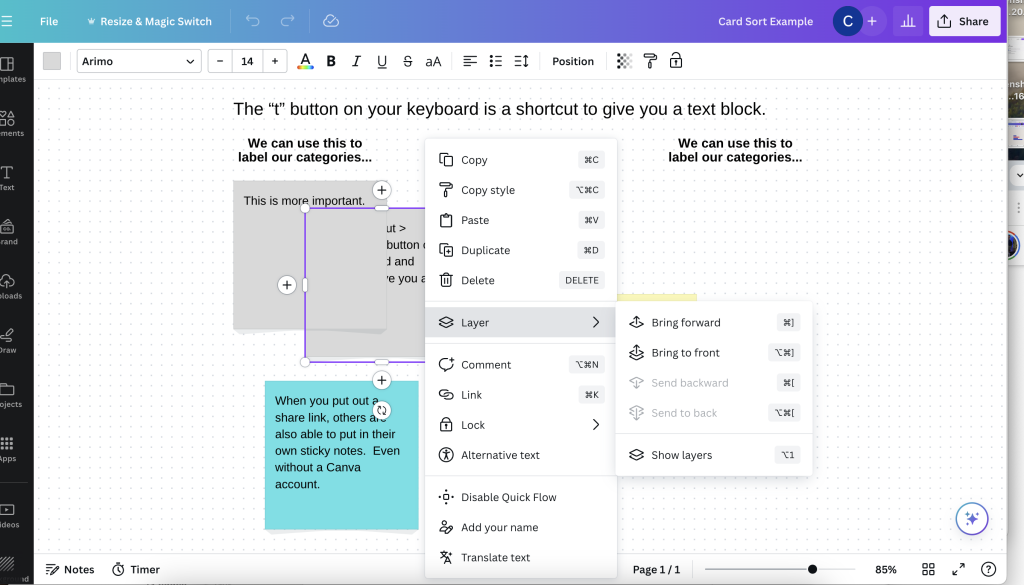
9. Sticky notes can be stacked.

The sticky notes can definitely be stacked. By right clicking on a sticky note you can access the layer menu (which will allow your participant to move a sticky note forward or backward in a pile). Whiteboards are also infinite in Canva, so they can always just order the sticky notes up and down the page or left to right.

Since you are both in the document at the same time, you can always help the participant move items around as they direct the process.

Screenshot - Layer options in Canva

10. Want to use the same sticky notes over and over again?

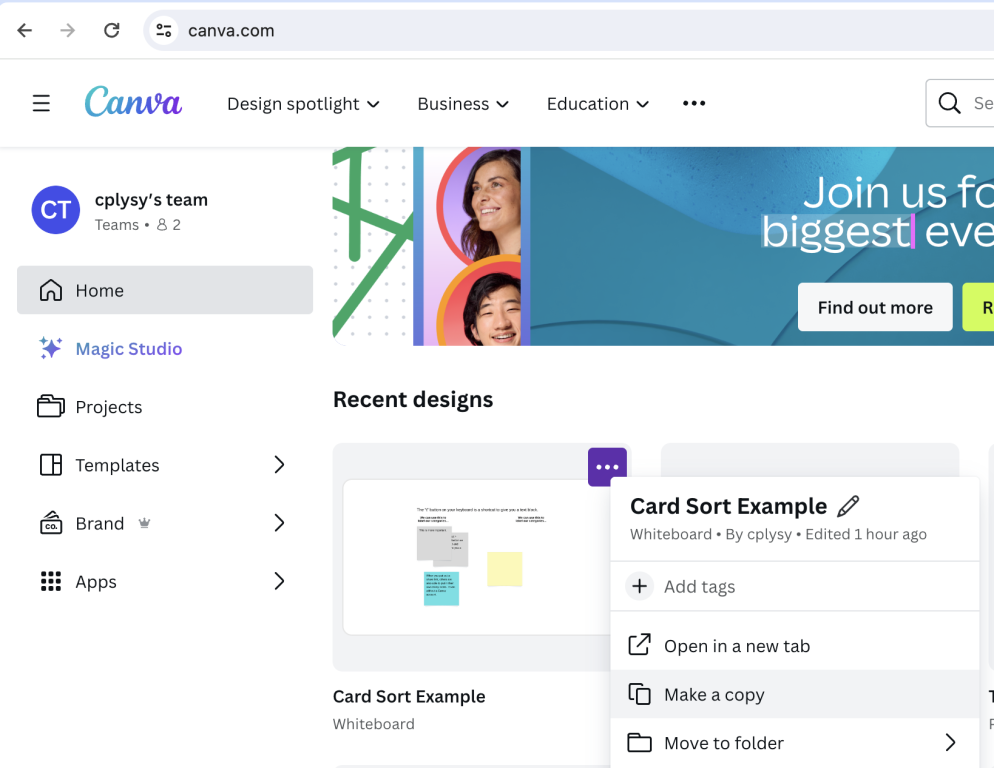
During the Canva setup process, after you have your sticky notes set, go ahead and make a copy of the design file. Do this for as many interviews as you want to lead. This way you’ll have a visual record for each.

Screenshot - Making a copy of a Canva file.

This post is part of a new series on specific design methods. Card sorts are just one of many potentially useful user experience design methods I suggest to researchers and evaluators. If you’re interested in learning more UX design methods, visit my diydatadesign course catalog and look for UX Design 101.

Written by cplysy · Categorized: freshspectrum

Apr 11 2024

Scrum, melé para el trabajo colaborativo

Scrum es un marco de trabajo inicialmente para desarrollo ágil de software que se ha expandido a otras industrias. Es un proceso en el que se aplican de manera regular un conjunto de buenas prácticas para trabajar colaborativamente, en equipo y obtener el mejor resultado posible de proyectos, caracterizado por:

  • Adoptar una estrategia de desarrollo incremental, en lugar de la planificación y ejecución completa del producto.
  • Basar la calidad del resultado más en el conocimiento tácito de las personas en equipos auto organizados, que en la calidad de los procesos empleados.
  • Solapar las diferentes fases del desarrollo, en lugar de realizar una tras otra en un ciclo secuencial o en cascada.

Este modelo fue identificado y definido por Ikujiro Nonaka y Takeuchi a principios de los 80, al analizar cómo desarrollaban los nuevos productos las principales empresas de manufactura tecnológica. En su estudio, Nonaka y Takeuchi compararon la nueva forma de trabajo en equipo, con el avance en formación de melé (scrum en inglés) de los jugadores de Rugby, a raíz de lo cual quedó acuñado el término “scrum” para referirse a ella.

Scrum permite la creación de equipos auto organizados impulsando la co-localización de los miembros del equipo, y la comunicación verbal entre los miembros y disciplinas involucrados en el proyecto.

Scrum es un marco de trabajo que define un conjunto de eventos, prácticas y roles, y que puede tomarse como conjunto base para definir el proceso de producción que usará un equipo de trabajo o dentro de un proyecto.

Aunque esta forma de trabajo surgió en empresas de productos tecnológicos, es apropiada para cualquier tipo de proyecto con requisitos inestables y para los que requieren rapidez y flexibilidad, situaciones frecuentes en el desarrollo de determinados sistemas de software.

Los roles principales en Scrum son:

(1) El Scrum Master, que procura facilitar la aplicación de Scrum y gestionar cambios,

(2) El Product Owner, que representa a los stakeholders (interesados externos o internos),

(3) El Team (equipo) que ejecuta el desarrollo y demás elementos relacionados con él.

(4) Durante cada sprint, un periodo entre una y cuatro semanas (la magnitud es definida por el equipo y debe ser lo más corta posible), el equipo crea un incremento de software potencialmente entregable (utilizable).

La metodología Scrum se basa en:

  • El desarrollo incremental de los requisitos del proyecto en bloques temporales cortos y fijos.
  • Se da prioridad a lo que tiene más valor para el cliente.
  • El equipo se sincroniza diariamente y se realizan las adaptaciones necesarias.
  • Tras cada iteración (un mes o menos entre cada una) se muestra al cliente el resultado real obtenido, para que este tome las decisiones necesarias en relación con lo observado.
  • Se le da la autoridad necesaria al equipo para poder cumplir los requisitos.
  • Fijar tiempos máximos para lograr objetivos.
  • Equipos pequeños (de 3 a 9 personas cada uno).

Written by cplysy · Categorized: TripleAD

  • « Go to Previous Page
  • Go to page 1
  • Interim pages omitted …
  • Go to page 53
  • Go to page 54
  • Go to page 55
  • Go to page 56
  • Go to page 57
  • Interim pages omitted …
  • Go to page 304
  • Go to Next Page »

Footer

Follow our Work

The easiest way to stay connected to our work is to join our newsletter. You’ll get updates on projects, learn about new events, and hear stories from those evaluators whom the field continues to actively exclude and erase.

Get Updates

Want to take further action or join a pod? Click here to learn more.

Copyright © 2026 · The May 13 Group · Log in

en English
af Afrikaanssq Shqipam አማርኛar العربيةhy Հայերենaz Azərbaycan dilieu Euskarabe Беларуская моваbn বাংলাbs Bosanskibg Българскиca Catalàceb Cebuanony Chichewazh-CN 简体中文zh-TW 繁體中文co Corsuhr Hrvatskics Čeština‎da Dansknl Nederlandsen Englisheo Esperantoet Eestitl Filipinofi Suomifr Françaisfy Fryskgl Galegoka ქართულიde Deutschel Ελληνικάgu ગુજરાતીht Kreyol ayisyenha Harshen Hausahaw Ōlelo Hawaiʻiiw עִבְרִיתhi हिन्दीhmn Hmonghu Magyaris Íslenskaig Igboid Bahasa Indonesiaga Gaeilgeit Italianoja 日本語jw Basa Jawakn ಕನ್ನಡkk Қазақ тіліkm ភាសាខ្មែរko 한국어ku كوردی‎ky Кыргызчаlo ພາສາລາວla Latinlv Latviešu valodalt Lietuvių kalbalb Lëtzebuergeschmk Македонски јазикmg Malagasyms Bahasa Melayuml മലയാളംmt Maltesemi Te Reo Māorimr मराठीmn Монголmy ဗမာစာne नेपालीno Norsk bokmålps پښتوfa فارسیpl Polskipt Portuguêspa ਪੰਜਾਬੀro Românăru Русскийsm Samoangd Gàidhligsr Српски језикst Sesothosn Shonasd سنڌيsi සිංහලsk Slovenčinasl Slovenščinaso Afsoomaalies Españolsu Basa Sundasw Kiswahilisv Svenskatg Тоҷикӣta தமிழ்te తెలుగుth ไทยtr Türkçeuk Українськаur اردوuz O‘zbekchavi Tiếng Việtcy Cymraegxh isiXhosayi יידישyo Yorùbázu Zulu