I don’t know how to feel when I see “data storytelling”.
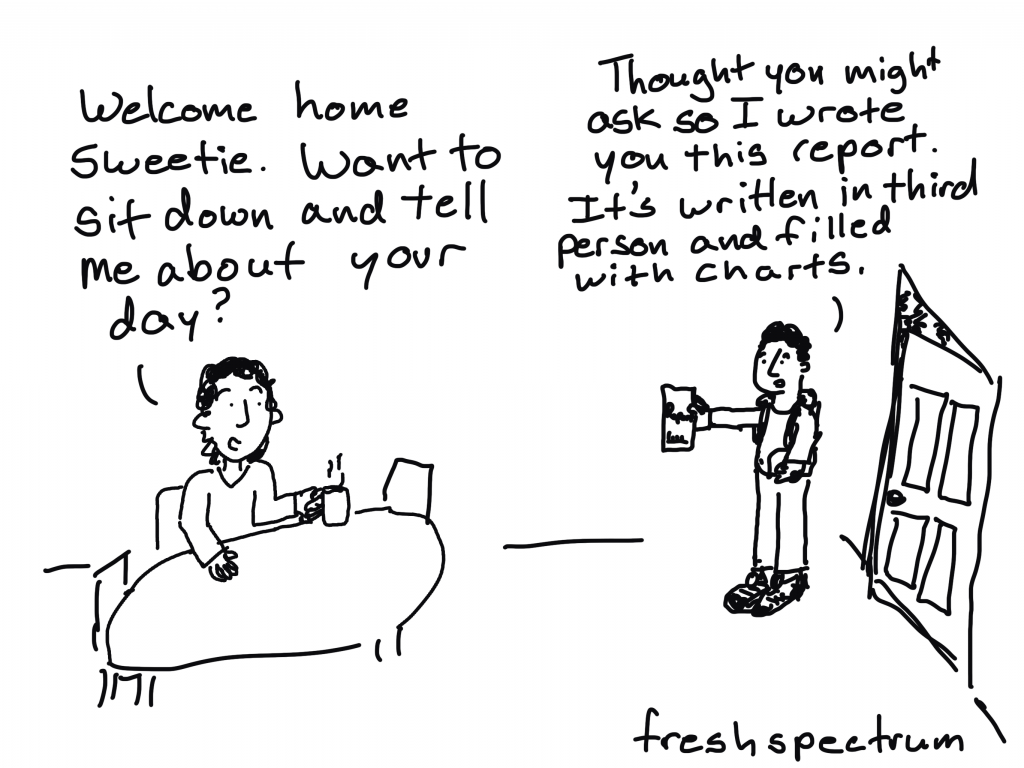
Being an illustrator, data analyst and designer, I have been asked a time or two to teach a workshop on data storytelling. And I know what the requester is looking for when they ask (they want their employees to stop writing super boring generic-chart-filled reports). But I find the word pair irritating.
Because if you want compelling reports, you don’t need to teach data storytelling. You just need to teach your data people how to tell a good story. And then, if you want better charts, you need to teach your data people how to illustrate.
Today’s newsletter is about storytelling. You’ll find a range of examples, tips, and courses that could help you tell a better story.
Avoid certain storytelling tropes.
Glynn Washington’s Snap Judgement is one of a number of radio shows built around storytelling. The show itself provides lots of good storytelling examples. But there are also some nice tips on good storytelling practice to be found on their pitch page.
By the way, a trope is a kind of cliche or often used metaphor. They are so common that sometimes you can fall into writing a trope without even thinking about it.
Tropes to Avoid
> Something really sad or tragic happened to me and I got over it by doing something positive.
> I am an American and I met a bunch of impoverished foreign people and they taught me about privilege or appreciating what I have / zen / etc.
> Anything that relies heavily on sex, violence or shock factor in order to be a good story
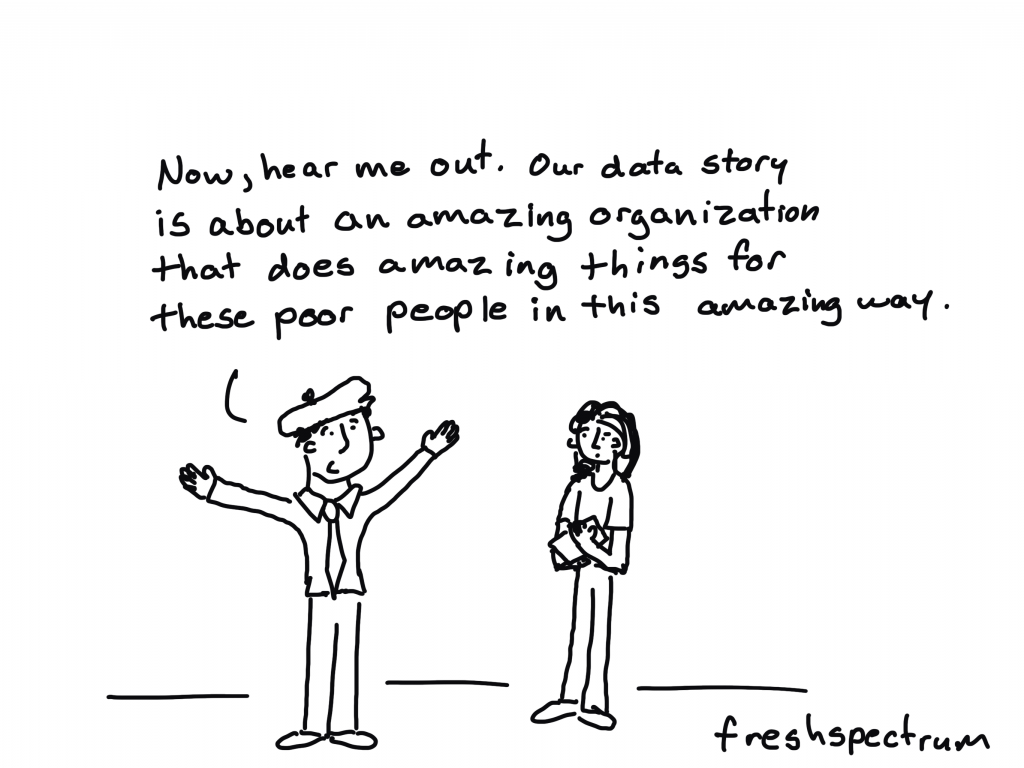
> This person or organization does an amazing thing helping people in this amazing way!
> This almost happened to me, but then at the last minute it didn’t! My reflections on that!
> My reflections on pretty much anything that isn’t event-based!
Think through your story line.
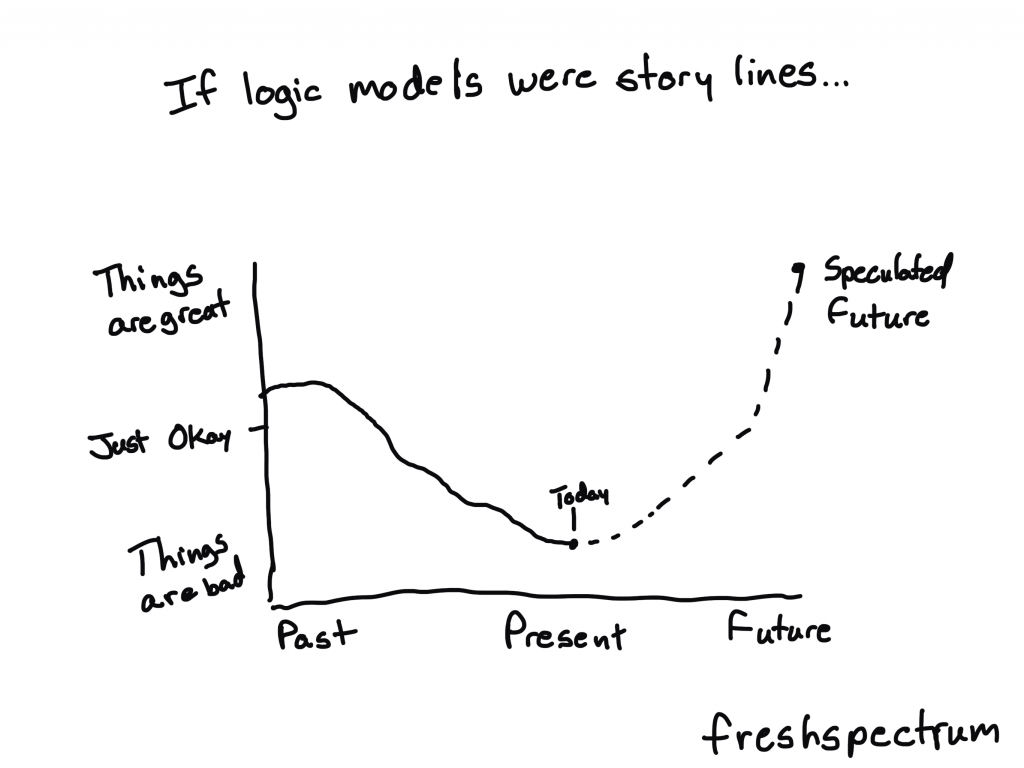
This short video of Kurt Vonnegut lecturing on the shapes of stories is one of my all time favorite storytelling resources. Thinking through the shape of your story can help you see it in a new way.
We call this kind of story, man in hole…somebody gets into trouble, gets out of it again. People love that story.
Construct your story like you’re making a movie.
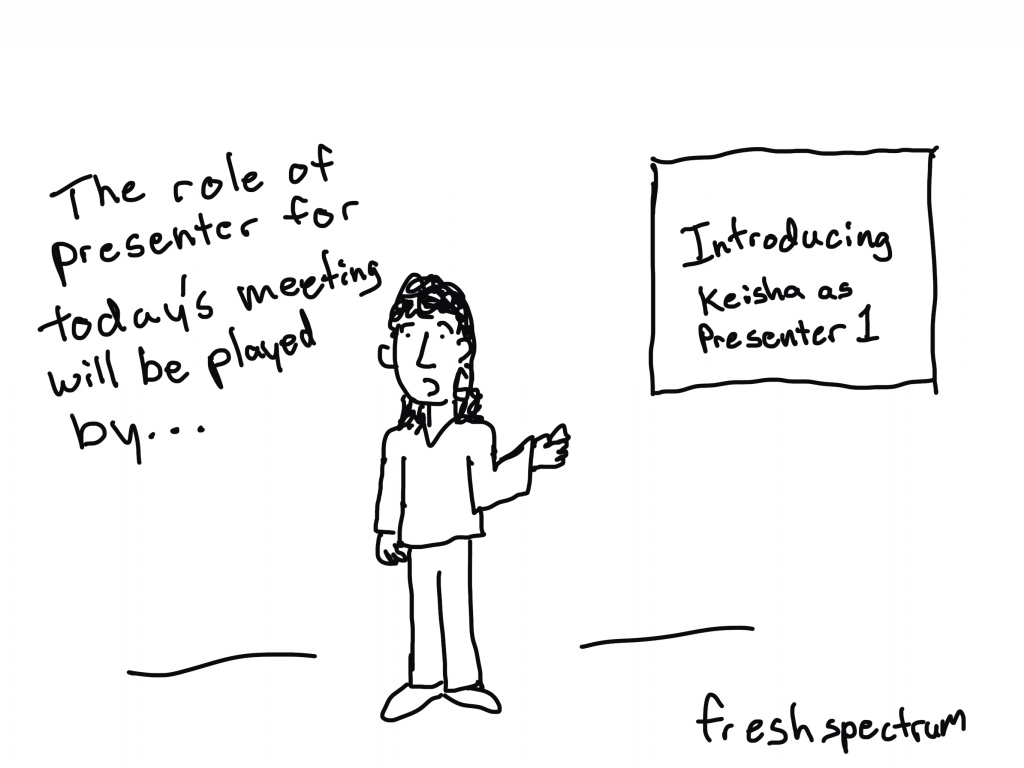
Good film is built from good story. So why not tap into some of the secrets used by filmmakers? You can probably blame this video for the way my blog posts have always skipped around so much. Basically I try to drop a topic when it gets boring and move on to something different.
If you tell a story that’s all “And then they, and then, and then,” you’re in big trouble.
But remember that sequence provides the sense of a destination.
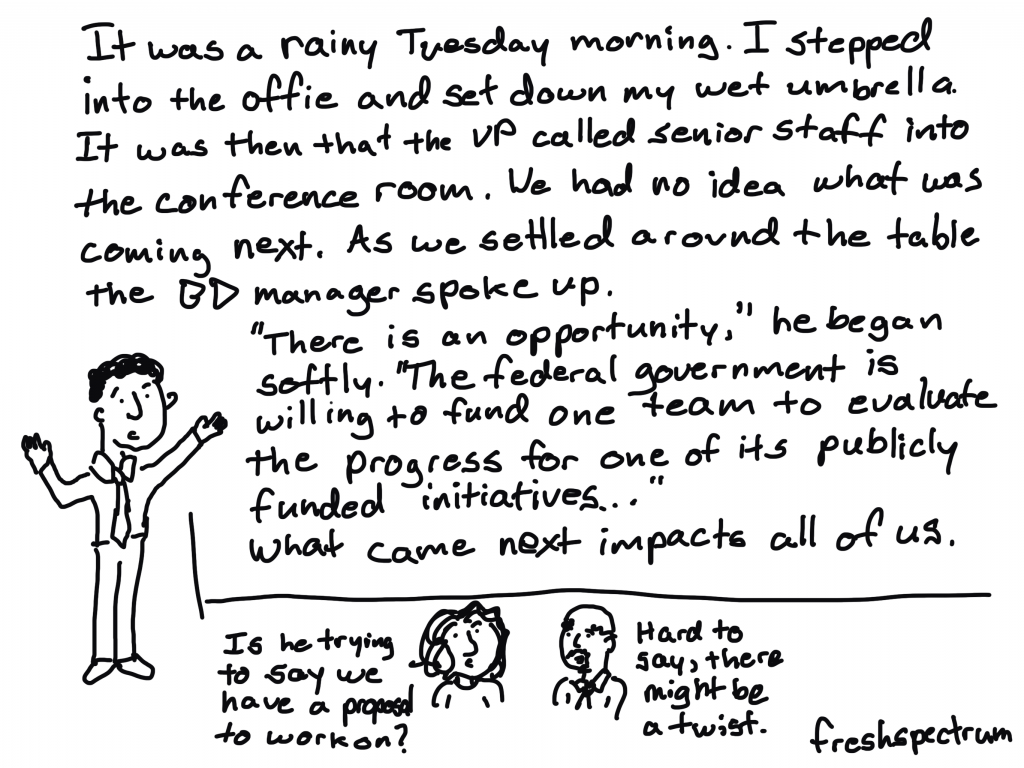
Another radio show that provides really good examples of story is This American Life. There is a series of clips floating around the web that provides some storytelling advice from host Ira Glass.
Okay. So you have the building block which is like the actual sequence of actions, the anecdote part of it. This thing happened and then this thing and then this thing. That’s one building block.
Then the other big building block, your other tool, is that you have a moment of reflection.
There is more than one way to tell a good story, and we are all storytellers.
Pixar teamed up with Khan Academy to create a nice free storytelling course.
It’s a really good course from a company built around story. I like how it starts, reminding us that we are all natural storytellers. But if you want to be better, that takes work.
Storytelling is something we all do naturally, starting at a young age, but there’s a difference between good storytelling and great storytelling.
Our choice in story matters, and not just in terms of engagement.
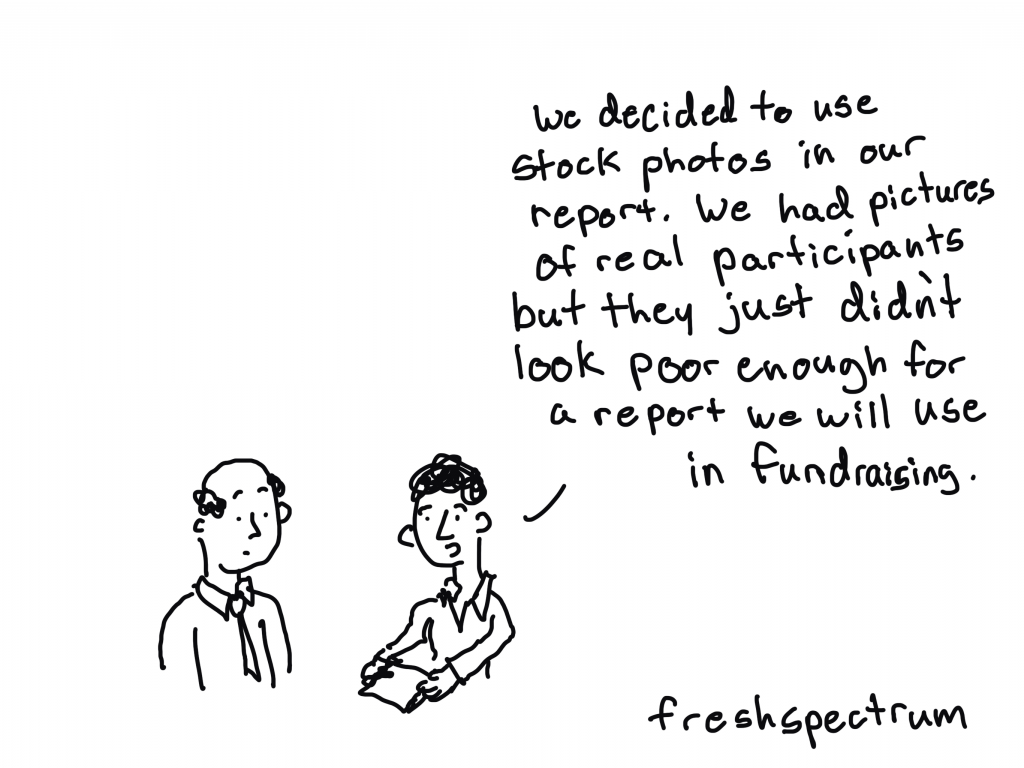
This is another problem with common tropes. These tropes often feature stereotypes that paint a singular picture of complex situations. Novelist Chimamanda Adichie makes that point in her fantastic TED talk from 2009.
What struck me was this: She had felt sorry for me even before she saw me. Her default position toward me, as an African, was a kind of patronizing, well-meaning pity. My roommate had a single story of Africa: a single story of catastrophe. In this single story, there was no possibility of Africans being similar to her in any way, no possibility of feelings more complex than pity, no possibility of a connection as human equals.
The danger of a single story | Chimamanda Ngozi Adichie | TEDGlobal 2009
Thinking beyond a single perspective.
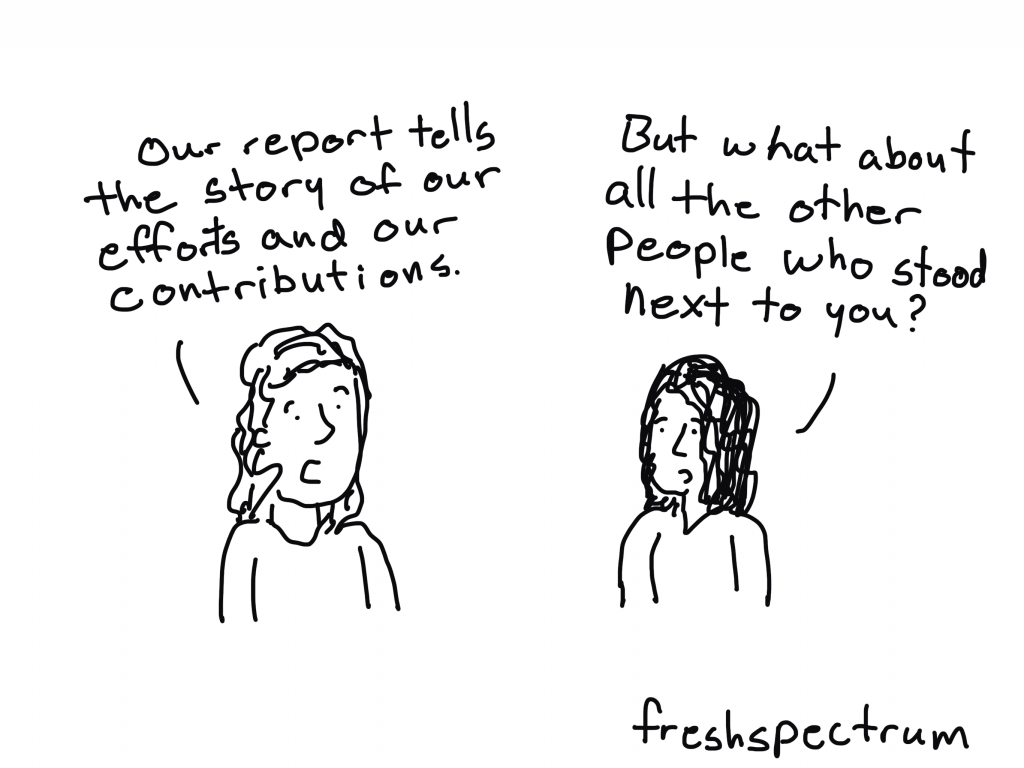
I love the point that Seth Fairchild makes in his TEDx talk about looking to the people next to you. I find when organizations go into story mode, they tend to focus on themselves as the key character. But life is always far more layered than that.
It is often said that Native Americans are not linear thinkers, that we think in terms of circles. We take a more holistic approach to life and everything that we do. And the beauty of a circle is that while you can look behind you and you can look in front of you, you can also look to your side, to the people next to you.
Native American Oral Storytelling & History | Seth Fairchild | TEDxSMU
From story writing to story collecting.
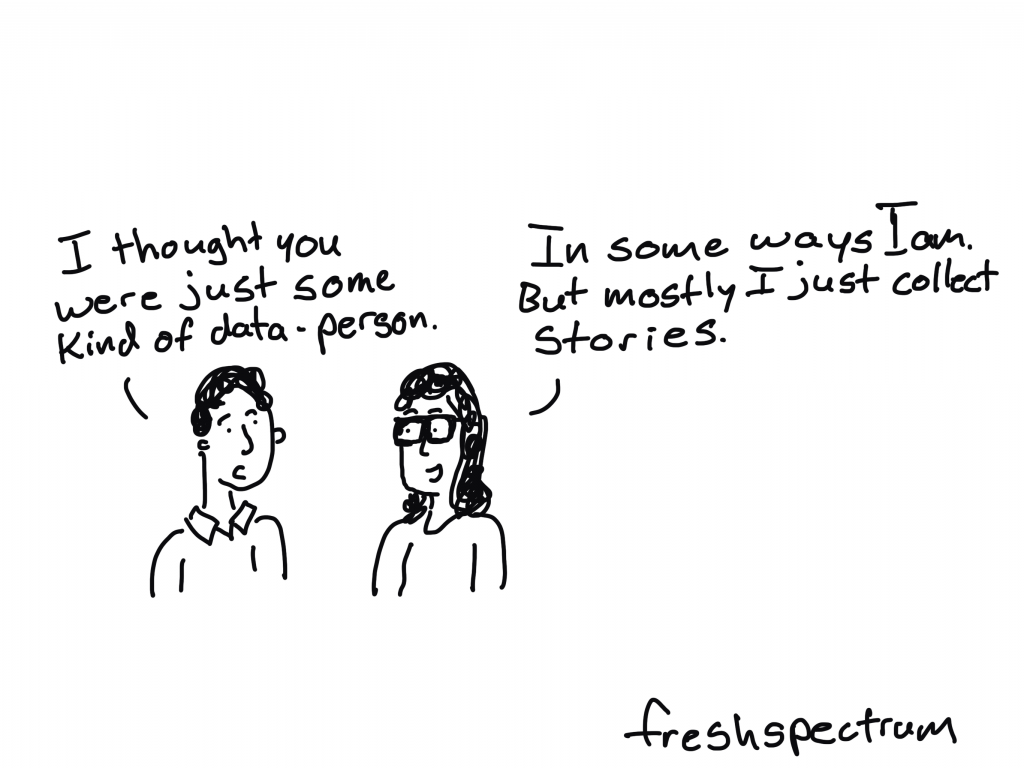
Everyone has stories. Some people have more than others. Some people have fewer but tell them better.
Yes, I would love to hear more of your personal stories. But honestly, you could make an even bigger impact by collecting stories from others than just telling your own. It’s good practice too.
If you listen to NPR you have probably heard a StoryCorps story at some point or another. They’ve actually developed a few DiY courses of their own.
After years of working closely with community partners, StoryCorps has created a new set of do-it-yourself resources to help organizations develop their own interview collection projects.

 English
 Afrikaans
 Shqip
Shqip አማርኛ
አማርኛ العربية
 Հայերեն
 Azərbaycan dili
 Euskara
 Беларуская мова
 বাংলা
বাংলা Bosanski
 Български
 Català
 Cebuano
 Chichewa
 简体中文
简体中文 繁體中文
繁體中文 Corsu
Corsu Hrvatski
 Čeština
 Dansk
Dansk Nederlands
 Esperanto
 Eesti
Eesti Filipino
 Suomi
Suomi Français
 Frysk
Frysk Galego
 ქართული
 Deutsch
 Ελληνικά
 ગુજરાતી
 Kreyol ayisyen
 Harshen Hausa
 Ōlelo Hawaiʻi
 עִבְרִית
 हिन्दी
 Hmong
Hmong Magyar
 Íslenska
 Igbo
Igbo Bahasa Indonesia
 Gaeilge
 Italiano
 日本語
日本語 Basa Jawa
 ಕನ್ನಡ
ಕನ್ನಡ Қазақ тілі
 ភាសាខ្មែរ
 한국어
한국어 كوردی
كوردی Кыргызча
 ພາສາລາວ
 Latin
Latin Latviešu valoda
 Lietuvių kalba
 Lëtzebuergesch
 Македонски јазик
 Malagasy
 Bahasa Melayu
 മലയാളം
 Maltese
 Te Reo Māori
 मराठी
मराठी Монгол
 ဗမာစာ
ဗမာစာ नेपाली
 Norsk bokmål
 پښتو
پښتو فارسی
فارسی Polski
 Português
 ਪੰਜਾਬੀ
 Română
 Русский
 Samoan
 Gàidhlig
 Српски језик
 Sesotho
 Shona
Shona سنڌي
سنڌي සිංහල
සිංහල Slovenčina
 Slovenščina
 Afsoomaali
 Español
 Basa Sunda
 Kiswahili
 Svenska
 Тоҷикӣ
 தமிழ்
தமிழ் తెలుగు
 ไทย
ไทย Türkçe
 Українська
 اردو
اردو O‘zbekcha
 Tiếng Việt
 Cymraeg
 isiXhosa
 יידיש
יידיש Yorùbá
 Zulu
Zulu