• Skip to main content
  • Skip to footer
  • Home

The May 13 Group

the next day for evaluation

  • Get Involved
  • Our Work
  • About Us
You are here: Home / Archives for allblogs

allblogs

Jun 11 2020

9 Common Writing Mistakes in Evaluation


Evaluators need to write clearly for their work to be used. Although not preferable, the written evaluation report must stand on its own, clearly conveying the key findings and messages. The 9 mistakes below are ones that I’ve come across in my years of writing, editing, and reading evaluation reports. The first three are more evaluation specific, while the middle three relate more to writing style, and the final three are all about grammar. I’ve provided tips to help you prevent or correct these common errors.

1. Using Jargon

To explain why not to use jargon I, ironically, must first explain it. The Oxford Dictionary defines jargon as “special words or expressions that are used by a particular profession or group and are difficult for others to understand.” 

What is considered jargon depends on who your target audience is. If your audience is expected to have some technical expertise, using terms others may consider jargon can help them quickly identify what you are talking about. But, if your audience is general, it may be best to eliminate the jargon or clearly explain it and avoid repeated use of the word.

Jargon can be hard to identify. In evaluation, common jargon includes topics related to:

  • Methods: e.g. mixed methods, formative evaluation, summative evaluation, systematic sampling, convenience sampling

  • Analysis: e.g. data saturation, logistic regression, triangulation

  • Interpretation: e.g. benchmark, generalizability

Tip: If you need to use jargon in a report that includes a general audience, explain the concept first, then use the jargon-y word. Using jargon first and explaining second can cause general audience members to disengage and feel like concepts are over their heads.


2. Using analogous words

In evaluation there are several words that can be used relatively interchangeably.

Common analogous words include:

  • Program/project/initiatives

  • Staff/employee/provider

  • Patient/client

  • Participant/respondent

Sometimes, which term is being used depends on your audience or stakeholder. Check if you are unsure. In rare cases, multiple words can be used within one program in which case its best to have your stakeholders agree which term will be used in the evaluation report (and to prevent a tracked changes war between stakeholders. Trust me, I’ve seen it happen).

Tip: ctrl+F can help you find and replace mistakes that slip by or when multiple people are involved in writing sections of the report.

3. Floating or repetitive quotes

When using quotes, tie them into the text without restating what the quote is about. Quotes should fit seamlessly into the narrative and be embedded within the surrounding text. Do not just restate what the quote says in the body of your writing.

For example, I often see:


“…Participants were happy with the training, especially the extra attention given to policies and procedures.      

‘I liked the training, especially the part where we learned about the policies and procedures.’ (Program participant)”


Tip: Quotes should be used for emphasis and to showcase the participants’ voice, not to explain an entire concept.


4. Exaggerating with Adverbs and Adjectives

Be very cautious about using hyperbole in your writing (see what I did there!). Modifiers that exaggerate your statements should be used with intention. Writing that is littered with exaggerative adjectives and adverbs tend to make people skeptical. Show rather than tell your audience why something is the most/best/greatest/very.

For example, instead of writing:

“Participants were very frustrated about x,” show the reader what you mean. “Participants consistently expressed frustration about x” tells us that this topic came up many times, while “Participants recalled specific times where they were frustrated about x” tells that this issue was described specifically rather than people just stating “x was frustrating.” In both cases, the examples provide a clearer picture of the frustration than just ‘very’ frustrated. Being more specific lends greater clarity to your writing and provides important details for your audience.

Tip: Writing with exaggeration is a habit that is best caught during the editing process. If you can catch yourself while writing, ask yourself what other descriptive word could be used. Most often, the adjective or adverb is unnecessary and can be removed.


5. Being Verbose

In school I often filled my papers with extra words and explanations to meet the page or word count or an assignment. In writing for evaluation, you want to do the opposite. The time and energy you put into creating clear and readable reports is wasted if you leave your readers to wade through your long-winded writing. Being succinct is a learned skill.

Tip: Use active voice (see more below) and edit, edit, edit.


6. Using Passive Voice

Active voice is when the person or thing doing the action comes first. Passive voice is when the person or thing being acted on comes second. Writing evaluation reports using active voice gives your writing a sense of energy and reduces your word count. It also makes it is clear who or what is doing the action.

For example:

  • The participants were told about the interview by the program director. (Passive)

  • The program director told the participants about the interviews. (Active)

Tip: Always think who did what. Be assertive in your writing.


7. Data is/are

A Note on Data

Unlike mass nouns such as butter, water, and sugar, one cannot refer to a collection of different types of data as ‘datas’. For example: A cookie recipe may ask you to ‘combine the white and brown sugars’ but you would never refer to ‘analyzing the qualitative and quantitative datas’.

No matter what side of the data is/are debate you fall on, pick one side in your writing and stick to it. Sometimes your choice is dictated by your audience. A more academic of formal environment may prefer that you refer to data as plural (and use datum when referring to a singular piece of data) while a general audience may feel this style is too formal. The APA 7th edition citation guide defines data as a plural noun, requiring the use of plural verbs. However, in many contexts ‘data’ is considered a mass noun, like butter, water, or sugar.

Tip: Whether you’ve chosen to refer to data in the plural or singular, an easy way to check that you are using the correct verb when editing your writing is to replace the word ‘data’ in your head with another word which is more obviously either singular or plural. I use ‘cats’. Reading my methods section aloud in my head sounds like “The program staff captured the administrative cats in an Excel spreadsheet. The cats were checked for completion and missing data.”


8. Oxford Comma

Highly contested just like referring to data as a singular noun, the use (or not) of the oxford comma often elicits strong opinions. Being consistent with your usage sends a message to your reader about grammatical precision. When multiple people are writing the report, it is important to be consistent in whether you use (or not) the oxford comma or not throughout the report.

Tip: If you chose not to use the oxford comma be aware that there are certain instances where a comma is necessary before the word ‘and’ in a list greater than two things to convey the correct meaning.

Probably the most common example: ‘The strippers, Hitler and Stalin…’ implies, or is ambiguous at best, that Hitler and Stalin are the strippers in this sentence. While ‘The strippers, Hitler, and Stalin…’ makes it very clear that there are three groups of people being referred to in this sentence: 1) strippers, 2) Hitler, 3) Stalin.


9. Unclear pronoun reference

No, I’m not referring to the use of gender pronouns ‘they’ and ‘them’, rather I’m referring to having an unclear link between the pronoun and it’s antecedent (the noun it is referring to). Pronouns such as ‘it,’ ‘they,’ and ‘that’ should link clearly to one noun.

For example: “Laura and Marissa liked the ice cream she made.”

  • Who made the ice cream? She is ambiguous in this context as the reader is unsure which of the two women made the ice cream.

A more common example I see in reporting: “The participants and program staff had differing opinions about the pizza lunch that was provided. They said it was greasy and soggy.”

  • Who said it was greasy and soggy? The participants or the program staff? Since they have differing opinions, we are assuming both groups didn’t think the pizza was greasy and soggy.

Tip: Nothing can fix this mistake other than judicious editing. Match your pronoun to one clear noun.

Hopefully these common errors and tips have given you a starting place to improve your next evaluation report.


Sign up for our newsletter

We’ll let you know about our new content, and curate the best new evaluation resources from around the web!


We respect your privacy.

Thank you!


Written by cplysy · Categorized: evalacademy

Jun 10 2020

Comment on Evaluator Competencies Series: Program Theory by Beth

We’ve just launched a new version of Dylomo software and there is now an “Export” button so that you can export the logic model as an image file!

Written by cplysy · Categorized: drbethsnow

Jun 10 2020

Tecnologías para el seguimiento y evaluación en tiempos de COVID 19

La plataforma BetterEvaluation nos muestra el “Uso de tecnologías para monitoreo y evaluación en entornos inseguros“, aplicable en nuestra respuesta al COVID 19:

Operar en entornos inseguros es una de los retos más críticos para organizaciones humanitarias, de desarrollo y de consolidación de la paz por igual. Las restricciones de acceso o incluso los ataques directos hacen que el monitoreo y la evaluación sean extremadamente difíciles. Tecnologías como teléfonos móviles, radios, plataformas de Internet y rastreadores GPS prometen nuevas soluciones para recopilar datos vitales o rastrear la implementación de proyectos.

En algunos de los contextos humanitarios más inseguros, los programas de ayuda de monitoreo son particularmente importantes para las organizaciones humanitarias. ¿La asistencia llegó a las personas adecuadas? ¿Han llegado los camiones de ayuda de manera segura a su ubicación prevista? ¿Cómo evalúan las poblaciones afectadas los servicios prestados? En medio de las restricciones de acceso, los ataques y el riesgo de desvío de la ayuda, esas preguntas siguen siendo difíciles de responder.

Las restricciones de acceso, los altos costos, la infraestructura deficiente y los altos niveles de incertidumbre requieren herramientas que puedan funcionar sin un suministro constante de electricidad, a través de grandes distancias y sin habilidades informáticas avanzadas. Identificamos seis tipos de tecnología que cumplen con estos criterios: (1) mecanismos de retroalimentación basados ​​en teléfonos móviles, (2) dispositivos portátiles para la recopilación de datos digitales, (3) detección remota con satélites o  seguimiento de entregas, (4) transmisión con radios y (5) comunicación con plataformas en línea y (6) uso de redes sociales. Los profesionales de M&E son cada vez más optimistas sobre el uso de estas tecnologías cuando trabajan en entornos inseguros.

Tipos de tecnologías:

Se pueden usar varias tecnologías en entornos inseguros para recopilar y comunicar datos de los programas de ayuda:

1.El uso creciente de teléfonos móviles básicos en entornos volátiles puede facilitar la comunicación con las comunidades. Muchas organizaciones están expandiendo sus sistemas de alcance y retroalimentación para aceptar mensajes a través de SMS, llamadas o respuesta de voz interactiva, en la que se utilizan mensajes pregrabados para proporcionar o recopilar información.

2.Los dispositivos portátiles: Los teléfonos inteligentes, tabletas o dispositivos digitales más básicos, son cada vez más baratos y fáciles de usar. Muchas organizaciones de ayuda han encontrado conveniente y rentable el uso de dispositivos digitales para la recolección de datos en lugar de las encuestas tradicionales en papel. Los actores de la ayuda ahora pueden acceder a un mercado sustancial para la creación de formularios digitales y las aplicaciones de recopilación de datos. La entrada de datos digitales vinculada a bases de datos electrónicas también facilita el análisis y la visualización de datos automáticos.

3.Detección remota: Cuando el acceso físico está restringido, hay una serie de tecnologías aéreas para recopilar información sobre objetos o áreas sin tener una presencia física. Esto también se conoce como “teledetección” y puede revelar las condiciones del contexto y otros cambios observables, como la construcción, los desarrollos agrícolas o el movimiento de la población. Las herramientas de teledetección adicionales, como radares e infrarrojos, pueden aumentar aún más esto. Del mismo modo, los dispositivos vinculados a los “satélites de navegación” permiten identificar y rastrear la ubicación de las entregas o el personal y visualizar información en los mapas.

4.La radio sigue siendo la tecnología más popular que las personas usan para recibir noticias y actualizaciones en muchos contextos de recursos limitados. En muchos entornos inseguros, es la forma más confiable de llegar a las comunidades. A menudo se entiende como una herramienta de comunicación unidireccional, pero la programación de radio también se puede utilizar para un compromiso activo, involucrando o apoyando a las comunidades en la creación de sus propios programas.

5.Finalmente, donde las plataformas de comunicación en línea son populares, las agencias y organizaciones pueden usarlas para sus esfuerzos de monitoreo, retroalimentación y responsabilidad.

6.Las redes sociales como Facebook y Twitter, así como aplicaciones de mensajería instantánea como WhatsApp. Estas herramientas permiten transmitir información y mensajes a través de conexiones en línea, a menudo de forma gratuita.

Written by cplysy · Categorized: TripleAD

Jun 10 2020

Rules for Privileged Straight White Males – Andrea’s Rewrite

This post was originally written by Andrea Guerrero- Guajardo as a direct response to Michael Quinn Patton’s blog post “Rules for Privileged Straight White Males.” It was published to Google Docs on June 6, 2020 as a personal blog post and shared on EvalTalk as a contribution to the overall discussion.

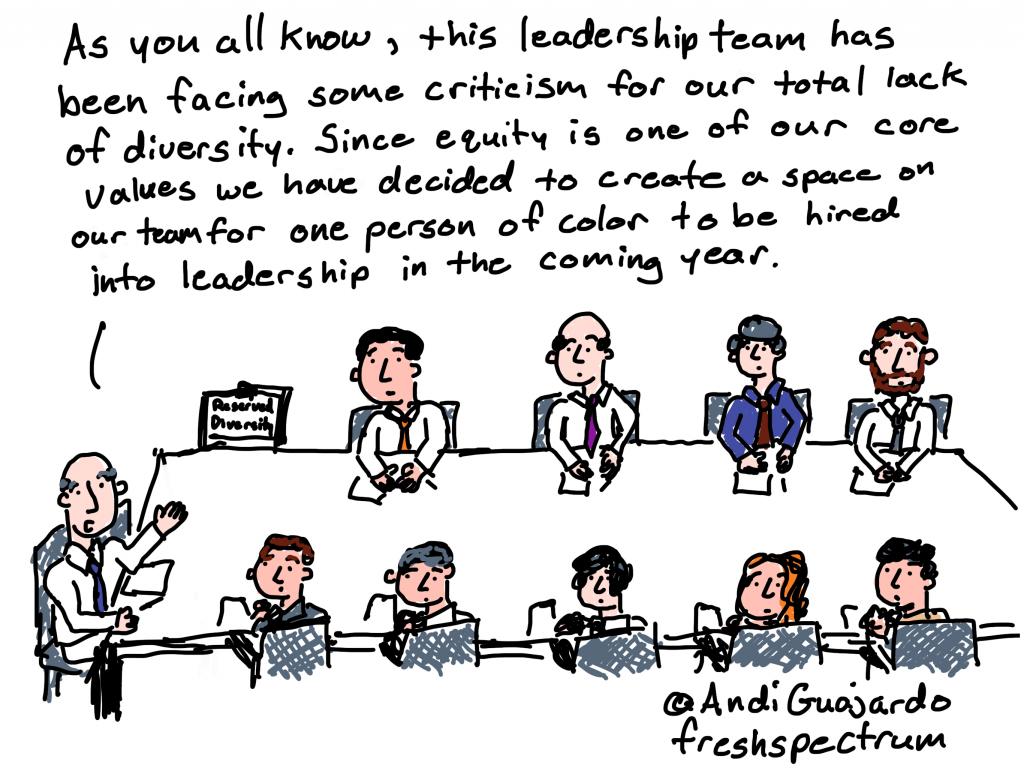
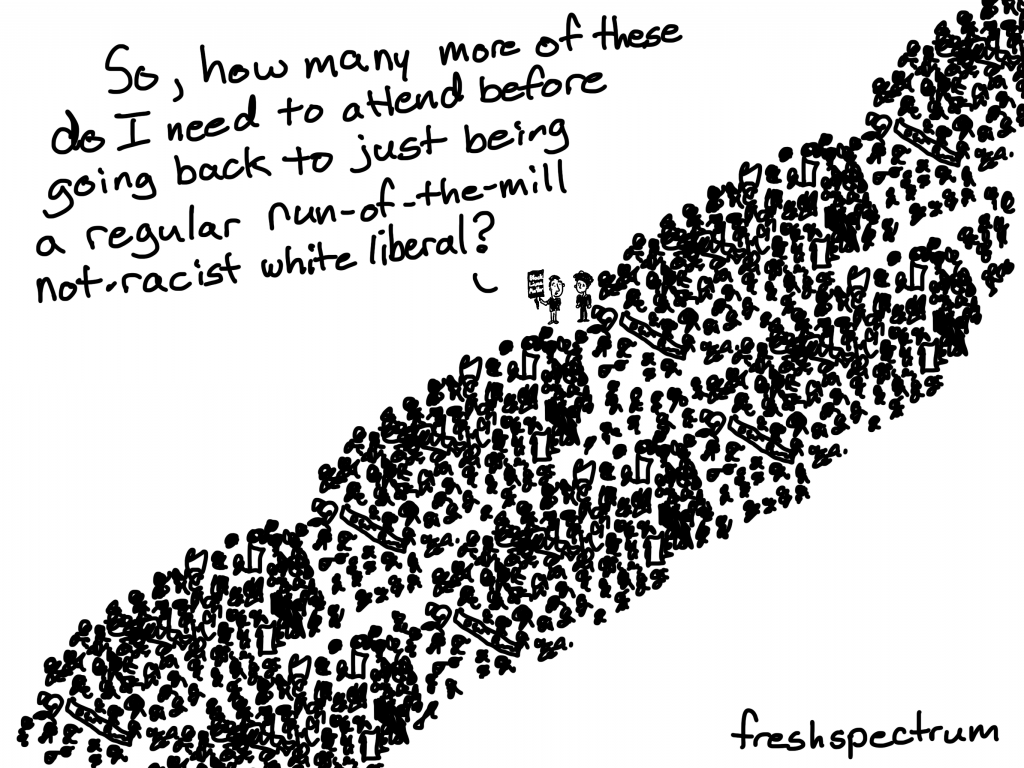
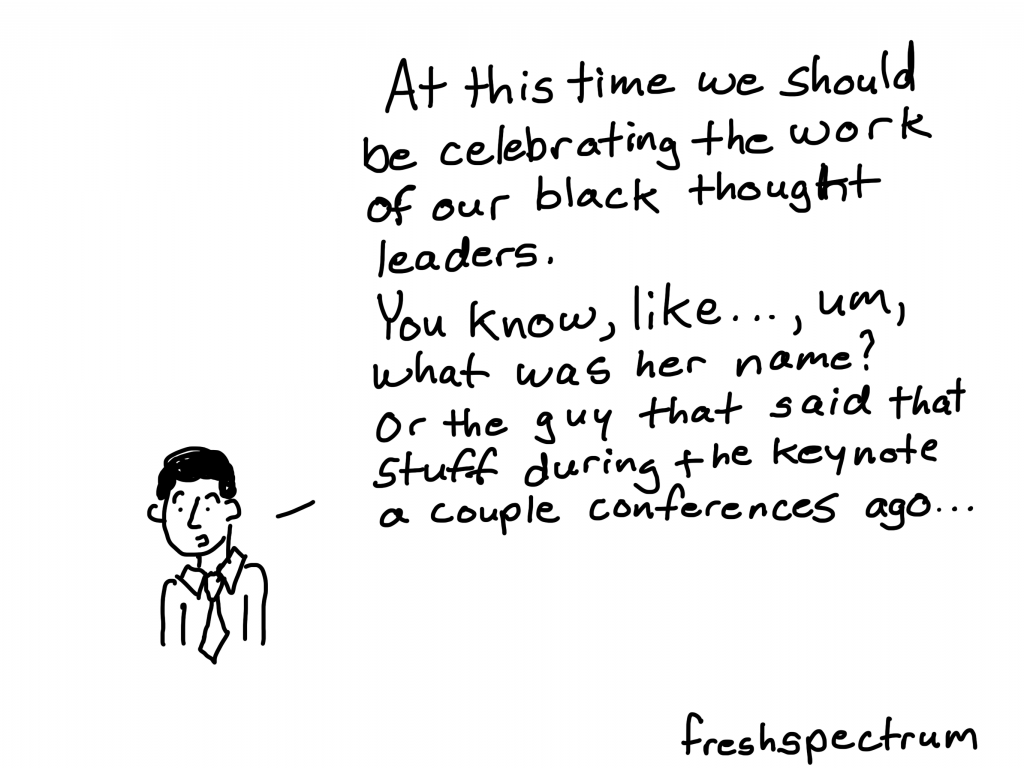
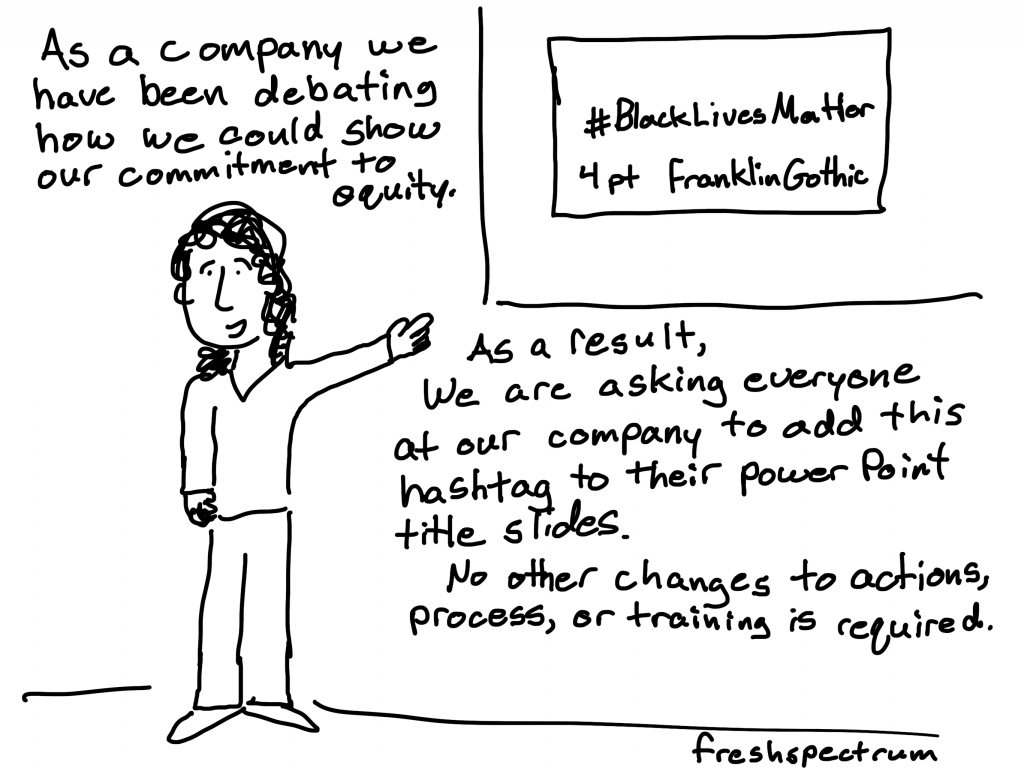
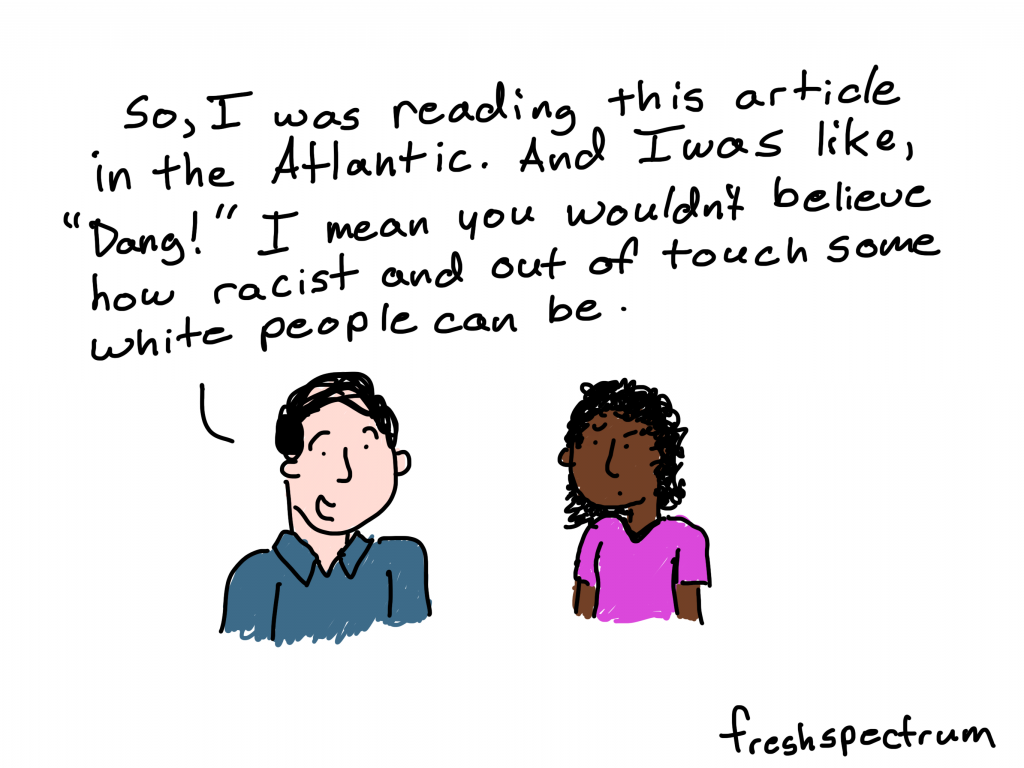
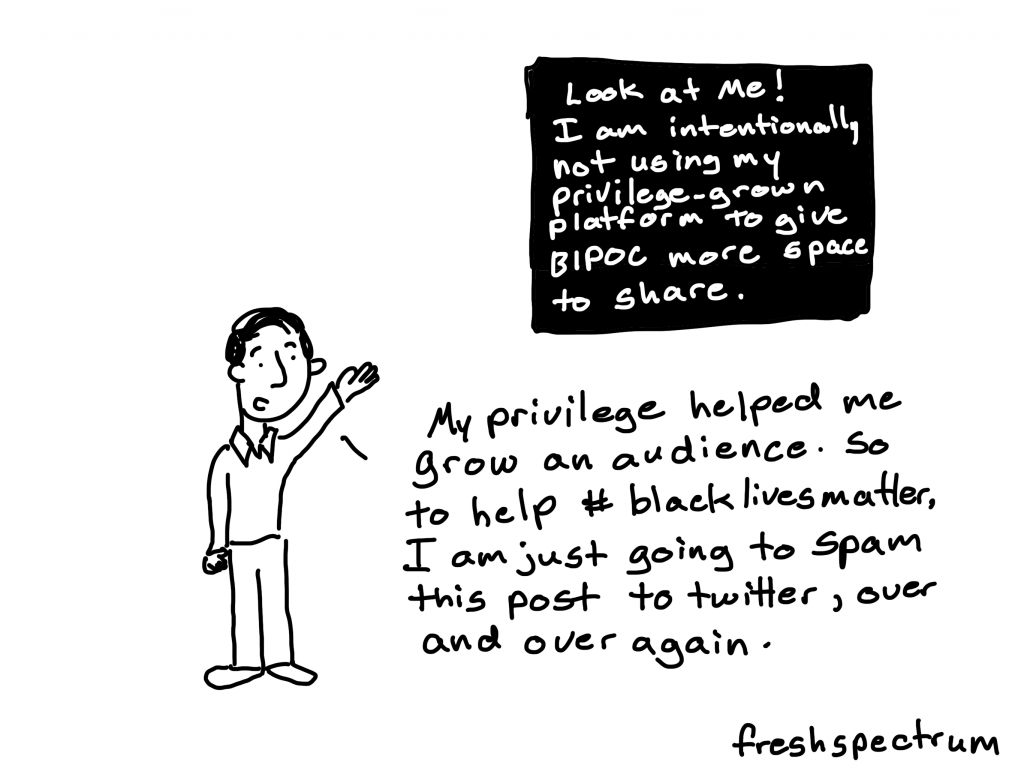
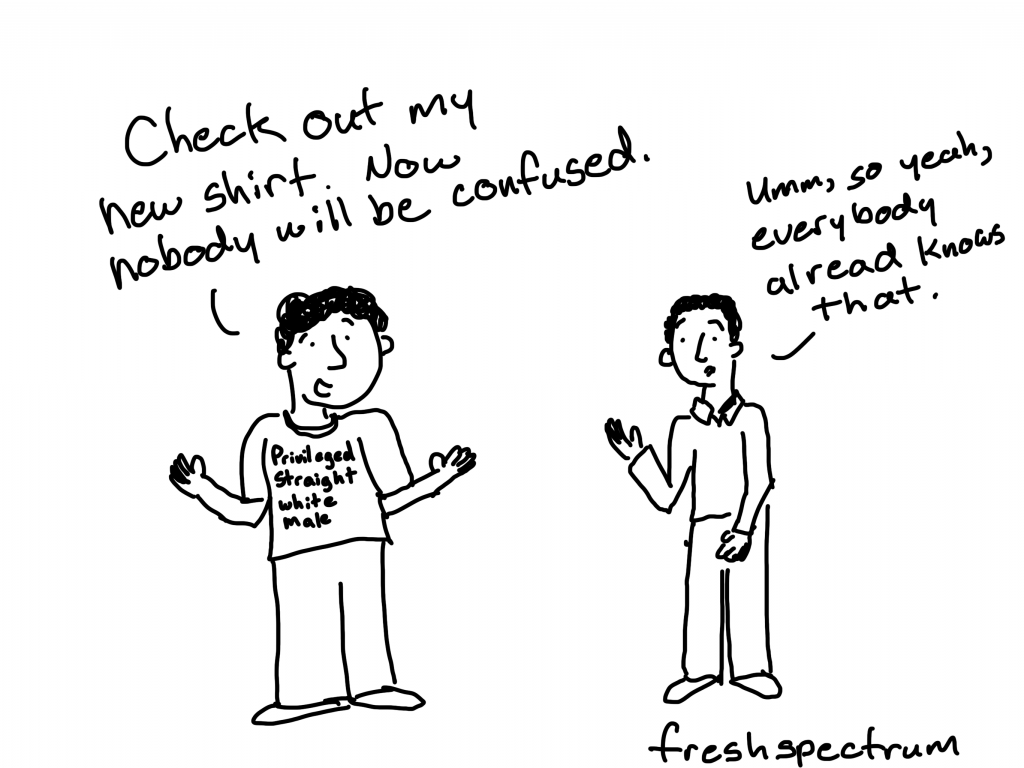
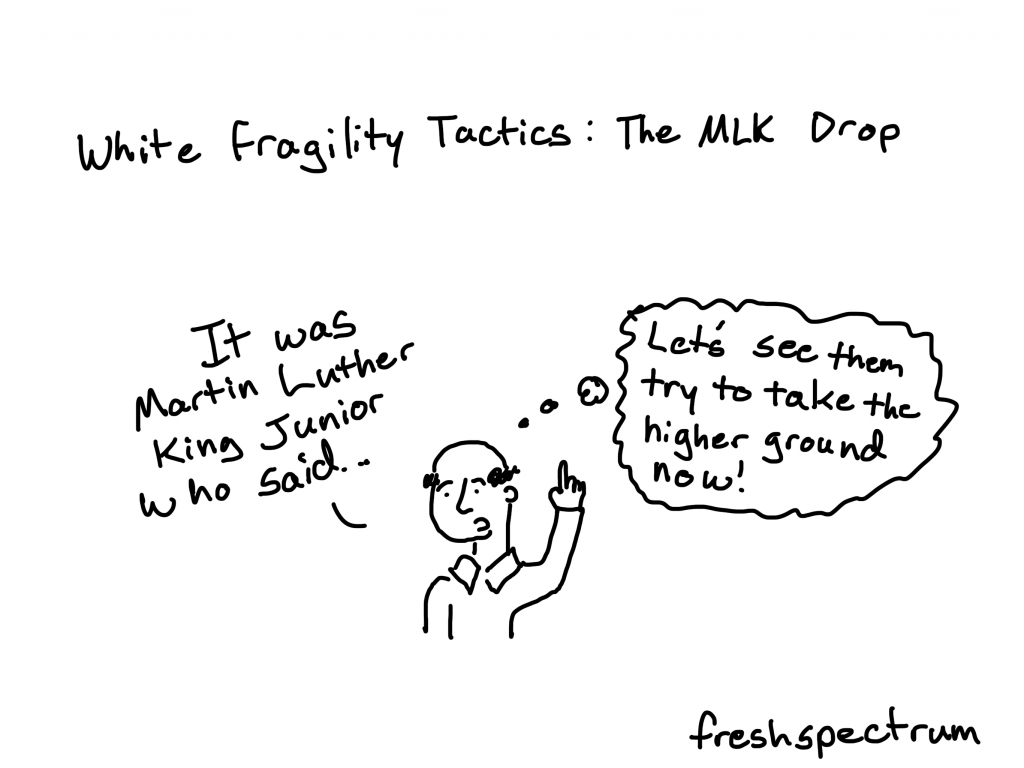
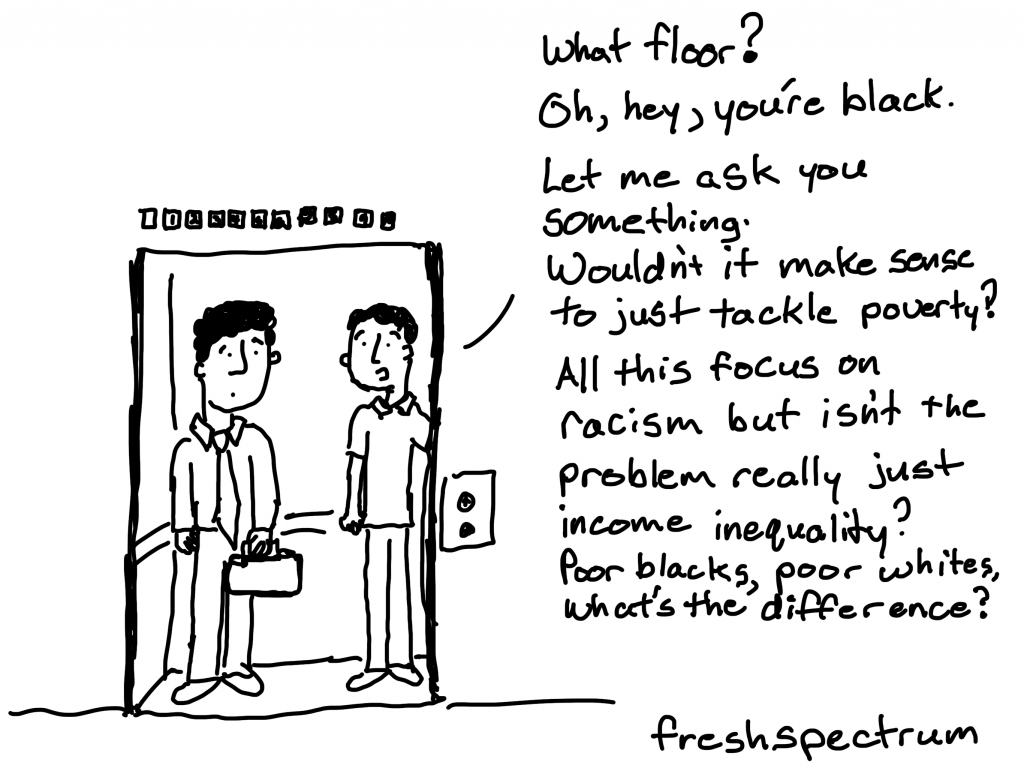
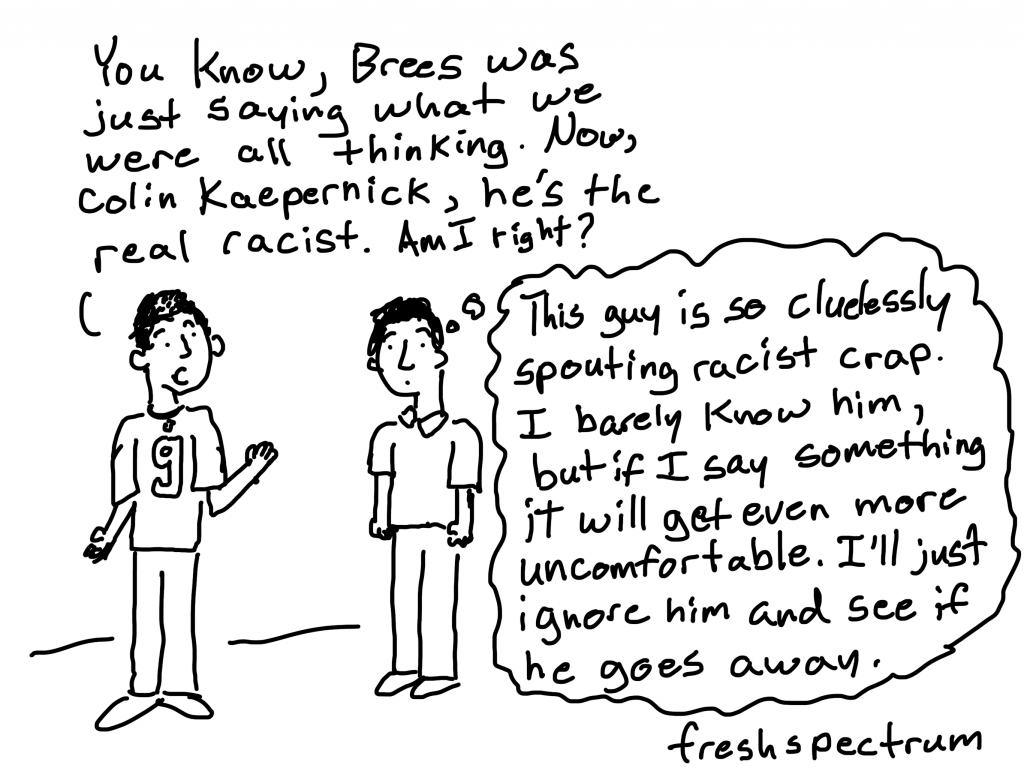
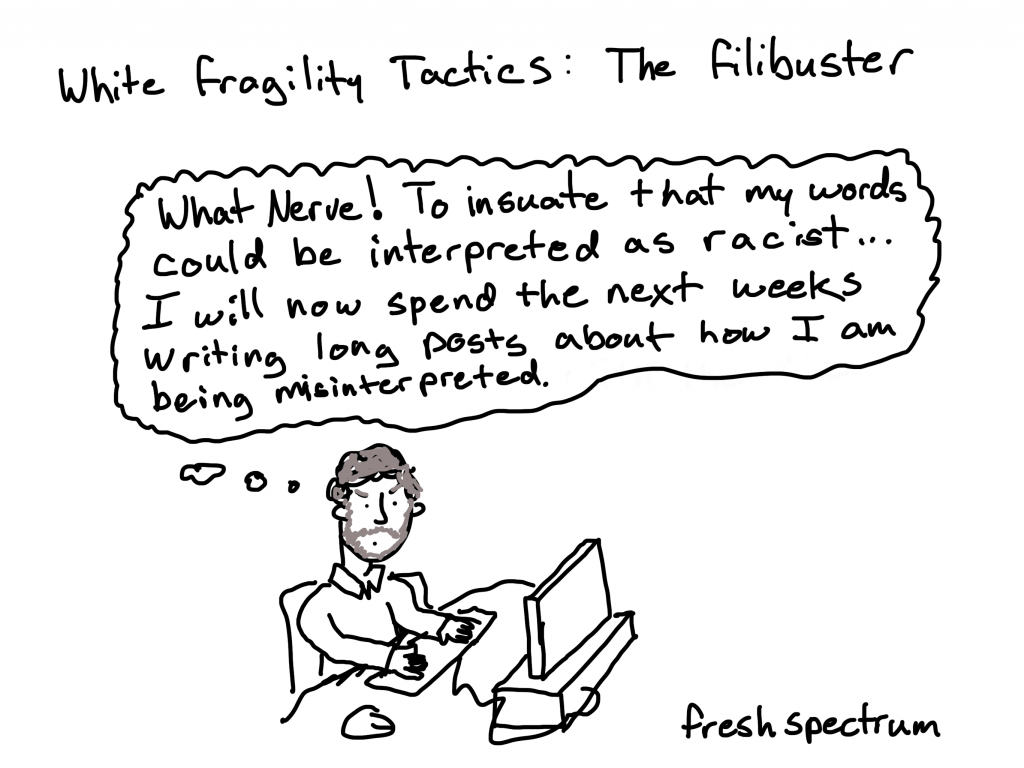
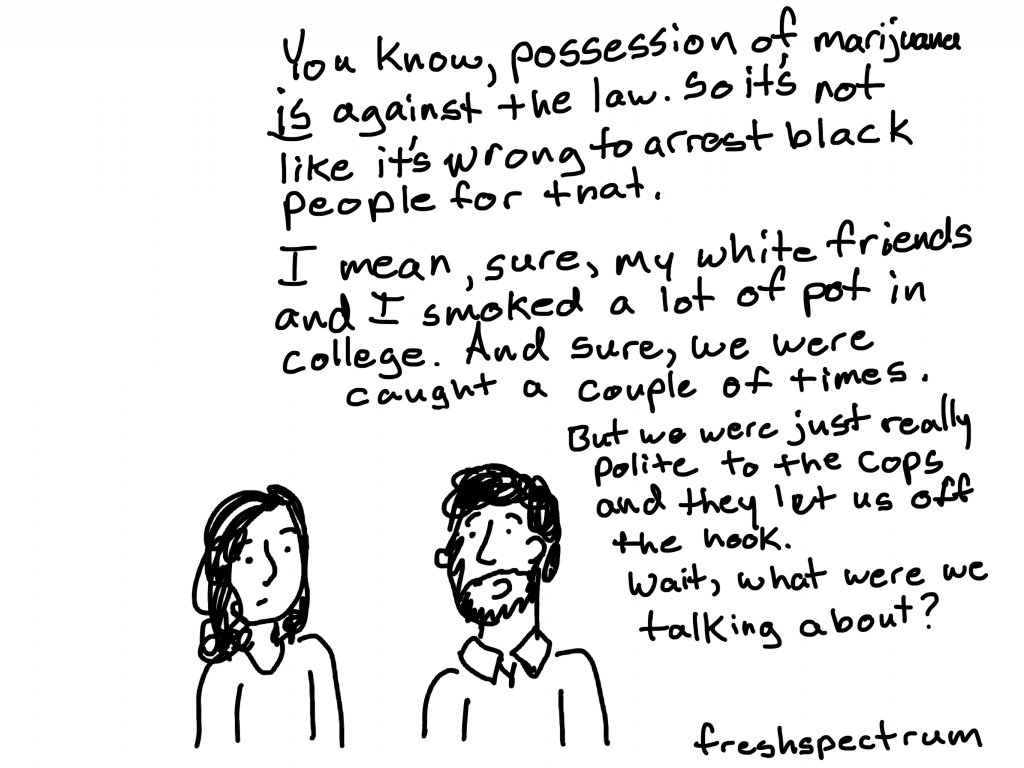
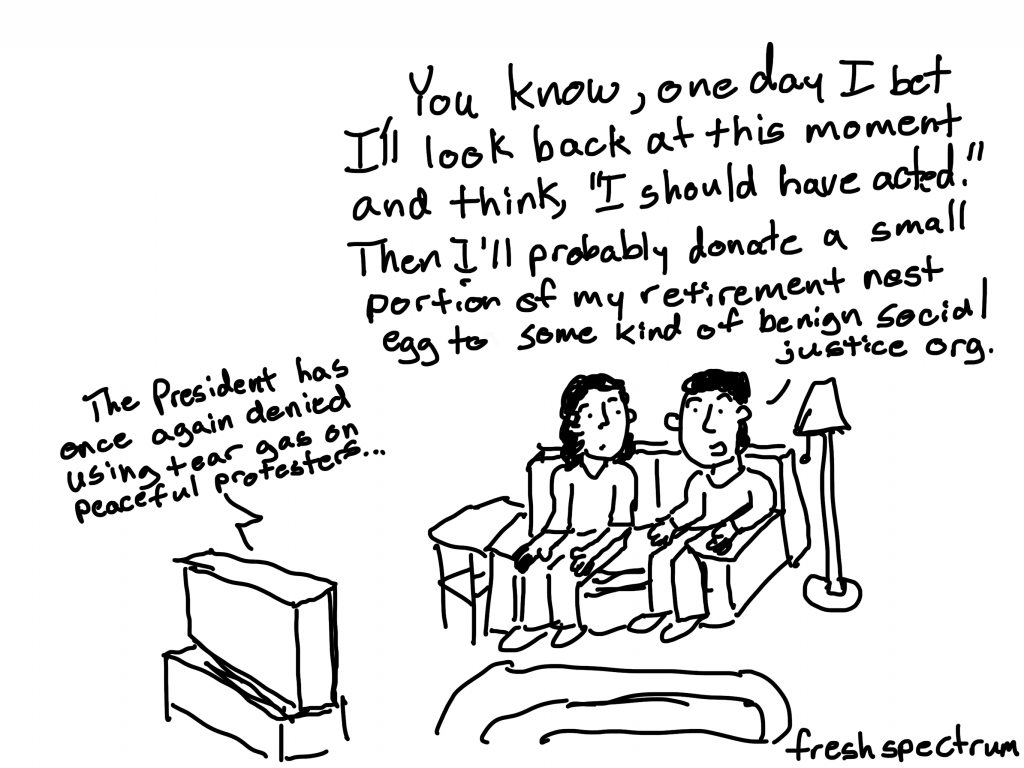
The words in this post belong to Andrea and Michael. Andrea has graciously allowed me to re-post her words here on this site. The cartoons are my contribution (-Chris).

Hi Evaltalk-I have some thoughts:

I know and acknowledge that this was an earnest attempt at writing these rules. Upon first and second and third reading, I became increasingly aware that the rules continue to frame the straight white male perspective from a passive posture without advocating for an active role in dismantling white supremacy.

Each of these rules can be accomplished from the safety of the straight white male’s living room. None of these rules obligates the straight while male to actually do anything to elevate the voices of Black and African-American people. (Side note: I intentionally prioritize Black and African-American people because the moment demands it. The use of “women and people of color” minimizes the notion that Black Lives Matter. As a Latina and a Cherokee woman, I can declare that Black Lives Matter without asking – but what about me? I digress). 

I have offered my own revisions to the rules that center how straight white males can be actively anti-racist instead of simply being satisfied with declaring that they are not themselves a racist. Dr. Ibram X. Kendi states that “…the problem with being ‘not racist’? It is a claim that signifies neutrality: I am not a racist, but neither am I aggressively against racism. But there is not neutrality in the racism struggle. The opposite of ‘racist’ isn’t ‘not racist.’ It is ‘antiracist.;”

I also note that MQP has cited three of our colleagues: Nicky Bowman, Vidya Shenker, and Rita Fierro. I admire and respect and absolutely value both scholarship and friendship that comes from these women. But in a moment where we are screaming Black Lives Matter from the pits of our souls with the pain and anguish of 400 years, why did MQP not find the time to publish the names of Black Evaluator Lives that Matter? I’ll start, and I’m sure that I will miss some.

Please reply and add more. Hazel Symonette, Stafford Hood, Melvin Hall, Rodney Hopson, Dominica McBride, Ayesha Boyce Akynruly, Katrina Bledsoe, Denise Ward Hood, Tamara Bertrand-Jones, Kevin Favor, Hank Frierson, Leah Peoples, Cindy Crusto, Krystle Tomlin, Maurice Samuels.  Seriously, add names here. (Update, additional names provided via crowdsource): Anna. M Madison, James E. Davis, Geri Lynn Peak, Veronica Thomas, Elmina Johnson, Ricardo Millett, Jara Dean Coffey, Michael Arnold.

Every single one of these people has been my teacher in some way. I either read their book or paper, heard their keynote, attended their sessions, or shared a story over a cocktail. Their lives matter just like all other Black Lives Matter, and our eval community should be saying that out loud right now. 

Similarly, I notice that MQP was guided mostly by water protectors at Standing Rock. This is another missed opportunity to center Black and African American voices.  There are innumerable local, state, and national Black Lives Matter chapters and organizations. Reclaim the Block, the Black Visions Collective, Color of Change, Dignity and Power Now, and many others have been on the front lines of protest and can offer guidance in the same way that Standing Rock can. The difference is this: you are centering Black voices and is why I had to offer my revisions of MQP’s rules. They remove the straight white male frame while offering action-oriented strategies for how to be a straight white male working to dismantle white supremacy. 

MQP’s differentiation of rules versus principles to create contextual guardrails operates under the assumption that privileged straight white males follow all the rules. Principles are subjective based on the social conditioning of the straight white male, and it has been proven time and again that he chooses to disregard the rules, even rules as simple as “no means no” and “stop sign means stop.” Often, the straight white male weighs the cost of breaking the rule against the consequence he might suffer. The framework of white supremacy that tells us that the consequence will likely be lenient. When confronted with “no means no,” the privileged straight white male must ask himself, “Will I be fired for sexually harassing my colleague?” or when he encounters a stop sign, “can I afford to just pay a ticket?” A hard and fast rule does not equate to cognitive or behavior change and is ineffective if the straight white male is not willing to, or does not understand, the principle that should influence his decision-making. 

MQP draws on his own “personal experiences” to inform the rules for straight white males. I suggest that straight white males are not the ones who should be policing themselves. Additionally, it would be irresponsible of me, as a Cherokee Latina woman, to accept rules for straight white males that have been written by straight white males. MQP declares that these rules do not follow a commonly accepted process for co-construction, are absolute, and not up for discussion. The restriction disallows the introduction of input and critique from any source other than the privileged straight white male and discounts legitimate knowledge of communities of color.

MQP acknowledges that these rules are likely incomplete, and invites others who want to add their own to “bring them on.” These revisions are my own critical read of the Rules as written by MQP. I have spent the last few weeks (and a lifetime, quite frankly) listening to my *white allies* pat themselves  on the back for just knowing that white supremacy exists but doing nothing about it. MQP has most certainly been doing the *work* in his scholarship and practice, but if we are writing rules for other straight white males, the rules have to be explicit. 

1. Explore the state of the world through the eyes of a Black or African-American person.

Before you express your opinion and preface it by saying, “In my opinion,” or “From my perspective,” find ways to put yourself in the shoes of a Black person and then see if you should still be sharing your opinion at all. Instead, elevate the voices of Black and African American people. 

Do not make general authoritative statements about the state of the world, or any parts of it (like evaluation). Do not pontificate in general authoritative terms about how things are and/or how things ought to be. An example would be to state unequivocally, as was recently done: “Evaluation is not a tool for social change.”

The appropriate way to express opinions is to preface those opinions with some conditional introduction like, “From my perspective,” “In my view,” or “Based on my experiences…..”

You do this not to alert others that you are expressing a personal opinion but to remind yourself of that fact because, straight white males often confuse their opinions about the world with how the world actually is because, in their arrogance, self-assurance, and cluelessness, they actually believe they speak truth and that others ought to feel privileged to hear their truth. So, it can be helpful to remind yourself that you are expressing an opinion not speaking truth by prefacing your opinions conditionally. Others already know that anything and everything you say is conditioned by your being a privileged straight white male. They don’t need to be reminded of that. You do.

Moreover, the sub-rule of this rule, is never add IMHO. By invoking that particular conditional, you are communicating not humility, but the exact opposite. The language of “my humble opinion” is arrogant, grating, insensitive, and infuriating because it tells the listener that you are the exact opposite of humble, but you think you can disguise your arrogance, insensitivity, and cluelessness with that juvenile phone text shorthand.

From Michael Quinn Patton’s blog post “Rules for Privileged Straight White Males.”

2. Use your white male privilege and the benefits you receive from it, to actively help Black and African-American people.

Leverage wealth, influence, social capital to enrich or enhance the work of Black and African-American people, their careers, initiative, foundations, scholarship, etc. Furthermore, the privileged straight white male needs to be willing to say, “I am an oppressor.”

Don’t deny you are privileged. Privileged straight white males, which is all  white males in a society that inherently privileges straight white maleness, understandably feel uncomfortable with having their privilege named and exposed. The Standing Rock guidance states: “Standing Rock challenges allies to be aware of their white privilege, and to occasionally be comfortable sitting in your own discomfort.” Protesting that you are not privileged simply demonstrates your cluelessness about your privileges and the systemic and structural nature of those privileges. Instead of resisting the privileged status, put your energy into thinking about and identifying the nature of your privilege. A simple example.

Growing up, my father paid me an allowance to mow the grass, shovel snow, and other “male” tasks. My sisters were required to do housework without pay because as housewives they would not be paid, so they should not come to expect to be paid for housework. I was exempt from housework. I was allowed to deliver newspapers to make money. My sisters were denied such opportunities.

In elementary school the black students regularly got detention for talking to each other in class, but the white students never did. Several detentions led to suspension; suspension led to failing a grade; being held back a grade and then another, led to dropping out of school; and onward into poverty and prison. Such are the small, trivial beginnings of disadvantage versus privilege that build and accumulate and become systemic and make you believe that you’ve earned the position of privilege. The rule: Don’t deny you are privileged. Understand your privileges. Search and you will find them, aplenty.

From Michael Quinn Patton’s blog post “Rules for Privileged Straight White Males.”

3. Please do not ever, under any circumstances go around stating that you are a privileged straight white male.

Full stop. We are probably already aware of that status and don’t need to be told. Instead, actively work toward not doing harm to Black and African-Americans with words or deeds. (Note: I get that MQP meant this as one does at a conference or in a paper, but it sounded ridiculous to just state that you are a privileged white male and NOT offer some context for having said it.)

Avoid adding contingencies, explanations, conditionals, and limitations to your straight white male identity and corresponding privilege. What does that mean? Should you find yourself in a situation where people are introducing themselves, or in providing a context for something you write, you state, appropriately: “I am a privileged straight white male.” End the statement there. Full stop. Don’t rush to add: However…, But…, Nevertheless…, Despite that… or any of scores of such conditionals that communicate that you actually are not aware of the implications of being a privileged straight white male as you rush to explain away the very significance of that revelation. Your conditionals will simply reveal your cluelessness. Omitting the conditionals won’t eliminate your cluelessness. That would require adherence to rule number two. But omitting the conditionals would at least keep you from overtly exposing your cluelessness.

From Michael Quinn Patton’s blog post “Rules for Privileged Straight White Males.”

4. Make it your job to learn about the experiences of Black and African-American people.

Still, don’t profess to understand them because, as MQP correctly points out, you can’t and never will. That doesn’t mean that you shouldn’t acknowledge that the white-washed history you were fed in school was incomplete and often erroneous. Study up, straight white male. But keep it to yourself. No straight white male-splaining to people about their own history. Don’t presume to understand what is best for Black and African American people, and don’t force your allyship on others. 

Don’t profess to understand the experiences of women and people of color. You don’t. I don’t. You can’t. I can’t. They know it. You and I need to know it. For example, you are rarely even aware that you are a straight white male. It scarcely, if ever, even enters your consciousness that whatever is happening at any moment is a consequence of and has to do with your being a straight white male. In contrast, women and people of color regularly explain that they are always aware of how their status, whatever it is, is present in the moment at some level in some way. Part of being privileged, indeed, a big part of being privileged, is not having to think about your identity as a straight white male and the privilege that comes with that identity.

From Michael Quinn Patton’s blog post “Rules for Privileged Straight White Males.”

5. The revision to this rule relates to the second half of it. Yes, please listen and ask questions rather than speaking over people.

However, do not force labor on Black and African-American people. It is not their responsibility to educate you or be available for your inquiry stance. Take it to the google or the library. There is a immense body of literature on injustice, racism, and sexism – and all the intersections (shout out Dr. Crenshaw) of those oppressive forces. The people doing the work are exhausted from having to explain for the umpteenth time why growing up poor does not negate your white privilege. Don’t give them more work to do. 

“Speak to understand not to be heard.” This is another rule gently articulated by the Native American leaders who organized the protests against the pipeline at Standing Rock. Straight white males have a long history of dominating conversations, not listening, not asking questions, not listening, interrupting others, did I mention not listening, especially interrupting women and people of color, taking up too much air time, and being in love with hearing themselves talk. These tendencies flow from socialization as a privileged straight white male. These tendencies are not congenital, but become deeply embedded through reinforcement and practice. Learn to ask questions rather than make statements. Take an inquiry stance. You and I have nothing to teach about injustice, racism, and sexism. You and I have everything to learn.

Extra credit homework personal growth assignment for privileged straight white male evaluators: Read Vidhya Shanker’s (2019) dissertation on “the construction of race in and through evaluation,” 

Read it appreciatively, to learn. This is not an evaluation assignment. It is a personal growth assignment. Read without critique, without judgment, without automatically agreeing or disagreeing. Don’t evaluate it. It has already been evaluated by her doctoral committee. Absorb it. Examine your reactions. Seek to understand. Ask clarifying questions. But don’t express opinions about it. You don’t actually understand enough to have opinions about it. A great leap forward would be to actually identify things you don’t understand and questions you have.

From Michael Quinn Patton’s blog post “Rules for Privileged Straight White Males.”

6 – 8. Honestly, 6-8 are kinda similar, so here’s the revision: yes, don’t complain or whine about any of those things, but you are obligated to take it a step further.

When you hear your friends, family, colleagues, co-worker, barber, grocery store clerk, dry cleaner, uber driver, or (and especially elected officials) complain or whine about any of these things – CALL IT OUT. Maybe they’ll listen or maybe they won’t, but you don’t get a W just because you manage not to complain or whine. It’s a standard that most children learn by the time they leave kindergarten, so you have to be better and do better.

Don’t complain about political correctness, identity politics, affirmative action, intersectionality, diversity initiatives (Does that include me?), inclusion concerns (ditto), and equity (ditto). Just don’t. It’s tiresome and enraging.

7. Don’t ever complain that you are being treated unfairly. The world is not fair. Your sense of unfairness pales in comparison to the unfair challenges and obstacles faced by those on the front lines working against racism and for justice. During the protests about the murder of George Floyd, a major, I would even say dominant, theme in news interviews with black mayors, female mayors, black female mayors, and other mayors representing minority groups has been that twice as much is expected of them as of the white male mayors that they replaced and they get 10 times the criticism. When things go well, the successes are attributed to others; when things go badly, they get the full blame. Fair? African-Americans have twice the infection rates from the coronavirus as whites and twice the death rate from Covid-19. Job losses due to shutting down the economy are significantly greater for women and people of color. Poor people are significantly more affected by pollution of water, land, and air. The list goes on and on. These are indicators of systemic and structural injustice and unfairness.

8. Don’t whine about being misunderstood, misrepresented, and misinterpreted. In so complaining you simply demonstrate a deep, embarrassing cluelessness about your own actions and statements. Instead of lamenting your ill-treatment, think about how you presented yourself and what you said that has led to the reactions you have received that feel unfair. Don’t ask others to behave differently. Your only way to affect their reactions of others is for you to behave differently.

From Michael Quinn Patton’s blog post “Rules for Privileged Straight White Males.”

9. This one works. No revisions here.

Focus on systemic and structural racism and injustice. It’s not about you personally as a privileged straight white male. It’s about the system that you are part of and are either upholding or working to change. These rules are about changing behaviors to change relationships, perspectives, dynamics, and boundaries to change systems. The affliction of being a privileged straight white male is making everything about you. You are a cog in the system. Get cognitive.

From Michael Quinn Patton’s blog post “Rules for Privileged Straight White Males.”

10. Yes, rules are different for Black and African-American people than they are for straight white males. We see this in practice every day, but it’s not just enough to know that it happens.

Find opportunities to leverage your straight white maleness in service to others. Use your time, talent, and treasure to undo the unspoken rules.  Put your body between a person who would assault a Black body. Walk in protest of white supremacy and all its progeny that pervades every single institution of power that exists on turtle island. Real change means sacrifice, and it’s your turn to give up the comfort and safety of your straight white maleness. 

Don’t complain about these rules. Of course, you resist and detest such disrespectful, authoritarian, and demeaning rules. The very scope and depth of your anger at such rules is evidence of your long-standing privilege of not being subject to arbitrary and capricious rules. Four years ago, Philando Castile, a 32-year-old African American man, was stopped while driving and fatally shot by a police officer in Saint Paul, Minnesota. He was carefully following the rules he had learned about how black men should behave when pulled over by police for “driving while black.” At the time I was involved with a team in evaluating an African-American after school program in the inner city of St. Paul. Teachers and parents worked together to teach six, seven, eight, nine-year-old black boys the rules for how to behave to avoid racist retaliation by white teachers, white police, and white people generally. The teachers and parents struggled with how to offer their children a vision of opportunity and hope while alerting them to be careful and follow the rules, unfair rules, disrespectful rules, outrageous rules, but potentially lifesaving rules.

From Michael Quinn Patton’s blog post “Rules for Privileged Straight White Males.”

Guajardo, A. G. (2020, June 6). Andrea’s Rewrite of the Rules for Privileged Straight White Males.  EvalTalk, Personal Blog Post

A Special Thanks to Andrea for allowing me to re-post her words here! – Chris

Eval Central UnWebinar for June 10, 2020 @3PM Eastern (12PM Pacific)

Special Guest: Thomas Archibald

This week’s seed topic: Anti-Racism, White Fragility, White Supremacy, White Privilege, and White People Questions

Join us! > https://www.crowdcast.io/e/evalcentral/register

Written by cplysy · Categorized: freshspectrum

Jun 10 2020

Your Values Always Come at a Cost

Image description: Two protestors in Washingon, DC, holding brown and white signs with the phrase “Black Lives Matter” written in black. Photographer: Yasin Ozturk Over the last 3 months, I’ve been doing a lot of observation. Observing the ways in which my client organizations have (or not have) been able to pivot their operations and […]

The post Your Values Always Come at a Cost appeared first on Nicole Clark Consulting.

Written by cplysy · Categorized: nicoleclark

  • « Go to Previous Page
  • Go to page 1
  • Interim pages omitted …
  • Go to page 257
  • Go to page 258
  • Go to page 259
  • Go to page 260
  • Go to page 261
  • Interim pages omitted …
  • Go to page 310
  • Go to Next Page »

Footer

Follow our Work

The easiest way to stay connected to our work is to join our newsletter. You’ll get updates on projects, learn about new events, and hear stories from those evaluators whom the field continues to actively exclude and erase.

Get Updates

Want to take further action or join a pod? Click here to learn more.

Copyright © 2026 · The May 13 Group · Log in

en English
af Afrikaanssq Shqipam አማርኛar العربيةhy Հայերենaz Azərbaycan dilieu Euskarabe Беларуская моваbn বাংলাbs Bosanskibg Българскиca Catalàceb Cebuanony Chichewazh-CN 简体中文zh-TW 繁體中文co Corsuhr Hrvatskics Čeština‎da Dansknl Nederlandsen Englisheo Esperantoet Eestitl Filipinofi Suomifr Françaisfy Fryskgl Galegoka ქართულიde Deutschel Ελληνικάgu ગુજરાતીht Kreyol ayisyenha Harshen Hausahaw Ōlelo Hawaiʻiiw עִבְרִיתhi हिन्दीhmn Hmonghu Magyaris Íslenskaig Igboid Bahasa Indonesiaga Gaeilgeit Italianoja 日本語jw Basa Jawakn ಕನ್ನಡkk Қазақ тіліkm ភាសាខ្មែរko 한국어ku كوردی‎ky Кыргызчаlo ພາສາລາວla Latinlv Latviešu valodalt Lietuvių kalbalb Lëtzebuergeschmk Македонски јазикmg Malagasyms Bahasa Melayuml മലയാളംmt Maltesemi Te Reo Māorimr मराठीmn Монголmy ဗမာစာne नेपालीno Norsk bokmålps پښتوfa فارسیpl Polskipt Portuguêspa ਪੰਜਾਬੀro Românăru Русскийsm Samoangd Gàidhligsr Српски језикst Sesothosn Shonasd سنڌيsi සිංහලsk Slovenčinasl Slovenščinaso Afsoomaalies Españolsu Basa Sundasw Kiswahilisv Svenskatg Тоҷикӣta தமிழ்te తెలుగుth ไทยtr Türkçeuk Українськаur اردوuz O‘zbekchavi Tiếng Việtcy Cymraegxh isiXhosayi יידישyo Yorùbázu Zulu