• Skip to main content
  • Skip to footer
  • Home

The May 13 Group

the next day for evaluation

  • Get Involved
  • Our Work
  • About Us
You are here: Home / Archives for allblogs

allblogs

Aug 13 2022

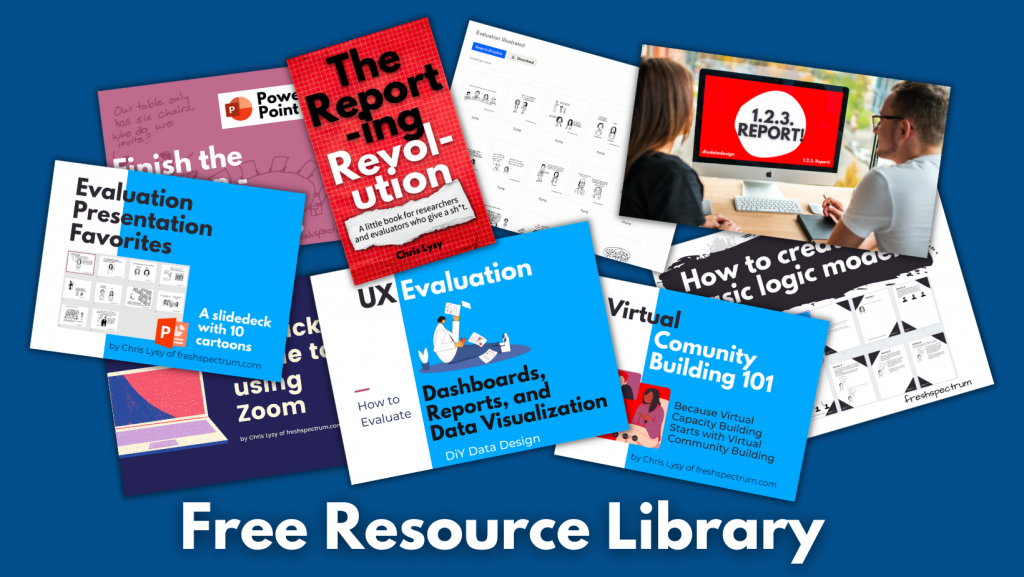
Free Resource Library relaunch, now with more cool stuff.

I just relaunched my free resource library, here is what you’ll find inside.
Limited Time Downloads and Events

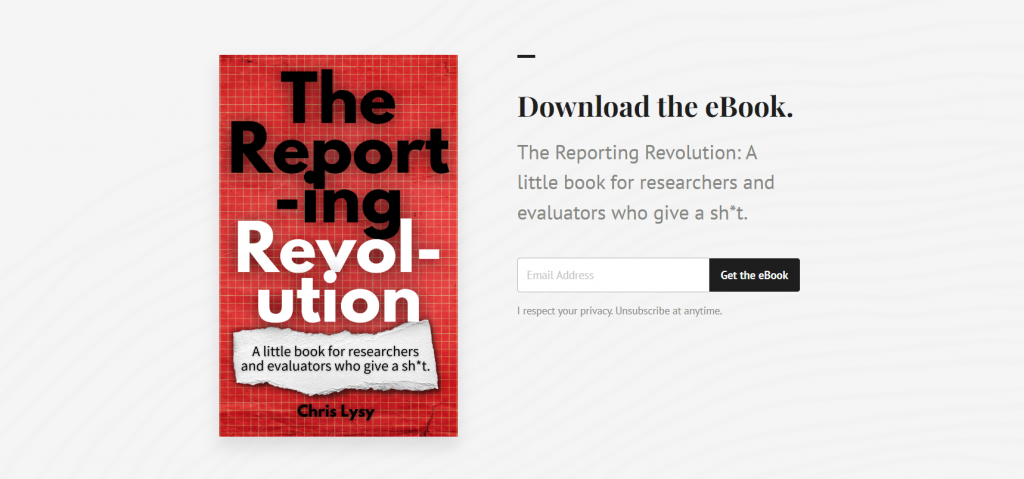
As of today you’ll only find one time limited download, my in-process book The Reporting Revolution.

This section will change often as some resources I share only stay free for short amount of time. I’ll try to always keep at least one thing in this section, it could be anything from a free course module to an upcoming webinar.

eBooks, Guides, and Cartoons

This is my catch all section for most of my resource downloads. Currently it includes the following:

  • UX Evaluation [PDF]
  • Virtual Community Building 101 [PDF]
  • How to create a basic logic model [PDF]
  • A Quick Guide to using Zoom [PDF]
  • Evaluation Presentation Favorites [PowerPoint]
  • Finish the Cartoon: Engaging Stakeholders [PowerPoint]
  • Evaluation Illustrated Full Cartoon Collection [Dropbox Folder]

The Evaluation Illustrated Cartoon Collection is newly shared. Originally you would have had to buy the book to get full access. Now you can get access to downloadable copies of all 114 cartoons for free.

Free Courses

Right now I only have one free course but I do have a couple others in mind.

YouTube Channel & Tutorial Links

I have my recent tutorial posts listed out by category (i.e. Excel, Canva, Evaluation) you’ll also find a link to my YouTube channel which features videos not always shared on this site.

Enjoy!

Use this link to check it all out.

And please feel free to share with your friends!

Written by cplysy · Categorized: freshspectrum

Aug 09 2022

Principles: Evaluation, Strategy and More

Over at our sister site (Censemaking), we are publishing a series on Principles-Focused Evaluation. The series is looking at the basic building blocks that underpin the approach and will describe how to use it.

We will be posting some additional materials here at a later date.

But before one starts out using principles, it’s essential to understand what they are and why they matter.

Principles in Practice

When we look at principles in practice we first need to look at the definition of the term.

PrincipleDownload

As we can see from above, principles are guides for conduct. They are touchstones that can inform planning and action in the face of uncertainty. If we were sure about causes and consequences, we could rely on rules. When we are uncertain, principles will have to do.

Principles are also evaluable.

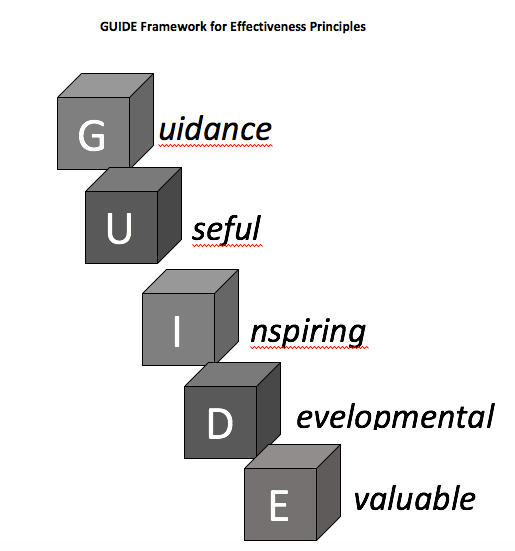
Michael Quinn Patton has riffed on this role of principles in his GUIDE Framework for Principles-focused Evaluation.

As Patton writes on Principles-Focused Evaluation,

Principles-focused evaluation examines (1) whether principles are clear, meaningful, and actionable, and if so, (2) whether they are actually being followed and, if so, (3) whether they are leading to desired results.  Principles are derived from experience, expertise, values, and research.

Principles, Values and Strategy

Principles reflect our values. Values are about what has meaning for us, what we invest in, and subsequently, what has value. That is why we can evaluate good principles.

The first step in developing principles is determining what you value.

The second step is determining your values. Values are the beliefs we hold that guide our actions and shape our identity.

Thirdly, connect the two; this is strategy.

Drawing on the GUIDE framework above, consider reflecting on what you value, your values, and how (or if) they are connected. We work with many organizations with a gap between their stated values and desires and their actions. Much of our work is on closing this gap with our clients. The reasons are often that we let our environment shape our actions without connecting them to values or value.

We find many clients do things with low value yet are a product of legacy systems in place to accomplish something else. By clarifying our values and determining what has value, we can change this by design.

This is what strategic design is all about.

So now you know why principles, strategy, and design are all related.

If this is something that you want help in doing, let’s talk. This is what we do.

Photo by Amrit Sangar on Unsplash

The post Principles: Evaluation, Strategy and More appeared first on Cense Ltd. .

Written by cplysy · Categorized: cameronnorman

Aug 07 2022

Cómo construir una cultura organizacional positiva

La cultura organizacional se puede definir como (1) el carácter y la personalidad de una organización, (2) lo que hace que su organización sea única y (3) es la suma de sus valores, tradiciones, creencias, interacciones, comportamientos y actitudes.

Nicole Schaerer nos cuenta cómo construir una cultura organizacional positiva:

1. La gente importa: Las organizaciones más exitosas dedican tanto tiempo como dinero en atraer, retener y desarrollar personas con los valores, el ajuste cultural y la actitud correctas. Las organizaciones que se enfocan en las personas crean sin esfuerzo culturas organizacionales positivas.

2.Comunicacion positiva: La comunicación regular y positiva, ayuda a crear una cultura organizacional positiva, particularmente si los empleados confían en sus líderes para lograr los cambios prometidos.

3. Bucle de retroalimentación: Dos de las necesidades humanas más importantes son sentirse escuchado y comprendido. Los sistemas de retroalimentación de los empleados satisfacen ambas necesidades de manera rápida y efectiva.

4. Mostrar apreciación:  Cuando el personal es reconocido y apreciado por lo que hace en el trabajo, está más inclinado a sentirse satisfecho en el trabajo y está más comprometido y más motivado para hacer el trabajo.

5. Propósito, visión y saber que contribuyes. Los líderes que entienden, se involucran y comunican de manera efectiva una visión compartida, construyen culturas organizativas positivas, en las que los empleados saben por qué se presentan al trabajo todos los días y cuál es su función en la visión compartida.  Cuando las personas sienten que están contribuyendo a un objetivo significativo, se sienten más felices, más positivas y satisfechas en sus trabajos.

5. ¡Diviértete y sé divertido! Las emociones positivas tienden a aumentar la creatividad y la innovación y facilitan el desarrollo de las relaciones. En definitiva, ir a trabajar debe ser una experiencia agradable.

Written by cplysy · Categorized: TripleAD

Aug 04 2022

La persuasión y sus técnicas

Fuente

En psicología, la persuasión: 

(1) es una habilidad de influencia social necesaria para la formación y sentido de pertenencia en grupos.

(2) consiste en la utilización deliberada de la comunicación para cambiar, formar o reforzar las actitudes de las personas, siendo estas últimas representaciones mentales que resumen lo que opinamos de las cosas, personas, grupos, acciones o ideas.

Existen diferentes niveles de persuasión, desde (a) el consejo, pasando por (b) la exposición de argumentos, hasta (c) la manipulación y extorsión. Debido a que las actitudes juegan un papel importante en la forma de comportarse, un cambio en ellas debería dar lugar a un cambio en nuestro comportamiento, que es lo que, en última instancia, se pretende con la persuasión.

Al igual que todas las habilidades, la asertividad y el arte de la persuasión se pueden adquirir a través del conocimiento de las diferentes estrategias, la práctica y la motivación. Las técnicas de persuasión son un conjunto de acciones o procedimientos que se llevan a cabo con el objetivo de convencer a alguien sobre algo concreto y, además, que se comporte de acuerdo a ello.

Algunas técnicas de persuasión:

1. Técnica de la reciprocidad

Se basa en el concepto de la reciprocidad. Esto tiene que ver con en el hecho de que si tú haces algo primero, sin que nadie te lo haya pedido antes, de alguna forma está en la naturaleza humana que la gente se sienta en deuda contigo.

2. Técnica de la etiqueta

Se basa en colocarle una etiqueta a la persona que quieres convencer, simplemente haciéndole una pregunta. La idea es que busquemos una característica positiva de nuestro interlocutor, que esté en sintonía con lo que vamos a pedirle a continuación. Lo interesante es que en muchos casos ni siquiera tenemos que estar seguros de que la persona tiene esa característica, a veces es suficiente con que se trate de un atributo positivo socialmente.  Con esta técnica se apela al concepto que cada cual tiene de sí mismo y al principio de la coherencia según el cual, una vez que hemos tomado una decisión (sobre todo delante de alguien), nos forzaremos a ser congruentes y a asumir el compromiso. La clave para usar esta técnica de persuasión consiste simplemente en encontrar la etiqueta justa para la persona que, a la misma vez, responda a nuestro objetivo final.

3. Prueba social

Uno de los grandes males de este comportamiento gregario es considerar todo lo que es popular como algo de alta calidad o como algo bueno. A veces es cierto, pero en muchos otros casos sencillamente no lo es. “Demuestras”, por prueba social, que lo que ofreces funciona de verdad.

4. Técnica desorganiza-replantea

¿Qué pasaría si nos saliésemos del “guión” al que estamos acostumbrados? Cuando se introduce un elemento disruptor para el que no estábamos preparados, nuestra mente se ve forzada a cambiar sus patrones de razonamiento. Durante esos instantes se produce una sobrecarga cognitiva y somos más proclives a aceptar cualquier sugerencia que pueda parecernos medianamente razonable.

5. Técnica de la autoafirmación

Poniendo nuestros argumentos en su boca. las personas normalmente le prestan más atención a sus argumentos que a los de su interlocutor, sobre todo cuando intentan ganar a toda costa.

Las razones más convincentes provienen de nosotros mismos, aunque no estén en sintonía con nuestros puntos de vista. Por tanto, la próxima vez que quieras convencer a alguien, no te pongas a la defensiva intentando rebatir sus argumentos, deja que sea él quien haga todo el trabajo, solo tendrás que guiarle.

6. Técnica de la escasez o exclusividad

Está demostrado a nivel de la psicología de la venta que el deseo aumenta si se percibe algo como exclusivo o escaso o con “plazas limitadas”.

Referencia

Guerri, Marta (2021) Las mejores técnicas de persuasión

Rodríguez Villar, Ana Luisa (2009) Técnicas de persuasión.

Written by cplysy · Categorized: TripleAD

Aug 03 2022

The Reporting Revolution – Digital Reporting Strategy

So in case you haven’t been following, I am writing a book. And every couple of weeks I’m releasing a new chapter. When the book is all done, I’m going to self-publish on Amazon.

Until it’s ready for publication, you can download the current version for free. You’ll find the link at the bottom of this page.

In today’s release you’ll find a new introduction and chapter 3 which dives into modern reporting strategy. Reporting strategy is not about what we report but how we report. How we get our ideas from our work into the minds of the people in our audiences.

My goal isn’t to find my way onto the NY Times bestseller list. I just want to create a really useful guide on modern reporting. So please download the book, read it, and give me feedback. And if there are things you find unclear please let me know.

Here is what’s inside currently as of August 3:

  • Introduction – A Little Story
  • Chapter 1. The Big Why
    • Why are we still reporting like it’s 1999?
    • Our reports tell everyone else a story about our profession.
    • Seeing our work through our audience’s eyes.
    • Unintentional gatekeepers.
    • Mindset change – Noun report to verb report.
    • Not just better, faster too.
    • Make it easy.
  • Chapter 2. Finding Your Audience
    • Who is in your audience?
    • Activity: Naming your Audience
    • Your Big 3 Audiences
    • Activity: Three Bucket Audience
    • The Audience Growth Saturation Point
    • Audience Reach Splash Model
    • Measuring your Audience
    • Audience Building or Serving?
  • Chapter 3. Developing YOUR Modern Reporting Strategy
    • Rule #1 – Everyone is overwhelmed.
    • Activity: The Overwhelmed Reader
    • The Default Reporting Strategy
    • Activity: What is Your Organization’s Reporting Strategy?
    • Towards a Practical Strategy
    • 1:3:25 Strategy
    • Flagship Report Strategy
    • Comprehensive Blog + Social + Email Strategy
    • Audience Borrowing Strategy
    • Email Newsletter Strategy
    • Webinar Series Strategy
    • Learning Community Strategy
    • Creating a YOU Strategy
The Reporting Revolution: A little book for researchers and evaluators who give a sh*t.  
Screenshot of the eBook landing page.

Click here to go to the download page.

Written by cplysy · Categorized: freshspectrum

  • « Go to Previous Page
  • Go to page 1
  • Interim pages omitted …
  • Go to page 119
  • Go to page 120
  • Go to page 121
  • Go to page 122
  • Go to page 123
  • Interim pages omitted …
  • Go to page 310
  • Go to Next Page »

Footer

Follow our Work

The easiest way to stay connected to our work is to join our newsletter. You’ll get updates on projects, learn about new events, and hear stories from those evaluators whom the field continues to actively exclude and erase.

Get Updates

Want to take further action or join a pod? Click here to learn more.

Copyright © 2026 · The May 13 Group · Log in

en English
af Afrikaanssq Shqipam አማርኛar العربيةhy Հայերենaz Azərbaycan dilieu Euskarabe Беларуская моваbn বাংলাbs Bosanskibg Българскиca Catalàceb Cebuanony Chichewazh-CN 简体中文zh-TW 繁體中文co Corsuhr Hrvatskics Čeština‎da Dansknl Nederlandsen Englisheo Esperantoet Eestitl Filipinofi Suomifr Françaisfy Fryskgl Galegoka ქართულიde Deutschel Ελληνικάgu ગુજરાતીht Kreyol ayisyenha Harshen Hausahaw Ōlelo Hawaiʻiiw עִבְרִיתhi हिन्दीhmn Hmonghu Magyaris Íslenskaig Igboid Bahasa Indonesiaga Gaeilgeit Italianoja 日本語jw Basa Jawakn ಕನ್ನಡkk Қазақ тіліkm ភាសាខ្មែរko 한국어ku كوردی‎ky Кыргызчаlo ພາສາລາວla Latinlv Latviešu valodalt Lietuvių kalbalb Lëtzebuergeschmk Македонски јазикmg Malagasyms Bahasa Melayuml മലയാളംmt Maltesemi Te Reo Māorimr मराठीmn Монголmy ဗမာစာne नेपालीno Norsk bokmålps پښتوfa فارسیpl Polskipt Portuguêspa ਪੰਜਾਬੀro Românăru Русскийsm Samoangd Gàidhligsr Српски језикst Sesothosn Shonasd سنڌيsi සිංහලsk Slovenčinasl Slovenščinaso Afsoomaalies Españolsu Basa Sundasw Kiswahilisv Svenskatg Тоҷикӣta தமிழ்te తెలుగుth ไทยtr Türkçeuk Українськаur اردوuz O‘zbekchavi Tiếng Việtcy Cymraegxh isiXhosayi יידישyo Yorùbázu Zulu