If I use the Dylomo software how do I print or export out the logic model to place in a document?
allblogs
Comment on Evaluator Competencies Series: Program Theory by Andre Cotterall
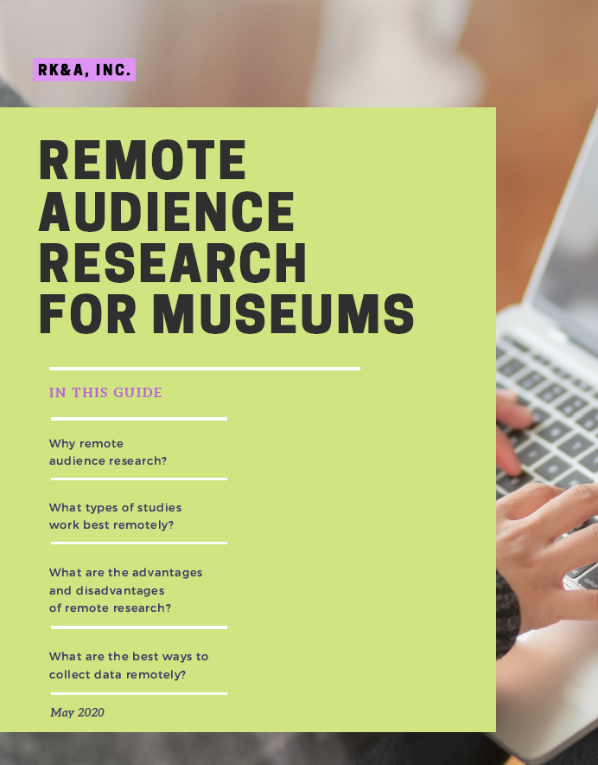
Remote Audience Research for Museums — Download the Guide!
As evaluators, our work depends on being able to gather data on and from museums’ audiences. It probably goes without saying that this has become trickier in a world transformed by a global pandemic. Museums and cultural organizations are temporarily closed, and we anticipate lower visitation (and different visitation patterns) once they reopen. This makes the question of where and how we might connect with study participants especially pertinent. One thing we have been asking ourselves at RK&A is: do we really need to be physically in a museum to collect useful audience data?
The short answer is no. While historically, museums have, for the most part, heard from their audiences through what evaluators call onsite research, a well-designed remote research study can provide just as thoughtful, valid, and reliable findings as one that gathers data from visitors recruited on the museum floor.
As the name suggests, remote research is research conducted offsite (not at a museum), with the researcher and study participants in different physical locations. This may sound strange, new, or maybe even scary if you are used to gathering data from audiences in-person, at the museum. But, stay with me! While it would certainly be easy to dismiss the idea of doing audience research remotely as simply a temporary research solution while we are at home due to COVID-19, there is robust precedent for doing fully remote studies in “normal times.” Many of these examples stem from the user experience (UX) and product development industries, but museum evaluators also collect data remotely when it best fits the needs of a project. For instance, we might contact participants after a program for telephone interviews to hear about their experiences. As long as a museum’s audience research studies are still rigorously designed and ethical research principles are upheld, there is no reason why they cannot be done fully remotely.
In fact, there are many reasons why museums might choose remote audience research as a primary research strategy over onsite research, even after museums begin to reopen. For one, since participants are recruited in advance for a remote study, they come to the table more focused and mentally prepared to provide feedback, which is not typically the case when they are recruited on the busy museum floor. Participating from home also helps people feel more comfortable, and this feeling can ultimately translate into more honest feedback by reducing courtesy bias (when people withhold critiques for fear of offending the museum or researcher), which can be high in an in-person study. Further, remote studies can allow for broader and more diverse voices to be heard than might be possible when recruiting only among visitors in the museum’s building. Of course, there are some disadvantages to doing fully remote studies, including the lack of environmental context from not being physically in the museum and, to some extent, privacy concerns.
Remote audience research is a huge topic and there is a lot to consider when deciding if it is the right approach for you (more than I can possibly fit in this post!). With that in mind, RK&A created a guide to help you understand the rationale behind remote research for museums, what types of studies work best remotely, the advantages and disadvantages of remote research, and the best ways to collect data remotely. Download RK&A’s Guide to Remote Audience Research for Museums.
Shortened link: https://bit.ly/3dnyOG9
The post Remote Audience Research for Museums — Download the Guide! appeared first on RK&A.
Participación de adolescentes en el monitoreo y evaluación
Haz clic para acceder a UNICEF_ADAP_GuidanceNote.pdf
En octubre de 2019 UNICEF ha publicado la nota de orientación sobre Participación de adolescentes en el monitoreo y evaluación (PA M&E)
Esta nota de orientación fue creada en respuesta a ese desafío, para ayudar al personal de UNICEF a determinar qué forma de PA M&E (1) puede dotar de mayor valor añadido; (2) cómo los adolescentes pueden participar de manera significativa, segura y ética en diferentes contextos; (3) qué cuestiones prácticas deberían ser consideradas al diseñar e implementar actividades participativas de M&E; y (4) qué herramientas y recursos se pueden usar para apoyar dicho proceso.
La nota de orientación es interactiva, lo que permite a los usuarios acceder a herramientas de soporte y orientación o navegar dentro del documento fácilmente. Su objetivo es ser un recurso práctico para el personal de UNICEF y por los socios de UNICEF.
Si bien ha habido un progreso considerable en la mejora de la participación de los adolescentes, sigue siendo limitada la participación de adolescentes en el monitoreo y la evaluación (M&E). Sin embargo, los beneficios de la participación adolescente en el monitoreo y la evaluación (PA M&E) son ampliamente reconocidos: credibilidad, empoderamiento, dignidad, asociaciones intergeneracionales y cambio colectivo basado en la evidencia.
En la práctica, parte de l@s profesionales pueden tener (a) una experiencia limitada con respecto a los pasos a seguir y (b) unos recursos limitados para comprometerse significativamente con los adolescentes en las actividades de M&E. (c) Otr@s pueden preocuparse de que la participación sea explotadora, insegura o poco ética. Por tanto, cómo se hace la participación en M&E, es un desafío clave.
- La participación de los adolescentes puede ayudar a los esfuerzos de M&E a obtener datos mejores y más auténticos sobre temas relevantes para los jóvenes, para una mejor toma de decisiones. Por lo tanto, puede reforzar la credibilidad de la evidencia y de las decisiones tomadas en base a esa evidencia.
- La participación de los adolescentes puede fomentar el empoderamiento, tanto a través del desarrollo de habilidades específicas de M&E (“pensamiento evaluativo”) como a través de la participación en un proceso significativo con otros adolescentes y adultos.
- Los adolescentes son tratados con dignidad y pueden forjar asociaciones intergeneracionales que pueden impulsar un cambio colectivo basado en la evidencia.
So what is evaluation anyway?
Post originally published as a collection of 13 evaluation cartoons on March 25, 2014. Updated with way more context on May 27, 2020.
When you search “What is Evaluation?” on Google, you get the kinds of responses you might expect.
- The Wikipedia page…if a topic is important enough it will have a Wikipedia page. And whatever you may think about Wikipedia, it’s one of Google’s favorite sites.
- Dictionary pages. We did ask for a definition, right?
- Evaluation association definitions.
- Large government and NGO definition pages.
They are somewhat formulaic. Usually the definition is tied directly to a prominent author or theorist. Or it’s sourced to a recent article which sourced a prominent author or theorist. Then the organization expands upon that definition.
But why are you asking? Is a direct answer really all that important?
If it is, well then, here is a good one.
What is Evaluation?
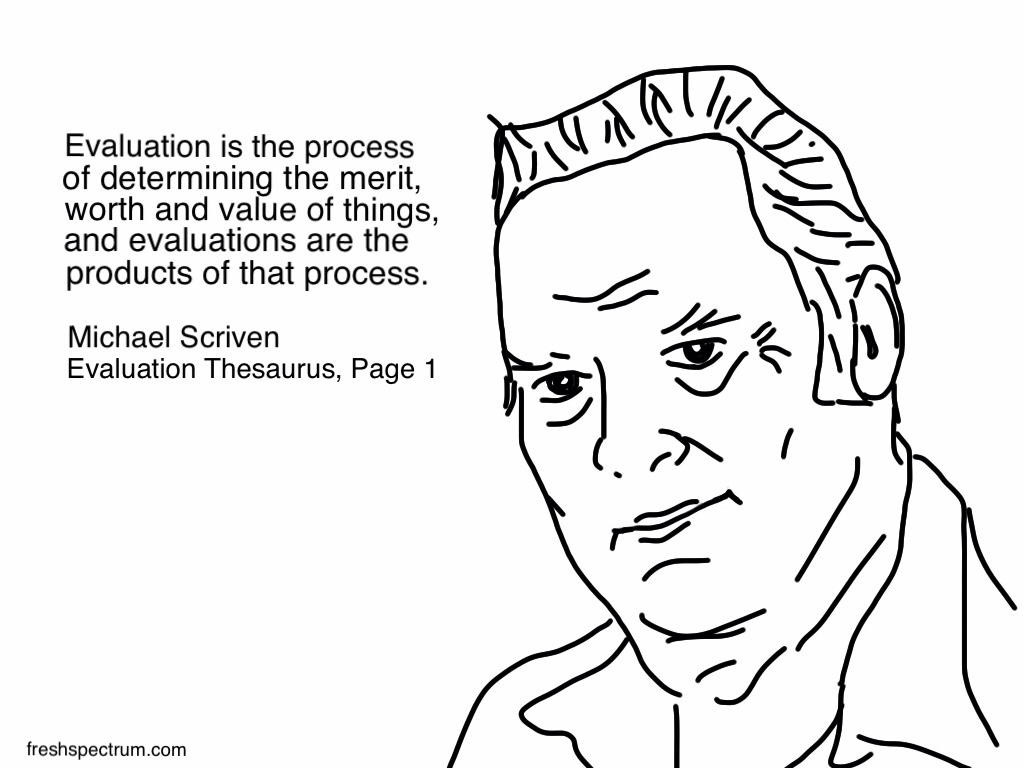
Evaluation is the process of determining the merit, worth and value of things, and evaluations are the products of that process.
Now for the indirect answer, let’s dive deeper.
Evaluation can be hard to explain.
Back in 2014 the American Evaluation Association put together a task force with the purpose of defining evaluation.
The statement is meant to encourage dialogue — so based on comments and responses it will be revised periodically. Thus, your reactions and comments are encouraged (see comment section below).The Task Force was comprised of both long-time evaluation professionals and AEA members newer to the profession. All have experience and expertise in communicating to others about evaluation. The task force included:
Michael Quinn Patton, Chair, Edith Asibey, Jara Dean-Coffey, Robin Kelley, Roger Miranda, Susan Parker, and Gwen Fariss Newman
The Canadian Evaluation Society took a similar root to find their own.
(Through a reflective process, the CES Board of Directors, supported by a consultation of members, has crafted and adopted the following as the CES definition of evaluation. PDF version. Cheryl Poth, Mary Kay Lamarche, Alvin Yapp, Erin Sulla, and Cairine Chisamore also published Toward a Definition of Evaluation Within the Canadian Context: Who Knew This Would Be So Difficult? in the Canadian Journal of Program Evaluation, vol. 29, no. 3.)
For most of us “What is Evaluation” is an open question. It evolves over time and adapts based on context. But I am not sure evaluators would have it any other way.
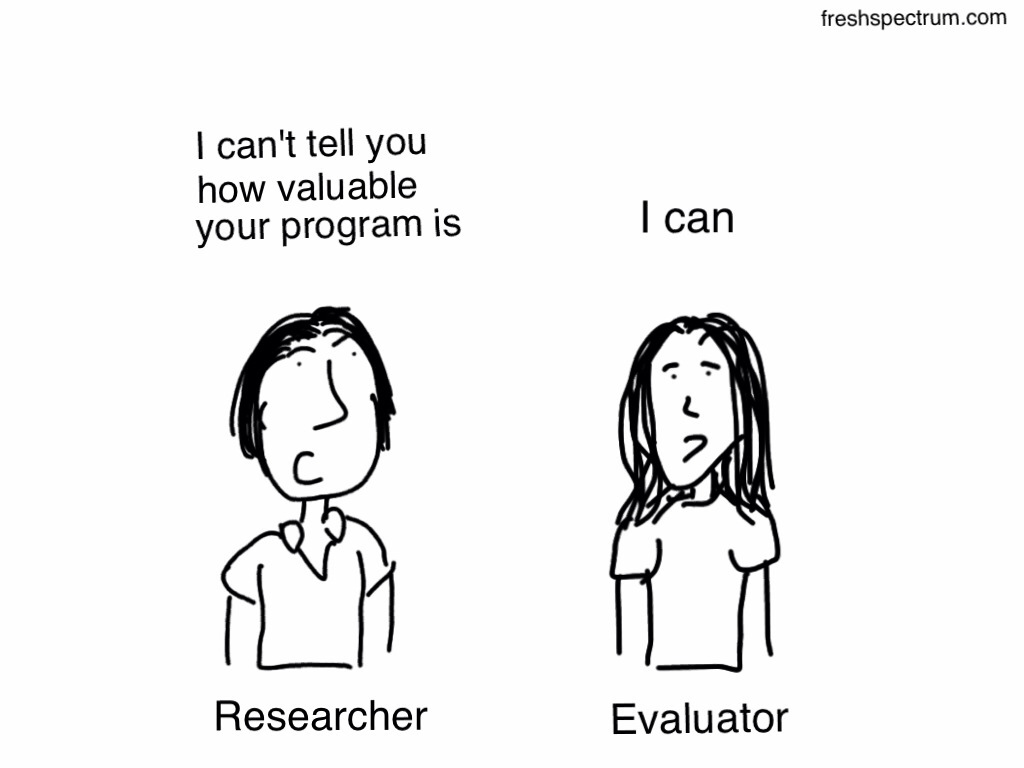
Research vs Evaluation
From this perspective, evaluation “is a contested term”, as “evaluators” use the term evaluation to describe an assessment, or investigation of a program whilst others simply understand evaluation as being synonymous with applied research.
I’m pretty sure the Wikipedia evaluation page editor is trying to call us out.
But honestly, there are a lot of converted researchers in evaluation. And there are a lot of “evaluators” who are really just doing research.
I was a converted researcher. I saw the similarities in the methods and thought that it was pretty much the same thing. But it’s not what you do.
The how, where, who, and why really matter in evaluation.
Evaluation is not…
Research: The purpose of research is to generate new knowledge, while evaluation is about making evaluative claims and judgments that can be used for decision making and action
Figuring out the Type of Evaluation
Just like there is not one definition, there is not just one type of evaluation or one way to do an evaluation.
Evaluation can range from being very simple service evaluations to complex evaluative research projects. Each service will require a different approach depending on the purpose of the evaluation; evidence base, stage of development, context of the service; and the resources and timescales for the evaluation.
Evaluations can focus on implementation and learning (formative evaluation), how a service works (process evaluation) and whether it has worked (outcome/summative evaluation) – or all of these aspects over the life cycle of a project.
A lot of organization’s boil evaluation down to these three kinds of pursuits.
On BetterEvaluation, we use the word ‘evaluation’ in its broadest sense to refer to any systematic process to judge merit, worth or significance by combining evidence and values.
But there are all sorts of types of evaluation out there in the world.

Here are some thoughts on the topic by Emily Elsner, a current member of the freshspectrum Panel of Experts.
Michael Quinn Patton defines evaluation thus:
Evaluation involves making judgements about the merit, value, significance, credibility, and utility of whatever is being evaluated: for example, a program, a policy, a product, or the performance of a person or team.’
Evaluation seems to raise two assumptions in people: firstly, that there is an easy ‘off-the-shelf’ solution, and second, that evaluation is going to be critical and negative. The angle of judgement, and (as Patton elaborates in his book) the association of judgement with values, is a crucial aspect that can be forgotten. Yes, evaluation can be critical, but it can also provide strategic guidance, support decision-making, and more – all positive, useful things for projects and organisations.
Linked to this, if evaluation is to be supportive of projects and organisations, then it needs to be tailored to the project/organisation, otherwise it is just measuring for the sake of it, as Muller, in his book ‘The Tyranny of Metrics’, reminds us: ‘
There are things that can be measured. There are things that are worth measuring. But what can be measured is not always worth measuring; what gets measured may have no relationship to what we really want to know […] The things that get measured may draw effort away from the things we really care about. And measurement may provide us with distorted knowledge – knowledge that seems solid but is actually deceptive.
Emily Elsner is an impact and evaluation consultant based in Zurich, Switzerland. She has spent the last few years working in the migration-entrepreneurship-social enterprise space, and is now independent, balanced between the social and environmental spheres.
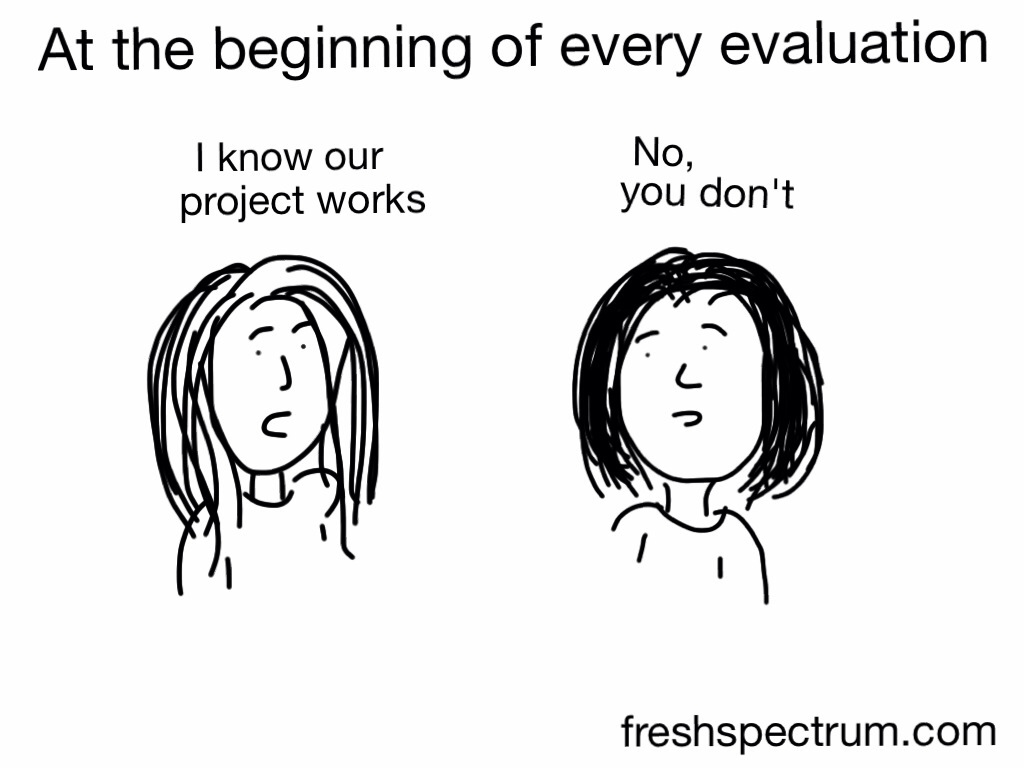
Overcoming the inherent tension between the evaluator and program being evaluated.
Who gets to say what works and what does not work? What does it all really mean? It’s definitely not hard to move back and forth between evaluation and philosophy.
Evaluation and evaluative work should be in service of equity.
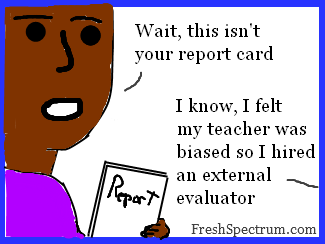
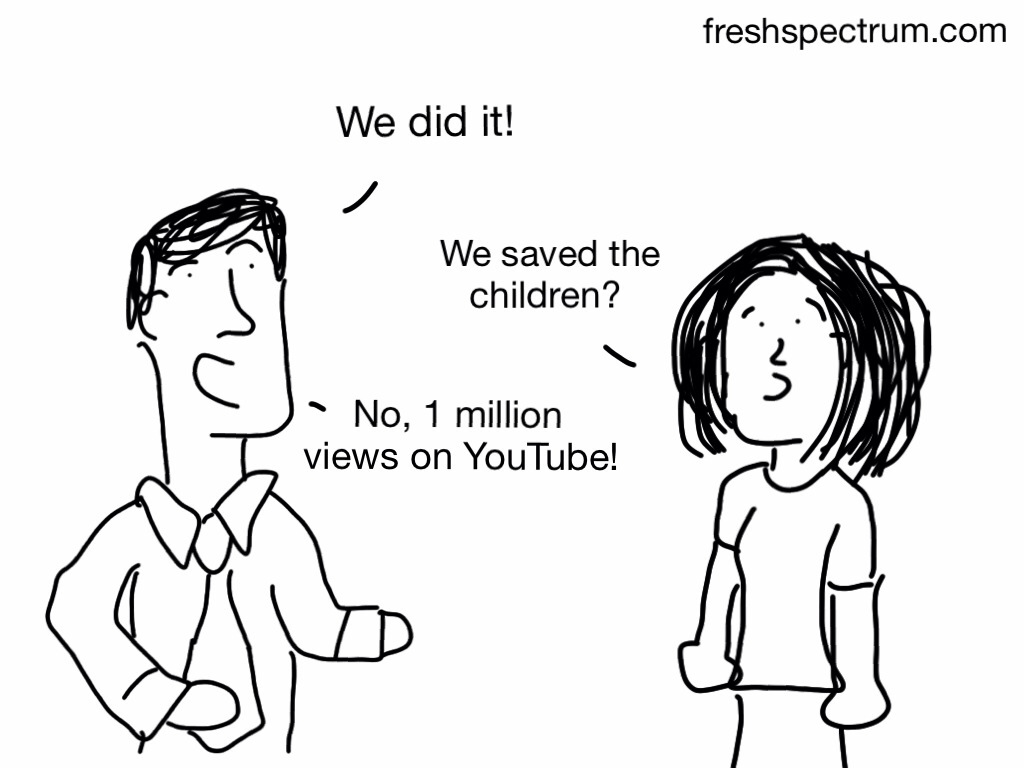
Focusing on the Right Outcomes
We are what we measure.
UNEG’s definition of evaluation further states that evaluation “should provide credible, useful evidence-based information that enables the timely incorporation of its findings, recommendations and lessons into the decision-making processes of the organizations and stakeholders
The United Nations Office of Drugs and Crime – What is Evaluation?
Connecting the Dots
Evaluative reasoning is the process of synthesizing the answers to lower- and mid-level questions into defensible judgements that directly answer the high-level questions. All evaluations require micro- and meso-level evaluative reasoning… not all require it at the macro level.
Jane Davidson’s UNICEF Methodological Brief on Evaluative Reasoning
Making Comparisons
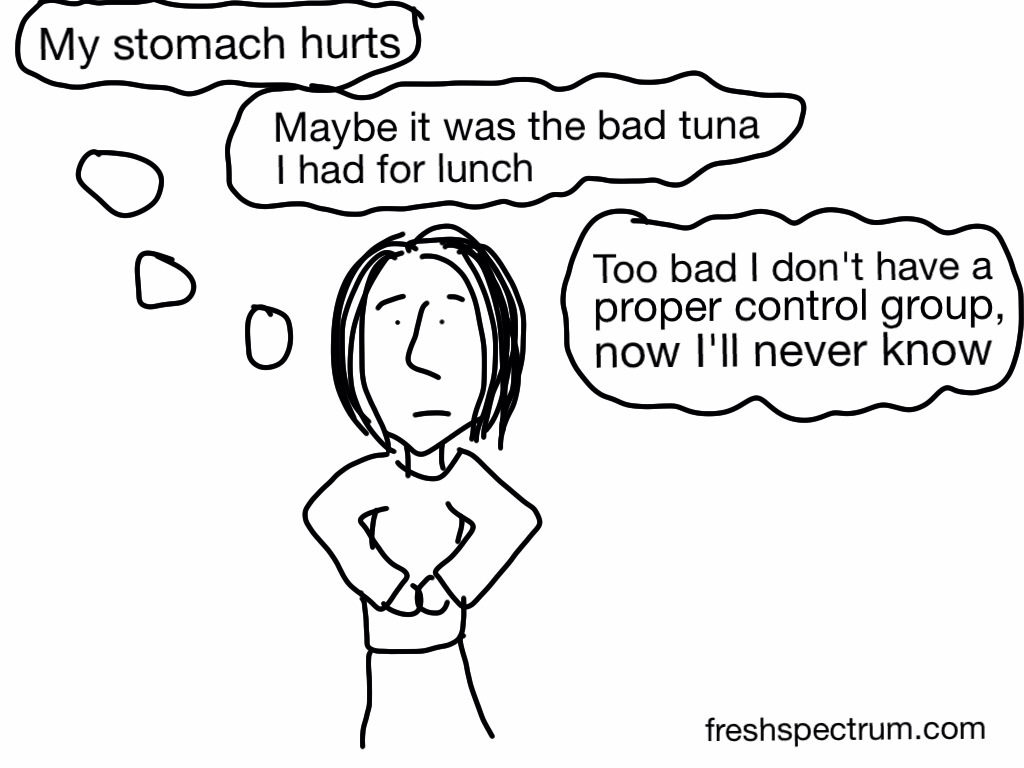
In its simplest form, counterfactual impact evaluation (CIE) is a method of comparison which involves comparing the outcomes of interest of those having benefitted from a policy or programme (the “treated group”) with those of a group similar in all respects to the treatment group (the “comparison/control group”), the only difference being that the comparison/control group has not been exposed to the policy or programme.
Systematic Assessment
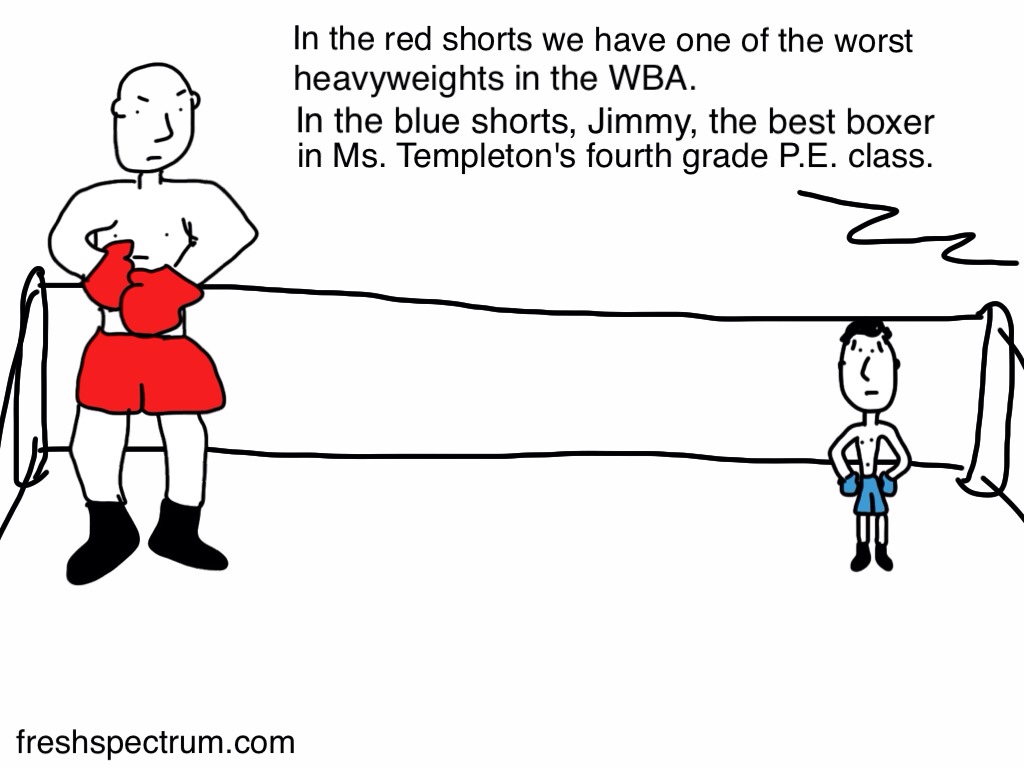
Effective program evaluation is a systematic way to improve and account for public health actions by involving procedures that are useful, feasible, ethical, and accurate. Several key documents guide program evaluation at the CDC.
At various times, policymakers, funding organizations, planners, program managers, taxpayers, or program clientele need to distinguish worthwhile social programs from ineffective ones, or perhaps launch new programs or revise existing ones so that the programs may achieve better outcomes. Informing and guiding the relevant stakeholders in their deliberations and decisions about such matters is the work of program evaluation.
From Rossi, Lipsey, and Henry’s book Evaluation, A Systematic Approach
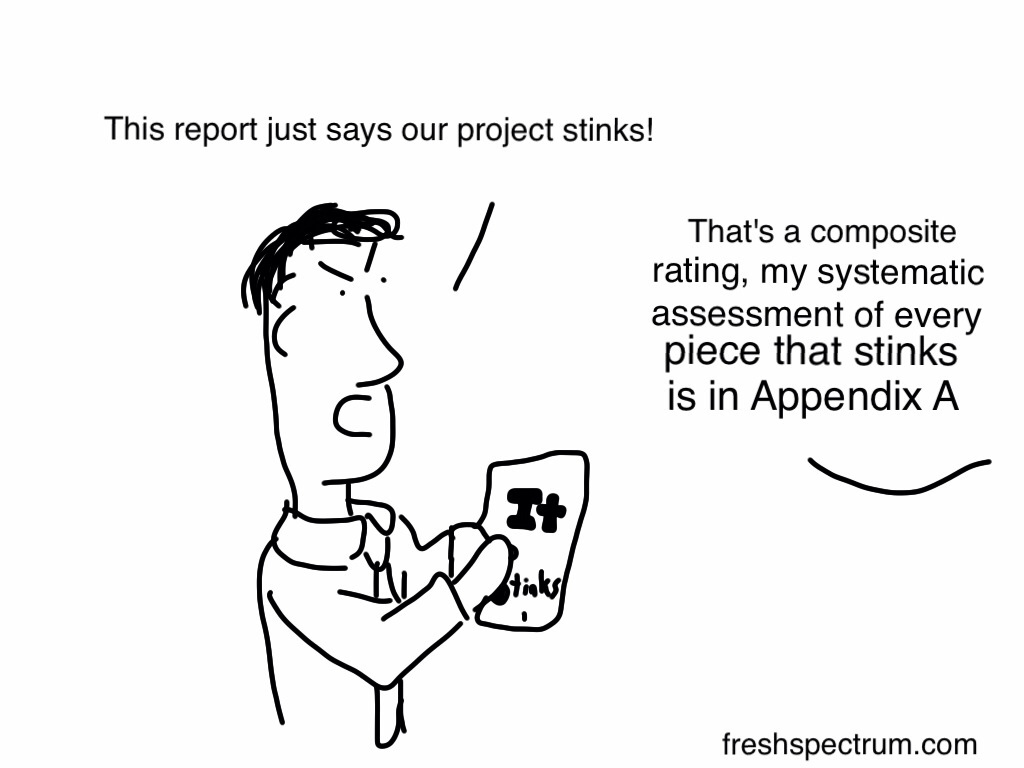
Evaluation is the systematic assessment of the operation and/or the outcomes of a program policy, compared to a set of explicit or implicit standards, as a means of contributing to the improvement of the program or policy.

Impact Assessments
Impact analysis is a component of the policy or programming cycle in public management, where it can play two roles:
Ex ante impact analysis. This is part of the needs analysis and planning activity of the policy cycle. It involves doing a prospective analysis of what the impact of an intervention might be, so as to inform policymaking – the policymaker’s equivalent of
business planning;Ex post impact assessment. This is part of the evaluation and management activity of the policy cycle. Broadly, evaluation aims to understand to what extent and how a policy intervention corrects the problem it was intended to address. Impact assessment
focuses on the effects of the intervention, whereas evaluation is likely to cover a wider range of issues such as the appropriateness of the intervention design, the cost and efficiency of the intervention, its unintended effects and how to use the experience from this intervention to improve the design of future interventions.
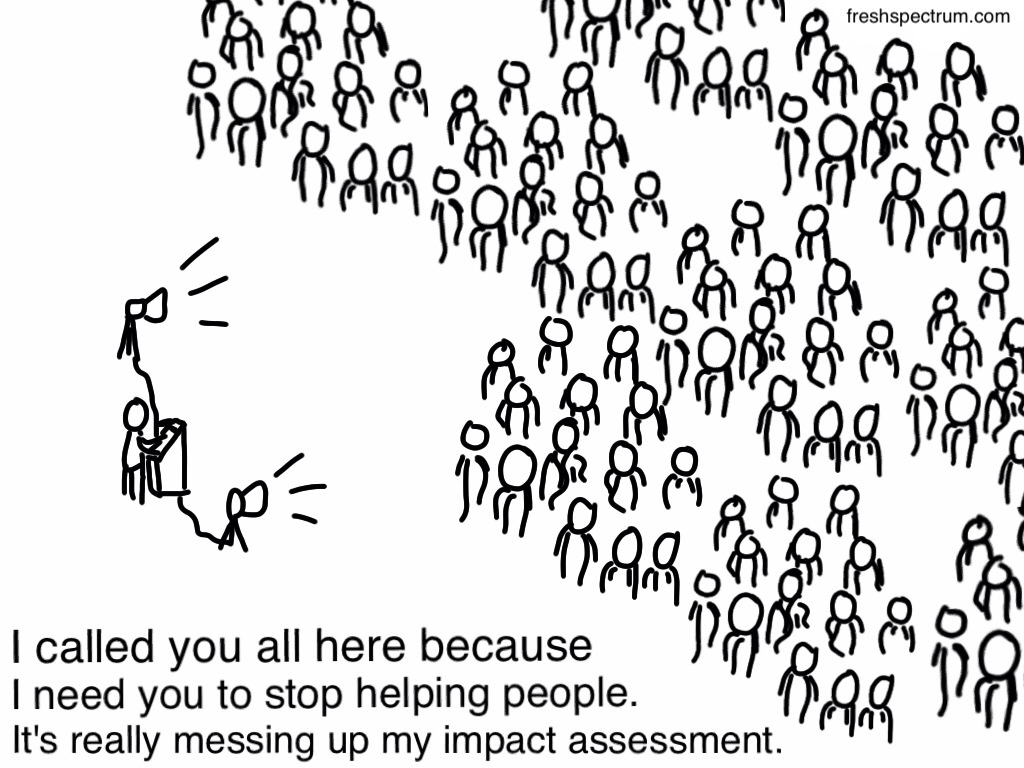
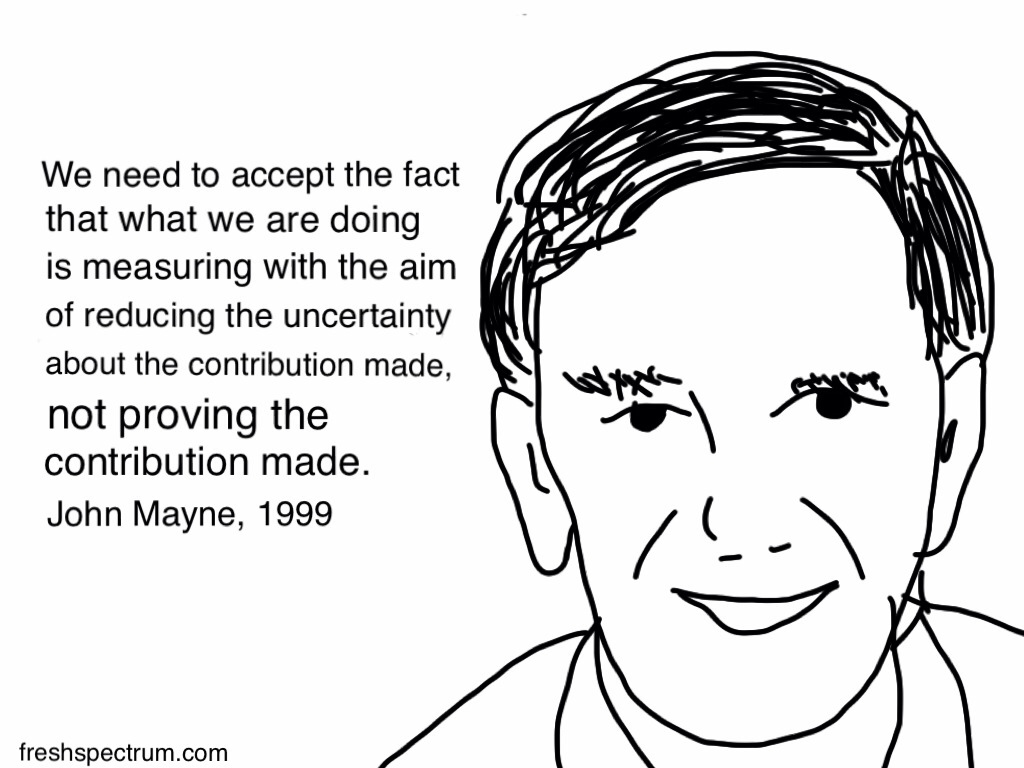
We need to accept the fact that what we are doing is measuring with the aim of reducing the uncertainty about the contribution made, not proving the contribution made.
John Mayne Addressing Attribution Through Contribution Analysis: Using Performance Measures Sensibly
Want more evaluation cartoons?
If you were brought here because of the evaluation cartoons, you can find lots more by checking out the following post: 111 Evaluation Cartoons for Presentations and Blog Posts. The post will also provide you with information on licensing terms and use.
 English
 Afrikaans
 Shqip
Shqip አማርኛ
አማርኛ العربية
 Հայերեն
 Azərbaycan dili
 Euskara
 Беларуская мова
 বাংলা
বাংলা Bosanski
 Български
 Català
 Cebuano
 Chichewa
 简体中文
简体中文 繁體中文
繁體中文 Corsu
Corsu Hrvatski
 Čeština
 Dansk
Dansk Nederlands
 Esperanto
 Eesti
Eesti Filipino
 Suomi
Suomi Français
 Frysk
Frysk Galego
 ქართული
 Deutsch
 Ελληνικά
 ગુજરાતી
 Kreyol ayisyen
 Harshen Hausa
 Ōlelo Hawaiʻi
 עִבְרִית
 हिन्दी
 Hmong
Hmong Magyar
 Íslenska
 Igbo
Igbo Bahasa Indonesia
 Gaeilge
 Italiano
 日本語
日本語 Basa Jawa
 ಕನ್ನಡ
ಕನ್ನಡ Қазақ тілі
 ភាសាខ្មែរ
 한국어
한국어 كوردی
كوردی Кыргызча
 ພາສາລາວ
 Latin
Latin Latviešu valoda
 Lietuvių kalba
 Lëtzebuergesch
 Македонски јазик
 Malagasy
 Bahasa Melayu
 മലയാളം
 Maltese
 Te Reo Māori
 मराठी
मराठी Монгол
 ဗမာစာ
ဗမာစာ नेपाली
 Norsk bokmål
 پښتو
پښتو فارسی
فارسی Polski
 Português
 ਪੰਜਾਬੀ
 Română
 Русский
 Samoan
 Gàidhlig
 Српски језик
 Sesotho
 Shona
Shona سنڌي
سنڌي සිංහල
සිංහල Slovenčina
 Slovenščina
 Afsoomaali
 Español
 Basa Sunda
 Kiswahili
 Svenska
 Тоҷикӣ
 தமிழ்
தமிழ் తెలుగు
 ไทย
ไทย Türkçe
 Українська
 اردو
اردو O‘zbekcha
 Tiếng Việt
 Cymraeg
 isiXhosa
 יידיש
יידיש Yorùbá
 Zulu
Zulu