By Johanna Morariu
Advocacy ecosystems are a community of interacting individuals and organizations. They unite around a shared purpose of influencing policies and practices of institutions. A quote attributed to Helen Keller, “Alone we can do so little; together we can do so much,” aptly sums up what it takes for advocates to be successful in local, state, and national policy change campaigns.
Many different types of organizations make up these ecosystems, including policy advocacy organizations and think tanks, community organizing groups, memberships and associations, faith organizations, labor groups, and funders. For the most part, philanthropic funding and evaluation efforts have focused on the role of 501(c)(3) organizations within these ecosystems.

So, why should we pay attention to 501(c)(4) organizations in advocacy ecosystems? It takes many organizations, coalitions, allies, and others to influence policy change. Rarely if ever is one organization or individual able to catalyze a policy change victory. Often, 501(c)(4) organizations are a critical part of these efforts, but less visible.
Many 501(c)(4) advocacy organizations play special roles in their advocacy ecosystems. Staff of 501(c)(4) organizations work with decision-makers behind closed doors, speak on behalf of other advocates, and negotiate policy deals. And 501(c)(4) organizations can engage in potent strategies that are off-limits to 501(c)(3) organizations. Because of this special role, it is important to better understand the role of 501(c)(4) organizations in advocacy ecosystems.
What are 501(c)(4) advocacy organizations? A 501(c)(4) organization is a social welfare organization that may pursue educational, lobbying, and some limited political activities. 501(c)4 organizations are especially important in policy change efforts as they can engage in issue-based advocacy and the political process.
What might happen if we don’t pay attention to 501(c)(4) organizations in advocacy ecosystems? While the unique role and contributions of 501(c)(4) organizations are often needed for policy change, funding for these activities can be scarce or non-existent. From an advocacy strategy perspective, if 501(c)(4) organizations are needed in an advocacy ecosystem but are not present or funded, a critical gap exists and the ecosystem may struggle to be effective. If an evaluation of the ecosystem is performed and takes the common focus on 501(c)(3) organizations, there is likely to be a critical deficiency in our understanding of the advocacy ecosystem.
I hope you agree that it is important to understand 501(c)(4) organizations within advocacy ecosystems. To help you get started, here are five questions I’ve used in my work.
1. What is the size and location of the 501(c)(4) resources in the advocacy ecosystem?
How do these resources compare to the 501(c)(3) resources in the advocacy ecosystem?
Within an advocacy ecosystem, the amount and type of resources going toward 501(c)(3) vs. 501(c)(4) organizations determines the scale and nature of an advocacy campaign. The extent to which those resources and the work they support are complementary may make an ecosystem more or less effective.
Knowledge of the location and size of 501(c)(3) and 501(c)(4) organizations in the ecosystem provides a foundation on which to build further analysis. For example, who are the influential 501(c)(4) organizations in the advocacy ecosystem and how are they regarded by influential 501(c)(3) organizations? Or how are the influential 501(c)(4) organizations regarded by organizations that have a base of directly affected people?
To dig in to this question, here are two assessment options I’ve used:
● Collect grantmaking/financial data from funders and grantees via document reviews, interviews, and other forms of data collection.
● Layer this information on organization profiles or a network map.
In my experience, this can be challenging information to collect. Advocates and their funders may be unwilling or unable to share complete funding information.
2. Who is the 501(c)(4) organization accountable to?
Does the 501(c)(4) organization have its own base of directly affected people? How does this affect their role in their advocacy ecosystem?
In my experience evaluating advocacy efforts for nearly 15 years, organizations that have a base or are more directly accountable to a constituency behave differently than other organizations. Organizations with a defined constituency, members, or other forms of a “base” may engage in policy negotiation differently. They may move slower at times, as they collect input and feedback from their base. Or they may behave differently in policy negotiations, as people in their base grapple with how their lives may change with the policy ramifications.
To dig in to this question, here are two assessment options I’ve used:
● Surveys, interviews, or desk research to identify which organizations have members and if those members are people who are directly impacted by the advocacy issue.
● Layer organization data on network maps to get a feel for which organizations are more/less accountable to a base or where their accountability lies. Take a close look at key influence and decision-making areas of the network such as relationship hubs, coalitions, and key actors.
3. What is the nature of relationships among 501(c)(3) and 501(c)(4) organizations?
As the 501(c)(4) organization can be a gatekeeper with decision-makers, do the 501(c)(3) organizations trust the 501(c)(4) organization to speak and act on their behalf?
Relationship dynamics are a key component that can help or hinder success in advocacy ecosystems. Are advocates able to work through tough decisions on strategy and resources? Do advocates trust each other and depend on each other?
To dig in to this question, here are two assessment options I’ve used:
● Interviews or surveys with advocates from across an advocacy ecosystem to gauge their relationships with each other. Depending on the situation, this could be generally about the ecosystem or specifically about relationships between specific advocates.
● Observation of campaign forums and communication.

4. How well aligned and coordinated are the goals and strategies of 501(c)(4) and 501(c)(3) organizations?
Are the “inside” and “outside” games pointed in the same direction? Are both sufficiently resourced?
When advocates make good use of the complementary contributions of 501(c)(3) and 501(c)(4) organizations, they maximize the value of both resources. Yet in most advocacy ecosystems, 501(c)(4) resources are rare and insufficient. Aligning the contributions of 501(c)(4) organizations with those of 501(c)(3) organizations — artfully, yet lawfully — enhances the ecosystem’s influence and impact.
First, do all organizations in the ecosystem share the same north star? Or are they pointed toward different galaxies? The extent to which advocates share a north star is an important attribute of the ecosystem that may affect tactical alignment, trust and decision-making, and other dynamics.
Next, understand the relative contributions of 501(c)(3) and 501(c)(4) organizations. What are their unique contributions? Are resources focused on 501(c)(3) organizations? Expect a focus on strategies like public education and non-partisan get-out-the-vote (GOTV) drives. Are at least some resources going to 501(c)(4) organizations? You may see other strategies such as voter registration drives, voter guides, candidate endorsements, ballot measure campaigns, or significant lobbying. Once the unique contributions of 501(c)(3) and 501(c)(4) organizations are known, also explore the points of overlap, alignment, or coordination.
Ideally, the advocacy ecosystem has enough resources to deploy the strategies best fit to the need at hand. Importantly, “enough” does not mean equally split between 501(c)(3)s and 501(c)(4)s. And there may not be agreement about what is enough — in total or among 501(c)(3)s and 501(c)(4)s. At the end of the day, what matters is the strategic complementarity of 501(c)(4) and 501(c)(3) organizations, and that there are enough resources for both.
To dig in to this question, here are two assessment options I’ve used:
● Advocate interviews about their individual and collective efforts and their perspectives on how well aligned/coordinated those are.
● Bellwether interviews or other key informant interviews.
5. Who can engage in learning conversations about advocacy ecosystems that encompass 501(c)(3) and 501(c)(4) organizations?
Strategic learning helps advocates learn from their efforts to “to make their next move in a way that increases their likelihood of success” (Coffman & Beer, 2011). In the context of advocacy ecosystems where 501(c)(3) and 501(c)(4) organizations are both necessary for success it can be difficult to engage in strategic learning. Why?
501(c)(3) organizations and funders may limit their engagement with 501(c)(4) organizations short of legal boundaries, limiting the ability to learn as an integrated ecosystem. Sometimes there is a fear of being too partisan or political. Or, it could stem from uncertainty about what activities are permissible for a 501(c)(3).
With a little legwork, advocates should be able to figure out how to engage lawfully in strategic learning together. Seek the involvement of an expert about the legal parameters for learning and strategy conversations. One resource is Bolder Advocacy, which provides training, a free technical assistance hotline, and other resources for nonprofits and foundations who want to engage more actively in the policy-making process to advance their work.
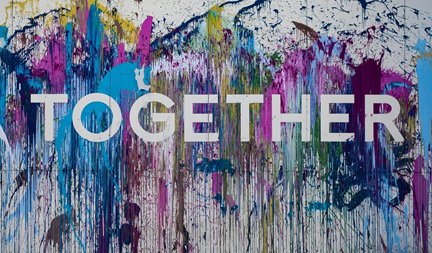
“Alone we can do so little; together we can do so much.”
Advocacy ecosystems are a rich mix of 501(c)(3) organizations, 501(c)(4) organizations, and their funders working together to advance policy change. To accurately evaluate the full range of strategies that make policy change possible, we must pay more attention to the unique role that 501(c)(4) organizations play in these ecosystems.
Johanna Morariu is the former Co-Director of Innovation Network. If you would like to connect about the ideas in this post, you can find her on LinkedIn or email info@innonet.org.
If you like this post and want to see more from Innovation Network, be sure to clap for this article and follow our publication.
5 Questions to Ask about 501(c)(4) Organizations in Advocacy Ecosystems was originally published in InnovationNetwork on Medium, where people are continuing the conversation by highlighting and responding to this story.
 English
 Afrikaans
 Shqip
Shqip አማርኛ
አማርኛ العربية
 Հայերեն
 Azərbaycan dili
 Euskara
 Беларуская мова
 বাংলা
বাংলা Bosanski
 Български
 Català
 Cebuano
 Chichewa
 简体中文
简体中文 繁體中文
繁體中文 Corsu
Corsu Hrvatski
 Čeština
 Dansk
Dansk Nederlands
 Esperanto
 Eesti
Eesti Filipino
 Suomi
Suomi Français
 Frysk
Frysk Galego
 ქართული
 Deutsch
 Ελληνικά
 ગુજરાતી
 Kreyol ayisyen
 Harshen Hausa
 Ōlelo Hawaiʻi
 עִבְרִית
 हिन्दी
 Hmong
Hmong Magyar
 Íslenska
 Igbo
Igbo Bahasa Indonesia
 Gaeilge
 Italiano
 日本語
日本語 Basa Jawa
 ಕನ್ನಡ
ಕನ್ನಡ Қазақ тілі
 ភាសាខ្មែរ
 한국어
한국어 كوردی
كوردی Кыргызча
 ພາສາລາວ
 Latin
Latin Latviešu valoda
 Lietuvių kalba
 Lëtzebuergesch
 Македонски јазик
 Malagasy
 Bahasa Melayu
 മലയാളം
 Maltese
 Te Reo Māori
 मराठी
मराठी Монгол
 ဗမာစာ
ဗမာစာ नेपाली
 Norsk bokmål
 پښتو
پښتو فارسی
فارسی Polski
 Português
 ਪੰਜਾਬੀ
 Română
 Русский
 Samoan
 Gàidhlig
 Српски језик
 Sesotho
 Shona
Shona سنڌي
سنڌي සිංහල
සිංහල Slovenčina
 Slovenščina
 Afsoomaali
 Español
 Basa Sunda
 Kiswahili
 Svenska
 Тоҷикӣ
 தமிழ்
தமிழ் తెలుగు
 ไทย
ไทย Türkçe
 Українська
 اردو
اردو O‘zbekcha
 Tiếng Việt
 Cymraeg
 isiXhosa
 יידיש
יידיש Yorùbá
 Zulu
Zulu